by Ethan Faverino | Feb 25, 2026 | Education, News
By Ethan Faverino |
The Arizona House of Representatives passed HCR 2003, the Protect Girls’ Sports in Arizona Act, on February 23, 2026, in a vote of 32 ayes to 25 nays.
Sponsored by Rep. Selina Bliss (R-LD1), the measure now advances to the Arizona Senate. If approved by the Senate, it would refer the proposed law to Arizona voters for consideration on the November 2026 general election ballot.
HCR 2003 seeks to require schools and athletic associations to designate interscholastic and intramural athletic teams or sports as “males/men/boys,” “females/women/girls,” or “coeducational/mixed,” based on an individual’s biological sex as recorded at birth on the original birth certificate. Teams designated for females would not be open to biological male athletes.
The resolution also includes stronger privacy protections, prohibiting schools and athletic associations from authorizing individuals to use restrooms, locker rooms, shower rooms, or other private athletic facilities not designated for their biological sex, effective January 1, 2027.
The measure restores and strengthens elements of Arizona’s 2022 Save Women’s Sports Act (SB 1165), which faced partial blocks by the Ninth Circuit Court of Appeals, creating uncertainty for schools, families, and athletes.
“Today the House acted to protect fair competition for girls across Arizona,” stated Rep. Bliss. “Women’s sports were created because biological differences matter. When those differences are ignored, girls lose roster spots, scholarships, and opportunities they earned. HCR 2003 gives voters the chance to protect female athletes and establish clear, durable rules for schools.”
Additional provisions of the proposed law include:
- Allowing athletes to participate on teams aligned with their biological sex or on coeducational teams.
- Prohibiting government entities, licensing organizations, accrediting bodies, or athletic associations from taking adverse action against schools or associations that maintain separate teams for female athletes.
- Providing a private cause of action for athletes deprived of opportunities or harmed by violations, including for injunctive relief, damages (including for psychological, emotional, or physical harm), attorney fees, and costs.
- Protecting against retaliation for reporting violations, with similar legal remedies available.
- Applying to public and qualifying private schools serving K-12.
“Court rulings have created uncertainty for schools and families,” Rep. Bliss added. “This referral allows Arizona voters to decide whether girls’ sports should remain for girls. It protects privacy in locker rooms and showers and restores clarity statewide.”
HCR 2003 now heads to the Arizona Senate for further consideration. If approved, it will be on this year’s general election ballot.
Ethan Faverino is a reporter for AZ Free News. You can send him news tips using this link.
by Staff Reporter | Feb 23, 2026 | News
By Staff Reporter |
The Republican-led Senate is poised to vote on multiple bills that would impose greater restrictions on gender transition procedures in Arizona.
The Senate Health and Human Services Committee passed four bills targeting different aspects of gender transition procedures: Senate Bills 1014, 1177, 1094, and 1095. All with the exception of SB 1095 were heard in committee last week. All were passed without the support of Democratic lawmakers.
Progressive activists lined up to testify against the bills during the several committee hearings.
SB1095, which would ban gender transition procedures for minors, provoked testimony from several activist adults who identify as transgender.
Former Liberty Elementary School District governing board member, Paul Bixler, said SB1095 would harm, not help, children. Bixler, a man, identifies as a transgender woman.
Ruth Carter, an attorney, said SB1095 amounted to discrimination. Carter, a woman, identifies as a nonbinary individual.
Marilyn Rodriguez, Creosote Partners founder and lobbyist representing the ACLU, said SB1095 was impermissibly broad as written.
Sen. Lauren Kuby (D-LD8) called the bill discriminatory, and argued that lawmakers shouldn’t ban gender transition procedures since certain healthcare experts support those procedures as treatments for gender dysphoria.
“These are private, personal decisions, healthcare decisions, we shouldn’t be discriminating against transgendered youth or those who have gender dysphoria as is described,” said Kuby.
Sen. Analise Ortiz (D-LD24) said the legislature would be better focusing on making healthcare more affordable. Ortiz said the legislation was not only discriminatory but violative of parental rights laws.
“It bans healthcare for a specific group of people solely based on gender identity; that is discrimination no matter how you want to paint it,” said Ortiz.
Sen. Mark Finchem (R-LD1), the bill sponsor, disputed the narratives of his Democratic colleagues that healthcare experts were to be trusted fully and that gender transition procedures were appropriate for minors.
“To those who worship the grounds that doctors walk on: they also said cigarettes were good for you,” said Finchem. “[Permanently altering treatments like mastectomies] are decisions that kids are being talked into, in some cases. I didn’t just dream this bill up myself. This came from kids and parents. More kids than parents.”
Majority Leader John Kavanagh (R-LD3) questioned the logic of his Democratic colleagues that parents had a right to submit children to irreversible medical treatments, but not the right to decide whether their children should be called by certain pronouns or alternative names in school.
SB 1014 would require health insurers to offer coverage for detransition procedures should those insurers provide coverage for gender transition procedures. It would also issue reporting requirements on insurance claims for gender detransitions.
“Detransitioners are people too; they deserve the same care as those who are manipulated into believing they have gender dysphoria, which leads them to undergo gender transition surgery that they later regret,” said the bill sponsor, Sen. Janae Shamp (R-LD29), in a press release. “This legislative package puts their long-term well-being above politics and ideology.”
Jeanne Woodbury, a lobbyist for the ACLU, argued the reporting requirements within the bill would result in discriminatory outcomes.
Bixler, the transgender-identifying former school board member, claimed the bill would result in providers refusing to provide gender transition procedures.
SB 1177 would ban public funding for gender transition procedures.
Sen. Wendy Rogers (R-LD7), the bill sponsor, explained during Wednesday’s HHS hearing that she discovered taxpayers were funding gender transition treatments for prisoners. Rogers also discovered that individuals were being arrested on purpose in order to receive free gender transition treatments.
“Taxpayer dollars should never be used to bankroll irreversible procedures on children,” said Rogers in a later press release. “This legislation draws a hard line and makes clear that public funds will not subsidize experimental or life-altering interventions on minors.”
Ashton Allen expressed support on behalf of Center for Arizona Policy. Allen said subsidies should be tied to valid medical treatments, which he said gender transition procedures weren’t.
Woodbury, the transgender-identifying ACLU lobbyist, argued against Rogers’ claims and said the treatments were affordable. Woodbury also said an end to subsidization would lead to excessive medical risks associated with forced detransitions.
Minority Whip Rosanna Gabaldon (D-LD21) said ending subsidies was “extreme and punitive,” as well as “unfair and dangerous.”
Sen. Sally Ann Gonzales (D-LD20) accused Rogers of faking a story that individuals were getting themselves arrested in order to receive free gender transition treatments. Gonzales called the bill discriminatory.
Sen. Shamp questioned why drugs historically considered to be dangerous were suddenly ethical in the context of gender reassignment.
“Lupron was deemed cruel and unusual punishment being utilized in the prison system for sex offenders, rapists. But now we want Arizona taxpayers to pay for that drug to be utilized for gender reassignment? How the heck did we get here?” said Shamp.
SB 1094 would allow individuals to seek damages in court against physicians who performed gender reassignment surgeries on them as minors. Kavanagh sponsored the bill.
“When permanent procedures are performed on minors who suffer harm, there must be consequences,” said Kavanagh in a press release. “These reforms restore transparency and provide a pathway to just compensation for those harmed.”
AZ Free News is your #1 source for Arizona news and politics. You can send us news tips using this link.
by Matthew Holloway | Jan 14, 2026 | News
By Matthew Holloway |
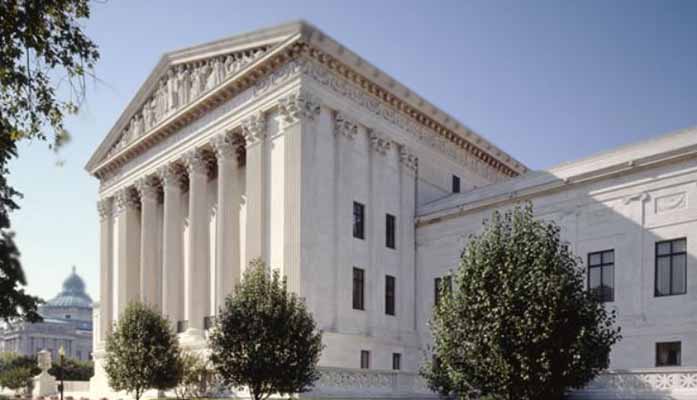
Arizona Senate President Warren Petersen (R–LD14) said he believes the U.S. Supreme Court is likely to uphold state laws that protect girls’ and women’s sports, following oral arguments in a closely watched case on whether biological males may compete in female athletic competitions.
Petersen attended oral arguments in West Virginia v. B.P.J. in Washington, D.C., where the Court heard challenges to state-level laws restricting participation in girls’ sports based on biological sex.
“It was an incredible experience to be in the Supreme Court with the justices in the room hearing their arguments,” Petersen said in an interview with AZ Free News following the hearing. “If I’m reading the room, I think we win this six to three.”
Petersen explained that much of the questioning from the Justices centered on the definition of sex under the law, rather than transgender status itself. “What it’s really boiling down to is the definition of sex,” he said. “They’ve conceded that it’s about sex. They’re not even arguing that it’s about transgender status.”
He described a moment during questioning in which Justice Alito pressed attorneys defending the challenge to the laws on how to define the term “woman,” calling the exchange revealing.
Petersen and House Speaker Steve Montenegro (R-LD29) joined the case through an amicus brief in September 2025 after Arizona Democrat Attorney General Kris Mayes declined to defend the Save Women’s Sports Act. Under Arizona statute, that authority shifted to legislative leadership.
“Unfortunately, you have an attorney general who’s not willing to defend our laws,” Petersen said. “But fortunately, the statute gives the Senate President and the Speaker standing. We were able to intervene and defend the law, and we’ve taken it all the way here.”
Petersen characterized the law as “common sense” and said lawmakers felt compelled to see it defended at the highest level.
“This is the same Women’s Sports Act to protect our girls and make sure they have these opportunities,” he said. “This law needed to be defended.”
Beyond athletics, Petersen said the case raises broader questions about state authority and federal overreach. “If they get this wrong, it would be devastating,” he said. “It would mean that your daughters, your granddaughters, your sisters—their chances to compete in sports and be champions—those dreams are shot.”
Petersen noted that while most states have enacted protections for girls’ sports, a Supreme Court ruling striking those laws down nationwide would leave states with no recourse. “At least if they leave it to the states, there would be some safe harbors,” he said. “If they ruled against everybody, there would be nowhere girls could go.”
Critics of the laws argue that they discriminate against transgender individuals. Petersen rejected that framing, saying the laws preserve opportunities while maintaining fairness.
“They still have opportunities,” he said. “They can be part of a co-ed team; they can play with people of the same biological sex or even create their own leagues. What they can’t do is play in biological girls’ sports.”
He added that the issue is necessary and unavoidable, pointing to female athletes who have lost titles and opportunities under policies that allow biological males to compete in girls’ categories.
If the Supreme Court upholds the laws, Petersen said no new legislation would be required in Arizona. “We already have the law,” he said. “We just want the law that we passed to be upheld.”
If the Court issues a narrow or adverse ruling, Petersen said lawmakers may be forced to explore alternative legislative approaches, though he cautioned that a sweeping loss could take years—or longer—to undo.
“That’s why it’s so critical they get it right,” he said. “If they get it wrong, it’s no different than Roe v. Wade. It could be decades, if ever, until it gets fixed.”
The Court is expected to issue its ruling as late as June this year, according to Petersen.
Matthew Holloway is a senior reporter for AZ Free News. Follow him on X for his latest stories, or email tips to Matthew@azfreenews.com.
by Ethan Faverino | Jan 12, 2026 | Education, News
By Ethan Faverino |
Arizona State Superintendent of Public Instruction Tom Horne hailed a unanimous decision by the Arizona Court of Appeals that reinstates a lawsuit against the Mesa Unified School District (MPS), reinforcing parental rights in cases involving children’s gender identity.
The ruling allows parents to pursue legal action against public schools that withhold critical information about a child’s intent to identify as a gender different from their biological sex.
“Schools are not substitutes for parents, and they have zero right to withhold information that parents are entitled to know,” said Horne. “Arizona law is very clear on the right of parents, and they should be informed when a child expresses a desire to be identified as a sex other than the one to which they were born. The Court of Appeals was unanimous in their decision allowing a lawsuit filed against the Mesa school district by a parent to proceed. I am very pleased that the Court made the correct ruling to defend parental rights and remind schools they should follow the law or risk legal action.”
The case is of a parent whose daughter, referred to as “Megan” (a pseudonym), was a student at an MPS junior high school during the 2022-23 school year. According to court documents, MPS had implemented “Guidelines for Support of Transgender and Gender Nonconforming Students” since at least 2015. These guidelines included procedures for school staff to support students asserting a gender identity different from their sex assigned at birth, such as updating their name or pronouns in internal systems without necessarily notifying parents.
In “Megan’s” situation, school personnel allowed her to use the male name “Michael” among teachers and students, while deliberately avoiding updates to the district’s electronic system to prevent automatic parental alerts.
The guidelines instructed staff not to disclose a student’s transgender status or gender nonconforming presentation without the student’s consent, even to parents.
This included options for students to specify whether their identity could be shared with school leadership, teachers, or peers—but parental notification was not mandated unless a change was requested in the school’s internal system.
“Megan’s” parents discovered the name change in October 2022 and confronted the school officials. In a December 2022 meeting with the principal, they learned that the school had intentionally bypassed the notification system to keep the matter secret.
The principal admitted that even if the parents had requested updates on name changes, pronouns, or gender-related issues, MPS policy prohibited informing parents.
The parents demanded that all staff cease using “Michael” and revert to Megan’s given name, but at a February 2023 meeting with teachers, all but one continued using the preferred name.
The parents further claimed that the school’s actions encouraged Megan to lie to her parents, straining the family relationship and delaying necessary mental health support.
Once her parents were fully informed, Megan was able to speak openly with them and a mental health counselor. Within a month, her issues were resolved, and she became comfortable presenting herself as female and using her given name. The lawsuit, joined by MPS board member Rachel Walden, alleges violations of Arizona’s Parents’ Bill of Rights, which protects parents’ authority over their children’s upbringing, education, health care, and mental health. It also cites prohibitions against public employees compelling children to withhold information from parents, requirements for advance notification on sexuality-related instruction, and bans on mental health screening without consent.
Ethan Faverino is a reporter for AZ Free News. You can send him news tips using this link.
by Matthew Holloway | Oct 13, 2025 | Education, News
By Matthew Holloway |
As enrollment dips and two schools are considered for repurposing, Scottsdale Unified School District (SUSD) is promoting a biking event for “girls, nonbinary youth, and gender-expansive” children in family-facing communications.
In an October 9th post to X, parental rights organization Scottsdale Unites for Educational Integrity (SUEI) wrote: “Parents confirmed @ScottsdaleUSD is using their district-wide communication system to promote an event for ‘nonbinary youth’ and ‘gender expansive’ children. Girls in Gear (and apparently boys, too) claims that these lessons are Social Emotional Learning. Email: GovBRD@SUSD.org.”
The “Girls in Gear” program, which focuses on cycling skills and social-emotional learning, includes participants who identify outside traditional gender norms, according to a district email sent to families. A post on X by SUEI shared the event flyer, which lists the inclusive criteria.
According to the Girls in Gear website, the event “is open to any rider who identifies as a girl. If a rider identifies as a girl, then the rider is welcome to participate in Girls in Gear.”
In a reply to the SUEI post, Arizona Women of Action drew attention to the contradiction that SUSD is continuing to focus on gender ideology despite reduced enrollment, school closures under discussion, and at-risk federal funding.
Arizona Women of Action wrote in its reply:
“1. Identifying as a gender that is not innate (boy or girl) is often the first step of the ‘trans’ path. By Scottsdale Unified recognizing these identities (non-binary, gender expansive) the district can contribute to a child’s ‘trans’ path. Change in pronouns and presentation are next, irreversible puberty blockers and hormones follow.
2. This is no longer a girls’ event if non binary or gender expansive youth can participate.
3. SUSD is closing schools. This kind of choice could be a contributing factor to low enrollment.
4. Isn’t there an EO about this? Yes. And schools can lose federal funding.”
The organization also called up on followers to call “the U.S. Department of Education’s Office for Civil Rights (OCR) at 1-800-421-3481 to report non-compliance.”
District reporting in February revealed that under SUSD Superintendent Dr. Scott Menzel, enrollment has consistently dropped. As of February 2025, enrollment stood at 19,367, a decrease of 390 students from 2024, down 355 from the previous year. Over the past seven years, enrollment has dropped precipitously by 13%, from 22,608.
In response to the enrollment trends, the SUSD governing board voted 3-2 on October 7th to advance a proposal to repurpose Echo Canyon K-8 School and Pima Elementary School for the 2026-27 school year, according to AZ Family. Menzel addressed the looming closures with families in a September message and cited under-enrollment at both schools.
The promotion of the program also comes amid federal policies addressing gender-related content in schools. President Trump’s Executive Order 14190, issued January 29, 2025, directs the withholding of federal funds from K-12 programs that promote gender ideology or other specified materials, and reestablishes the 1776 Commission for patriotic education. Additionally, a Department of Health and Human Services directive on August 26, 2025, requires states to certify that sex education programs do not reference transgender youth or gender ideology to receive funding, affecting 46 states and territories, including Arizona. Several Democratic-led states have filed lawsuits challenging the directive. Despite pending legal action, the Executive Order and HHS Directive both remain in effect at present.
SUSD has previously addressed transgender-related policies, including student transition plans and LGBTQ curriculum, and run afoul of the Arizona Department of Education and parents alike. In prior incidents, the district faced questions over notifications to parents and the use of school spaces for related activities, such as a “sexuality-safe-space” at Mohave Middle School, as reported by the Arizona Daily Independent.
Last month, a BrainPOP lesson on LGBTQ topics prompted review under state DEI restrictions, with Superintendent of Public Instruction Tom Horne citing potential violations.
Other community responses in the thread include comments from users expressing concern over the event’s inclusivity and district priorities.
Matthew Holloway is a senior reporter for AZ Free News. Follow him on X for his latest stories, or email tips to Matthew@azfreenews.com.