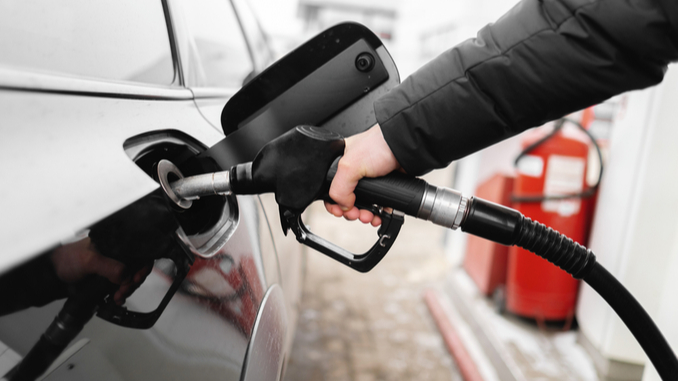
The Phillips 66 Los Angeles Oil Refinery, in operation for 102 years, is set to shut down in October and will leave California with a dwindling network of just eight refineries remaining. The closure places the already fragile supply lines of gasoline and diesel fuel for California, Arizona, and Nevada in question.
All three states utilize California’s Low Carbon Fuel standard for fuel known as California Reformulated Gasoline (CaRFG), which is 90% petroleum-based gasoline and 10% ethanol, ostensibly designed to reduce air pollution and decrease emissions of smog-forming toxins. The closure is expected to have a wide impact across the region on prices for gasoline, diesel, and even aviation fuels.
The Phillips 66 refinery accounts for approximately 8.57% of California’s overall refinery capacity. The closure, announced last year, drew bipartisan pleas from Arizona and Nevada’s governors to California’s Governor Gavin Newsom who asked him not to authorize new legislation that allows California to demand more fuel be held in-state for California’s needs, regardless of outside demand.
Arizona’s Democrat Governor Katie Hobbs and Nevada’ Republican Governor Joe Lombardo said in a joint statement, “It is evident that increased regulatory burdens on refiners and forced supply shortages will result in higher costs for consumers in all of our states. With both of our states reliant on California pipelines for significant amounts of our fuel, these looming cost increases and supply shortages are of tremendous concern to Arizona and Nevada.”
According to OANN, a spokesman for Newsom told the outlet that the California law will “prevent price spikes that cost Californians upwards of $2 billion last year, giving the state more tools to require that petroleum refiners backfill supplies and plan ahead of maintenance.” Although he reassured Californians at the time that “the state has the tools to make sure they backfill supplies and plan ahead for maintenance,” he made no such reassurance to Arizona or Nevada.
California Republican Assemblywoman Kate Sanchez warned in a post to X, “Expect CA gas prices to skyrocket and more refineries to shut down as Sacramento Democrats double down on their agenda to exterminate affordability and make a middle-class life impossible to achieve for millions.”
Expect CA gas prices to skyrocket and more refineries to shut down as Sacramento Democrats double down on their agenda to exterminate affordability and make a middle-class life impossible to achieve for millions. https://t.co/A8qAJykYXg
Newsom accused Hobbs and Lombardo of repeating Big Oil talking points, saying their concerns reflected “the oil industry’s talking points rather than the facts.” He claimed that the California Energy Commission will be able to dampen price spikes and supply shortages with a spokesman calling their letter a “stunt” to appease “Big Oil Donors.”
Newsom signed the bill over the objections of both neighboring governors.
California is poised to lose a significant portion of its oil refining capacity by the end of 2026, as Valero announced the closure of its Benicia refinery—its second largest in the state—just months after Phillips 66 declared plans to shut down its Los Angeles facility. Together, the closures will eliminate roughly 17.4% of California’s total refining output, a shift expected to ripple beyond state borders, potentially triggering gasoline price spikes and supply disruptions in neighboring Arizona and Nevada.
These developments come on the heels of new state regulations introduced under Governor Gavin Newsom, which impose strict oversight on refinery operations. The rules limit when refineries can conduct maintenance, mandate increased inventory storage, and aim to curb perceived “price manipulation.” However, the energy industry and regional leaders argue these measures are accelerating refinery shutdowns and undermining fuel stability across the Southwest.
California operates as an “energy island,” with limited ability to import refined fuel from other U.S. regions due to the federal Jones Act, which restricts domestic shipping to U.S.-built and -crewed vessels. With U.S. shipbuilding capacity far behind that of countries like China, domestic maritime transport remains scarce and costly. As a result, California will increasingly rely on foreign tanker ships for fuel imports—an emissions-intensive, volatile, and expensive solution.
Governor Newsom claims California’s high gas prices are due to refinery “price gouging,” despite his own administration’s lack of evidence. His regulatory push has faced bipartisan opposition, including a joint letter from Arizona Governor Katie Hobbs and Nevada Governor Joe Lombardo warning that new refinery laws could lead to “higher costs for consumers” in all three states. Chevron echoed this concern, stating that the regulations would increase both the likelihood and duration of fuel shortages, while permanently raising consumer prices.
Refineries in California are already operating at or near full capacity. With no new facilities planned—especially as the state pushes to ban new gas-powered car sales by 2035—any closure tightens supply margins. The upcoming shutdowns will reduce daily refining capacity to 1.34 million barrels, well below the state’s consumption level of 1.8 million barrels per day, necessitating a shortfall of over 140 million barrels per year.
Due to California’s requirement for a specialized gasoline blend, few out-of-state refiners can meet demand, further narrowing supply options. These vulnerabilities were recently exposed when the temporary shutdown of the Martinez refinery sent gas prices soaring across the region, including in Arizona and Nevada.
With California gas prices already the nation’s highest—averaging $4.86 per gallon—experts warn that future supply shocks could bring about even more dramatic volatility and potential fuel shortages across the Southwest.
Jonathan Eberle is a reporter for AZ Free News. You can send him news tips using this link.
President Joe Biden’s time in the White House is mercifully coming to an end. He is now officially a lame duck with six months to go.
Biden was a victim here of a corrupt Democratic machine that — along with a complicit media — thought they could pull off a grand election-year deceit, despite his failing cognitive abilities. The Democratic establishment and a compliant media convinced millions of primary voters that Biden was of sound mind and ready to serve four more years. This lust for power put America in danger.
How could they be so unpatriotic?
So, where will Biden stand in the history books? He was not a failed president because of his declining cognitive abilities. It was his policies that wrecked America.
It is hard to point to a single policy that he got right. On the economy, he was catastrophically bad.
The trillions of dollars of debt he rung up bought nothing. He sent inflation to the highest levels in almost forty years.
The average family lost $2,000 of income after inflation during his reign. More people died of COVID during his presidency than Trump’s — despite the availability of the vaccine.
Interest rates rose. Biden declared war on American energy. He put America back into the Paris Climate Accord—and the rest of the world went on using more fossil fuels than ever. By impeding U.S. oil and gas production and pipelines he played into the hands of our enemies — China and Iran.
Gas prices rose. Small business confidence sagged. Poverty rates rose.
Then there was the sheer incompetence. The bungled Afghanistan withdrawal was a national security disaster. The border became a broken dam with millions seeking to illegally enter the country. The government spent $7.5 billion on electric vehicle chargers and only a handful got built.
Biden gave away hundreds of billions of dollars for an illegal and immoral student loan forgiveness program. He put regulators in charge of key agencies even though — or because — they hate business. A majority of his appointees had no business experience. It showed.
When he departs the White House in the months ahead he will leave the nation poorer, weaker, more divided, more in debt, more vulnerable, and less respected than when he entered office.
This was a man who pledged to unite the country and did just the opposite. He deserves to go down in history as one of the five worst presidents of the 20th and 21st century.
Here is my list starting with the worst: 1) Woodrow Wilson; 2) Herbert Hoover: 3) Jimmy Carter; 4) Joe Biden; 5) Barack Obama.
Now the Democrats want to run Vice President Kamala Harris, who was on board with every Biden policy and helped oversee the worst border catastrophe in modern history.
Just when you thought things could not get any worse.
Stephen Moore is a contributor to The Daily Caller News Foundation, visiting fellow at the Heritage Foundation, and a co-founder of the Committee to Unleash Prosperity.
Rep. Andy Biggs (R-AZ) says “Bidenomics” is to blame for the surging gas prices in his district, the fifth congressional district.
According to Biggs, “Bidenomics” includes a “war on domestic energy,” meaning the oil and gas industry.
The average gas price in Arizona, per AAA, sits at about $4 per gallon, a steady rise from prices over the last month but a slight decline from the average last year, when prices hit about $4.30 a gallon.
Arizona’s averages have consistently sat higher than the national averages over the past year.
“Biden’s war on domestic energy hits Americans in the pocketbook. Gas is over $4.00/gallon in my district!” said Biggs. “Arizonans are suffering thanks to Bidenomics.”
Biden's war on domestic energy hits Americans in the pocketbook.
The highest-ever recorded average for gas prices in Arizona was nearly $5.40 in the summer of 2022.
AAA has attributed the recent steady rise in gas prices to the increase in oil prices. Crude oil hit over $10 per barrel earlier this year, attributed to Ukrainian attacks on Russian oil infrastructure and increased conflicts in the Middle East.
The Biden administration has reportedly urged Ukraine to cease its attacks on Russian oil refineries, out of concern for rising gas prices. However, Ukraine President Volodymyr Zelensky has dismissed those requests from U.S. officials, telling The Washington Post that the U.S. lacks authority to dictate his military strategy.
“We used our drones. Nobody can say to us you can’t,” said Zelensky.
Mapping of gas prices nationwide reflects a trend for prices to be highest around the West Coast, lowest around the midsection of the country, and slightly higher again around the East Coast.
Another factor for the upward surge in gas prices relates to the Biden administration’s increased pressures on oil and gas production — such as the plan announced last fall to scale back leasing for offshore oil and gas drilling — in an attempt to increase American reliance and support for “clean energy” alternatives.
Biden campaigned on the promise to abolish the oil industry, and “end fossil fuel.” His first executive order laid some of the framework to fulfill that promise, such as imposing a moratorium on certain oil and natural gas leasing activities, and directing agencies to revise fuel and emissions standards for vehicles.
On Thursday, the Biden administration announced $20 billion in grants to private companies for clean energy initiatives.
On Wednesday, the Department of Energy canceled two purchases to refill the Strategic Petroleum Reserve (SPR). Agency officials indicated a desire to avoid buying back oil above its target price of $79 per barrel, since the cost per barrel is around $87.
The Biden administration has depleted the SPR by about 45 percent.
Last month, the Biden administration announced stricter emissions standards for heavy-duty vehicles such as freight trucks and buses. Available technologies to meet their new emissions standards include the advanced internal combustion engine vehicles, hybrid vehicles, plug-in hybrid electric vehicles, battery electric vehicles, and hydrogen fuel cell vehicles.
In January, the White House paused permitting on liquified natural gas (LNG) exports.
AZ Free News is your #1 source for Arizona news and politics. You can send us news tips using this link.
As Christmas approaches, Americans are making a list and checking it twice — not to determine who’s been naughty or nice, but to determine what they can afford this Christmas. For all too many of them, the answer is, not much, and certainly not as much as before Joe Biden became president.
That creates a political problem for the president, because even as he’s spent the better part of the past six months touting the benefits of “Bidenomics” (suggesting the word connotes a rising standard of living for the majority), the American people have come to a different far different conclusion. For them, “Bidenomics” means, “I can’t afford it.”
A recent Bloomberg News analysis shows why: A basket of goods for the average family that cost $100 before the COVID-19 emergency costs $119.27 today. “Since early 2020,” says the piece, “prices have risen about as much as they had in the full 10 years preceding the health emergency.”
Electricity is up 25% since January 2020, and groceries the same. A pound of ground beef is up from $3.29 to $5.23; two pounds of chicken breast have risen from $6.12 to $8.44; and coffee has gone from $4.17 to $6.18.
You won’t save any money going out to eat — restaurant food is up 24%.
And getting there isn’t any less expensive, either. After peaking around $5 per gallon last year, gasoline has dropped somewhat, but gasoline prices today are still 60% higher than they were on the day Joe Biden took office.
Because of Biden’s bad energy policies (read: shutting down pipelines; stricter EV regulations; no leases for drilling; and new taxes on coal, oil, and natural gas, among others), energy prices have gone up overall by 30% in less than three years — electricity is up 25%, propane gas is up 23%, natural gas is up 25%, and diesel fuel is up 47%.
Housing, too, is far more expensive, and nearing unaffordable. In January 2021, the monthly mortgage payment on a median-priced home was $989. Today, that number has more than doubled, to $2,041. Mortgage rates have more than doubled since Biden took office, pricing many families out of the market – and forcing sellers to pull back and sit on properties they’d prefer to sell, but cannot.
Not surprisingly, American families have turned to their credit cards just to make ends meet. The result: Americans now hold more than $1 trillion in credit card debt. That’s a record high.
It’s no wonder Biden’s approval ratings, and, specifically, his approval rating on his handling of the economy, are down. In this recent survey, he’s at 40% approve, 49% disapprove on his overall job rating, and 36% approve, 61% disapprove on his handling of the economy. A full 76 percent said the economy was either “not so good” or “poor” when asked to rate economic conditions right now. Just 26% of the survey respondents said Biden’s economic policies had helped the economy “a lot” or “somewhat,” while 48 percent said his policies had hurt the economy “somewhat” or “a lot.”
And in this poll’s version of the killer question Ronald Reagan posed in his one debate with Jimmy Carter in October of 1980 – “Are you better off today than you were four years ago?” – just 4% say they are “much better off” and 10 percent say they are “somewhat better off” when asked how they have fared since Joe Biden became president.
Policies have consequences, and Americans are suffering under the real-world consequences of Joe Biden’s policies.
It’s bad enough that Americans have to suffer under the consequences of Biden’s bad policies. What makes it worse is that Biden and his administration are doubling down on their bad policies. They refuse to learn from the real-world experience of seeing the results of their policies; instead, they continue to act as if those consequences are not visible to anyone, let alone everyone.
Biden and his Democrat allies know they want more government spending, more government programs, more government regulation, more government power and control over our lives.
Meanwhile, Rudolph goes hungry, because Santa can’t afford to feed his reindeer.