by Dan Titus | Jun 1, 2024 | Opinion
By Dan Titus |
People in states that have signed on to the EPA/ State Climate Action Plan program can no longer say, “it’s only happening in California” because California is the United Nations blueprint for the entire United States.
On September 20, 2023, the Biden administration met at the Sustainable Development Summit in New York with the goal of recommitting to the [United Nations] 2030 Agenda for Sustainable Development and the Sustainable Development Goals—SDGs. A White House fact sheet stated, “The United States is committed to the full implementation of 2030 Agenda and the SDGs, at home and abroad. At their core, the SDGs seek to:
- Expand economic opportunity – This means public-private partnerships, which is crony capitalism. In this scheme there are winners and losers, where profits are privatized, and losses are socialized on the backs of middle-class Americans.
- Advance social justice – This means placating and advancing people based on their skin color. At its core it is discriminatory.
- Promote good governance – This skirts our elected form of government and injects unelected special interest initiatives into our lives, where no one gets to vote.
- Ensure no one is left behind – This means catering to protected classes and minorities in order to create “capacity building” for initiatives and redistributive wealth schemes. Under Diversity and Inclusion (DEI), these classes are awarded “equity” and “inclusion” based on their skin color.
The Biden administration hired people from California and put them into positions in all federal agencies relating to climate change in order to fulfill his Green New Deal plan. Therefore, the plan mirrors what California has done at the national level.
The EPA/State Climate Action Plan program are through cooperative grants, (Climate Pollution Reduction Grants, CPRG) which have “take it or leave it” terms and conditions. These agreements bind states and local jurisdictions into creating GHG inventories to reduce GHG emissions, which eventually wind their way into administrative law, constraining property and individual rights. These grants force United Nations style Sustainable Communities Strategies (SCS) that addresses the U.N. 2030 Agenda for Sustainable Development Goals (SDGs), which the Biden administration has committed to.
The EPA pitches climate action plans as voluntary. This is not true. Once a state agrees to take grant money, they sign on to mandatory elements in the grant terms and conditions contract — They are now in the United Nations/California club.
The EPA/State Climate Action Plan program is between the federal EPA, a “Partner” and unelected state agencies, boards, bodies, or commissions. Therefore, the entire process is being implemented without the consent of citizens and oversight of state legislatures – no one gets to vote. In essence, most states, including so-called conservative states, are selling out for bribes, aka grant money.
According to the EPA, states submitted Priority Climate Action Plans (PCAPs) under President Biden’s Inflation Reduction Act. The EPA/State Climate Action Plan program was hurried into place because there was concern that there could be a Republican change in the November 2024 election, which could jeopardize the program; hence, the name “priority” climate action plan in the first phase of the plan.
In 2023, under the first phase of the $5 billion program, the EPA made a total of $250 million in grants available to states, the District of Columbia, Puerto Rico, 80 MSAs, four territories, and over 200 Tribes and Tribal consortia to develop ambitious climate action plans that address greenhouse gas emissions. 45 states are now covered by a climate action plan. 5 states: Florida, Iowa, Kentucky, South Dakota and Wyoming decided not to participate.
The program is a two-phase federal grant program that allows the state to develop and implement ongoing community-driven projects that reduce ambient air pollution.
- Phase I provided $250 million for noncompetitive planning grants, of which states were eligible for $3 million each to support the development of a climate action plan.
- Phase II includes $4.6 billion in competitive implementation grants to execute the projects identified in the climate action plan.
The deadlines for submission of PCAPs are:
- Priority Climate Action Plan – Creates an inventory of the state’s primary GHG generators. Due March 1, 2024 (states and Metropolitan Statistical Areas (MSAs) and due April 1, 2024 (tribes, tribal consortia, and territories)
- Comprehensive Climate Action Plan – A plan to cut that pollution statewide. Due two years after planning grant award, or approximately mid-2025 (states and MSAs) and due at the close of the grant period (tribes, tribal consortia, and territories)
The EPA/State Climate Action Plan program seeks to create arbitrary greenhouse gas (GHG) emission reductions in order to install unconstitutional hidden fees and taxes on hard working Americans. This is accomplished by doing a greenhouse gas inventory for carbon (CO2) and methane.
Once inventories for GHGs have been established, reduction goals can be set by States and local jurisdictions. Taxes and fees follow: GHG pricing mechanisms like cap and trade programs for energy producers; congestion pricing and vehicle mileage taxes for cars and trucks; mandatory retrofitting of commercial and existing residential homes to “green” building standards; zero emission vehicle requirements; increased gasoline, natural gas, and heating oil prices. For example, categories for emission controls include:
- Transportation
- Electricity Generation
- Industry
- Agriculture
- Commercial and Residential Buildings
- Waste and Materials Management
- Wastewater
- Land Use, Land Use Change, and Forestry
The EPA provided states with an outline template to follow in the development of their PCAPs called the, Priority Climate Action Plan Guidance: An Outline for States and MSAs. Therefore, the State PCAPs are very similar in their presentation. For example, PCAP lists required elements:
- GHG Emissions Inventory,
- Priority Measures and Reduction Estimates,
- Benefits Analysis,
- Low-Income and Disadvantaged Communities (LIDAC) Benefits Analysis,
- Review of Authority to Implement,
- Intersection with Other Funding Availability, and
- Coordination and Engagement.
State legislatures did not pass PCAPs. It all happened through interagency coordination: EPA and state agencies, which are under the control of Governors.
Arizona State University and Northern Arizona University for the Arizona Governor’s Office of Resiliency were the lead players in The Clean Arizona Plan: Priority Climate Action Plan State of Arizona. They coordinated the obligatory public outreach required by EPA grants, which included feedback from numerous special interest stakeholders who directly benefit from environmental initiatives, while hard working residents are relegated to answering simple questions on outcome-based online surveys — All of this is at the detriment to Arizona’s residents.
People need to contact their state’s Governor and condemn them for signing on and creating commissions and task forces while utilizing faux stakeholder consensus to justify existing PCAPs and Comprehensive Climate Action Plans already in the works. They need to notify their state legislatures that this is happening and ask them if they know about this EPA program.
Also, people need to remind elected officials of their constitutional oaths to protect individual property rights, as evidenced in a Paramount Network’s “Yellowstone” season one episode: Patriarch John Dutton is confronted by a group of Communist Chinese tourists who are trespassing on his land. He demands that they leave and when he explains that he owns the land, one trespasser states, “It is wrong for one man to own all this.” Dutton responds, “This is America, we don’t share land here!”
People in states that have signed on to the EPA/State Climate Action Plan program can no longer say, “it’s only happening in California” because California is the United Nations blueprint for the entire United States.
Dan Titus is affiliated with the American Coalition for Sustainable Communities (ACSC). Their mission is sustaining representative government; not governance, by collectivist-oriented unelected agencies and commissions.
by Daniel Stefanski | May 18, 2024 | News
By Daniel Stefanski |
Members of Arizona’s Republican legislative leadership are again taking action against harmful energy policies for their state.
Earlier this week, Arizona Senate President Warren Petersen and House Speaker Ben Toma sued the Environmental Protection Agency (EPA) over select regulations targeting gas-powered vehicles. The two legislative leaders also signed onto another lawsuit, which was led by a coalition of state attorneys general from across the nation, that challenged a California rule that would also have adverse effects in Arizona.
Joining Petersen and Toma on the legal filings in federal court against the EPA was the Arizona Trucking Association.
“These rules exceed the EPA’s statutory authority, are arbitrary, capricious, and an abuse of discretion,” said Senate President Warren Petersen. “In the absence of our Attorney General holding the Biden Administration accountable, the Legislature will gladly protect our citizens from this egregious abuse of power.”
In an exclusive comment to AZ Free News, Speaker Ben Toma said, “This latest California regulation attempts to override federal law, threatens to mandate the use of battery-electric vehicles, and targets owners and operators of trucking fleets. Arizona is among the top states that Californians have fled to in recent years. I joined this lawsuit to protect Arizona’s growing economy, business-friendly policies, and interstate commerce that produces fuel tax revenues for the state.”
“The EPA’s tailpipe emissions rules prioritize politics over science, posing a greater threat to public health by inflating the cost of essential and everyday goods,” said Tony Bradley, President & CEO of the Arizona Trucking Association. “Despite the trucking industry’s remarkable progress—already reducing 98.5% of emissions—we’re dedicated to further advancements through innovation and investment. Yet, the EPA’s impractical mandates, targeting a mere 1.5% of remaining emissions, burden us with unrealistic expectations and exorbitant costs. We proudly join the Arizona Legislature in challenging these detrimental regulations.”
One of the lawsuits asked the U.S. Court of Appeals for the District of Columbia Circuit to “declare [the] EPA’s final action (Greenhouse Gas Emissions Standards for Heavy-Duty Vehicles – Phase 3) unlawful and vacate it.” The other took legal aim at the EPA’s final rule for Multi-Pollutant Emissions Standards for Model Years 2027 and Later Light-Duty and Medium-Duty Vehicles.
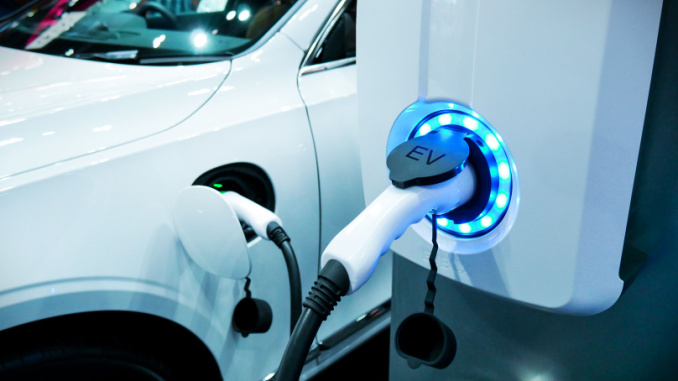
According to Arizona Senate Republicans, these regulations from the EPA “require by 2032 nearly 70% of all new vehicles and 25% of all new semitrucks or similar heavy-duty vehicles sold in the United States to be electric, guaranteeing to raise the costs of everything Arizonans purchase, and without adequate charging infrastructure in place or the necessary power grid capacity.”
The California lawsuit was led by the State of Nebraska and challenged California’s “ban [on] internal-combustion engines in medium- and heavy-duty vehicles.” Arizona Senate Republicans pointed out that “the rule applies to any fleets headquartered in Arizona, if they operate within California, which will create dire impacts to the supply chain and dramatically raise costs for Arizona trucking companies that will inevitably be passed onto their customers.”
“The climate change agenda from Democrats imposes expensive and unattainable goals on the automotive and trucking industries, which will undoubtedly lead to soaring consumer prices,” said Senator Frank Carroll, vice chairman of the Senate Committee on Transportation, Technology & Missing Children. “We don’t have the infrastructure to power these vehicles, and the average working-class citizen or trucking business can’t afford to purchase them.”
Daniel Stefanski is a reporter for AZ Free News. You can send him news tips using this link.
by Daniel Stefanski | Apr 4, 2024 | News
By Daniel Stefanski |
Arizona legislative Republicans are requesting the state’s governor to take action to protect water and wastewater systems from cyberattacks.
On Tuesday, the Arizona State Senate Republican Caucus called on Governor Katie Hobbs “to take swift action to protect Arizona’s critical infrastructure from adversary nations seeking to unleash harm on the United States.”
The demand from the lawmakers follows a letter from the White House to state governors, warning of “the impending threat of cyberattacks.”
In that letter, which was signed by the Administrator of the Environmental Protection Agency and the Assistant to the President for National Security Affairs, the White House identified two of those “recent and ongoing” threats. The first was from “threat actors affiliated with the Iranian Government Islamic Revolutionary Guard Corps.” This threat, according to the letter, has “carried out malicious cyberattacks against United States critical infrastructure entities, including drinking water systems.”
The second threat was from “The People’s Republic of China state-sponsored cyber group known as Volt Typhoon.” This adversary, per the letter, “has compromised information technology of multiple critical infrastructure systems, including drinking water, in the United States and its territories.”
Senate President Warren Petersen issued a statement in conjunction with his Caucus’ call to the governor, saying, “Water is vital to lives and livelihoods. It’s concerning the Governor has yet to share any information with the Legislature, or the public, on this matter. What’s even more concerning is at a recent stakeholder meeting on a completely separate issue, a representative from the Arizona Department of Emergency and Military Affairs expressed to our lawmakers no knowledge of this warning from the White House.”
According to the Administration’s communication, these cyberattacks “have the potential to disrupt the critical lifeline of clean and safe drinking water, as well as impose significant costs on affected communities.”
Petersen also shared his thoughts on what the governor should do in order to protect the state from these cyberattacks. He wrote, “I encourage her to prioritize the safety and wellbeing of our citizens by taking steps to protect Arizona’s critical infrastructure from enemy nations who are a known threat to our state and country. This includes signing our legislation crafted specifically to mitigate these threats, such as SB 1403, SB 1340, and SB 1123.”
SB 1403, sponsored by Senator Janae Shamp, would “make it generally unlawful for specified foreign principals to purchase, own, acquire by grant or devise or have any other interest in (hold) real property” – according to the Arizona House overview.
SB 1340, sponsored by Senator Frank Carroll, would “prohibit a publicly managed fund from holding an investment in a foreign adversary, a state-owned enterprise of a foreign adversary, a company domiciled within a foreign adversary, or any other entity owned by or domiciled in a foreign adversary; or investing or depositing public monies in a bank that is domiciled in, or has a principal place of business in, a foreign adversary” – according to the summary from the Arizona House.
SB 1123, sponsored by Senator Wendy Rogers, would “prohibit a business or governmental entity in Arizona from entering into an agreement involving critical infrastructure if certain criteria apply.”
The letter from the Biden Administration officials requested the help of state governors “to ensure that all water systems in your state comprehensively assess their current cybersecurity practices to identify any significant vulnerabilities, deploy practices and controls to reduce cybersecurity risks where needed, and exercise plans to prepare for, respond to, and recover from a cyber incident.”
Daniel Stefanski is a reporter for AZ Free News. You can send him news tips using this link.
by AZ Free Enterprise Club | Feb 18, 2024 | Opinion
By the Arizona Free Enterprise Club |
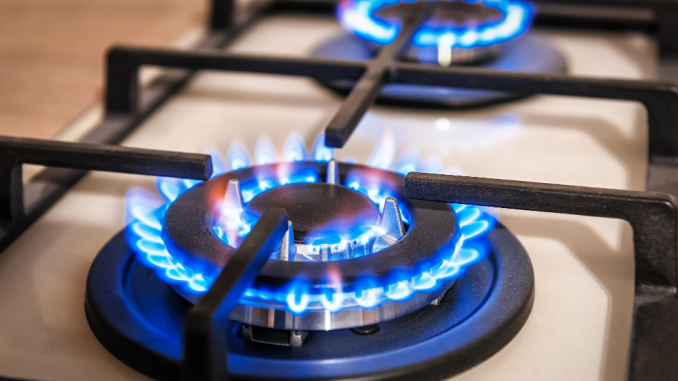
“Do as we say, and not as we do.” That is typically how it goes with government. In this case, the “do as we say” means you giving up your gas stoves and cars. The “not as we do,” well, the Vice President of the United States still openly enjoys her very own gas stove, and don’t expect the President to give up Air Force One or his large fleet of gas limousines and cars anytime soon. Also, you probably shouldn’t sit in anticipation for the activists to give up the private jets they fly into climate conferences to scheme about how to limit your access to gas devices, or their yachts. Remember, it’s do as we say, not as we do.
Normally, the left will try to hide and subvert their goals. That’s what they did with their efforts to ban gas stoves: have the media tell everyone it was a conspiracy theory, and that no one wanted to take them, meanwhile having several agencies draft complicated rules to basically regulate them out of existence. Now, however, they have become more emboldened to just come right out and say it: we are coming for your gas cars…
>>> CONTINUE READING >>>
by AZ Free Enterprise Club | Nov 13, 2023 | Opinion
By the Arizona Free Enterprise Club |
Ozone levels in Maricopa County are lower today than they were 20 years ago. And the reality is that most of the ozone currently in the region is either due to natural events or coming from China. But you won’t hear facts like that from the Left. Instead, they’d rather hatch a scheme to enforce their climate change agenda on the American people, and one of their biggest targets in the past year has been Arizona. Now, after failing to convince our state to ban gas cars and gas stoves, the Sierra Club is attempting to use the courts to force this agenda upon us.
An Impossible Standard
Much of this began in September 2022 when the United States Environmental Protection Agency (EPA) reclassified Maricopa County as a moderate nonattainment area of ozone limits under the Clean Air Act. This basically means that, according to the EPA, Maricopa County’s ozone levels are too high and therefore our state—including its citizens, motorists, and businesses—must be forced to adopt ozone control measures. Failure to comply with these measures could mean fines, penalties, or the withholding of federal transportation dollars for Arizona.
Of course, what they won’t tell you is that the main reason our ozone levels are too high isn’t because there are more cars on the road or Arizonans like trying new recipes on their gas stoves. The main reason our ozone levels are too high is because the federal government moved the goal posts back in 2015 when the EPA dropped its acceptable ozone levels from 75ppb to 70ppb…
>>> CONTINUE READING >>>