by Matthew Holloway | Nov 22, 2024 | News
By Matthew Holloway |
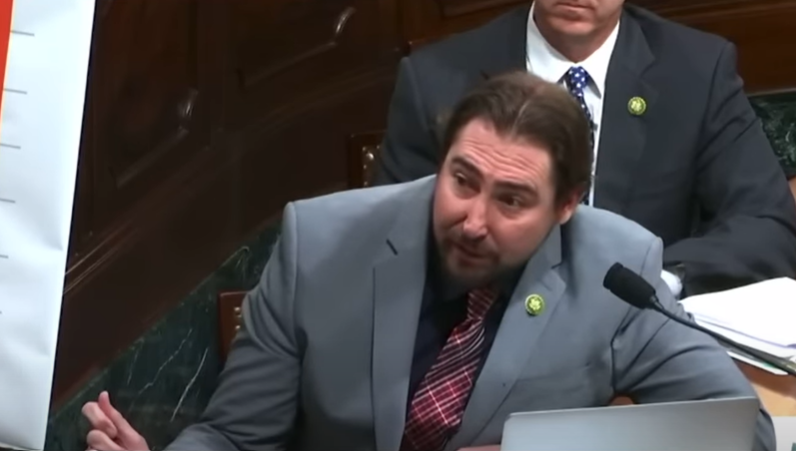
Congressman Eli Crane (R-AZ-2) announced Wednesday that H.R. 3047 which he proposed to transfer Federal Land within the Apache-Sitgreaves National Forest to the northern Arizona communities of Pinedale and Alpine, has made it through the House Committee on Natural Resources. Specifically, the bill addresses the needs for both communities for expanded cemetery space which, being surrounded by federal land, is nearly impossible for the towns or private buyers to acquire.
The bill is cosponsored by Congressman Paul Gosar (R-AZ-9) and would convey 2.5 acres of National Forest System land to Navajo County for the Pinedale Cemetery expansion and 8.06 acres of National Forest System land to Apache County for the Alpine Cemetery expansion.
The office of Rep. Crane noted that for over a decade both communities have struggle with locating appropriate cemetery space, often needing to lay loved ones to rest in cemeteries over a hundred miles away from the communities in which they lived and died.
Navajo County Supervisor Daryl Seymore wrote, “The community of Pinedale has a long and rich pioneer history, and the residents are proud of that heritage. Pinedale is a community where generations of families live, grow, and raise their families. This bill will allow families to lay their loved ones to rest in the place that their family member loved so much. I’m grateful to Congressman Crane and his staff for their work on this bill and his support of the Pinedale community.”
Crane said in a statement, “I’m pleased to report that my bill passed out of the House Committee on Natural Resources and awaits consideration on the House Floor. These communities have storied histories, and they deserve to lay their loved ones to rest in the place that means so much to them.”
The Congressman credited the community of the Church of Jesus Christ of Latter Day Saints adding, “This piece of legislation is one of the first bills I introduced in Congress and is a testament to the strength of the Latter-Day Saints Community in Northern Arizona. I appreciate Supervisors Seymore and Nelson for their leadership, and we will continue to do everything we can to push this bill through the legislative process.”
Apache County Supervisor and Board Vice-Chairman Nelson Davis wrote, “As a County Supervisor and Vice-Chairman of the Board of Apache County, I have seen firsthand the ‘very real needs’ of the communities that I represent. Recently, the effort put forth by you and your staff in securing the conveyance of USFC land immediately adjacent to the Alpine Community Cemetery is representative of meeting that ‘very real need.’”
Following the passage of the bill through the House Committee on Natural Resources, Chairman Bruce Westerman said, “Oftentimes, the smallest solutions can have the most meaning. Congressman Crane’s legislation to convey important parcels of land to the Apache and Navajo counties will help communities properly lay to rest their loved ones. This is the type of thoughtful work that makes Rep. Crane such an important asset to his constituents.”
Matthew Holloway is a senior reporter for AZ Free News. Follow him on X for his latest stories, or email tips to Matthew@azfreenews.com.
by Matthew Holloway | Nov 13, 2024 | News
By Matthew Holloway |
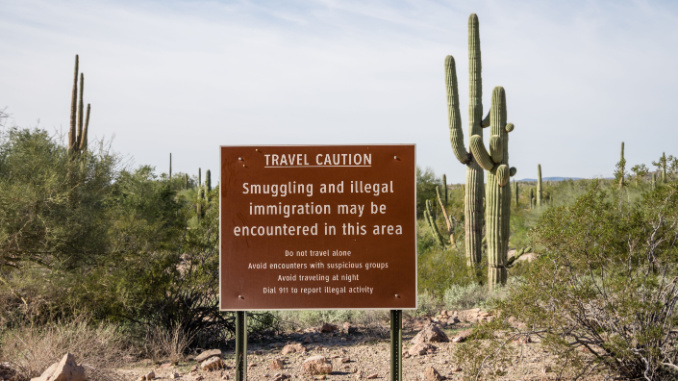
A series of polls released over the past year have shown that public support for the mass deportation of illegal immigrants represents a majority-driven mandate from the American people which cuts across racial, political, and economic lines. Congressional leaders from Arizona have emerged as the most fervent voices reflecting the widely accepted viewpoint.
As noted by Cronkite News, President-Elect Donald J. Trump drew direct attention to this in remarks he made announcing his victory when he touted “an unprecedented and powerful mandate.”
“They’re coming by the thousands,” Trump warned in a video posted on Truth Social. “We will secure our borders. And we will restore sovereignty.”
A Scripps News/Ipsos survey presented findings that approximately 54% of the American public, including 25% of Democrats, an overwhelming 86% of Republicans, and even a strong majority of 58% of Independents agreed that they “strongly,” or “somewhat” support “Deporting those who are in the country illegally.”
Similarly, an Axios Vibes survey by The Harris Poll released in April found conclusively that 51% of the American public, with 42% of Democrats, 68% of Republicans, and even a 45% share of Latinos and 40% of Black Americans polled found they “support mass deportations of undocumented immigrants.”
Finally, a Fox News Poll, by Beacon Research (D) and Shaw & Company Research released in mid-October in the final weeks of the election cycle made it quite clear that “Since 2015, support for deporting those living in the U.S. illegally is up across the board, but most notably among nonwhite voters (+24 points favor), Republicans (+21 points), rural voters (+20), urban voters (+19), and men (+16). Democrats are also more likely to favor this now but by a smaller 8-point margin.” The increase over time in acceptance of mass deportation has been profound.
Congressman Eli Crane (R-AZ) has consistently criticized the Department of Homeland Security under the Biden administration and frequently sparred with Secretary of the Homeland Security Alejandro Mayorkas. In April, Crane was reported by Forbes as scorching Mayorkas.
Congressman Paul Gosar (R-AZ) shared a video of Trump explaining his mass deportation policy in a post to X in March 2023 with the caption: “We need mass deportations and NO AMNESTY.”
Congressman Andy Biggs (R-AZ) posted likewise in January 2023 writing, “All illegal aliens must be deported. Period.”
Trump’s selection of former acting director of ICE, Tom Homan, as “border czar,” has further energized the conversation around the mass deportation plan Trump promised during his campaign.
The morale of Border Patrol agents has also improved significantly according to reports. National Border Patrol Council President Paul Perez told Fox News in an interview that the agency’s morale is “through the roof,” adding, “We’ve received hundreds of calls, texts, emails, just saying how happy the agents are.”
“There are a lot of agents that had originally said that they would retire if President Trump did not win. And now those same agents are saying they’re going to hold back on their retirement because they want to serve under this administration again, because they know exactly how it was during this first administration, and they know this one’s going to be even better,” he said.
Matthew Holloway is a senior reporter for AZ Free News. Follow him on X for his latest stories, or email tips to Matthew@azfreenews.com.
by Matthew Holloway | Oct 10, 2024 | News
By Matthew Holloway |
The Veteran Improvement Commercial Driver License Act (S. 656), a bill designed to facilitate the transition of U.S veterans into a field requiring a commercial driver’s license (CDL) through GI benefits, was signed into law on October 1st. The bipartisan legislation, championed by Congressman Eli Crane (R-AZ), was sponsored by Senator Deb Fisher (R-NE) and passed the U.S. House of Representatives by a voice vote on Sep. 25th after passing the Senate by unanimous consent, making it a very rare, truly bipartisan bill.
The new law will exempt newly opened trucking school facilities from an existing regulatory delay of two years, during which the U.S. Department of Veterans Affairs and state regulators are required to deny the school the ability to process GI benefits, as long as the primary facility has already been approved. This allows existing schools to expand. In effect, this will streamline the opening of new facilities to train more veterans moving into the trucking industry.
According to a press release from Rep. Crane, “This will allow veterans more accessibility to CDL schools, reducing commuting times, leading to high-paying careers in the trucking industry.”
Crane said in a statement, “I’m proud to play a role in expanding opportunities for veterans in rural Arizona. Expanding the scope of GI education benefits to CDL programs is a way to increase opportunities for those who have put their lives on the line for our country. Bureaucratic obstacles should never inhibit our nation’s veterans from having flexibility in building prosperous lives for themselves.”
Rep. Edwards told reporters, “It’s high time we take meaningful steps toward better supporting a veteran’s transition into the civilian workforce,” according to Landline. “Too many arbitrary rules are impeding a veteran’s ability to achieve the very American dream that they are fighting for others to pursue, but the Veteran Improvement CDL Act helps to eliminate one of those barriers.”
Edwards shared in a 2023 post to X, that the then-proposed bill was endorsed by the American Legion.
Sen. Fischer said in a statement, “Our veterans deserve every opportunity to participate in the American dream they’ve fought to protect. But when their service is over, many veterans face unfair roadblocks when they look for jobs. My legislation makes it easier for veterans to get their CDL licenses and earn a good living.”
As reported by industry publication FleetOwner, the American Trucking Associations President and CEO Chris Spear applauded passage of the act through Congress with a statement hailing it as a way to “help veterans secure rewarding careers and alleviate the truck driver shortage.”
He told the outlet, “When the brave men and women in our armed forces return home, the last thing they should have to worry about is red tape preventing them from achieving the American dream that they fought to defend. Improving veterans’ access to CDL programs will open the door of opportunity to good-paying, in-demand jobs in the trucking industry. We are appreciative of the leadership by Senators Fischer and Padilla and Representatives Edwards and Pappas on this important bill, which will help veterans secure rewarding careers and alleviate the truck driver shortage.”
Matthew Holloway is a senior reporter for AZ Free News. Follow him on X for his latest stories, or email tips to Matthew@azfreenews.com.
by Matthew Holloway | Sep 30, 2024 | News
By Matthew Holloway |
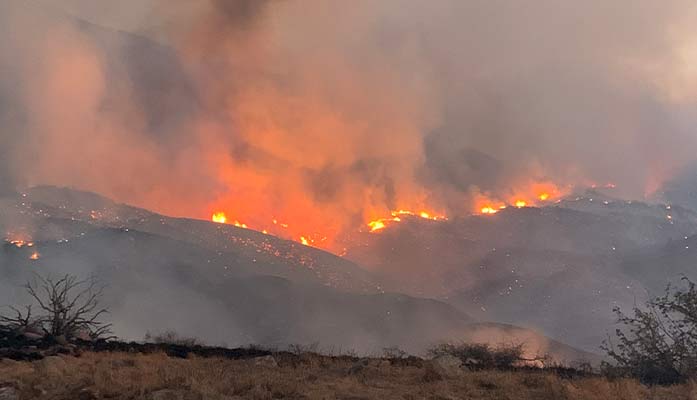
The ‘Fix Our Forests Act’ introduced by Congressman Bruce Westerman (R-AR), co-sponsored by Congressman Paul Gosar (R-AZ), and supported by Congressman Eli Crane (R-AZ) passed the U.S. House of Representatives Tuesday in a 268-151 vote. The vote went largely along partisan lines with 55 Democrats joining the Republican Majority to advance it to the Senate. The act as explained by Crane’s office “would improve the health and resiliency of America’s forests.”
Citing the breadth of the designated forests in the United States at 117 million acres and with the stark warning that these forests are “overgrown, prone to fires, and in need of active management,” the Republican measure is designed to expedite the approvals process for forestry management and fire control. Both are imminent and ever-present concerns in the wildfire-prone high-desert grasslands and forests of Northern Arizona.
According to a press release from Crane’s office, the Fix Our Forests Act is designed to:
“Simplify and expedite environmental reviews to reduce costs and planning times for critical forest management projects while maintaining rigorous environmental standards;
End frivolous litigation that delays needed forest management projects;
Utilize state-of-the-art science to prioritize the treatment of forests at the highest risk of wildfire;
Incentivize forest management projects of up to 10,000 acres to increase the pace and scale of active management;
Promote federal, state, tribal, and local collaboration by creating a new Fireshed Center and codifying the Shared Stewardship initiative;
Make communities more resilient to wildfire by coordinating existing grant programs and incentivizing new research;
Give agencies new tools to restore watersheds, protect communities in the wildland-urban interface and prevent forest conversion;
Revitalize rural economies by strengthening tools such as Good Neighbor Authority and Stewardship Contracting;
Adopt new and innovative technologies to address forest health threats like wildfires, drought, insects and disease;
Harden utility rights-of-way against wildfire by encouraging more active management and removal of dangerous hazard trees.”
The Biden administration reportedly opposes the bill, and it could potentially meet with a veto if it passes the Senate. In a statement from the White House, the Biden-Harris administration wrote, “H.R. 8790, however, also contains a number of provisions that would undermine basic protections for communities, lands, waters, and wildlife; reduce opportunities for public input; and heighten the likelihood for conflict, litigation, and delay on needed forest restoration and resilience work,” the statement continued per the Washington Examiner. “The Administration therefore strongly opposes this bill.”
In a statement published by the Congressional Western Caucus, Rep. Westerman said, “America’s forests are on life support after decades of mismanagement. The clock on these ticking time bombs is down to the final few seconds, and Congress must move swiftly to save our forests from imminent destruction. Today, the House took decisive action on the bipartisan Fix Our Forests Act, which will empower local land managers and agencies with tools to enact the most vital forest management projects. The time to fix our forests is now.”
In a post to X, Crane wrote, “Yesterday, I voted proudly in support of the bipartisan Fix Our Forests Act, which would restore forest health and protect our communities in #AZ02. Thanks to @NatResources Chairman @RepWesterman for his leadership on this legislation.”
The bill was cosponsored by 17 Republicans including Rep. Paul Gosar (R-AZ) and six Democrats and must now be taken up by the Senate.
Matthew Holloway is a senior reporter for AZ Free News. Follow him on X for his latest stories, or email tips to Matthew@azfreenews.com.
by Matthew Holloway | Sep 22, 2024 | News
By Matthew Holloway |
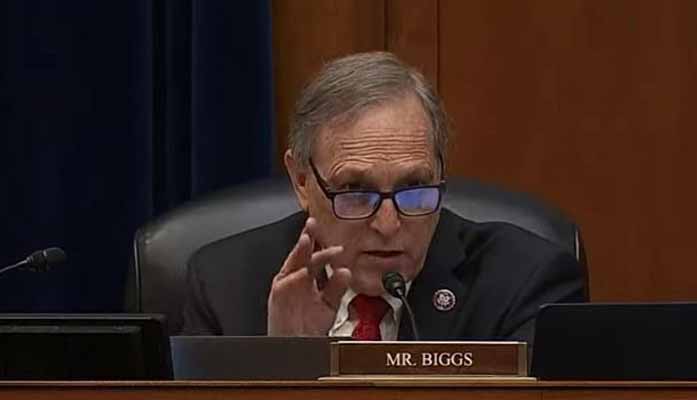
Republican Congressman Andy Biggs carried on the well-worn tradition of symbolic and sometimes whimsical naming conventions for congressional bills last week. On Tuesday, Biggs introduced the Keeping Aid for Municipalities and Localities Accountable Act, abbreviated as the KAMALA Act, in a bid to withhold federal funding from states and municipalities providing housing assistance to illegal immigrants.
The obviously pejorative nature of the bill’s name aside, Biggs and his co-sponsors identified the necessity of the bill by pointing to the “Dream for All program” passed in the California legislature last month. That bill would have allowed illegal immimgrants residing in the state to receive a mortgage down payment handout of up to $150,000 bankrolled by California taxpayers, and given that a 14.5% of the state’s budget comes from federal funding, the American people as a whole.
As Biggs’ office noted in a press release, this California bill was vetoed by Democrat Gov. Gavin Newsom, but not based on an issue with the policy, but rather purely on funding grounds, “not a recognition that the policy creates new incentives for illegal immigration and would drive housing prices further out of reach of middle-class Americans.”
In his veto, Newsom wrote, “This bill seeks to prohibit the disqualification of applicants from one of California Housing Finance Agency’s (CalHFA) home-purchase assistance programs based solely on their immigration status. Given the finite funding available for CalHFA programs, expanding program eligibility must be carefully considered within the broader context of the annual state budget to ensure we manage our resources effectively. For this reason, I am unable to sign this bill.”
In response the KAMALA Act, if adopted, would add new legal language to the Community Development Block Grant (CDBG) program which would prohibit funds from CDBG funded programs to be used to benefit “illegal aliens, parolees, or asylees,” and only benefit American citizens. It would further prohibit the U.S. Department of Housing and Urban Development (HUD) from allowing the same funds to be allocated to “states or localities allowing noncitizens to participate in housing assistance programs.”
Biggs said in a statement, “Americans are outraged at the Biden-Harris Administration’s refusal to put the needs of citizens over the comfort of illegal aliens. Democrats across the country are coddling illegal aliens, providing them with housing assistance while hundreds of thousands of Americans live on the streets. Congress must step in and use the power of the purse to ensure that taxpayers aren’t subsidizing these foolish priorities.”
From the text of the KAMALA Act, the bill states, “Notwithstanding any other provision of law, no amount from a grant under section 106 made in fiscal year 2024 or any succeeding fiscal year may be used to assist persons who are neither a national of the United States nor lawfully admitted for permanent residence under section 101(a)(20) of the Immigration and Nationality Act.”
The act is cosponsored by fellow Arizona Congressmen Paul Gosar (R-AZ), Elijah Crane (R-AZ), as well as Reps. Andy Ogles (R-TN), Matt Rosendale (R-MT), Bob Good (R-VA), Jeff Duncan (R-SC), Andy Harris (R-MD), Lauren Boebert (R-CO), Andrew Clyde (R-GA), and Tim Burchett (R-TN).
Matthew Holloway is a senior reporter for AZ Free News. Follow him on X for his latest stories, or email tips to Matthew@azfreenews.com.