In 2022, the Arizona legislature passed—and then-Governor Ducey signed into law—a landmark election integrity bill: HB 2492. Authored by the Arizona Free Enterprise Club, the law bolsters safeguards to our election process by requiring proof of citizenship to register to vote, ensuring that only U.S. citizens are voting in our elections.
It’s commonsense legislation that is popular with the public and a blueprint for other states looking to adopt nearly identical bills. And why wouldn’t it be? U.S. citizens cannot go into France, Australia, or any other country throughout the world and vote in their elections, so why should citizens from other countries be allowed to vote in our elections?
Yet immediately after HB 2492 was passed, a consortium of liberal organizations and the Biden Justice department sued to stop the law from going into effect. Now, after multiple trips to the Ninth Circuit Court of Appeals, one of which included a bizarre ruling that required an emergency appeal to the U.S. Supreme Court to let Arizona enforce our proof of citizenship requirements for the 2024 election (which we won), the entire law will now be going to the nation’s highest court.
We are confident that the Supreme Court will uphold the law in its entirety, but one issue about the litigation has been simmering beneath the surface: Arizona Attorney General Kris Mayes…
Arizona Senate President Warren Petersen is calling on Secretary of State Adrian Fontes to revise the state’s draft of the 2025 Elections Procedures Manual (EPM), warning that lawmakers may pursue legal action if disputed provisions remain in place.
The Elections Procedures Manual, which outlines how elections are conducted in all 15 Arizona counties, must comply with state law and receive approval from both the governor and attorney general before taking effect. Petersen contends the current draft includes measures that exceed the secretary of state’s legal authority.
“The Elections Procedures Manual cannot be used as a vehicle to rewrite Arizona law,” Petersen said in a statement released Monday. “If these provisions are not corrected before submission, litigation will follow.”
Among the concerns identified by Petersen and Republican legislators are provisions they say weaken election safeguards. These include extending the time for non-citizens to “cure” invalid registrations, bypassing voter ID requirements on registration forms, limiting ballot challenges, and reducing oversight on ballot chain-of-custody procedures.
Lawmakers also raised objections to proposed rules that they argue diminish political parties’ role in selecting poll workers, relax standards for petition circulators, and require election officers to adhere to policies they believe infringe on constitutional rights.
Petersen said the secretary of state has a “pattern” of resisting statutory requirements, adding that changes to election rules should be made through the legislative process rather than administrative directives.
“Our election laws are passed by the Legislature and signed by the Governor — not invented by one officeholder,” Petersen said.
Jonathan Eberle is a reporter for AZ Free News. You can send him news tips using this link.
Nothing undermines confidence in elections quite like discovering they can be compromised by foreign billionaires or botched altogether through complex schemes like ranked-choice voting.
This year, legislatures across the country took aim at both of these urgent threats to election integrity, as outlined by a recent report from Honest Elections Project. Altogether, eight states closed a critical legal loophole allowing foreign billionaires to flood ballot measure campaigns with foreign dark money. Meanwhile, six more states banned ranked-choice voting, the most legislative bans in a single year. In other words, conservative states have made 2025 a banner year for election reform.
Most Americans would be shocked to learn how vulnerable our elections are to foreign influence. Federal law forbids foreign nationals from donating to candidates or political parties yet offers no such protection for state or local ballot measures. This means that a foreign billionaire cannot influence a particular race, but he can spend millions to pass a constitutional amendment that rewrites the rules of the entire election system.
That loophole has been a gift to Swiss billionaire Hansjörg Wyss. According to the watchdog group Americans for Public Trust, Wyss has directed roughly $280 million into the Sixteen Thirty Fund, which has simultaneously spent more than $130 million in foreign-tied funds into ballot campaigns in 26 states. As shocking as these figures are, they likely represent the tip of the iceberg. After all, the same loophole can just as easily be abused by foreign nationals doing the bidding of China and Russia.
Fortunately, conservative states are taking action to ensure that ballot measures are no longer a Trojan Horse for foreign interference. After Ohio led the way in 2024, eight states this year—Arkansas, Indiana, Kansas, Kentucky, Louisiana, Missouri, Tennessee, and Wyoming—enacted new laws to ban foreign nationals and the groups they finance from funding ballot measure campaigns. Even Kentucky’s Democratic governor signed the bill into law, proof that defending elections from foreign influence should not be a partisan proposition.
That hasn’t stopped many on the left from fighting to keep these loopholes open for purely partisan gain. Marc Elias, Democrats’ top election lawyer, went to court in Ohio in 2024 and again in Kansas this year to block these bans. He lost both times, once in front of an Obama-appointed judge. States clearly have the authority to ban foreign funding, and every state should.
The same is true of ranked-choice voting, and 2025 was an incredible year in the ongoing fight to stop its spread.
Under ranked-choice voting, voters are asked to rank multiple candidates. Ballots are counted in rounds as losing candidates are eliminated and votes are redistributed. If a voter fails to rank enough candidates, the ballot is “exhausted” and thrown out. Candidates can win the most first-place votes but lose the election. Delays are inevitable; Alaska’s ranked-choice voting tabulation does not even begin until 15 days after Election Day. In California, a tabulation error once led to the wrong candidate being certified. Ranked-choice voting turns what should be a straightforward election into a complicated black box.
Fortunately, the public has seen the problems with this system from the start. In 2024, ranked-choice voting advocates spent nearly $100 million dollars on ballot measures promoting the scheme in six states. All failed. Only the District of Columbia adopted it, which is hardly a ringing endorsement.
Between 2022 and 2024, 11 states banned ranked-choice voting. And this year, six more – Arkansas, Iowa, Kansas, North Dakota, West Virginia, and Wyoming – acted to make the scheme illegal. And in Utah, lawmakers allowed a failed pilot program to expire, meaning ranked-choice voting will come to an end there, too.
As extraordinary as this progress is, conservatives must not become complacent. States like Michigan, Florida, Nebraska, North Carolina, Montana, and Arizona have all seen significant amounts of foreign-tied money pumped into ballot issue campaigns, but so far have not acted. And progressives remain committed to pushing ranked-choice voting, especially after witnessing the scheme elevate a Democratic Socialist in New York. Ranked-choice voting lobbyists are working legislatures nationwide, and activists are already gathering signatures for another ballot measure in the presidential battleground of Michigan.
That should serve as a warning. When it comes to securing our elections, the job is never done. This was a banner year for election integrity. Conservative leaders must keep the momentum going in 2026 and beyond.
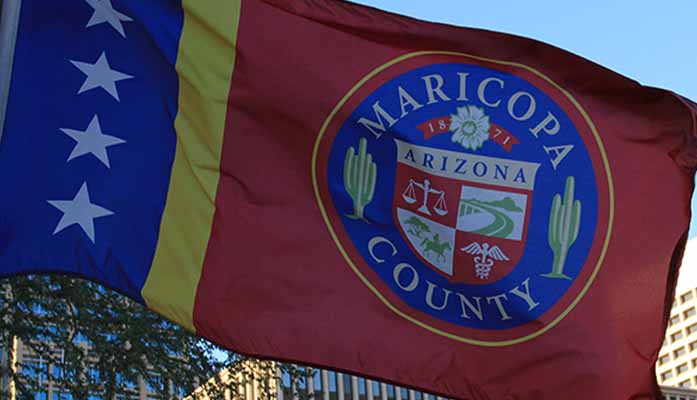
The legal fight between Maricopa County Recorder Justin Heap and the County Board of Supervisors escalated Monday. America First Legal filed two motions on Heap’s behalf, and Arizona’s legislative leaders submitted an amicus brief supporting him.
In a press release, the County Recorder’s Office stated that the motionsfiled by America First Legal “reveal how the County Board of Supervisors and County Attorney Rachel Mitchell have weaponized county government against duly-elected Recorder Justin Heap simply because he dared to fulfill his statutory duties and protect the sanctity of Arizona elections.”
Heap said in a statement, “It’s unfortunate that the Board’s unprofessional and bad faith actions have forced us to litigate this issue; however, it’s significantly more unfortunate that the Board continues to deny the voters of Maricopa County the positive, common sense election integrity reforms that they voted for last November when they elected me. As I’ve promised from day one, I am working to ensure honest, secure, and transparent elections for every voter in Maricopa County. I am not, and will not, waiver in my commitment to executing on this promise. I’m grateful to America First Legal for standing by my side in this battle.”
Recorder Justin Heap Refuses to Back Down in the Face of Unprecedented Attack on Election Integrity in Maricopa County ⤵️ pic.twitter.com/p9db5ODufm
— Maricopa County Recorder's Office (@RecordersOffice) August 25, 2025
America First Legal detailed Heap’s allegations in the first filing: “The Defendants — the members of the Maricopa County Board of Supervisors (‘BOS’) — have crossed from fiscal oversight into outright sabotage. Ignoring [state law] and decades of precedent, the BOS has refused to fund the Recorder’s ‘necessary expenses’ — from modern ballot-processing equipment to indispensable IT staff — while simultaneously seizing control of the very election functions its stonewalling endangers. The BOS’s obstruction is not mere bureaucratic foot-dragging; it is a calculated power grab that throttles the Recorder’s constitutional duty to administer secure, timely elections.”
🚨Arizona voters deserve elections run according to the law—not confusion or overreach.
Today Senate President @votewarren filed a brief in Heap v. Galvin making it clear: only the Legislature sets election duties, and they must be carried out by the officials elected for the… pic.twitter.com/CRGOFYIb34
In an amici filing in support of Heap, Arizona House Speaker Steven Montenegro and Senate President Warren Petersen’s legal representation call for a strict interpretation of state statutes which govern the responsibilities of the county recorder and board of supervisors. They argue that the “court should narrowly conclude that, based on the statutes’ plain language, when the statute authorizes ‘the county recorder or other officer in charge of elections’ to act, it is the recorder’s duty to ensure the statute is complied with unless the recorder expressly agrees to delegate that duty to another ‘officer in charge of elections.’”
As previously reported by AZ Free News, the months-long negotiations between Heap and the Board, led by Chairman Thomas Galvin, devolved steadily since Heap’s election and the replacement of Stephen Richer in January until finally collapsing into litigation in June.
The crux of the disagreement between the Board of Supervisors and County Recorder Heap rests upon a Shared Services Agreement (SSA) agreed to by Heap’s predecessor, Richer, who ardently opposed the election integrity efforts that Heap ran for office to enact. For nearly six months, the two county offices negotiated; however, Heap and the Supervisors were unable to reach an agreement, culminating in a lawsuit filed by Heap.
Since then, Heap has alleged that the Supervisors have “taken retaliatory actions” describing a series of measures that “make it impossible for him to do his job, including removing nearly all his election-related IT staff; seizing the servers, databases, and websites necessary to fulfill his duties; and restricting access to necessary facilities and equipment,” as reported by The Federalist.
In a second filing, Heap and America First Legal introduced allegations involving Maricopa County Attorney Rachel Mitchell, bringing a third County office into the fray in a dispute over who may represent the County Recorder, an attorney chosen by Heap or Maricopa County Attorney Rachel Mitchell. In the legal brief, they allege, “Attorney Mitchell originally appointed a criminal defense attorney to advise the Recorder; however, in April, America First Legal agreed to represent Heap pro bono, a move that Mitchell objected to.”
“When the Recorder complained that the original attorney appointed for him lacked sufficient subject matter expertise, County Attorney Mitchell appointed former Arizona Supreme Court Justice Andrew Gould to advise the Recorder only during negotiations with the Board. However, County Attorney Mitchell and the Board did not allow Justice Gould to litigate on the Recorder’s behalf,” the filing revealed.
But according to AFL, that wasn’t the end of it. “In May of 2025, Justice Gould specifically asked the Maricopa County Attorney’s Office for permission to litigate on Recorder Heap’s behalf but was not allowed to do so because the scope of his representation was limited to negotiation of the SSA and did not include litigation, and, accordingly, the County would not compensate him for litigation-related work.”
Mitchell responded by penning a letter to the AFL attorneys, writing in part, “This letter is to inform you that I am the Recorder’s attorney and that you do not represent the Maricopa County Recorder’s Office or Recorder Heap in his official capacity.”
Per The Federalist, AFL attorney James Rogers retorted that the “County Recorder is allowed to pick his own lawyer in litigation,” adding that Heap “is not subject to the whims of the county attorney.”
In the midst of the complex legal battle between the Recorder’s Office and the Board of Supervisors, which has drawn the attention of legislative leaders, the dispute with Mitchell adds yet another layer of infighting within the already divided county government, with the calendar counting down to the 2026 elections.
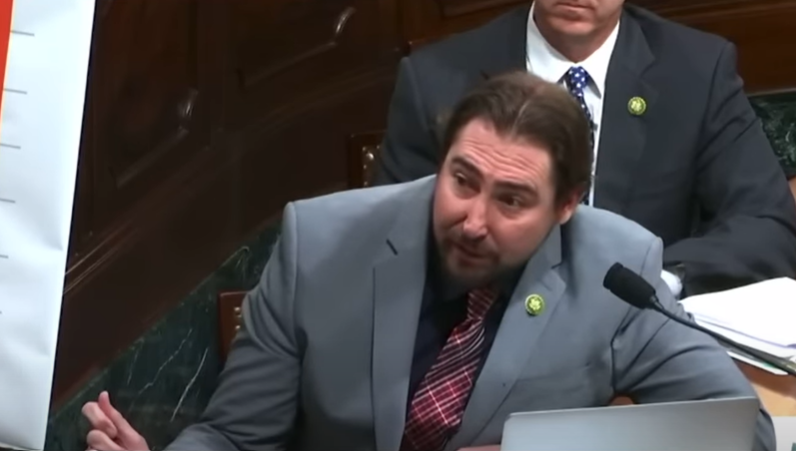
Congressman Eli Crane (R-AZ02) announced Friday that he has signed on to Rep. Abe Hamadeh’s ‘Preserving and Protecting the Integrity of American Elections’ Act, known as H.R. 2499. The bill is designed to codify President Donald Trump’s Executive Order 14248, which enhances U.S. election security by requiring proof of citizenship for voter registration, restricting mail-in ballot deadlines, and prioritizing enforcement against non-citizen voting.
The bill further mandates that states require proof of citizenship in the form of a government-issued ID on voter registration forms, orders the Departments of State, Homeland Security, and Social Security Administration to provide federal database access to states for determining voter eligibility, and requires a single Election Day deadline for vote tabulation. Each measure will carry the threat of withdrawn federal funding in the event of non-compliance.
In a post to X, Crane wrote, “Proud to cosponsor @RepAbeHamadeh‘s bill to codify President Trump’s executive order on election integrity. Arizonans have witnessed poorly-run elections firsthand, and this legislation addresses key vulnerabilities. We must have an efficient and trustworthy process.”
Proud to cosponsor @RepAbeHamadeh's bill to codify President Trump's executive order on election integrity.
Arizonans have witnessed poorly-run elections firsthand, and this legislation addresses key vulnerabilities.
After introducing the bill, Hamadeh said in a statement at the time, “The American people deserve better. They deserve to know that their legally cast ballot is counted and accounted for. I am disappointed, but obviously not surprised that Mayes and Fontes seek to thwart the implementation of commonsense safeguards of democracy.”
He added, “As a trusted advisor once said to me, ‘election integrity never disenfranchised a single soul, but a single act of election fraud disenfranchises us all.’”
In a press release, he added, “In Arizona, we have seen what the mismanagement of voter rolls, failed election infrastructure, and corrupt courts can do to destroy voter confidence and faith in our system overall. We are taking swift action to rebuild citizens’ trust in our elections through comprehensive and meaningful election integrity legislation.”
Many people say we should focus on the future and move on from 2020 and 2022… How could I knowing what I know? Our elections have been hijacked, they’ve been corrupted, and the American people deserve justice. It can never happen again.
In a post to X, the Congressman observed, “Many people say we should focus on the future and move on from 2020 and 2022… How could I(?) [K]nowing what I know? Our elections have been hijacked, they’ve been corrupted, and the American people deserve justice. It can never happen again. Election Security IS National Security.”