by Ethan Faverino | Mar 1, 2026 | News
By Ethan Faverino |
In a decisive step to strengthen voter confidence and streamline Arizona’s election processes, the Arizona House of Representatives passed HCR 2016, a proposed constitutional amendment sponsored by Representative Rachel Keshel (R-LD17).
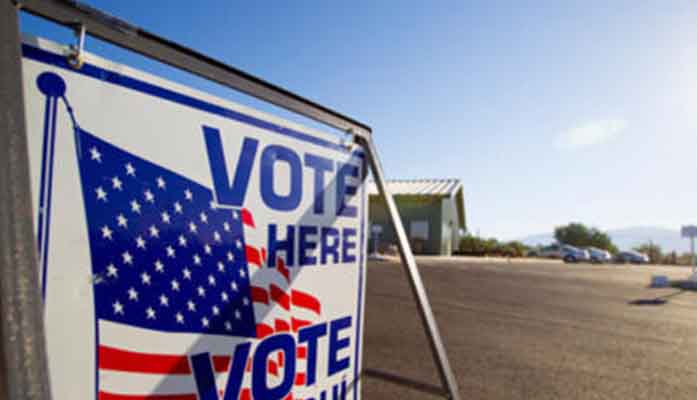
HCR 2016 seeks to require in-person voting to take place exclusively at designated precinct polling places, eliminating the use of countywide voting centers, emergency voting centers, and on-site early voting locations.
If approved by voters in the upcoming election, the resolution would cap election precincts at no more than 2,500 registered voters at the time precincts are designated. It would also remove statutory authority for voting centers and related provisions in election administration, electioneering, and unlawful acts statutes.
“Arizonans want elections they can understand, observe, and trust, and the precinct model delivers that,” stated Rep. Keshel. “HCR 2016 puts Election Day voting back where it belongs: at clearly designated polling places tied to precincts, with reasonable precinct sizes that are easier to staff and manage. Voting centers and last-minute location changes create confusion, weaken consistent procedures, and slow results. This helps restore faith in our elections for Republicans, Independents, and Democrats who expect clear rules and timely results.”
The resolution would end the option for in-person voting at on-site early voting locations through 7:00 p.m. on the Friday before an election and eliminate references allowing on-site tabulation of early ballots at voting centers.
House republicans advanced HCR 2016 as a key priority under the House Republican Majority Plan to secure elections by reinforcing the structure of in-person voting and empowering Arizona voters to decide the issue directly at the ballot box.
The measure aligns with broader efforts to ensure fast, accurate ballot counting for timely results, protect election integrity, and promote transparency.
Secure elections remain a top focus for Arizona Republicans, who emphasize that voters deserve free, fair, and transparent processes where ballots are counted quickly and results are known sooner. HCR 2016 supports these goals by addressing structural elements that contribute to delays and confusion in election administration.
The measure now advances to the Arizona Senate for further consideration.
Ethan Faverino is a reporter for AZ Free News. You can send him news tips using this link.
by Staff Reporter | Feb 9, 2026 | News
By Staff Reporter |
Several of the Maricopa County Board of Supervisors reviewed the recorder’s new signature verification process this week.
Supervisors Mark Stewart and Debbie Lesko visited the recorder’s office on Friday to observe what Recorder Justin Heap has promised to be a stronger approach to signature verification.
Also present were members of the Maricopa County Republicans and local election integrity advocates.
Supervisor Stewart publicized some of the training materials given to elections workers tasked with signature verification, including metrics for accepting or flagging signatures based on broad and local characteristics.
The new format for signature verification has two levels of review, the first for the user and second for the manager. At the level one user review, two signature reviewers of differing political parties compare signatures with the reference signature on file.
Signatures with obvious matches based on characteristics may be accepted as good signatures, while signature comparisons that yield differences outweighing similarities must be flagged for level two review by a manager.
The level two managerial review concerns the review of all available signatures in a voter’s registration record, which can be upwards of 50 samples. The signature pool could include signatures from voter registration forms, verified early voting affidavits, and in-person sign-ins from rosters.
Signatures consistent with the signature pool would be approved and sent to another level two manager of a differing political party for review, while nonmatching signatures would be set aside for further action. The recorder’s office has a set limit of disposition types: no signature, household exchange, need packet (a catch-all disposition type), deceased (which flags National Voter Registration Act research), and pre-questioned signature.
That last disposition qualifies for automatic submission to another manager of a differing political party for level two review.
All signatures with any discrepancy at any levels are required to be part of a mandatory audit review, set at two percent currently.
Training materials also made clear the efforts by the recorder’s office to integrate user-friendly updates to signature review software.
Level one reviewer screens will display the current election affidavit signature alongside the historical affidavit signatures from newest to oldest, removing the old requirement for users to scroll to compare signatures.
The training materials also stressed that users should default to flagging signatures for review for any reasons other than a “good signature” determination.
The visit marked an unusual bright point in the strained relationship between the board and the recorder.
The board and recorder have been engaged in a year-long legal battle in the Maricopa County Superior Court over elections administration powers.
This week marked a particularly tenuous moment in the battle after board leadership issued subpoenas against three of the recorder’s staff members.
The Maricopa County Superior Court sided with the recorder on the issue and put in place a temporary restraining order against the board to halt the subpoenas.
Friday’s visit was not a signal by the two visiting supervisors that they were on the recorder’s side in this court battle. Lesko reposted statements from Board Chair Kate Brophy McGee addressing the subpoenas. Stewart issued his own statement recognizing the validity of arguments from both his fellow board members and the recorder’s office.
AZ Free News is your #1 source for Arizona news and politics. You can send us news tips using this link.
by Ethan Faverino | Feb 7, 2026 | News
By Ethan Faverino |
On Friday, Arizona Governor Katie Hobbs signed a Republican bill passed on a bipartisan vote by the Arizona Legislature to change the date of the 2026 primary and permanently move Arizona primaries to the second to last Tuesday in July.
The legislation permanently shifts the primary election date earlier, ensures timely ballot access for military voters overseas, and mandates clearer guidelines for political party observers at polling sites, marking a significant step toward greater election integrity and consistency ahead of the 2026 election cycle.
HB 2022 addresses longstanding issues with Arizona’s election calendar by moving the primary from August 4 to the second-to-last Tuesday in July – specifically July 21 for 2026.
This two-week adjustment resolves conflicts with federal requirements under the Uniformed and Overseas Citizens Absentee Voting Act (UOCAVA), which mandates that ballots be sent to military and overseas voters at least 45 days before an election. Previously, Arizona’s timeline risked delays, potentially disenfranchising service members.
By advancing the date, the bill ensures that ballots are mailed on time, giving voters abroad ample time to receive, complete, and return them.
The measure also enhances transparency and oversight by explicitly requiring authorized political party observers to be permitted at all voting locations, including early voting centers and emergency voting sites.
The bill was sponosored by Rep. Alexander Kolodin (R-LD3) with a mirrored bill (SB 1425) sponsored in the Arizona Senate by Sen. Wendy Rogers (R-LD7).
“Arizona law has always intended to protect the integrity of our elections, including for military voters and at ALL voting locations,” said Rep. Kolodin. “I am delighted that Governor Hobbs agreed with me that this commonsense reform and legislation is necessary.”
“This was a unified Republican effort leading the way from start to finish,” Senator Rogers added. “By working together across chambers, we delivered a commonsense election bill that protects military voters, brings clarity to our election calendar, and strengthens transparency for Arizona voters. This is how the process should work.”
New voter deadlines are as follows:
- Voter Registration Deadline: June 22, 2026
- Ballots are mailed to voters on the Active Early Voter List and In-Person Early Voting Begins: June 24, 2026
- Primary Election Day: July 21, 2026
The Primary date change also impacts filing deadlines for candidates running for office.
Filing Dates:
- Partisan Primary Candidate Filing: Feb. 21, 2026 – March 23, 2026
- Precinct Committeemen Write-In Deadline: April 6, 2026
- Write-In Candidate Filing Deadline: May 22, 2026
The measure had the full support of the Arizona Freedom Caucus (AFC). In a statement, AFC Chairman Senator Jake Hoffman (R-LD15) said, “Governor Hobbs signing Representative Kolodin’s HB 2022 is a huge win for election integirty in Arizona. While Adrian Fontes is making radical and unserious legislative proposals, like expanding unaccountable, sprawling voting centers and reinstating a permanent early voter list, Representative Kolodin is leading with bipartisan supermajorities.”
Ethan Faverino is a reporter for AZ Free News. You can send him news tips using this link.
by Matthew Holloway | Feb 5, 2026 | News
By Matthew Holloway |
The Arizona House of Representatives approved bipartisan election integrity legislation on Monday intended to enhance voting oversight and protect the rights of military and overseas voters.
The measure, House Bill 2022, sponsored by State Representative Alexander Kolodin (R-LD3), cleared the full House after receiving bipartisan support. The bill’s passage comes amid ongoing discussions nationwide about election security and voter access.
According to the AZ House GOP, the legislation aims to protect Arizona’s military voters by ensuring election procedures account for service members and other Arizonans living or serving outside the state. Specific provisions in the bill address the handling and timely delivery of ballots for individuals covered under the Uniformed and Overseas Citizens Absentee Voting Act (UOCAVA), a federal law that safeguards absentee voting rights for military and overseas voters.
Specifically, the bill moves the Arizona primary election date to the second-to-last Tuesday in July, to better align with the federal election timeline adopted by the U.S. Congress and prevent military UOCAVA ballots from going uncounted.
In a statement announcing the bill’s passage, Representative Kolodin said, “This bill exists for one reason: to make sure Arizona voters, especially our men and women serving overseas in uniform, are not disenfranchised because Congress changed the rules and failed to check the calendar. HB 2022 locks in the fix that worked in 2024. Military ballots went out on time, and our men and women serving in uniform were able to exercise their right to vote as citizens of the United States. There is no excuse to walk away from something we know works.”
HB 2022 also includes a series of measures intended to strengthen election oversight and transparency, including requirements for updated reporting and procedural reviews by election officials, according to the bill summary.
The following changes will also be made:
- Modifying the deadline for ballot curing in elections that include a federal office to five calendar days, from the previous five business days.
- Broadening the type of locations that may be observed or challenged by party representatives, including ballot replacement locations, voting centers, in-person early voting locations, and emergency voting locations.
- And allowing permitting nomination and local initiative petition forms circulated under the previous law to be considered valid for the July 2026 primary.
State Representative Kolodin chairs the House Ad Hoc Committee on Election Integrity and Florida-style Voting Systems with Co-Chair Rep. John Gillette (R-LD30). The panel was formed to study election procedures and propose electoral reforms. This committee has previously advanced legislation to improve voter identification requirements, tighten security around mail-in and absentee ballots, and restrict certain external influences on Arizona elections.
HB 2022 will now move to the Arizona Senate for further consideration.
Matthew Holloway is a senior reporter for AZ Free News. Follow him on X for his latest stories, or email tips to Matthew@azfreenews.com.
by Matthew Holloway | Jan 24, 2026 | News
By Matthew Holloway |
A proposed constitutional amendment aimed at reshaping Arizona’s election system passed its first major legislative hurdle in a hearing on Wednesday, as the Arizona House Committee on Federalism, Military Affairs & Elections (FMAE) approved Rep. Alexander Kolodin’s (R-LD3) Arizona Secure Elections Act.
The Committee advanced House Concurrent Resolution 2001 with a 4-3 vote. It now heads to the House Rules Committee. If approved by both chambers of the Arizona Legislature, the measure would be referred to voters on the November 2026 general election ballot.
Kolodin announced the committee hearing on social media ahead of the meeting.
According to supporters, HCR 2001 is intended to address concerns about voter confidence following recent election cycles. If approved by voters, the constitutional amendment would establish several requirements for statewide election administration.
Those provisions include limiting voter registration and participation to U.S. citizens, prohibiting foreign contributions to candidates or ballot initiatives, and requiring government-issued identification in order to vote.
Additional requirements would mandate that early voting concludes no later than 7:00 p.m. on the Friday preceding a Tuesday general election, prohibit the acceptance of ballots after polls close on Election Day, preserve in-person voting options at accessible polling locations, and require mail-in voters to verify their address each election cycle.
Committee Debate
During the hearing before the committee, Kolodin described HCR 2001 as an effort to overhaul Arizona’s election system by drawing comparisons to reforms adopted in Florida after the 2000 presidential election.
“This year the Arizona State Legislature will give the voters of Arizona the opportunity to transform our system of elections from a national embarrassment to a national model,” Kolodin told committee members, arguing that Florida’s reforms improved election security, sped up results, and increased voter satisfaction.
Kolodin urged lawmakers to advance the measure, saying the proposal would allow voters to address longstanding concerns about election administration.
Democrats raised concerns about voter access and election logistics. Rep. Aaron Márquez (D-LD5) argued that the proposal would effectively end the active early voting list and push large numbers of voters back into in-person voting without funding for additional polling locations, potentially creating longer lines on Election Day.
Kolodin rejected that characterization, emphasizing that HCR 2001 is a constitutional ballot referral rather than a statutory change.
“You have mistaken assumptions right off the bat,” Kolodin said. “It’s not a piece of legislation. It’s not modifying statutory law. This is a constitutional ballot referral.”
Kolodin explained that constitutional amendments are intended to establish broad governing principles, while election administration details are left to statute.
“In a statute, you want to be prescriptivist,” he said. “With a constitutional amendment, you must refrain from being overly prescriptivist,” noting that constitutional provisions are designed to endure for generations.
Addressing concerns about early voting, Kolodin said the proposal would not eliminate early or mail-in voting but would require voters to confirm their address each election cycle before automatically receiving a ballot.
Kolodin also defended the proposal’s voter identification requirements, arguing that the current signature verification system is imprecise and can result in lawful ballots being rejected.
“Our current system of signature verification, which is incredibly imprecise, leads to a large number of valid votes sometimes be[ing] rejected. It’s a very imperfect system. A more precise system, where a definite match can be obtained, where you don’t have to squint at the loops and the squiggles to try to figure out the signatures match, or if a ballot should be sent to curing, and potentially rejected, but where there’s something where it’s binary: it’s either a yes or no. There’s no matter of opinion there [that] will actually lead to fewer votes cast by lawful voters being rejected in the system,” Kolodin said.
Advocacy Groups Weigh In
The Arizona branch of the American Civil Liberties Union, represented by Katelynn Contreras, opposed the Resolution during the public comment period, stating, “HCR 2001 does not improve election integrity. Instead, it will restrict access for eligible voters to create confusion and rigid, unworkable rules in the Arizona Constitution. This resolution significantly curtails early and non-voting options that most Arizonans rely on.“ The ACLU representative cited what she described as survey data, claiming that 70 percent of Arizona voters say elections are fair and that roughly 80 percent vote by mail or early, and suggested that the ballot measure would “ban a method of voting that is widely used in the state.”
The figures cited by the ACLU couldn’t be independently verified by AZ Free News.
Asked to clarify the claim, Contreras said the measure would create “new discretionary areas that could be used to restrict mail voting for future.” Kolodin responded, “Mr. chair, I just wish to point out that that is untrue. OK, I just want to put that very clearly.”
The Arizona Freedom Caucus has promoted the proposal on its social media channels since the resolution’s prefiling in November, identifying it as a legislative priority and encouraging public engagement ahead of committee consideration. Arizona House Republican accounts have also circulated prior statements from Kolodin outlining the proposal’s intent.
Arizona Freedom Caucus Chairman Jake Hoffman (R-LD15) urged legislative leaders to advance the proposal following committee review.
“The Arizona Freedom Caucus is grateful that AFC Member Representative Alexander Kolodin has once again provided much-needed leadership in the critical mission to secure Arizona’s elections today and into the future,” Hoffman said. “Once it is heard by the FMAE Committee this week, I urge House Leadership to move it quickly to a floor vote and then send it to the Senate.”
Kolodin criticized the objections raised during the hearing, saying opponents had failed to cite provisions supporting claims that the measure would end early voting.
“We have now reached the point where the opposition to this measure has become truly silly,” Kolodin said, arguing that the proposal would expand, not restrict, voting opportunities.
He added, “It is time for the people of Arizona to have the opportunity to get their kids and their grandkids, my kids and your kids, an election system that we can be proud of, an election system that actually works, instead of inconveniencing and disenfranchising voters, and an election system that provides more opportunities for community participation by casting one’s vote at the polls or to return you ballot to the polls as you prefer. And it’s time, in other words, to take this choice out of the hands of politicians and put it in the hands of the people who actually deserve to have it: you, the voters of Arizona, and that’s where we’re sending it, despite the opposition.”
AZ Free News previously reported on Kolodin’s election integrity proposals and related legislative efforts, including the prefiling of HCR 2001 and its Senate mirror measure, SCR 1001, in November 2025. The Senate resolution, introduced by Sen. Shawnna Bolick (R-LD20), passed a hearing with the Senate Judiciary Committee 4-3 on Wednesday and will be heard next by the Senate Rules Committee.
The resolution must be approved by both the Arizona House and Senate before it can be referred to voters for consideration in 2026.
Matthew Holloway is a senior reporter for AZ Free News. Follow him on X for his latest stories, or email tips to Matthew@azfreenews.com.