U.S. consumer price inflation slowed more than expected in November, with the latest official data showing a notable drop in the Consumer Price Index (CPI) and core inflation. This key measure strips out food and energy costs, according to an update released Thursday by the Joint Economic Committee (JEC).
The headline Consumer Price Index (CPI-U), a broad measure of prices consumers pay for everyday goods and services, rose only 2.7% from November 2024 to November 2025, below the roughly 3.0% economists had expected. This marks one of the lowest readings in 2025, signaling a potential easing of inflationary pressures.
Core CPI, a measure that excludes volatile food and energy prices, also fell to 2.63% year-over-year, its lowest reading since March 2021.
Between September and November, the headline CPI increased modestly by 0.20%, while core inflation edged up by 0.16% over the same period, indicating that prices rose only slightly in recent months, even after volatility is adjusted for.
The data showed a mixed picture for specific sectors:
Food price inflation was 2.65% year-over-year, a decline of roughly 0.46 percentage points from September.
Energy price inflation rose 4.24% year-over-year, up about 1.39 percentage points from September.
Regionally, the Northeast saw the highest inflation rate between September and November at 3.1%, while the West and Midwest tied at 3.0%. The South recorded the lowest inflation at 2.2%, down from 2.7% in the September report.
In addition to prices, the JEC noted improvements in real wages during the most recent two-month period. Inflation-adjusted earnings for private nonfarm workers showed that weekly earnings rose 0.66% and hourly earnings rose 0.35%, suggesting that wage growth modestly outpaced price gains through November.
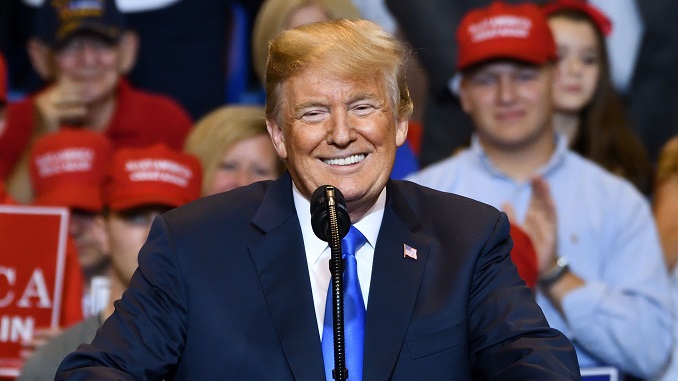
In a post to X on Thursday, the White House highlighted the slowed inflation and the pace of wage increases, writing, “President Trump is turning the economy around—pulling it back from the brink & setting the stage for a HISTORIC BOOM.”
President Trump is turning the economy around—pulling it back from the brink & setting the stage for a HISTORIC BOOM.
✅ Bringing high prices down ✅ Wages rising faster than inflation ✅ 100% of new jobs to American-born workers ✅ Gas prices ⬇️
Economists have cautioned that some of the recent inflation slowdown reflected in official figures may be affected by data collection challenges earlier this year. Independent reporting highlights that federal data gathering was disrupted by a prolonged government shutdown, which prevented the Bureau of Labor Statistics from compiling October CPI data and may have altered how price changes were measured, according to Reuters.
Nonetheless, both headline and core measures show inflation moving closer to longer-term targets, a development policymakers and markets will be watching closely as the Federal Reserve, Congress, and Trump Administration consider their next steps in 2026.
Arizona Senate Republicans released their 2026 Majority Plan on Monday, outlining policy priorities aimed at reducing the cost of living, strengthening public safety, supporting economic growth, and increasing oversight of state government.
The plan follows several years of divided government at the Capitol and builds on what Republicans describe as recent legislative accomplishments, including balanced budgets and multiple tax cuts passed without raising overall taxes. Caucus leaders say the 2026 agenda is intended to address challenges facing Arizona families, particularly rising housing costs, inflation, and concerns about government accountability.
“Arizonans want affordable living, safe neighborhoods, and a government that strengthens — not weakens — our economy,” Senate President Warren Petersen said in a statement. “While the Governor’s vetoes stall progress, Senate Republicans remain focused on protecting taxpayers, upholding Arizona’s freedoms, and preventing the radical left from turning our state into California.”
A central component of the plan is a proposed tax and budget framework aimed at providing relief from rising prices. Senate Republicans say they are pursuing reductions in state taxes on tips and overtime, expanded deductions for seniors, and policies to support small businesses. Caucus leaders estimate the proposals would return more than $1 billion to taxpayers over three years while pairing tax relief with restrained government spending.
Housing affordability is another major focus. The plan cites regulatory barriers, slow permitting processes, and executive-level actions as factors contributing to Arizona’s housing shortage. Republicans say they support reforms to speed up construction, reduce fees, and limit local restrictions on new housing, while aligning development decisions with water availability data.
“Arizonans can’t afford policies that stall development, inflate housing prices, or jeopardize our water security,” Senate President Pro Tempore T.J. Shope said. “Senate Republicans are advancing practical, data-driven solutions that support responsible growth and keep Arizona livable for the next generation.”
Water policy is addressed alongside housing, particularly as negotiations over the Colorado River continue. The plan emphasizes the Legislature’s statutory role in those talks and calls for shared conservation efforts among basin states to avoid placing disproportionate burdens on Arizona.
Public safety proposals include addressing staffing shortages in correctional facilities, increasing oversight of state agencies, and strengthening accountability for violent offenders and probation violators. The plan also reiterates support for Second Amendment protections and public safety pension stability.
Senate Majority Leader John Kavanagh criticized the current administration’s record, saying, “Arizonans deserve leadership that solves problems, not a wolf in sheep’s clothing who blocks solutions and hopes voters won’t notice.”
Additional priorities outlined in the plan include border security enforcement, election integrity measures, education policy, transportation and infrastructure investment, emergency preparedness, artificial intelligence safeguards, family court reform, veterans’ services, and oversight of agencies such as AHCCCS and the Department of Child Safety. Opening day of the second regular session of the 57th Legislature is scheduled for January 12, when many of the proposals are expected to be introduced.
Jonathan Eberle is a reporter for AZ Free News. You can send him news tips using this link.
What a difference a year makes. As President Trump highlighted in his speech in Pennsylvania Tuesday, by any number of metrics, the economy is barreling full steam ahead. The sign he stood in front of said it all: “lower prices, bigger paychecks.” And the data backs him up. As he said Tuesday: “Pennsylvania is winning again.” Those words are no hollow rallying cry, they reflect real results.
Just weeks ago, the Bureau of Economic Analysis (BEA) revised its estimates for second-quarter 2025 economic growth, and the results were dramatic. Real gross domestic product surged at an annualized 3.8 percent rate, far stronger than the 3.0 percent estimate given just months earlier. It’s a stunning rebound after the last six months of the Biden era, when growth came in at 3.3 percent for the third quarter of 2024 and a truly anemic 1.9 percent for the fourth quarter.
That isn’t just chump change – that kind of growth doesn’t happen when consumers and businesses are on edge. It happens when Americans are confident, when households are spending, and when businesses are investing. As the BEA itself noted, this uptick came largely from rising consumer spending and a drop in imports (imports are subtracted from GDP).
What’s more, the “real final sales to private domestic purchasers” (which strips out the wild swings from trader and inventories and zeroes in on actual domestic demand) – one of the metrics economists use to compare one quarter to another – rose 2.9 percent in Q2. That’s a full percentage point stronger than previously believed.
This is no small rebound. After a rough start in 2025, with a slight contraction in Q1, the second quarter delivered a burst of energy, and proved that policies set in motion by the Trump administration are working.
You don’t have to stare at macroeconomic spreadsheets to sense the shift. Many Americans are now spending dollars, investing in their kids’ futures, stocking up the pantry, and buying gifts.
The 2025 Black Friday weekend delivered record-breaking numbers. According to Adobe Analytics, which tracks e-commerce, “U.S. consumers spent a record $11.8 billion online … marking a 9.1% jump from last year,” reported the Associated Press. And it wasn’t just Black Friday that set a record – consumers spent $6.4 billion online on Thanksgiving Day itself, another record.
That’s not just digital “click traffic;” that’s real money moving – money that represents families who feel secure enough to spend, businesses stockpiling inventory, and entrepreneurs launching new ventures. That kind of consumer vitality ripples outward.
As President Trump put it Tuesday in Pennsylvania: “We are bringing back real value to the American people.” That resonates – because people across income levels just proved with their wallets that they believe in this comeback.
Beyond holiday shopping and GDP headlines lies another signal of confidence and strength: retirement. Per the latest data from Fidelity Investments, the number of Americans with at least $1 million in their 401(k) accounts just hit a new record. About 654,000 Americans are now 401(k) millionaires – up sharply from 595,000 at the end of June, and up from 544,000 a year ago, representing a 20% surge from the Biden years.
This isn’t just financial fluff for the wealthy – this is a genuine barometer of middle-class Americans putting faith in the markets, stocks, and long-term saving. It means that working people who stashed cash through decades of effort are now seeing those savings efforts rewarded.
The rising number of 401(k) millionaires couldn’t have come at a better time. With traditional pensions disappearing, millions of Americans are forced to rely on defined-contribution retirement plans. The climb in 401(k) balances signals that people are adapting and succeeding.
Put together – the 3.8 percent GDP growth, the Thanksgiving/Black Friday spending splurge, the record-high 401(k) millionaires – and one conclusion becomes clear: the Trump economy is booming.
When families feel confident enough to save, invest, and spend, that’s when you know the recovery has legs. President Trump and his administration have laid the groundwork – lower regulation, pro-growth policies, and a renewed sense of optimism.
Tuesday in Pennsylvania, President Trump didn’t just talk about jobs and tariffs, he talked about restoring American dignity and opportunity. “We’re bringing back real value,” he said. And with the data now piling up, “real value” isn’t just a slogan. It’s a restoration of America’s economic foundation.
At this moment, for Americans across the board, the comeback isn’t merely a promise. It’s happening. And you can feel it, see it, and invest in it.
Arizona’s childcare system is in crisis, with the number of licensed providers plummeting nearly 50% since 2002, while costs have skyrocketed beyond the reach of many working families, according to a new report from the Common Sense Institute (CSI).
The state’s licensed childcare providers have fallen from 5,126 in 2002 to just 2,779 in 2024—a 46% decline that has driven up prices, lengthened waitlists, and left hundreds to thousands of Arizona children without access to formal care.
The report, Childcare in Arizona: An Economic Opportunity with Wide Implications, warns that without urgent policy action, the shortage will continue to push parents—predominantly mothers—out of the workforce and widen economic disparities across urban and rural communities.
Currently, Arizona ranks 6th in the country for infant care costs relative to median income. The state is behind California, Vermont, Washington, Washington, D.C., and Massachusetts.
Licensed facilities have dropped from 4,660 in 2010 to 2,687 in 2022 before a modest rebound to 2,779 in 2024, with closures accelerating to 9.2% annually between 2018 and 2022 due to COVID-era restrictions, labor shortages, and rising regulatory costs.
Arizona has only 256,267 licensed slots for 460,882 children under age 6. Rural counties like Santa Cruz barely have enough licensed capacity to support 1% of the infant population in the county.
“Even as demand remains high, the number of licensed providers has fallen sharply — limiting supply, driving up costs, and constraining labor force participation,” said Glenn Farley, Director of Policy and Research at CSI. “These pressures ripple through the broader economy, reducing productivity and household income. Based on our analysis, expanding access to affordable, quality care is not only good policy, but a necessary step for sustaining long-term economic growth in the state.”
The median daily cost of infant care now stands at $61.40, a 42.7% increase from $43.03 in 2018, requiring a minimum-wage worker to labor 72.8 hours per month just to afford one infant’s care.
Urban counties like Maricopa and Pima fare better than rural areas, yet shortages remain acute. In Maricopa County, infant slot coverage reaches 13%, and families need 37.6 hours at the average wage to afford care.
Childcare workers earn just $13.67 per hour—57 cents for every dollar the average Arizona worker makes, and per-capita employment in the sector has fallen from 1.5 to 0.8 workers per 1,000 residents since its peak.
CSI estimates that closing the childcare gap could bring 50,000 jobs into the workforce, boosting Arizona’s GDP by up to $17.5 billion and generating $188 million in new income tax revenue under a midpoint scenario.
“Costly, scarce childcare sidelines too many parents,” the report concludes. “Make it more available and affordable, and Arizona wins—more people working, higher incomes, and more state revenue.”
Ethan Faverino is a reporter for AZ Free News. You can send him news tips using this link.
The NFIB Small Business Optimism Index declined 0.6 points in October to 98.2 points. Despite the small decline, it remains above its 52-year historical average of 98. In a positive sign, the Uncertainty index dropped 12 points to 88, marking the lowest level this year.
NFIB Chief Economist Bill Dunkelberg said, “Optimism among small businesses declined slightly in October as owners report lower sales and reduced profits. Additionally, many firms are still navigating a labor shortage and want to hire but are having difficulty doing so, with labor quality being the top issue for Main Street.”
Labor challenges persisted, with a seasonally adjusted 32% of owners reporting unfilled job openings, unchanged for the second straight month, and the lowest since December 2020.
Labor quality was cited by 27% of owners as their single most important problem, up 9 points from September and the highest since November 2021, when it reached 29%. It ranked 11 points above taxes, the second-largest concern. Of the 56% of owners hiring or trying to hire, 88% reported little to no qualified applicants.
Sales and profits declined, as a net negative 13% of owners reported higher nominal sales over the past three months, down 6 points. Positive profit trends fell 9 points to a net negative 25%—the largest contributor to the Index decline.
Among those with lower profits, 33% blamed weaker sales, 16% noted rising material costs, and 9% pointed to both labor costs and price changes.
Pricing pressures eased slightly, with the net percentage of owners raising average selling prices falling from 24% to 21%, though it is still above the historical monthly average of 13%.
30% of small businesses plan to raise prices in the next three months, just down 1 point. An unadjusted 31% reported higher prices, while just 12% reported lower prices.
Inventory gains dropped 3 points to a net negative of 6%. 10% reported stock increases while 15% reported reductions. Supply chain disruptions were cited as the biggest reason for inventory problems, with 60% of owners saying it affected them to some extent.
Capital investments saw 55% of owners reporting outlays in the past six months. Among them, 36% spent on new equipment, 22% on vehicles, and 14% on facility improvements or expansions. 23% plan outlays in the six months.
20% of small business owners expect better conditions, the lowest since April, but well above the historical average of 4%. Only 13% view it as a good time to expand. Business health assessments shifted, with 12% rating their business as excellent, 51% good, 33% fair, and 4% poor.
“A reduction in sales and profits has certainly taken a toll on small business owners’ optimism,” NFIB State Director Chad Heinrich said. “Despite these challenges and the ongoing labor shortage, our members are resilient, with many still trying to create good-paying jobs for Arizonans.”
Ethan Faverino is a reporter for AZ Free News. You can send him news tips using this link.