by Corinne Murdock | Jul 19, 2022 | News
By Corinne Murdock |
Governor Doug Ducey told Democratic mayors of the nation’s capital and most populous city, respectively, that they shouldn’t complain to him about asylum seekers, but should petition their party since it bears ultimate responsibility. Since April, Texas and Arizona have sent over 4,000 migrants to D.C.
Washington, D.C. Mayor Muriel Bowser complained to CBS News that Ducey and Texas Governor Greg Abbott were “tricking” illegal immigrants seeking asylum into boarding buses headed for her city. Bowser said that these buses were overwhelming D.C.’s homeless shelters.
“I fear that they’re being tricked into nationwide bus trips when their final destinations are places all over the United States of America,” said Bowser.
The D.C.-based news outlet, WUSA9, reported that several asylum seekers were told by Texas and Arizona officials that they would be given further transportation to their final destinations after traveling to D.C. These accounts would corroborate Bowser’s claim.
However, Ducey asserted that Arizona only provided asylum seekers with voluntary transportation to Washington, D.C. Additionally, the governor insisted that the mayor was getting a taste of her party’s own policies.
“Welcome to our world, @MayorBowser. Now work with your party, your Congress, and your President to do something about it,” stated Ducey.
Ducey added that the only “trick” played on asylum seekers is one played by the Biden administration.
Ducey later tweeted that Bowser’s accusations were offensive to the homeless shelters and nonprofits of Arizona and other border states because they’re also overwhelmed.
In a statement to WUSA9, Ducey’s communications director, C.J. Karamargin, said that they were unaware of anyone misleading the asylum seekers.
“If anyone is being misled, we certainly want to know about it,” stated Karamargin.
Abbott spokespersons also declared to WUSA9 that they didn’t mislead the asylum seekers.
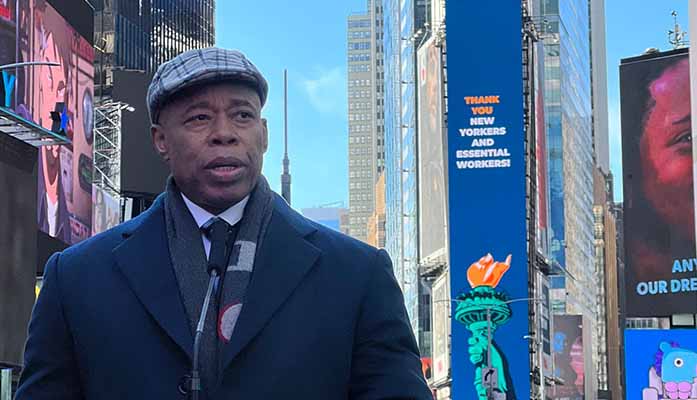
Ducey also dismissed New York City Mayor Eric Adams’ claim that Arizona sent migrant families to New York City, saying that Arizona only sent them to D.C.
“President Biden created the crisis at the border — he’s failed to respond to calls for action and refuses to even visit the border, so we’re bringing the issue a little closer to home for him,” tweeted Ducey. “The President’s policies have placed overwhelming burdens on Arizona communities. It’s convenient that these liberal mayors are finally speaking up on this humanitarian crisis once it affects their communities, even though our program does not charter to New York City.”
Corinne Murdock is a reporter for AZ Free News. Follow her latest on Twitter, or email tips to corinne@azfreenews.com.
by Terri Jo Neff | Jul 9, 2022 | News
By Terri Jo Neff |
In January, Gov. Doug Ducey pledged that securing Arizona’s water future would be a priority during his last year in office, and on Wednesday he delivered a $1 billion investment toward projects that will bring additional water to the state on a long-term basis and change Arizona’s future.
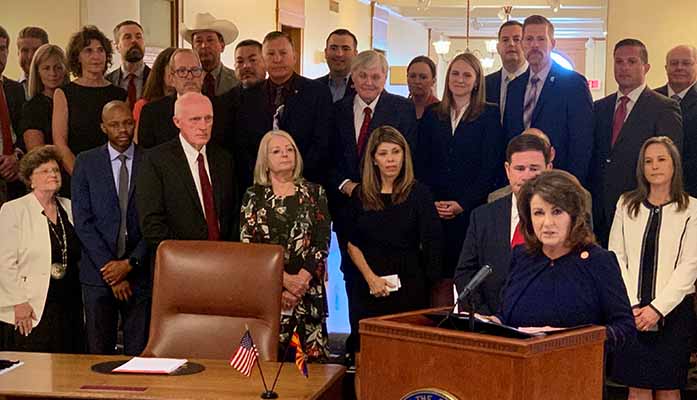
Ducey signed Senate Bill 1740 during a ceremony attended by several lawmakers and stakeholders. The bill, which the governor’s office called “historic legislation,” will allow Arizona to make significant strides in water conservation and innovative technologies such as desalination. It will also provide state officials the opportunity to identify and develop new innovative long-term water sources.
“This legislation is crucial for our continued growth and prosperity,” Ducey said. “As we’ve done over the past seven and a half years, we came together, brought everyone to the table and delivered for the people of this great state. And by doing so, we are leaving Arizona better and stronger than we found it
SB1740 appropriates more than $1 billion over three years to the Water Infrastructure Finance Authority (WIFA) while expanding the agency’s responsibilities to provide loans and grants to water providers and entities. The funding is earmarked to support importation of water into Arizona, conservation, efficiency and reuses, and new technologies.
During the signing ceremony, Ducey recognized Sen. Sine Kerr (R- Buckeye) and Rep. Gail Griffin (R-Hereford) for chairing their respective chamber’s natural resources committee this session.
The governor also lauded Senate President Karen Fann, House Speaker Rusty Bowers, and minority leaders Rep. Reginald Bolding and Sen. Rebecca Rios for ensuring strong bipartisan support, as only two nay votes were cast against SB1740.
Fann noted that Arizona already had a strong commitment to obtaining water security, but acknowledged the state needed to step up its water conservation, efficiency, and reuse projects.
“Arizona’s economy is booming and in order to sustain that growth, we need to look ahead,” she said after the signing. “This water package does just that.”
Sine, who sponsored SB170, sees the signing of the bill as setting in motion a pathway toward reliable future water sources. “Today we celebrate our action to address the water issues our great state faces,” Kerr said. “All Arizonans now and in the future will benefit from this legislation.”
Water legislation has been a longtime priority for Griffin, who saw passage of SB170 as a collaborative effort among multiple stakeholders. “This critical legislation just makes sense. It’s fair and forward-looking,” Griffin said. “I’m glad we’ve come together to find a solution for our water future.”
One of those vital stakeholders was Arizona Farm Bureau.
“More than most, Arizona’s farmers and ranchers know the value of water,” said AFB President Stefanie Smallhouse. “This forward-thinking legislation will be counted among Arizona’s other great successes in water management, and the Arizona Farm Bureau is thankful to the Governor, leadership and staff in the House and Senate, and all those who came together to make this bipartisan bill a reality.”
Another key stakeholder who supported SB1740 was the Arizona Municipal Water Users Association, which has been outspoken about the worsening conditions on the Colorado River which supplies water to much of Arizona.
“This is an important starting point to ensure continual planning and financing of water augmentation, reuse, and conservation,” said Warren Tenney, AMWUA’s executive directors. “Now, we must work together to maximize this historic investment in the wisest ways possible to benefit Arizona now and in the future.”
by Terri Jo Neff | Jul 7, 2022 | News
By Terri Jo Neff |
Gov. Doug Ducey vetoed a bill Wednesday which would have allowed Maricopa County voters to decide next year whether to extend a 2004 voter approved one-half cent transportation tax for another 25 years.
Ducey explained in his veto notice that his action was not about whether the 20-year voter approved Proposition 400 tax set to expire in December 2025 should be extended. Instead, he determined lawmakers approved House Bill 2685 with ballot language that was not responsible nor transparent.
“The language is not only biased, but it fails to include any mention of the increase of 20 to 25 years nor the changes to distribution for state highways, local roads and public transit,” Ducey wrote, pointing out the proposed ballot measure also does not take into consideration passage of the Investment in Infrastructure and Jobs Act.
As a result, Ducey noted that what voters would have been asked to approve “does not properly account for the opportunity to properly leverage state dollars for federal transportation infrastructure funding.”
HB2685 passed the State Senate with only 7 aye votes from the 16 members of its Republican caucus, while the bill received support of only 10 of the 31 House Republicans on the final vote. It was introduced in March to replace Senate Bill 1356 which did not make it out of the House Rules Committee.
Ducey’s veto notice did not have much good to say about HB2685, but he gave a shout out to Sen. Michelle Ugenti-Rita for introducing various amendments to both bills to address several concerns the majority of Republican lawmakers had with the language of the ballot measure.
The amendments offered by Ugenti-Rita (R-Scottsdale) would have ensured a fairer ballot description narrative, Ducey explained, as well as provide more strategic insight into how the transportation and infrastructure tax dollars would be spent.
“Unfortunately, none of these amendments were adopted,” Ducey wrote, adding that asking voters to approve the extension as proposed “is not the way to address the needs of our growing state.”
Reaction to Ducey’s veto was swift, including a statement from the Arizona Free Enterprise Club which called the veto “well-deserved” to avoid allocating transportation dollars for bike lanes, trollies, and “little used transit” at the expense of critical freeway maintenance.
“We commend the Governor for this wise decision and for hearing the concerns brought up by opponents throughout the process as well as thousands of Arizona taxpayers who expressed deep concerns over the poorly drafted legislation,” the AFEC statement reads. “The real victors of course are the taxpayers themselves who deserve common sense transportation policy and accountability for their tax dollars.”
Also complimenting Ducey’s veto was the Arizona Chapter of the Republican Liberty Caucus.
However, Phoenix Mayor Kate Gallego tweeted that she was profoundly disappointed by what she called Ducey’s shortsighted, anti-economic development, and “out of touch” veto.
One thing Gallego’s six-part missive did not mention is there is nothing in Ducey’s veto to prevent legislators from drafting a sounder bill next session and get it before voters in plenty of time to be decided before the one-half cent tax expires.
LEARN MORE HERE
by Terri Jo Neff | Jun 26, 2022 | News
By Terri Jo Neff |
An expansion of Arizona’s Empowerment Scholarship Account (ESA) program has long been a cornerstone platform issue for Conservative lawmakers. And on Saturday, Gov. Doug Ducey made comments which have supporters believing he will sign into law what he called “the most expansive school choice legislation in the nation.”
House Bill 2853 creates a roughly $7,000 education credit for each of the 1.1 million K-12 student in Arizona to attend any school of their choice, whether it be a public, private or charter school, or even homeschooling. Ducey has called passage of the bill sponsored by House Majority Leader Ben Toma (R-Peoria) a “monumental moment for Arizona’s kids and families.”
That sentiment was shared by the Goldwater Institute, which noted Arizona’s new universal ESA expansion provides school choice for all students and “empowers families to choose the best schooling option for their children regardless of their zip code.”
HB2853 will take effect on behalf of the state’s more than 1.1 million students a mere 90 days after signed by the governor. The credit, which is paid out as scholarships, can be used for expenses such as tuition and tutoring, transportation, education tools (i.e. textbooks and computers), and other costs directly related to supporting a student’s educational needs.
Among those across the country recognizing the legislative victory in Arizona is former Florida Gov. Jeb Bush, a longtime advocate of ESA programs.
In addition, Corey A. DeAngelis of the Washington DC-based American Federation for Children tweeted about the bill which now allows all Arizona families to direct their student’s ESA dollars to the educational institution that can best serve the student.
However, organizations such as Save Our Schools have threatened to push back on the new legislation if Ducey signs it. The group advocates for funding the needs of public school systems instead of the needs of individual students, even when a family has determined a private, charter, or home school situation is better for the student than a public school setting.
EDITOR NOTE: The original article has been updated to reflect that Gov. Ducey has not yet signed HB2853 despite his public comments in support of the legislation.
by Terri Jo Neff | Jun 24, 2022 | News
By Terri Jo Neff |
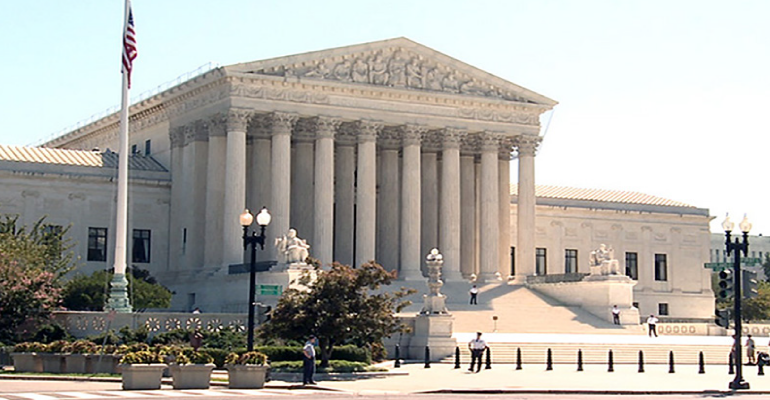
The U.S. Supreme Court ruled 6-3 on Friday that there is no federal constitutional right to have an abortion despite the 1973 decision in Roe v. Wade. And the reaction was swift across Arizona’s political sphere.
Many of the comments focused on what most saw as a faulty ruling issued by the SCOTUS nearly 50 years ago to carve out a right to an abortion under the U.S. Constitution. Among them was Gov. Doug Ducey, who used Twitter to express his thoughts on that aspect of the SCOTUS opinion written by Justice Samuel Alito.
Another elected official who took to Twitter was State Rep. Jacqueline Parker (R-Mesa) who retweeted an official statement released by U.S. Representative Andy Biggs.
State Rep. Walt Blackman (R-Snowflake) gave thanks to the six Justices who provided “victory for the unborn and states rights.”
Also reacting to the decision was U.S. Senator Kyrsten Sinema who expressed concern that government will stand between healthcare decisions she said are best made between a woman, her family, and her doctors.
Sinema added that she will “continue working with anyone to protect women’s ability to make decisions about their futures.”
Others, like Maricopa County Attorney candidate Julie Gunnigle, immediately turned the ruling into a political battle cry.
Similarly, current Arizona Secretary of State and presumptive Democratic nominee for Governor, Katie Hobbs used the ruling as fodder for her campaign.
However, Matt Salmon, a Republican candidate for Governor, took a moment to somberly reflect on what he called “a historic moment for the millions of Americans who believe in the sanctity of life.” Salmon,
Meanwhile, the question now for Arizonans is what impact Friday’s ruling with have here. Arizona Attorney General Mark Brnovich issued a statement advising that he expects the state’s newest abortion law to take effect in about 90 days. It bans the medical procedure 15 weeks after conception.