by Corinne Murdock | Jul 29, 2022 | News
By Corinne Murdock |
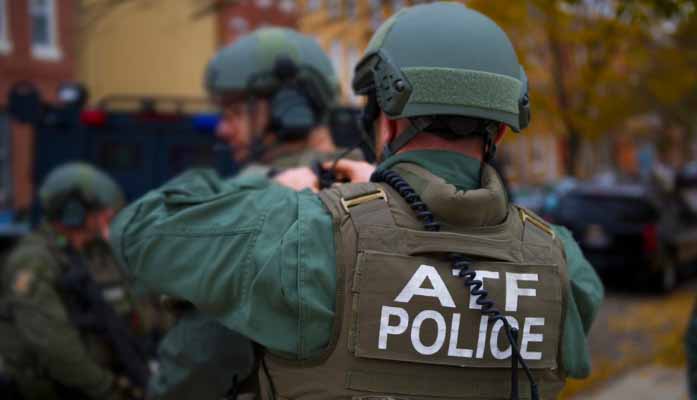
On Wednesday, Attorney General Mark Brnovich announced a lawsuit against the Biden administration for regulations treating unfinished, non-functional firearm parts as complete firearms.
Brnovich led a 17-state coalition lawsuit against the Bureau of Alcohol, Tobacco, Firearms, and Explosives (ATF) and the Department of Justice (DOJ) for the new regulations. In a press release, Brnovich said that the Biden administration was undermining American tradition on private firearm manufacturing.
“The ATF is attempting to overshoot the authority granted to it by Congress,” stated Brnovich. “The rulemakings are unconstitutional, impractical, and would likely put a large number of parts manufacturers out of business.”
The lawsuit addressed the ATF’s final rule, “Definition of ‘Frame or Receiver’ and Identification of Firearms,” issued in April. The ATF claimed in these updated guidelines that past definitions didn’t adequately describe modern frames and receivers. Accordingly, those definitions were untenable when seeking to regulate firearm parts used to assemble privately made firearms (PMFs), colloquially termed “ghost guns.” Therefore, the ATF argued, the definition of frames and receivers should include firearm parts and their variants.
The final rule will go into effect on August 24. The agency added that they will publish an additional final rule, which they characterized as a “stabilizing brace” to their guidelines, in December.
In the 168-page complaint, Brnovich asserted that the Biden administration regulations were “arbitrary, capricious, [and an] abuse of discretion” that violated multiple federal laws as well as the Constitution’s separation of powers, Fifth Amendment, Second Amendment, and First Amendment.
At the helm of the complaint are Gun Owners of America (GOA) and Gun Owners Foundation (GOF), affiliate nonprofits owned by North Dakota resident Eliezer Jimenez, and Morehouse Enterprises doing business as Bridge City Ordnance, a firearms dealer. The lawsuit insisted that the regulations would incur “ever encroaching, illegal, and unconstitutional infringements of their right to keep and bear arms.” It predicted that firearms dealers would be required to keep illegal records of privately-made firearms, and restructure their businesses entirely.
Joining Arizona are West Virginia, Alaska, Arkansas, Idaho, Indiana, Kansas, Kentucky, Louisiana, Missouri, Montana, Nebraska, Oklahoma, South Carolina, Texas, Utah, and Wyoming.
Corinne Murdock is a reporter for AZ Free News. Follow her latest on Twitter, or email tips to corinne@azfreenews.com.
by Corinne Murdock | Jul 6, 2022 | News
By Corinne Murdock |
On Tuesday, the Department of Justice (DOJ) announced that it sued the state over its new law requiring individuals to show proof of citizenship when registering to vote. The law, HB2492, wouldn’t take effect until next January.
DOJ Assistant Attorney General Kristen Clarke called Arizona’s proof of citizenship rule an “onerous” and “unnecessary” requirement.
The DOJ contended in its press release that Arizona’s law violates Section 6 of the National Voter Registration Act (NVRA) and Section 101 of the Civil Rights Act. The NVRA specifies that individuals aren’t required to show proof of citizenship for the federal voter registration form enabling them to vote in federal elections, just to attest that they have one: these are called “federal-only voters.”
In its lawsuit, the DOJ rationalized that the federal voter registration form doesn’t require anything beyond an attestation because documentation “is not necessary to prove citizenship.”
The DOJ also cited the 2013 Supreme Court (SCOTUS) ruling in Arizona v. Inter Tribal Council of Arizona, which determined that Arizona couldn’t require proof of citizenship for those registering to vote using the federal form.
As for the alleged Civil Rights Act violation, the DOJ argued that Arizona officials couldn’t deny individuals the right to vote if they willfully or mistakenly didn’t check a box on the voter registration form confirming that they’re a U.S. citizen. The checkmark serves as an attestation of citizenship, similar to the one outlined by the NVRA.
With this lawsuit, the Biden administration effectively declared their allegiance with other establishment Democrats suing Arizona over the citizenship requirement. At the helm of lawsuits from progressive activist organizations is Marc Elias, a favored lawyer within the Democratic Party who was at the center of the 2016 Russiagate hoax.
Elias celebrated the DOJ’s action.
HB2492 not only requires proof of citizenship when registering to vote. It also requires election officials to cross-check applicants’ citizenship through government databases. On top of local and state databases, these include databases within the Department of Transportation concerning Arizona IDs and driver licenses, the Social Security Administration, the Citizenship and Immigration Services Systematic Alien Verification for Entitlements Program, and the National Association for Public Health Statistics and Information Systems Electronic Verification of Vital Events System.
Over 11,000 voters in the 2020 election didn’t provide proof of citizenship. In 2018, that number was about 1,700.
Attorney General Mark Brnovich pledged to fight the Biden administration to uphold the law.
Corinne Murdock is a reporter for AZ Free News. Follow her latest on Twitter, or email tips to corinne@azfreenews.com.