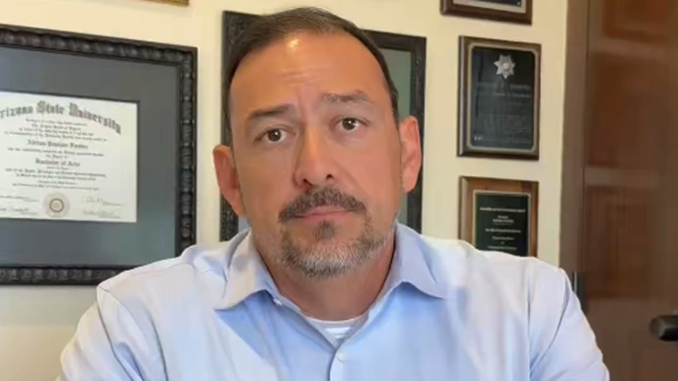
Arizona Secretary of State Adrian Fontes reportedly hasn’t received updated felony reports from the federal government for about a year, but the Department of Justice (DOJ) says it has provided them.
Maricopa County Recorder Justin Heap stated in a press release on Thursday that he learned the reports were available after contacting the DOJ. Heap said Fontes has refused to provide these reports for a year. As a result, county recorders are reportedly missing three quarterly reports containing up-to-date data on ineligible voters.
Heap said he was “disappointed” by Fontes’ decision to misrepresent the status of the reports.
“As the County Recorder for Arizona’s most populated county, I am disappointed that Secretary Fontes would gamble the trust of Arizona voters on a lie,” said Heap. “Arizona is missing at least three full quarters of felony data and voter ineligibility due to Secretary Fontes’ failure to follow the law.”
Heap also reported that the DOJ advised him that it had issued its second quarter federal felony report for 2026 to Fontes on Thursday.
“I am calling on Secretary Fontes to produce the missing reports immediately, so that Recorders can do their job and ensure integrity on our voter rolls,” said Heap.
Rather than focus on giving county recorders the data they need to locate those who need to be removed from the voter rolls, Fontes has focused his efforts on addressing the Trump administration’s recent initiative to purge voter rolls of unlawful voters.
This week, Fontes submitted a letter to the Arizona District Attorney’s Office addressing “troubling allegations” from a whistleblower that the Unlawful Voter Initiative, the federal government’s new initiative to identify and remove unlawful voters, was granting unauthorized access to voter registration information.
The Department of Homeland Security (DHS) and Citizenship and Immigration Services were cited as partners in the initiative. These agencies coordinate to cross-reference voter rolls with immigrant databases.
As the Attorney General of Arizona and the Arizona Secretary of State, we are charged with protecting the personal identifying information of Arizonans.
Today, we jointly sent the undersigned letter to U.S. Attorney Courchaine regarding troubling allegations that the federal… pic.twitter.com/Ar0OODb7N8
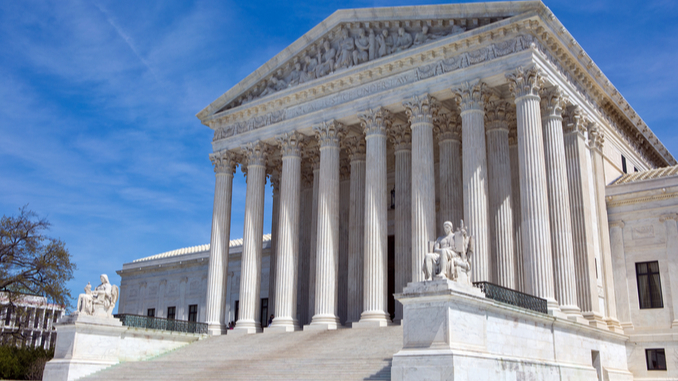
District Attorney Timothy Courchaine responded on Friday that the federal government was not violating privacy laws, citing the Supreme Court’s Friday decision in DHS v. League of Women Voters permitting DHS to request and receive citizenship status information.
“By prohibiting interference with the disclosure of information regarding citizenship status to DHS — ‘[n]otwithstanding any other provision of Federal, State, or local law’ — Congress necessarily authorized DHS to request and receive that information,” stated the ruling. “It is improbable that Congress intended to place officials in such a bind when it passed the [Illegal Immigration Reform and Immigrant Responsibility Act of 1996].”
President Donald Trump issued an executive order last March directing DHS to grant every state and local official responsible for voter registration systems with free access to federal citizenship and immigration status verification systems.
U.S. Attorney Tim Courchaine's response to concerns raised by Attorney General Mayes and Secretary of State Fontes earlier this week about Arizona voter registration information. pic.twitter.com/nNNTH88IOa
DHS praised the ruling as supportive of a new safeguard for American elections.
“This decision is a victory for election integrity,” said DHS General Counsel James Percival. “It’s remarkable that we had to file an emergency petition in the Supreme Court just so we can use government data to stop noncitizens from voting illegally. American elections are for Americans. The Trump Administration and the Department of Homeland Security will use every tool at our disposal to secure our elections.”
AZ Free News is your #1 source for Arizona news and politics. You can send us news tips using this link.
Arizona is facing a lawsuit for its practice of providing in-state tuition to illegal aliens while denying those benefits to citizens in other states.
The Department of Justice (DOJ) announced its lawsuit against the state on Thursday.
Arizona voters narrowly approved in-state tuition for illegal aliens through the legislatively referred ballot measure, Proposition 308, in 2022. The proposition, heavily backed by progressive out-of-state dark money, also repealed a statute prohibiting illegal aliens from receiving state-funded financial aid.
“Prop. 308 constitutes blatant unequal treatment favoring illegal aliens over U.S. citizens. Worse, such preferential treatment is squarely prohibited and preempted by federal law[,]” stated the complaint. “Arizona law rewards an illegal alien with eligibility for in-state tuition, based on residency within Arizona, while explicitly denying eligibility for resident tuition rates to U.S. citizens who are not Arizona residents.”
According to a January report from the Arizona Center for Investigative Reporting, at least 720 illegal aliens have received in-state tuition at Arizona public universities and colleges since 2022. More than 400 of those illegal alien students attended Arizona State University.
Those totals may not be reflective of the whole, since only seven out of 22 schools were reportedly able to provide that data.
The DOJ estimated the total of illegal alien students represented $10.5 million in reduced tuition.
Worth noting: The financial calculations used in this lawsuit misinterpret AZCIR's findings. The number of students reported was cumulative since the program began, up until the fall 2025 semester (not in a single semester) pic.twitter.com/2jBVgNR1fr
As cited by the DOJ, federal law prohibits states from giving post-secondary education benefits to illegal aliens while denying them to American citizens residing in other states.
“Notwithstanding any other provision of law, an alien who is not lawfully present in the United States shall not be eligible on the basis of residence within a State (or a political subdivision) for any postsecondary education benefit unless a citizen or national of the United States is eligible for such a benefit (in no less an amount, duration, and scope) without regard to whether the citizen or national is such a resident,” states 8 U.S.C. § 1623(a).
The DOJ is also suing New Mexico, Oregon, and Washington for offering similar taxpayer-funded higher education to noncitizens. About half of the states in the union and the District of Columbia award in-state tuition rates to illegal aliens.
These lawsuits are the culmination of an effort directed by President Donald Trump last spring.
Last April, Trump issued an executive order calling on the four states to end in-state college tuition for illegal aliens and ordering the attorney general to take the actions necessary to ensure the end of those practices.
“The Attorney General, in consultation with the Secretary of Homeland Security and appropriate agency heads, shall identify and take appropriate action to stop the enforcement of State and local laws, regulations, policies, and practices favoring aliens over any groups of American citizens that are unlawful, preempted by Federal law, or otherwise unenforceable, including State laws that provide in-State higher education tuition to aliens but not to out-of-State American citizens that may violate 8 U.S.C. 1623 or that favor aliens in criminal charges or sentencing,” read the executive order.
Attorney General Kris Mayes, through spokesman Richie Taylor, said the DOJ’s interpretation of the law was flawed, echoing an opinion issued by her office last year.
“Proposition 308, as written and approved by Arizona voters, doesn’t condition eligibility on residence, which is what the government alleges,” stated Taylor. “It conditions eligibility on whether a student attended and graduated from an Arizona high school (or homeschool equivalent). That’s the standard the voters wrote into law — tied to where a student attended school and where they graduated, not their residency.”
Rep. Andy Biggs (AZ-05), the Republican nominee for governor, immediately expressed support last year for Trump’s executive order to end disparities in tuition benefits for in-state students
“President Trump is right — US citizens shouldn’t pay more for college tuition than illegal aliens,” said Biggs.
President Trump is right – US citizens shouldn’t pay more for college tuition than illegal aliens.
I have supported legislation sponsored by @DrPaulGosar to clarify federal law and ensure illegal aliens don’t get benefits that Americans don’t.
Gov. Katie Hobbs has supported and sought to expand eligibility for in-state tuition rates to illegal aliens. During her inaugural State of the State Address in 2023, the governor asked the Republican-led legislature to earmark $40 million in the budget to provide in-state tuition for illegal aliens.
HAPPENING NOW – @GovernorHobbs is meeting with a group of young undocumented immigrants brought to Arizona as children. They’re sharing how the “Promise for Dreamers” program would benefit them. It would allocate $40 million for scholarships that would go to Dreamers. @KTAR923pic.twitter.com/iUKsSL8Qmc
Sen. Ruben Gallego (D-AZ) was cleared of campaign finance and sexual misconduct accusations by one entity, but now faces a probe into his campaign finances by another.
The Senate Ethics Committee issued a letter to Gallego on Friday notifying him that he was cleared of accusations made by Rep. Anna Paulina Luna (R-FL-13) concerning sexual and financial misconduct.
The committee advised it had reviewed statements from individuals identified in the complaint, Federal Election Commission (FEC) reports, the 2025 Senate secretary’s expenditure report, the House of Representatives clerk’s expenditure reports, the House of Representatives reports of privately sponsored travel, and information provided by Gallego to the committee.
Committee members include Sens. James Lankford (R-OK), chairman; Christopher Coons (D-DE), vice chair; James Risch (R-ID); Brian Schatz (D-HI); Deb Fischer (R-NE); and Jeanne Shaheen (D-NH).
In response to the committee letter, Gallego accused Paulina Luna on Monday of being one of many “far-right activists” spreading “right-wing conspiracies.”
The dismissal by the Ethics Committee reaffirms what I have said about these accusations from the beginning: they were right-wing conspiracies peddled by far-right activists like Anna Paulina Luna, the White House, and their allies.
I look forward to an apology from Rep. Luna…
— Senator Ruben Gallego (@SenRubenGallego) June 29, 2026
Relief for the potential 2028 presidential candidate was short-lived. The Department of Justice (DOJ) also had an announcement on Monday wherein it revealed Gallego was under investigation for those alleged campaign finance violations the ethics committee had cleared.
According to federal campaign finance records, Gallego allegedly spent campaign funds on amenities and extravagances for himself and his family. An anonymous source first reported on by Politico accused the senator of treating his campaign cash like a “personal slush fund” for “a luxury lifestyle.”
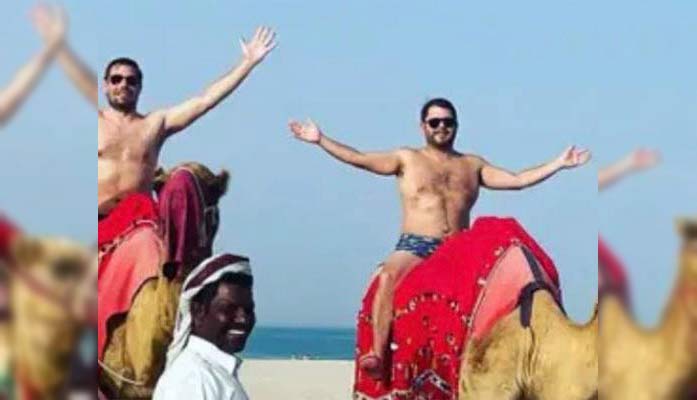
One widely scrutinized expenditure concerned Gallego’s attendance at the 2023 Super Bowl with his former best friend: ex-California congressman and gubernatorial candidate, Eric Swalwell. Gallego and Swalwell hosted a joint fundraising committee event in which they dropped tens of thousands of dollars on brunch, tickets, and other watch party arrangements for themselves and select special guests.
Gallego has reportedly spent around $20,000 in campaign funds on childcare over the past seven years (nearly half came from this past year alone), and tens of thousands more on trips to vacation destinations including Miami for his wife’s birthday, the Caribbean for the birthday of his wife’s boss, and Nantucket and Puerto Rico as well.
Twice in 2025, Gallego used campaign funds to fly his family and an au pair to Disney properties.
Another anonymous source — either the same source quoted by Politico or another source — toldThe Daily Beast that Gallego arranged at least the Miami trip under the guise of fundraising but truly intended as a celebration for his wife’s birthday.
The New York Times recently reported that, while running for Senate back in 2024, Gallego allowed his wife to drive an SUV leased for campaign purposes.
Gallego and his spokespeople have defended the au pair as allowable childcare reimbursements under FEC rules, and some of the events criticized as luxury outings like the jet-setting trips and 2023 Super Bowl watch party as valid fundraising endeavors.
“Trump is targeting Senator Gallego while the most weaponized Department of Justice in history is turning a blind eye to Trump’s unprecedented corruption that’s raising costs for families, and instead targeting anyone who gets in their way — like the Federal Reserve, members of Congress doing their oversight duty, and now Senator Gallego,” read a recent statement from a Gallego spokesperson.
“Because I’m not a millionaire (I’m one of the least wealthy members of Congress), every month is a game of childcare, travel, and scheduling balancing,” said Gallego in a post to X earlier this month. “And because of my schedule and the laws passed that allow for it, I will at times bring my wife and children with me to these retreats and fundraisers. Are these at nice venues? Yes, it’s where the donors are, and it’s part of campaigning. I know people have opinions on that, but that’s the nature of the campaign system we have in our country.”
Let me clear the air on some of these stories swirling around. The FEC has stated that childcare may be reimbursed. There is a simple reason: we want Congress to look like America. Not just people without children, those with grown children, or those from wealthy backgrounds.
This week, the Department of Justice (DOJ) asked the Supreme Court to uphold Arizona’s proof-of-citizenship requirements for voting.
The DOJ filed a brief in Republican National Committee, et al. v. Mi Familia Vota, et al. (case Nos. 25-1017, 25-1019, and 25-1022).
The case will determine whether the National Voter Registration Act (NVRA) prohibits states from: removing noncitizens from voter rolls within 90 days of an election, requiring individuals to provide documentary proof of citizenship when registering to vote in federal elections using the state registration form, and denying individuals the ability to vote by mail if they don’t provide documentary proof of citizenship.
These questions emerged from House Bills 2243 and 2492; both passed in 2022. Together, these bills require the secretary of state and county recorders to regularly review voter rolls, mandate registrants using the state registration form provide proof of citizenship, and prohibit vote by mail for federal-only voters.
The Ninth Circuit Court of Appeals ruled that the NVRA does preempt that legislation, impacting any similar citizenship proof measures taken by other states concerning their voting laws.
The federal court ruled the provisions in the Arizona laws amounted to unlawful voter suppression and were therefore unconstitutional. The court determined that voters must be allowed to vote federal ballots at least, even when they fail to provide proof of citizenship.
The respondents in the present litigation — Mi Familia Vota, Voto Latino, Arizona Asian American Native Hawaiian and Pacific Islander for Equity Coalition, Democratic National Committee, and the Arizona Democratic Party — want to preempt Arizona and other states from imposing proof-of-citizenship limitations on voting.
Jesus Osete, principal deputy assistant attorney general for civil rights, said in the DOJ announcement that the NVRA doesn’t prohibit states from removing noncitizens from voter rolls.
In its filing, the DOJ argued the lower court’s ruling conflicted with the NVRA since it would effectively render state forms into mere replicas of the federal form. States would lack the flexibility afforded by the NVRA, said the DOJ.
The DOJ filing argued that proof-of-citizenship requirements were harmonious with NVRA requirements to increase the number of eligible citizens registered to vote and ensure the maintenance of accurate and current voter rolls.
“When noncitizens with no right to shape American government vote in American elections, the ballot box no longer speaks for the People, because its tally no longer reflects their voice,” argued the DOJ.
Senate President Warren Petersen (R-LD14) said he was “thrilled” by the Trump administration’s intervention.
“Only U.S. citizens should vote in our elections,” said Petersen. “Excited for SCOTUS to take up this important case.”
Thrilled the Trump DOJ is backing Arizona’s proof-of-citizenship requirements! Only U.S. citizens should vote in our elections. Excited for SCOTUS to take up this important case. https://t.co/xWBiciTxjV
The Supreme Court has already overruled the Ninth Circuit Court of Appeals on one of the issues in 2024. The Supreme Court allowed Arizona to enforce its proof-of-citizenship requirement for state voter registration forms, but refused to allow enforcement of the requirement for those registering with federal forms.
That follows the precedent set in 2013, when the Supreme Court ruled that the NVRA prohibited Arizona from requiring proof of citizenship of those voters registering to vote with the federal voter registration form.
AZ Free News is your #1 source for Arizona news and politics. You can send us news tips using this link.
The U.S. Department of Justice has formed the West Coast Healthcare Fraud Strike Force, a new multi-district initiative targeting the significant rise in healthcare fraud across Arizona, California, and Nevada. The effort unites federal prosecutors with law enforcement partners to protect Arizona taxpayers, patients, and legitimate healthcare services from sophisticated fraud networks.
Assistant Attorney General Colin McDonald of the DOJ’s Fraud Division cited data showing sharp increases in fraud activity in the three states. “The Fraud Division is committed to bringing that same relentless, data-driven prosecutorial force to bear across every corner of this region,” said McDonald, “making unmistakably clear that no scheme is too sophisticated, no network too large or small, and no fraudster too distant to escape federal accountability.”
Arizona has been particularly hard-hit and is already on the front lines of enforcement. U.S. Attorney Timothy Courchaine for the District of Arizona noted that federal law enforcement and his office have already disrupted fraud schemes worth over a billion dollars of taxpayer money in the state. “Our mission as part of the West Coast Health Care Fraud Strike Force is to ensure Americans who need critical services are not used as pawns to make bad actors rich,” Courchaine stated. “Through excellent investigations, trial work, and seizures of ill-gotten gains, the District of Arizona will continue safeguarding those services.”
Arizona Attorney General Kris Mayes told The Center Square, “Arizona has been on the front lines of fighting Medicaid fraud for the past several years, and we welcome the federal government’s help in combatting this problem.” Mayes also highlighted that since 2023, her office has indicted 166 individuals and entities and recovered or seized more than $139 million in cash and assets.
Recent Arizona cases underscore the scale of the threat. In one scheme, Farrukh Jarar Ali, a 41 year old Pakistan-based operator, was charged with conspiracy to commit healthcare fraud and related offenses after allegedly submitting approximately $650 million in false and fraudulent claims to Arizona’s Medicaid program (AHCCCS) through at least 41 substance abuse treatment clinics.
Many patients were recruited from homeless populations or Native American reservations, and clinics often provided little or no legitimate care. AHCCCS paid out roughly $564 million before the scene was uncovered. Ali personally received about $24.5 million and used some proceeds to purchase luxury real estate in Dubai.
In another prosecution, Phoenix residents Alexandra Gehrke and her husband Jeffery King were sentenced to 15.5 years and 14 years in prison, for orchestrating a massive wound graft fraud scheme. Between November 2022 and May 2024, they and co-conspirators submitted over $1.2 billion in false or fraudulent claims to Medicare and other insurers for medically unnecessary bioengineered skin substitutes applied to elderly and terminally ill patients — often through illegal kickbacks and regardless of medical need.
Federal programs paid out nearly $615 million. Authorities seized substantial assets from the couple, including $97 million from bank accounts, luxury vehicles, life insurance annuities, cash, and gold and silver.
Mayes also referenced a prior $2.5 billion Medicaid fraud scheme involving fraudulent sober living homes targeting Native Americans, from which the state recovered only about 5% of losses. Her office has since launched a $6 million grant program to assist affected tribal nations.
The new Strike Force builds on these successes and addresses emerging threats identified by Scott Lampert, Acting Deputy Inspector General for Investigations at the U.S. Department of Health and Human Services. Lampert pointed to “sham operations designed to appear legitimate while exploiting patients and inflating claims through increasingly sophisticated methods.”
Ethan Faverino is a reporter for AZ Free News. You can send him news tips using this link.