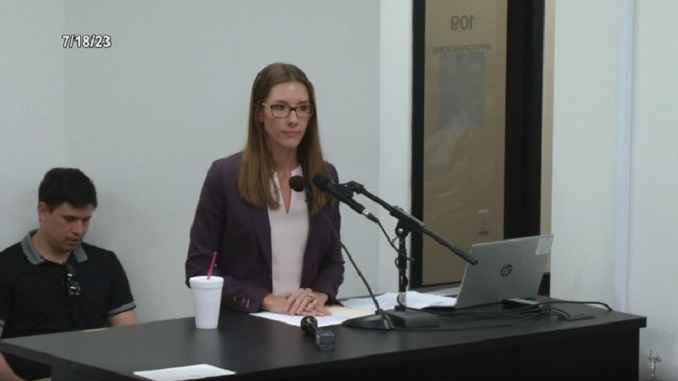
On Tuesday, a joint committee of the Arizona legislature launched an investigation into allegations of censorship at Arizona State University (ASU). Lawmakers issued a 60-day deadline to conduct the investigation.
The directive arose from the Joint Legislative Ad Hoc Committee on Freedom of Expression at Arizona’s Public Universities hearing concerning the T.W. Lewis Center, shuttered this year after the revocation of $400,000 in annual funding from its namesake, Tom Lewis, who cited “left-wing hostility and activism” as his reason for defunding the program.
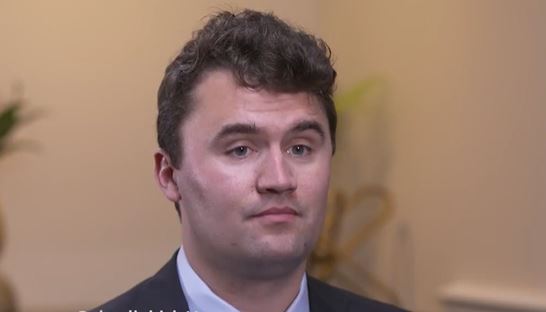
Lewis’ contention arose from the efforts of 37 Barrett Honors College faculty members, who launched a coordinated campaign to prevent an event featuring prominent conservative speakers Dennis Prager and Charlie Kirk. Prager testified at Tuesday’s hearing; he also published an opinion piece on the event ahead of the hearing.
.@DennisPrager says Arizona State University Barrett Honors College faculty are intellectual & moral lightweights: "They fear any conservative coming for 90 minutes, because in 90 minutes I can undo the 4 years of the indoctrination that these leftists give their students." pic.twitter.com/tmXn56rFih
State Sens. Anthony Kern, co-chair (R-LD27), Frank Carroll (R-LD28), Sally Ann Gonzales (D-LD20), Christine Marsh (D-LD04), and J.D. Mesnard (R-LD13) served on the committee, as did State Reps. Quang Nguyen (R-LD01), Lorena Austin (D-LD09), Analise Ortiz (D-LD24), Beverly Pingerelli (R-LD28), and Austin Smith (R-LD29). Kern and Nguyen served as co-chairs.
“This is to get to the bottom of a state-funded university that is not meeting its obligation to freedom of expression and freedom of speech,” said Kern.
The center relied on an annual budget of around $1 million; ASU representatives explained that the center would live on through the classes taught, though the actual center itself and the executive director at its helm, Ann Atkinson, would be gone.
ASU Vice President of Legal Affairs Kim Demarchi explained that Lewis’ funding provided for career development and education. Demarchi testified that ASU considered what programs it could continue without Lewis’ funding, and declared that they could only sustain the faculty without Lewis’ funding. Demarchi also shared that the Barrett Honors faculty weren’t punished in any way for the letter or allegations of intimidation.
“It is possible it [their letter] has a chilling effect,” said Demarchi.
However, Demarchi clarified that a professor would have to explicitly threaten a student’s grade in order to be in violation of university policy.
Atkinson went public with the closure of the Lewis Center last month. (See the response from ASU). She toldAZ Free News that the university turned down alternative funding sources that would make up for the loss of Lewis’ funding necessary to keep the Lewis Center running.
Nguyen opened up the hearing by recounting his survival of Vietnam’s communist regime as a child, and comparing that regime’s hostility to free speech to the actions of Barrett Honors College faculty.
“My understanding is that there is an effort to prevent conservative voices from being heard,” said Nguyen. “I crossed 12,000 miles to look for freedom, to seek freedom.”
Nguyen expressed disappointment that none of the 37 faculty members that signed onto the letter showed up to testify in the hearing. He said if he accused someone, he would show up to testify.
Democratic members of the committee contended that the event occurred and therefore censorship hadn’t taken place. Kern said the occurrence of the event doesn’t resolve whether freedom of speech was truly permitted, citing the closure of the Lewis Center.
ASU Executive Vice Provost Pat Kenney emphasized the importance of freedom of expression as critical to a free nation. Nguyen asked whether Kenney read the Barrett letter, and agreed to it. Kenney said the letter was freedom of expression. He claimed the letter didn’t seek cancellation of the event.
“When faculty speak out on their own like that, they’re covered on the same topic we’re here about, which is free speech,” said Kenney.
ASU representatives claimed near the beginning of the hearing that Lewis and ASU President Michael Crow had discussed the withdrawal of funding. However, toward the end of the hearing Kern announced that he’d received information from a Lewis representative that the pair hadn’t discussed the funding, and accused ASU representatives of lying.
Ortiz called the anonymous complaints from students hypotheticals because no formal complaints were lodged. She also claimed that the hearing was merely an attempt to delegitimize public and higher education. Marsh claimed that lawmakers shouldn’t consider the claims of student fears of retaliation because the students should’ve gone to ASU directly.
Nguyen asked whether ASU would defend guest speakers, such as himself, if ASU faculty were to lodge claims of white nationalism. Kenney said that, in a personal capacity, ASU faculty were free to make their claims, but not if they spoke out on ASU’s behalf.
Atkinson contested with the characterization that the Barrett faculty spoke out in their personal capacity. She pointed out that Barrett faculty signed the letter in their capacity as ASU faculty, emailed her using their ASU emails, and sent communications to students about opposing the event using ASU technology.
Ortiz announced receipt of a letter from the Arizona Board of Regents (ABOR) on the outcome of the requested investigation into the incident, the results of which Kern and the rest of the committee appeared to not have been made aware, determining that no free speech violations took place at ASU.
✅FOR IMMEDIATE RELEASE✅ State Representative @azaustinsmith Calls on Board of Regents to Investigate & Report on Free Speech Concerns at Arizona State University
“Free speech is paramount to the future of our Republic. Higher education taxpayer-funded universities must be held… pic.twitter.com/GllgAZhLiq
— Arizona House Republicans (@AZHouseGOP) June 21, 2023
Marsh speculated that the professors didn’t show up because they faced death threats, citing media attention and conservative speaker Charlie Kirk’s Professor Watchlist. Kern said that would be a “lame excuse.” He also pointed out that the professors launched a national campaign and initialized bringing themselves into a bigger spotlight.
“You’re making excuses where we don’t know that’s the case,” said Kern.
Atkinson said that she could provide “dozens, if not hundreds” of students that could testify to experiencing faculty intimidation. She also claimed that Williams told her to avoid booking speakers that were political.
“We allow the speaker but you have to take the consequences,” said Atkinson, reportedly quoting Williams.
Atkinson testified that TV screen ads were removed and flyers were torn down following the Barrett Honors faculty letter. She also said she shared the information for the person responsible on June 13, yet it appears ASU took no action. ASU said they weren’t aware of any advertising for the event pulled.
Additionally, Atkinson testified that Williams pressured her to postpone the event “indefinitely.” She noted that Williams interpreted ASU’s policy of not promoting political campaigns as not allowing political speech at all.
“We were in an environment telling us that this was ‘hate speech,’” said Atkinson.
Atkinson said she was directed by leadership ahead of the event to issue a preliminary warning that the event contained potentially dangerous speech.
Gonzales told Atkinson that hate speech doesn’t qualify as constitutionally protected speech. However, the rules attorney corrected her that the Supreme Court ruled hate speech as protected.
Arizona Senate Democrats had tweeted that "hate speech" doesn't qualify as free speech. Sen. Mesnard reminds Democrats present of the Supreme Court 8-1 ruling for Westboro Baptist Church that the First Amendment protects "hate speech." pic.twitter.com/tJT3laTbv7
ASU professor Owen Anderson also testified. He said that he’s previously had to get the free speech rights organization Foundation for Individual Rights and Expression (FIR) involved twice due to faculty attempts to suppress free speech. Anderson also said that faculty have attempted to restrict speech by adding anti-racism and DEI to policy on class content and annual reviews of professors.
“Insults abound, but rational dialogue is rare. What we need are administrators that call these faculty to higher conduct,” said Anderson.
In closing, Kern said he doesn’t trust ASU, the University of Arizona, or ABOR. He argued that ABOR hadn’t issued a real investigation and called their report “typical government fluff [and] garbage.” Kern also called for the firing of Barrett Honors College Dean Tara Williams.
Corinne Murdock is a reporter for AZ Free News. Follow her latest on Twitter, or email tips to corinne@azfreenews.com.
It looks like we struck a nerve at one of the largest universities in the United States. Last week, the Free Enterprise Club published an article on Arizona State University’s (ASU) failure to uphold free speech. The article came in the aftermath of an event held by the T.W. Lewis Center for personal development—a center of the Barrett Honors College—that featured prominent conservative speakers like Robert Kiyosaki, Dennis Prager, and Charlie Kirk.
While the event was allowed to proceed, it faced a campaign from 39 of the 47 faculty from the honors college who tried to shut it down. Then, in the months following the event, the center was not only dissolved, but two staff members lost their jobs. Now, ASU has offered a “fact check” of our article in a desperate attempt to save face. And as you might expect, it’s another swing and miss…
Universities are supposed to be the “marketplace of ideas.” With a “green light” rating from the Foundation for Individual Rights and Expression (FIRE), you would think that Arizona State University (ASU) would understand this. But apparently, the school would rather be just another woke university that shuts down free speech. Now, the T.W. Lewis Center for Personal Development—a center of the Barrett Honors College—and its executive director Ann Atkinson have found out the hard way.
Back in February, Atkinson organized an event on “Health, Wealth, and Happiness” as part of a series from the Lewis Center focused on connecting students with professionals who can offer career and life advice. Speakers for the event included Rich Dad, Poor Dad author Robert Kiyosaki, radio talk show host and founder of Prager U Dennis Prager, founder and president of Turning Point USA Charlie Kirk, and heart-transplant cardiologist Radha Gopalan. For a university that offers classes on subjects like witchcraft and critical theories of sexuality, this event felt pretty tame by comparison. But the mere mention of these conservative speakers caused more than 75 percent of the Barrett Honors College faculty to have a meltdown…
Arizona State University (ASU) Barrett Honors College faculty recruited students to oppose an upcoming event featuring conservative speakers. These educators stand opposed to their colleagues that organized the event, the T.W. Lewis Center for Personal Development.
The opposed speakers are Charlie Kirk, founder and president of activist group Turning Point USA; Dennis Prager, radio talk show host and founder of educational group PragerU; and Robert Kiyosaki, bestselling author of the top-selling personal finance book of all time and PragerU presenter. The trio are scheduled to speak Wednesday on “Health, Wealth, and Happiness.”
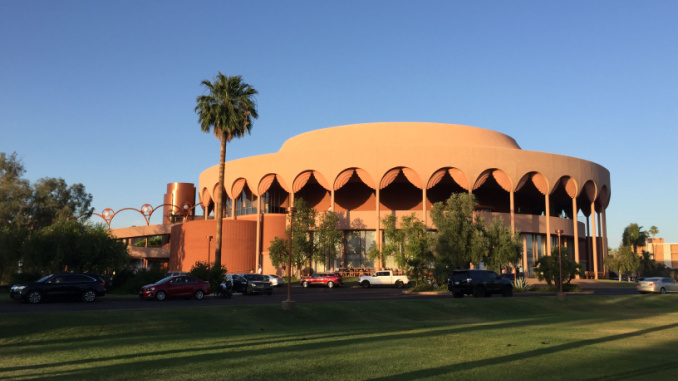
The T.W. Lewis Center is hosting a discussion of Health, Wealth, and Happiness with speakers Dennis Prager, Robert Kiyosaki, and Dr. Radha Gopalan at ASU Gammage theater on 2/8 at 7:00 pm! Students can attend this event for free! Tickets here: https://t.co/vyglKQjrtNpic.twitter.com/Q31ywkr86q
— Barrett, The Honors College at ASU (@barretthonors) January 26, 2023
In a letter to Barrett Honors College Dean Tara Williams last Wednesday, the faculty members called Prager and Kirk “purveyors of hate,” and accused them of attacking women, “people of color,” LGBTQ+ individuals, and democracy-based institutions. The faculty dismissed Kiyosaki as a debunked sales schemer.
“By platforming and legitimating their extreme anti-intellectual and anti-democratic views, Barrett will not be furthering the cause of democratic exchange at ASU, but undermining it in ways that could further marginalize the most vulnerable members of our community,” read the letter. “Our collective efforts to promote Barrett as a home for inclusive excellence demand we distance ourselves from the hate that these provocateurs hope to legitimate by attaching themselves to Barrett’s name.”
The faculty also accused the trio of advancing an “anti-intellectual agenda” because they have challenged the necessity of a college education, the hypocrisy over the use of the “n-word,” the problematic nature of Black History Month, the acceptance of transgenderism and gender ideology, and the integrity of the 2020 election.
Although ASU hasn’t indicated that it would cancel the event, AZ Free News was informed that on-campus marketing of the event was removed following the Barrett faculty complaints.
39 of 47 Barrett faculty members signed onto the letter: Abby Loebenberg, Abby Wheatley, Adam Rigoni, Alex Young, April Miller, Benjamin Fong, Christiane Fontinha de Alcantara, Dagmar Van Engen, David Agruss, Don Fette, Elizabeth Meloy, Gabriella Soto, Georgette Briggs, Irina Levin, Jacquie Scott, Jennifer Brian, John Lynch, Joseph Foy, Joseph O’Neil, Laura Jakubczak, Laurie Stoff, Lisa Barca, Mathew Sandoval, Matthew Voorhees, Michael Ostling, Mina Suk, Nilanjana Bhattacharjya, Peter Schmidt, Phillip Cortes, Rachel Fedlock, Rebecca Soares, Robert Mack, Sarah Graff, and Taylor Hines.
Levin, a Barrett faculty affiliate, toldThe State Press, ASU’s student-run newspaper, that she was shocked that ASU would allow this event and claimed that the guest speakers weren’t aligned with Barrett principles.
Ostling claimed that their signatures each represented different reasons for opposing Kirk, Prager, and Kiyosaki on campus, and that they weren’t advocating for the cancellation of the event.
“I believe these speakers represent ideas that go against the principles of the ASU charter that stands for inclusivity and not exclusivity,” said Ostling.
Multiple faculty members from the letter liked tweets that accused Prager and Kirk of being “white nationalists.”
On her since-deleted Twitter account, Miller, an Honors Faculty Fellow, accused ASU of “[selling] its soul to the ‘highest’ bidder.”
“When your college sells its soul to the ‘highest’ bidder, this is the result. What an outrageous embarrassment. Money over ethics, donors before students,” tweeted Miller.
Miller also emailed the condemnation letter to her students. Although Miller alleged in the email that she supported free speech in universities, even controversial speech, she said she opposed controversial speakers that donate to the college. Miller further claimed that Prager, Kirk, and Kiyosaki held beliefs that were beyond the scope permitting ideological debate.
“This is not a simple issue of partisan politics; these two speakers are known for, among other things, spreading: exceedingly hateful rhetoric that is harmful to many marginalized communities; anti-public education platforms; and health/medical disinformation— all of which go against the values and purposes of a post-secondary institution like Barrett and ASU,” wrote Miller.
Other Barrett faculty reportedly imposed similar pressure on their students. However, students have been reluctant to produce these documents; AZ Free News received information that students have expressed fear of retaliation from Barrett faculty and their peers if they express dissenting opinions or support for the event.
Young, also an Honors Faculty Fellow, tweeted that only those with a certain level of competence were allowed to engage in discourse — implying that this caveat disqualifies Prager, Kirk, or Kiyosaki. Young then claimed that those who issued public response to the letter had incited threats against their jobs and lives.
In a separate tweet, Young explained that the faculty members behind the condemnation letter were upset they hadn’t been consulted about the speaker selection for the event.
My colleagues and I at Barrett Honors College are embroiled in an escalating controversy involving this event. I'll explain some of it here, but the main point: we are being targeted by violent threats from the far right, & need solidarity from folks at ASU and beyond. 1/ pic.twitter.com/IFojB5WdaW
Additionally, three ASU professors issued a response letter via The Daily Wire to the Barrett Honors condemnation letter. These three professors were Jonathan Barth, associate history professor and associate director of the ASU Center for American Institutions; Donald Critchlow, history professor and director of the ASU Center for American Institutions; and Owen Anderson, philosophy and religious studies professor.
Barth, Critchlow, and Anderson said they didn’t support the suppression of speech advocated by the Barrett faculty members. They noted that ASU President Michael Crow has a long history of supporting intellectual diversity, even amid opposition. The three men said that the Barrett faculty were intentionally intimidating their peers and students, thereby destroying the free and open exchange of ideas.
“Faculty letters like the one condemning Dennis Prager and Charlie Kirk reinforce campus conformity and function as a not-so-subtle way to intimidate and silence would-be dissenters among the faculty and student body,” stated the trio.
Check out the work of @DonCritchlow and Professor Barth in the Daily Wire: Professors Stand Up For Free Speech As Liberal Colleagues Seek Boycott Of Dennis Prager And Charlie Kirk https://t.co/Z5gXVSXft2
UPDATE:Shortly after the publication of this story, AZ Free News received word that the events in question were restored. A follow-up email submitted late Monday afternoon explained that the events were restored because, “Under the leadership of President Michael Crow, Arizona State University is committed to intellectual diversity.”
Human nature remains constant, as evidenced by the relatability of Plato’s “Allegory of the Cave” to Arizona State University’s (ASU) latest actions. As fond as Plato and other ancient philosophers were of challenging their own and others’ ideas and beliefs through the dialectic, so it appears ASU shares a similar fondness for avoiding such interactions.
According to an email obtained by AZ Free News, ASU history department leadership forced the School of Philosophical and Religious Studies (SHPRS) to cancel two events funded by its Political History and Leadership (PHL) Program after asking history faculty in an unprecedented survey whether two guest speakers should be permitted to come. The two events featured speakers engaging in conservative rhetoric: Bret Weinstein, the controversial former Evergreen State College biology professor featured in a documentary by conservative radio talk show host and writer Dennis Prager on cancel culture, “No Safe Spaces,” and Katie Pavlich, a conservative commentator and University of Arizona (UArizona) alumna.
“For the first time since the conception of SHPRS, the head of the history faculty sent out an online survey to the history faculty asking them to vote on whether or not to bring these PHL funded speakers to campus,” read the email from PHL Co-Director Donald Critchlow.
Weinstein doesn’t consider himself a conservative; he has long considered himself a “deep progressive.” He was scheduled to speak in mid-October, while Pavlich was scheduled to speak sometime next spring.
AZ Free News reported January 19 that ASU canceled another PHL event featuring Congressman Andy Biggs (R-AZ-05) and former Utah congressman and Fox News contributor Jason Chaffetz. As reported at the time, ASU offered three different reasons for canceling the event to different parties. Several of the featured speakers were told that the event had to be canceled due to an increase in COVID-19 cases. However, others were informed that the event was canceled due to controversy over Biggs and Chaffetz being guest speakers.
The final reason given to AZ Free News for the event cancellation came from ASU. University spokesman Jerry Gonzalez told AZ Free News that a faculty member broke ASU’s scheduling protocol.
“The event at the Desert Botanical Garden was canceled due to a breach of scheduling protocol by a faculty member in the School of Historical, Philosophical and Religious Studies,” said Gonzalez. “The university welcomes the opportunity for this event to be rescheduled following the required protocols.”
About a week later on January 25, after the report by AZ Free News was shared on a national level, the email revealed that ASU’s history department implemented new, unspecified procedures for requesting guest speakers to come on campus. It was after PHL followed the new procedures that the head of the history faculty, Catherine O’Donnell, sent out the survey about the two speakers. After receiving the survey results, O’Donnell recommended SHPRS Director Richard Amesbury cancel both events featuring Weinstein and Pavlich. In turn, Amesbury directed PHL to cancel the two speakers.
Included in the closing portion of the email was a quote from ASU’s Statement of Freedom of Expression:
“Without a vibrant commitment to free and open inquiry, a university ceases to be a university,” read the statement.
Corinne Murdock is a reporter for AZ Free News. Follow her latest on Twitter, or email tips to corinne@azfreenews.com.