by Matthew Holloway | Jun 10, 2024 | News
By Matthew Holloway |
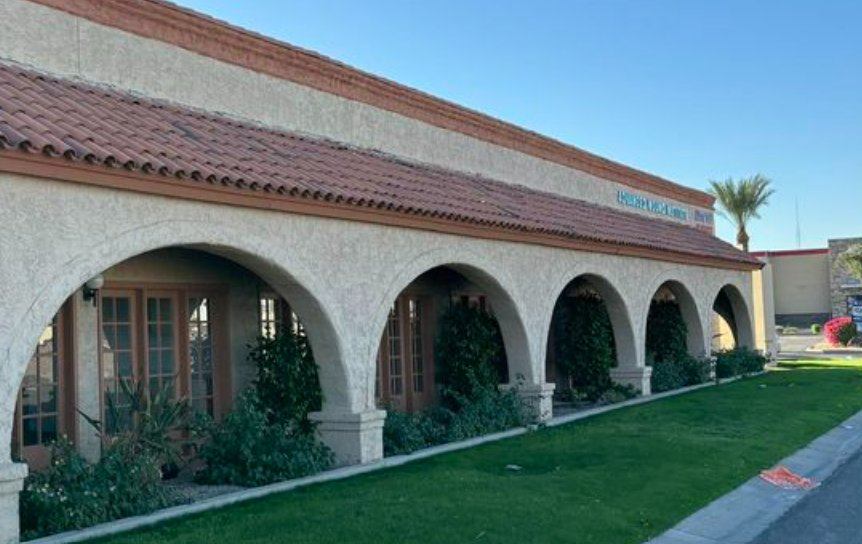
In social media posts on Friday afternoon The West Valley Republican & Independent Coalition, a non-profit PAC, stated that their office located on West Grand Ave. in Sun City, AZ “is almost a total loss,” after what is being called an electrical fire ripped through the building housing it overnight.
The organization wrote in a post to Facebook on Friday that the cause of the fire was electrical in nature saying, “Well, life sometimes sends us curveballs. And what a curveball this is: Our building had an electrical fire last night and our office is almost a total loss. Smoke damage is awful.”
Replying to comments, the organization stated that “everything was contaminated with poisonous chemicals from the fire.”
A volunteer effort in the early hours of Friday led by Chairman Cindy Newman and Congresswoman Debbie Lesko (R-AZ-08) with representatives from the Republican National Committee West Valley, American Majority Action, and GOP LD27 were reportedly able to clear the office of the PAC’s furniture and equipment in just three hours. The PAC expressed thanks in a post to Facebook minutes after the initial announcement.
The West Valley Republican & Independent Coalition is asking for donations to get the office cleaned and remediated, replacing all lost equipment and brought back into commission. According to the PAC’s website, “The West Valley Republican & Independent Coalition is a nonprofit PAC formed by local grassroots conservatives to provide a permanent office in the West Valley for the purpose of voter registration, voter outreach, distribution of political literature and as a meeting place for groups and individuals. The mission of the office is to foster an educated and informed electorate.
The PAC is self-funded through donations and has no paid staff or consultants. All funds donated to the PAC are utilized to pay rent, utilities, supplies, and to promote events.”
Chairman Cindy Newman speaking with AZ Free News confirmed that the fire was electrical in nature and started in another office in the complex. The damage was primarily caused by toxic smoke, and the office is closed indefinitely. The insurance on the office is insufficient to cover the massive losses in excess of $30,000. The organization is seeking an alternate meeting location.
“We’re going to come back even better than before I say,” Newman said. “I think we’ll come back better than what we were and we’ll have an incredible grand re-opening.”
Anyone wishing to volunteer or with questions can contact Newman at westvalleyrepublicans@pm.me.
Matthew Holloway is a senior reporter for AZ Free News. Follow him on X for his latest stories, or email tips to Matthew@azfreenews.com.
by Staff Reporter | May 21, 2024 | News
By Staff Reporter |
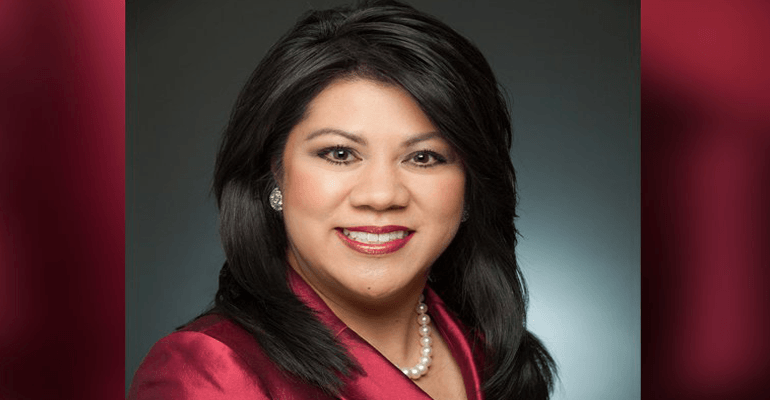
Arizona Treasurer Kimberly Yee was honored before Congress on Monday for her work and legacy inspiring girls and young women.
Congresswoman Debbie Lesko presented the recognition for Yee. Lesko noted that Yee was the first Chinese-American woman in Arizona to take on a high state-level position, as well as a Republican.
“It is the first Asian-American elected to a statewide office in Arizona history,” said Lesko.
Yee formerly served in the Arizona legislature, in both the House and the Senate, and rose to become the state’s second female majority leader, after the late Sandra Day O’Connor.
Prior to joining the state legislature and coming to Arizona, Yee worked for California’s Republican governors Pete Wilson and Arnold Shwarzenegger. After Yee moved to California, Yee became communications director for the place she now leads: the state treasurer’s office.
Yee’s transition into the legislature began after Governor Jan Brewer successfully recommended Yee to replace another lawmaker, former Republican representative Doug Quellan.
It was in the legislature that Yee passed a bill requiring doctors to provide women with the option of an ultrasound before obtaining an abortion.
Some of Yee’s high marks in office include her improvements that led to record highs of the Permanent Land Endowment Trust Fund, totaling over $8.6 billion at one point (as of March’s end, $6.75 billion); punishing companies’ boycotts of Israel; and getting into state law a requirement of financial education for high schoolers prior to graduation.
“Treasurer Yee’s service to Arizona has raised financial literacy rates, improved Arizona’s economy, and helped show young women and girls across the state that anything is possible,” said Lesko.
Yee has acted and spoken out consistently on her views of unsound policy, usually Democratic.
Back in February, Yee joined state Republican lawmakers’ lawsuit against the Biden administration over its confiscation of nearly one million acres of land in northern Arizona in an attempt to declare the land a monument.
The treasurer has also pushed back on Governor Katie Hobbs. She asserted publicly that the governor’s proposed education funding plan was “dangerous and unsustainable.”
Yee also refused to admit government employees under two agencies during a Board of Investment meeting after the Governor refused to nominate agency directors.
After the Hamas terrorist attack that initiated the ongoing conflict between Israel and Gaza, Yee ramped up support for Israel. The state increased its bond holdings to support Israel.
Yee ensured Arizona was the first state in the country to enforce anti-Boycott, Divestment, and Sanctions laws. The state divested $143 million from Unilever, the parent company of Ben & Jerry’s, in response to the latter company’s ceasing distribution in Israel.
Yee also improved Education Savings Plans (ESPs) under her leadership. The ESPs were up 38 percent: a three-year difference worth $2.25 billion.
Last year, Yee resisted Hobbs’ alleged desire to cancel ESA-related grants enabling children to attend all-day kindergarten.
Assets under Yee’s management grew from $15.4 billion when she took office to $30.4 billion.
AZ Free News is your #1 source for Arizona news and politics. You can send us news tips using this link.
by Corinne Murdock | Mar 18, 2024 | News
By Corinne Murdock |
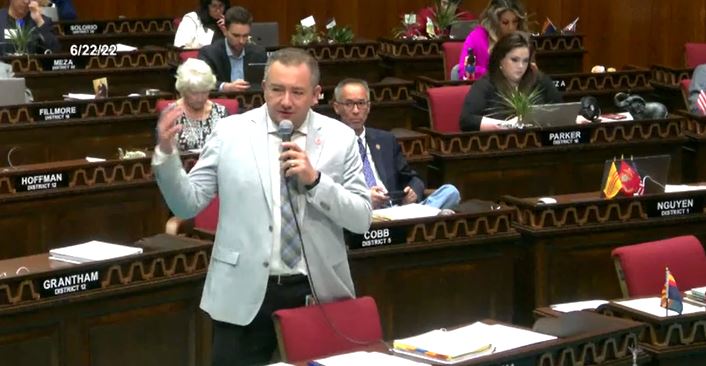
Congresswoman Debbie Lesko (R-AZ-08) brought her endorsement of Arizona House Speaker and congressional candidate Ben Toma (R-LD27) to the U.S. House floor.
During Tuesday’s House floor session, Lesko praised the state representative as “an accomplished and dedicated leader.” The congresswoman specifically applauded Toma’s work on passing universal school choice, voter ID, border security through e-Verify, and the state’s largest tax cut.
Lesko closed with what sounded like confidence in Toma’s fitness to represent the state at the congressional level.
“Speaker Toma’s career is a testament to his dedication to Arizona, his legacy of leadership will last for years to come,” said Lesko.
Lesko formally endorsed Toma in December, emphasizing Toma’s longtime residence and understanding of the eighth congressional district.
“Ben Toma lives in our district. He knows our district. He cares about the people who live in our district. As a legislator and Speaker of the Arizona House, Ben has a proven, conservative track record for getting things done and for standing up for the principles that have made our nation great. Now, more than ever, we need principled, experienced leaders, like Ben Toma, who will stand up for our values and advance our conservative priorities in Congress. I’m proud to endorse Ben Toma for Congress and will be working hard to get him elected because I know he will do a great job!”
Toma also has endorsements from former Sen. Jon Kyl; former Gov. Jan Brewer; State Sens. Frank Carroll (R-LD28) and John Kavanaugh (R-LD03); State Reps. Beverly Pingerelli (R-LD28), David Livingston (R-LD28), Quang Nguyen (R-LD01), and Justin Wilmeth (R-LD02); Surprise Mayor Skip Hall; former State Rep. Jean McGrath; Maricopa County Treasurer John Allen; Glendale Councilmember Lauren Tolmachoff; and former Republican Senate candidate Jim Lamon.
Ten other Republicans who have filed a statement of interest for the eighth congressional district are 2022 attorney general candidate Abe Hamadeh, State Sen. Anthony Kern, 2022 Senate candidate Blake Masters, former congressman Trent Franks, Isiah Gallegos, Rollie Stevens, Patrick Briody, Seth Coates, Jon Forsythe, and Jimmy Rodriguez.
An internal poll in December by National Public Affairs, a firm run by former Trump administration staffers, found Hamadeh had between 37 percent (uninformed of endorsements) and 45 percent (informed) voter support: a 23-point lead over the next leading candidate, Masters (14 percent uninformed, 10 percent informed). Franks followed behind (six percent uninformed, seven percent informed), then Toma (seven percent, both informed and uninformed), and then Kern (three percent uninformed, two percent informed). About 30 to 34 percent of polled voters remained undecided.
Another internal poll from last month by Fabrizio, Lee & Associates found that Hamadeh and Masters had equal voter support, both polling at 24 percent, with Franks following behind (nine percent), then Toma and Gallegos (three percent), and then Kern (one percent). 35 percent remained undecided.
Hamadeh has endorsements from a whole host of Trump administration officials, endorsees, and former President Donald Trump himself. Among Hamadeh’s endorsers are Senate candidate Kari Lake, Trump administration national security advisor Robert O’Brian, Trump administration national intelligence director Ric Grennell, Trump administration senior national intelligence advisor Kash Patel, Florida Congressman Cory Mills, and former Arizona GOP chair Kelli Ward.
Seven Democrats to have filed a statement of interest for the eighth congressional district are Sheila Bilyeu; Donald Case; Bernadette Greene Placentia; Marc Lewis; Steven Sawdy; Mark Thompson; and Whitten Gregory.
Two Libertarians also filed their statements of interest: January 6 participant Jacob Angeli-Chansley, the “Shaman,” and Alex Kolb.
Corinne Murdock is a reporter for AZ Free News. Follow her latest on Twitter, or email tips to corinne@azfreenews.com.
by Corinne Murdock | Dec 17, 2023 | Economy, News
By Corinne Murdock |
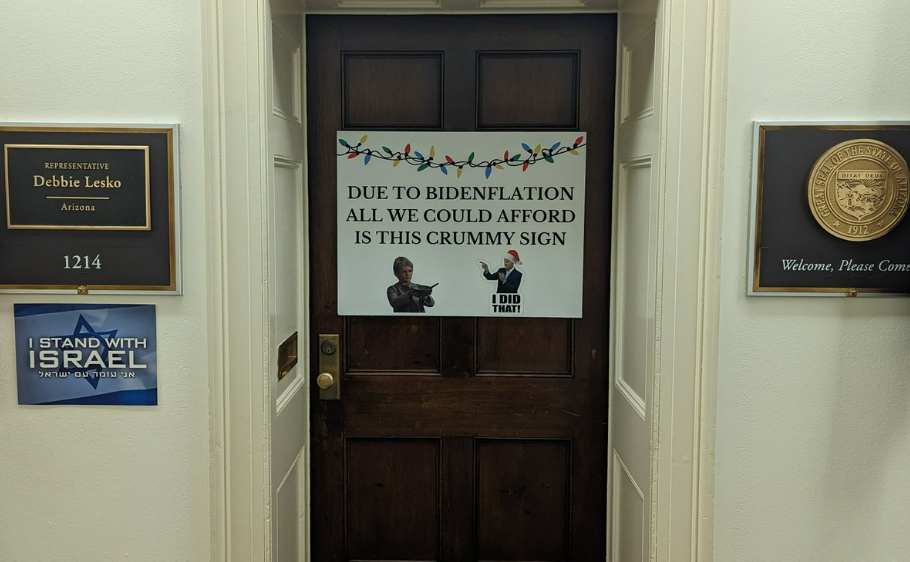
Rep. Debbie Lesko’s office showed off this year’s Christmas decorations available to them due to “Bidenflation”: a single, plain sign poking fun at historic inflation rates.
“Due to Bidenflation all we could afford was this crummy sign,” read the sign, with a classic depiction of Charles Dickens’ Oliver Twist begging for more food with an empty bowl of porridge, next to a picture of a Christmas hat-wearing Biden pointing at Twist with the caption “I did that!”
Lesko explained in a post that “Bidenflation” had a detrimental impact on her office’s tradition of decorating for Christmas.
“It’s a long-standing tradition that the second floor of Longworth is decorated for Christmas,” said Lesko. “My staff and I wanted to participate, but with Bidenflation who can afford it?”
The Bureau of Labor Statistics (BLS) reported last month that the Consumer Price Index (CPI) of all items increased by 3.2 percent compared to last year, with food at about three percent higher, all other items at four percent higher, and energy down over five percent.
On Tuesday, the BLS confirmed a .1 percent increase in the CPI last month, noting that overall cost of living reflected in the shelter index offset the decline in the energy index.
The greatest increases occurred in the cost of meals eating out, medical care commodities (drugs, medical equipment, and supplies), and services less energy services including shelter and transportation.
Meals at home increased by 1.7 percent: cereals and bakery products increased by 3.4 percent; meats, poultry, fish, and eggs increased by .1 percent; dairy and related products decreased by 1.4 percent, fruits and vegetables increased by .4 percent, nonalcoholic beverages and beverage materials increased by 2.9 percent, and all other foods increased by 3.3 percent.
Eating out increased by 5.3 percent: full service meals and snacks increased by 4.3 percent, and limited services and meals increased by six percent.
Energy commodities decreased by 9.8 percent: gas decreased by 8.9 percent and fuel oil decreased by 24.8 percent. Energy services decreased by .1 percent: electricity increased by 3.4 percent, while utility gas decreased by 10.4 percent.
Commodities less food and energy commodities sustained their price levels: new vehicles increased by 1.3 percent, while used cars and trucks decreased by 3.8 percent; apparel increased by 1.1 percent; medical care commodities increased by five percent; alcoholic beverages increased by 2.9 percent; and tobacco and smoking products increased by 7.7 percent.
Services less energy services increased by 5.5 percent. Shelter increased by 6.5 percent, with rent of primary residence increased by 6.9 percent and owners’ equivalent rent of residences increased by 6.7 percent.
Transportation services increased by 10.1 percent: motor vehicle maintenance and repair increased by 8.5 percent, motor vehicle insurance increased by 19.2 percent, and airline fare decreased by 12.1 percent.
Medical care services decreased by .9 percent, with physicians’ services decreased by .7 percent and hospital services increased by 6.3 percent.
Under President Joe Biden, the CPI hit a four-decade high last June: a 9.1 percent increase.
Annual inflation rates under former President Donald Trump averaged out to 1.9 percent: 2.1 percent in 2017, 1.9 percent in 2018, 2.3 percent in 2019, and 1.4 percent in 2020. The average annual inflation rates under Biden — factoring in 2021, 2022, and the latest inflation rate from this year — sits at over 5.5 percent.
These increases translate to Arizonans having to spend tens of thousands of dollars more for everyday necessities on average.
A study released earlier this year found that the average Arizona household must spend over $13,300 more to maintain the same standard of living they had in January 2021 — the state with the third-highest averages, just after Utah and Colorado.
The Thanksgiving dinner table may have also looked different this year. This year’s annual American Farm Bureau reported an average cost of $61 for a basic 10-person Thanksgiving dinner, down three dollars from last year but still eight dollars higher than 2021.
The average gas price in Arizona is currently at about $3.30.
Biden administration officials indicated to reporters this week that they anticipate 2024 will bring a continued decline in inflation. The Federal Reserve didn’t modify interest rates on Wednesday; Chairman Jerome Powell indicated that they would cut them next year.
Corinne Murdock is a reporter for AZ Free News. Follow her latest on Twitter, or email tips to corinne@azfreenews.com.
by Corinne Murdock | Dec 10, 2023 | News
By Corinne Murdock |
Two bills improving nuclear energy production and limiting energy efficiency regulations on home appliances from Rep. Debbie Lesko (R-AZ-08) are set to be voted on by the whole House.
Both bills passed out of the House Committee on Energy and Commerce on Tuesday. In a press release, Lesko said that the bills represented commonsense protections of two critical aspects of everyday American living.
“I am thrilled that these two commonsense bills have passed out of committee,” said Lesko. “I am working every day to leave our state and nation in a better place than when we found it, and I look forward to working with my colleagues to ensure that these proposals are approved by the full House of Representatives.”
One of the bills, the Advancing Nuclear Regulatory Oversight Act, would require the Nuclear Regulatory Commission to give reports to Congress on all procedural changes implemented during the COVID-19 pandemic. The report would also have to outline proposed efficiency improvements for the future.
The bill passed out of committee through another bill, H.R. 6544.
The report would also include an examination of the costs associated with the commission’s headquarters, regional offices, and technical training center. Specifically, the report would include costs not supportive of the commission’s mission, such as rent subsidies for other federal agencies, and proposals for cost reductions such as shedding or consolidating office spaces.
The other bill, the Hands Off Our Home Appliances Act, would limit the Department of Energy (DOE) from issuing new or amended energy efficiency standards that wouldn’t be technologically feasible or economically justified.
The act would allow for the amendment or revocation of energy efficiency standards that result in additional costs to consumers, don’t result in a significant conservation of energy or water, aren’t technologically feasible, and result in the affected product to not be commercially available to all consumers.
It would also require the DOE to conduct a quantitative economic impact analysis prior to prescribing any new or amended energy conservation standards. Included within this analysis would be the costs to low-income households, the variation in costs to consumers based on regional differences, effects of the standards on employment, and the lifecycle costs for the affected appliances: purchase, installation, maintenance, disposal, and replacement.
The act would restrict the DOE from declaring economic justification of any energy conservation standard unless the standard wouldn’t result in additional net costs to the consumer (purchase, installation, maintenance, disposal, and replacement of the affected products), and would result in a monetary value of energy savings.
In order to qualify as significant energy or water savings, the conservation standard would have to result in a reduction of at least .3 quads of site energy over three years or at least a 10 percent reduction in energy or water use of the affected product.
Corinne Murdock is a reporter for AZ Free News. Follow her latest on Twitter, or email tips to corinne@azfreenews.com.