by Terri Jo Neff | Oct 16, 2022 | News
By Terri Jo Neff |
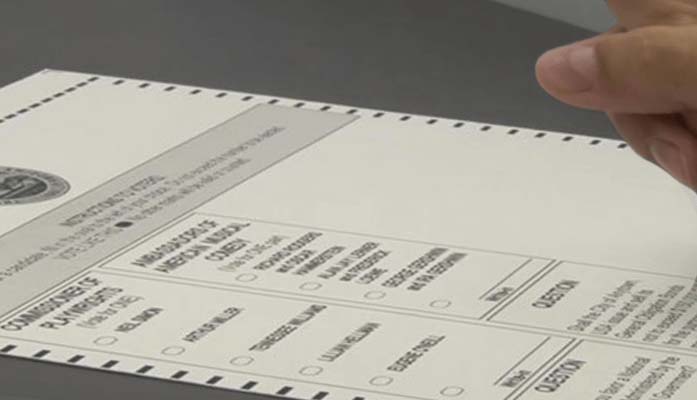
If Maricopa County Recorder Stephen Richer intended to quell support for Proposition 309 last week, his effort appears to have backfired. And on top of that, he is the subject of an investigation by the Arizona Attorney General’s Office, sources say.
On Oct. 11, Richer issued an email via his county account to media outlets promoting a letter “from all 15 Arizona County Recorders” about Prop 309, which the email and the letter state the Arizona Association of County Recorders (AACR) opposes.
The next day, election attorney Tim La Sota asked Attorney General Mark Brnovich to investigate the AACR’s use of Maricopa County resources to sway voters into casting a “no” vote. Richer’s actions on behalf of AACR violated two state laws which prohibit the use of public funds and public resources to influence any campaign or contest, La Sota wrote.
Prop 309 seeks to require voters who use early ballots to vote by mail to write their birthdate and a government-issued identification number on the early ballot affidavit along with the voter’s signature, which is already required. Often referred to as universal voter ID, it would also require in-person voters to present a form of photo identification such as a driver’s license or state identification card.
The AACR letter, which is printed on letterhead listing the names of the county recorders along the side, is signed “The People Responsible for Early Voting in Arizona.” The email goes further, showing it being “signed” by each of the individual recorders with their name and county noted, implying the county recorders were unanimous in their opposition.
Like many government associations, the AACR conducts its business based on a majority rule. This includes the association’s position on various matters, which is not always the same as that of the individual recorders.
For instance, Cochise County Recorder David Stevens is a very vocal proponent of Prop 309 and was consulted by lawmakers when the legislation’s language was drafted. This raised questions about the veracity of the email and letter issued by Richer, particularly after he retweeted that “Arizona’s county recorders put out a letter unanimously opposing #prop309.”
And in a subsequent Twitter exchange, Richer insisted it was a “unanimous voice vote…no nays, all ayes” with 14 of the 15 counties present (Apache County not in attendance).
Stevens wrote to Richer, demanding “a public retraction of this letter along with your apology for misleading the public.” He also questioned whether Richer was “pushing your own agenda” by giving the false impression of unanimity among the recorders on the Prop 309 issue.
The situation was further aggravated by the fact a newspaper in Stevens’ county published part of the AACR’s anti-Prop 309 letter with him listed as a signer.
Stevens told AZ Free News he was out of the country when the voice vote was conducted on Sept. 29. He was represented at the meeting by his chief deputy, who does not have a blanket proxy to vote on Stevens’ behalf.
“She was not elected by the people of Cochise County and is very careful to not speak on my behalf unless I have asked her to speak for me,” Stevens explained.
As to the statement by Richer, who is an attorney, that it was a unanimous vote, Stevens said any elected official—particularly one responsible for conducting elections—should know “that not voting no is not the same as voting yes.”
Stevens plans to push for all AACR votes in the future to be conducted by roll call, so there is documentation of how each recorder votes on a specific matter.
There has been no retraction by Richer nor AACR as of press time, but he quickly conceded it was “not appropriate” for him to post the AACR letter to the Maricopa County website.
“The letter has been taken down,” Richer said after the controversy erupted. As to La Sota’s complaint to the attorney general, Richer suggested the matter has “already been resolved” with the removal of the letter.
But election integrity proponents say the matter must not end there, as there must be consequences for the actions of AACR—and Richer specifically—for giving voters incorrect information about the group’s anti-Prop 309 position. In the meantime, supporters of strengthening voter ID laws are reporting more interest from voters on the subject.
by Corinne Murdock | Oct 5, 2022 | News
By Corinne Murdock |
The torrent of illegal immigrants defining the border crisis is drawing human smugglers nationwide to Arizona like moths to a flame.
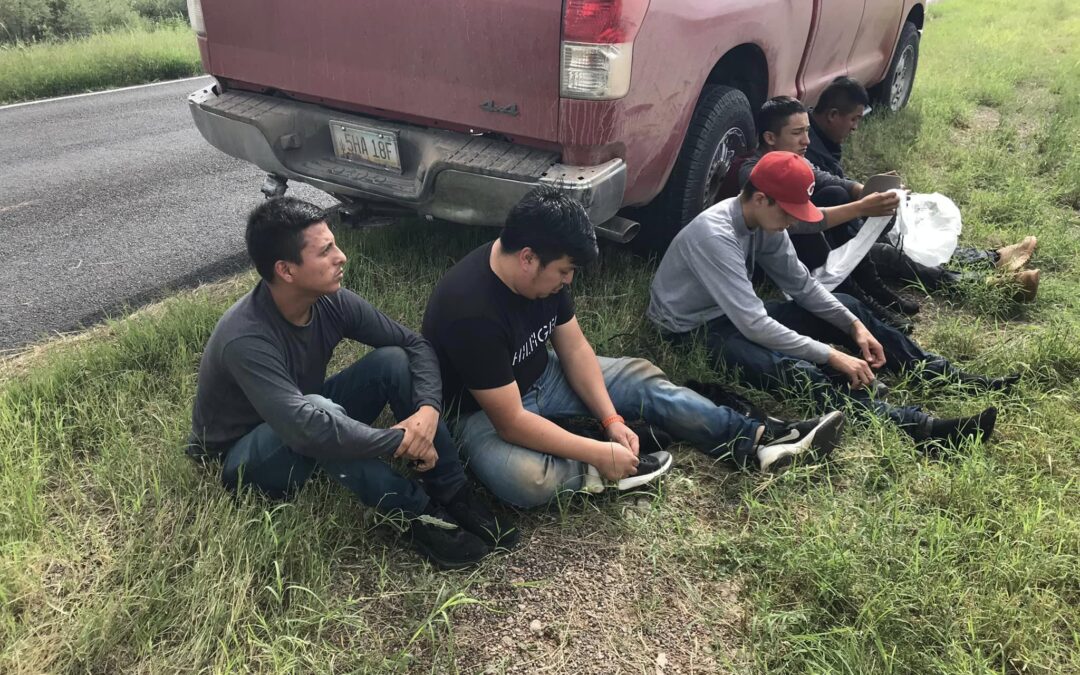
Last Wednesday, Operation Safe Streets with the Cochise County Sheriff’s Office arrested a Michigan man smuggling four illegal immigrants. Then on Thursday, their officers arrested a Florida man and woman smuggling eight illegal immigrants with drugs in the car.
Customs and Border Protection (CBP) reports that smuggling brings in up to $15,000 per illegal immigrant or more, depending on if the individual comes from further away. As some smugglers note to reporters, the cost depends on the risk — which includes distance traveled. Based on what those smugglers shared, an individual smuggler’s cut is likely anywhere from one-third to half of what the illegal immigrant pays.
Last Sunday, CBP officers arrested a New Mexico man smuggling five illegal immigrants while driving under the influence.
Cochise County Sheriff Mark Dannels told “The Conservative Circus” that 926 individuals were arrested in his county for border-related crimes, 50 of whom were foreign-born. Their county jail can only hold 302 people.
Dannels explained that the high number of Americans involved in smuggling is influenced in part by the poor state of the economy.
“As economies fail, crime increases. This is advantageous to the criminal cartels that are using Americans all over the country to come to Cochise and other counties on the border to exploit their criminal behavior,” said Dannels.
Dannels added that the smugglers are reckless and destructive. He shared that, just last week, smugglers damaged two of his officers’ vehicles by driving into them and injured one of his officers.
Dannels said that the Biden administration refuses to mitigate the border crisis. He opined that the only possibility of improvement would come from a change in elected officials.
“The only change that’s ever going to take place, they’ve made it clear, is that people need to get out and vote in November,” said Dannels. “Border security is community security.”
Dannels stated that Biden needed to make a public statement condemning illegal crossers and declaring that the current border activity constituted a crime.
“It’s almost like we’re America second on this border down here. We have been the forgotten Americans on this border,” said Dannels.
These apprehensions are in addition to the many Arizonans arrested for smuggling illegal immigrants and drugs.
Corinne Murdock is a reporter for AZ Free News. Follow her latest on Twitter, or email tips to corinne@azfreenews.com.
by Terri Jo Neff | Aug 17, 2022 | News
By Terri Jo Neff |
Voters in the southern Sulphur Springs Valley will find out later this week whether they get to vote on the creation of a Douglas Groundwater Basin Active Management Area that will establish new regulations for the withdrawal and use of groundwater by private landowners across a large swath of Cochise County.
And the Douglas AMA initiative could make it on the 2022 general election ballot even if not enough verified, valid petition signatures were turned in, according to an argument put forth by the group which collected the signatures.
Judge Laura Cardinal will conduct a hearing Friday on a challenge by Rural Water Assurance to block the AMA initiative from the ballots of roughly 13,450 voters whose addresses fall within the boundary of the proposed Douglas AMA.
The city of Douglas as well as the agriculture-heavy communities of McNeal and Elfrida will be impacted if the Douglas AMA is approved, as will be a portion of the city of Bisbee and surrounding areas.
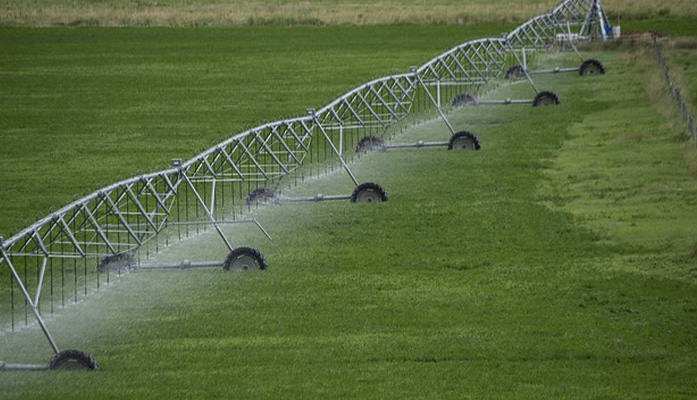
Proponents of the Douglas AMA contend unregulated pumping from large agricultural wells in central and southeastern Cochise County is depleting the aquifer. They are calling for several restrictions on groundwater use and irrigation which proponents claim are necessary to prevent harm to local residents who live in the area.
Critics like Rural Water Assurance, however, argue that an AMA interferes with private property rights in a number of ways. There will also be a loss of property value from newly implemented AMA-related restrictions placed on the use of the land, they argue, including a 100-year assured water supply certification required for subdivision development.
There is also concern that the push for a Douglas AMA comes at a time when southeast Arizona is expecting to see long-anticipated renewed economic activity thanks to Congressional plans to overhaul the current Douglas Port of Entry at the Mexico border.
But the issue before Cardinal will not be about the political arguments or water policy. Instead, she is being asked to rule whether Arizona Water Defenders submitted enough petition signature to get the AMA initiative on the upcoming ballot.
Part of what Cardinal must decide is whether it matters if those petition signatures are legitimate signatures of actual registered voters living within the boundaries of the proposed AMA. Or is a random sampling good enough.
Arizona Water Defenders needed at least 1,346 petition signatures to qualify for the ballot. The group submitted 2,271 signatures on July 6 and Cochise County Elections Director Lisa Marra later reported there were 1,683 valid signatures.
However, the process Marra used did not actually verify the validity of all of the signatures. Instead, a few dozen signatures were discounted immediately due to technical issues after which a random sample validation process was used.
This resulted in an extrapolated figure being provided by Marra without any verification if all of the presumed valid signatures were in fact valid.
In its election challenge, Rural Water Assurance argues Cardinal must disqualify nearly all of the submitted petition signatures as deficient for myriad reasons from mismatched voter signatures to signers not living within the proposed AMA boundaries.
A more crucial problem, the election challenge argues, is some of the 206 petition sheets did not include a completed circulator affidavit. That affidavit must be filled out by the person who circulated the petition to collect signatures.
With 10 signatures possible on each petition sheet, any petitions not properly circulated could result in a large number of disqualifications whether the voters’ signatures themselves are valid.
For its part, Arizona Water Defenders has asked Cardinal to dismiss the election challenge. The group argues that under current state law, it is legally irrelevant whether there is actually 1,346 verified petition signatures for getting the Douglas AMA initiative on the ballot.
The only important factor, according to the group’s attorney, is that Marra’s random-sampling calculation gave the group credit for more than the required number.
“There are no longer any remaining statutory requirements for the examination and verification of each signature of each petition by the Recorder,” attorney John A. MacKinnon argues in a motion to dismiss. “If the number of valid signatures as projected from the random sample equals or exceeds the minimum required number, the initiative is entitled to be on the ballot” under one of two statues.
The Cochise County Board of Supervisors and Cochise County Recorder David Stevens have been subpoenaed to court for Friday’s hearing, as has Marra and members of Arizona Water Defenders.
Arizona currently has five AMAs. The four located in Prescott, Phoenix, Pinal County, and Tucson where created by the Legislature. The fifth was approved by Santa Cruz County voters several years ago.
The Arizona Department of Water Resources provides a FAQ page about the proposed Douglas Groundwater Basis AMA here.
by Corinne Murdock | Jun 8, 2022 | News
By Corinne Murdock |
On Monday, a woman who voted for her dead mother during the 2020 election was sentenced to three years of supervised probation. The sentencing was consistent with other recent convictions of voter fraud this year.
The woman, 56-year-old Krista Michelle Conner of Cochise County, had her voter registration revoked, must pay $890 in fines, and serve 100 hours of community service. Conner submitted the ballot mailed to her mother, Caroline Jeanne Sullivan, who’d died one month before. That crime qualifies as a class 6 felony.
Cochise County Recorder David Stevens told the Arizona Daily Independent that the ballot wasn’t counted because Sullivan’s death was updated in the voter registration system prior to the ballot’s arrival.
The Arizona Attorney General’s Office Election Integrity Unit (EIU) handled Conner’s case. The EIU was formed in 2019, and formed an online complaint form in the summer of 2020.
Other recent convictions of voter fraud this year include 70-year-old Marcia Johnson of Lake Havasu City, sentenced to one year probation for casting her dead father’s ballot in the 2018 election; 62-year-old Joseph John Marak of Surprise, sentenced to 30 months of supervised probation for voting as a felon six times since 2016; and 64-year-old Tracey Kay McKee of Scottsdale, sentenced to two years’ probation for voting for her dead mother in the 2020 election.
As AZ Free News reported earlier this month, an election integrity nonprofit recommended that the state clean up its voter rolls and cease no-excuse mail-in ballots to prevent further cases of fraud. Governor Doug Ducey vetoed a bill purging non-citizens and non-Arizonans from voter rolls.
Earlier this year, the Arizona Republican Party sued Secretary of State Katie Hobbs and county recorders to challenge mailed ballots. A Mohave County judge ruled on Monday that no-excuse mail-in voting doesn’t violate the Arizona Constitution.
Corinne Murdock is a reporter for AZ Free News. Follow her latest on Twitter, or email tips to corinne@azfreenews.com.
by Terri Jo Neff | Dec 29, 2021 | News
By Terri Jo Neff |
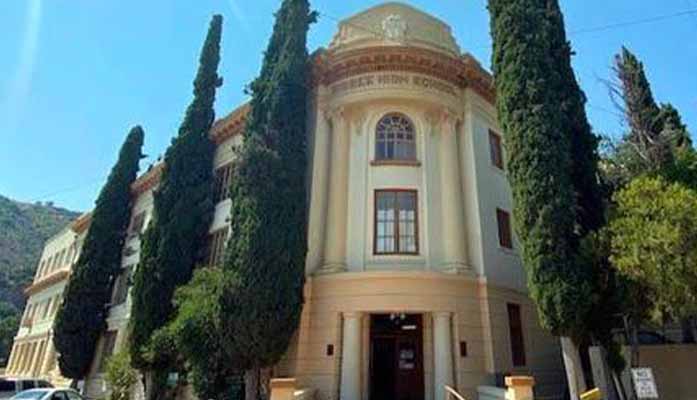
Cochise County officials are hoping someone with experience in the repurposing of historic properties will want to purchase, renovate, and redevelop the former Bisbee High School, whose exterior dates to 1914 and most of its interior to 1920.
The three-story, four-level school designed by architect Norman Foote Marsh is part of three parcels encompassing about 1.4 acres within the City of Bisbee. The property sits within the Bisbee Historic District, which is itself included on the National Register of Historic Places.
A recently announced request for proposals (RFP) notes Cochise County intends to sell the property “to a developer for subsequent conversion from governmental office use to multi-unit residential, which may also incorporate some retail and office use.” The city council recently approved the county’s rezoning request to Commercial Mixed Use (CM-2).
According to county officials, the ideal developer would have knowledge and experience in property redevelopment, adaptive reuse of historic properties, and historic preservation. Any conveyance by the county would likely include a permanent easement to preserve and protect the building’s exterior.
“The County also expects to enter into a mutually acceptable land development agreement with the successful proposer that will govern the subsequent rehabilitation of the building and the redevelopment of the property,” the RFP states.
Despite the complexities that can come with repurposing the building, there is an interesting peculiarity to Marsh’s three-story, four-level design for the school: as a result of being built on a hillside, all of the building’s levels to have a street-level entrance, a fact attested to by Ripley’s Believe-It-or-Not.
Interested developers can access additional information about the Bisbee High School property at https://cochise.bonfirehub.com/opportunities/57452
Meanwhile, another historic high school is for sale in Cochise County – the Tombstone Union High School built in 1922 along what is now State Route 80.
For the last 15 years, myriad realtors have tried to find a buyer for the two-story high school which has sat empty since 2006. The 4.5-acre property includes a separate gymnasium and science building, all of which are located near the Tombstone Historic District and historic Allen Street.
Anyone interested in more information about the sale of Tombstone HS can call Superintendent Robert Devere at 520-457-2217.