by Terri Jo Neff | Oct 22, 2021 | Economy, News
By Terri Jo Neff |
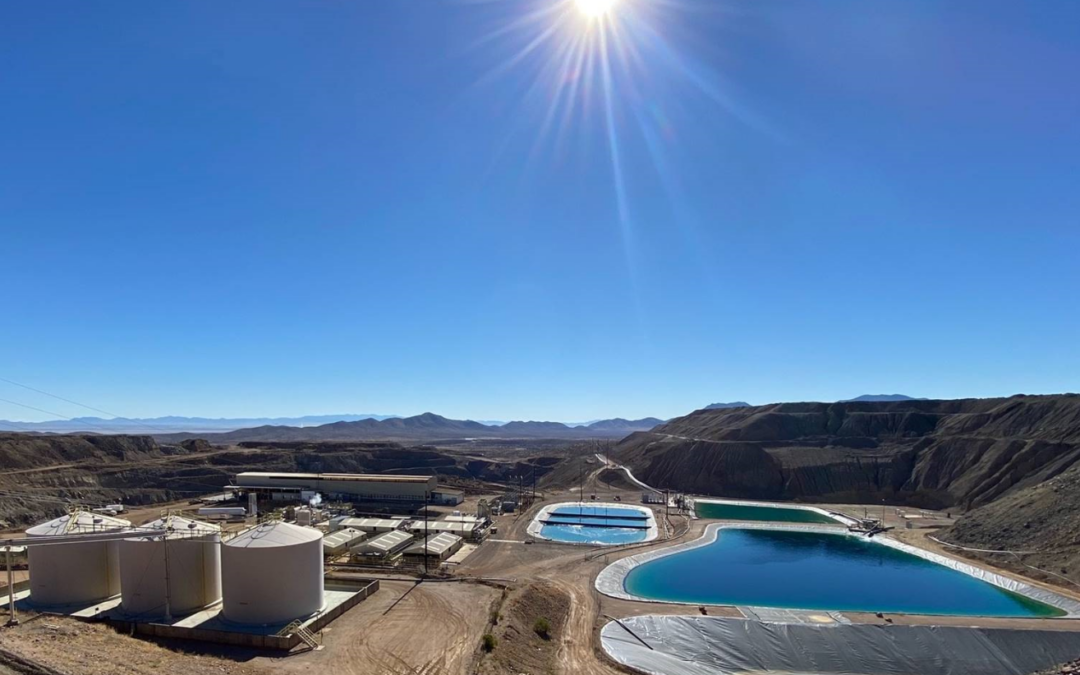
Excitement is growing in northern Cochise County after the announcement that multiple jobs will be created in early 2022 when Excelsior Mining Corp. reactivates the historic Johnson Camp Copper Mine which was first opened in the 1880s about 65 miles east of Tucson.
Johnson Camp Mine has not produced copper ore in nearly a decade but reopening the mine will allow Excelsior to take advantage of copper’s strong price. In turn, the company will use those revenues to pay for a neutralization plant for its newly opened Gunnison Copper Project, which has produced far less copper cathode than it forecasted.
Excelsior’s Gunnison Copper Project situated one mile from Johnson Camp Mine along Interstate 10 opened last year with limited operations. It is expected to produce 125 million pounds per annum of 99.99 percent copper cathode when fully operational, but this year’s goal was only 25 million pounds.
On Oct. 20, Senior VP Robert Winton said the company has produced less than 1 million pounds to date. The problem, according to Winton and CEO Stephen Twyerould, is that carbon dioxide (CO2) has shown up in Gunnison’s in-situ recovery wellfield.
The villain, they say, is calcite, a naturally-present mineral which creates CO2 when it reacts with the leaching solution injected into the wellfield.
Winton says a fix to the CO2 issue has been identified, but it will take months to update the current wells. In the meantime, company officials have decided to make improvements at the Johnson Camp Mine in order to generate higher revenues next year.
The comments by Twyerould and Winton were made during a webinar hosted by Amvest Capital, a New York-based specialist investment management and corporate finance firm focused solely on the natural resource sector.
Johnson Camp Mine and its existing SX-EW plant can provide up to five years of production from its Copper Chief Pit and the Burro Pit, which Winton says have “a lot of near surface copper.” After construction of a new leach pad and issuance of amended state permits, Johnson Camp is expected to commence production in the second half of 2022.
That means Excelsior’s current staff of about 60 (employees and consultants) will need to be bolstered, bringing much needed fulltime jobs to the Benson and Willcox areas.
According to Winton, the presence of calcite was known from geological studies, but the extent of its impact was not understood until production began at Gunnison last year.
“Calcite was certainly understood in the prework, metallurgical costs, and certainly the feasibility study which is fundamentally an acid consumption discussion,” he said. “However, the negative impacts of CO2 and how they really impacted our flow rate was certainly not envisioned and certainly became the fundamental focus of our ramp up challenges.”
The good part, Winton said, is that the calcite reaction can be managed, which is why construction of a neutralization plant funded by Johnson Camp Mine revenues is Excelsior’s immediate focus.
In 2014, the Johnson Camp property was the main asset of Nord Resources, which was forced into court-ordered receivership by creditors after years of underperformance. Then in late 2015, Excelsior Mining obtained the blessing of a Pima County judge to buy out Nord Resources’ assets.
The company then purchased thousands of surrounding acres, including the site where Gunnison Copper Project’s North Star copper deposit is located. But Excelsior officials are not putting all of their eggs in the copper basket.
Last month Twyerould released a preliminary economic assessment of another company asset, the Strong and Harris copper-zinc-silver deposit located on the northside of I-10 a few miles from Johnson Camp.
Twyerould said that if mining is undertaken at the Strong and Harris deposit it would be by traditional open pit, followed by high-grade underground mining of the remaining sulfides at the bottom of the pit. However, he cautioned that it is still too early to know if mining will be feasible.
“Mineral resources that are not mineral reserves do not have demonstrated economic viability,” he said.
Excelsior also has landholdings in the historic Turquoise Mining District, also referred to as the Courtland-Gleeson District, located approximately 30 miles southeast of the Johnson Camp Mine.
Excelsior Mining is using a six-step in-situ recovery process to produce 99.99 percent pure copper cathode sheets. The process starts with a leaching solution pumped through injection wells which have been sunk over the ore body. This is known as the wellfield.
The leaching solution then moves through naturally fractured rock and dissolves the copper. Multiple recovery wells surrounding each injection well then extract the copper-rich solution, also known as pregnant solution.
The fourth step is for the solution to be pumped to the surface for further processing during which copper is extracted from the solution and turned into copper cathode sheets. Finally, the mining solution is recycled back to the well field to be reused.
Throughout the leaching process, Excelsior Mining utilizes differential pumping and natural impermeable barriers to keep the fluids from migrating beyond the wellfield.
by Terri Jo Neff | Oct 1, 2021 | News
By Terri Jo Neff |
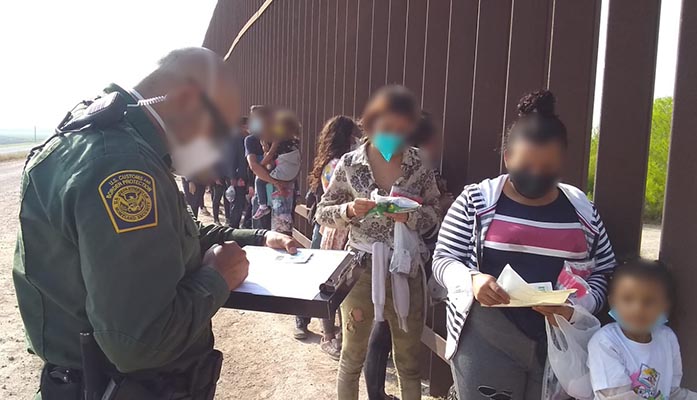
The facts prove the Southwest border of the United States is not secure, despite what a Texas Congresswoman said Wednesday, according to Cochise County Sheriff Mark Dannels, who is asking for more Arizona National Guard deployment to the border.
On Thursday, Dannels told KFYI’s James T. Harris that comments by U.S. Rep. Sheila Jackson Lee (D-Texas) of the southwest border being both sovereign and secure is “100 percent not true,” as is her comment that the situation at the border is simply being “subjected to biased and unfair narratives for political purposes.”
Dannels noted there were 1,473,000 million encounters reported at the southwest border from Oct. 1, 2020 through Aug. 31, 2021, up 325 percent from the same period last year. Those who turned themselves in or were captured came from 164 countries, with 63 percent identified as citizens of somewhere other than Mexico, he added.
The sheriff also said 183,000 border crossers were taken into custody during that period in the Tucson Sector which includes 80 miles of border Cochise County shares with Mexico. He added that an estimated 115,000 “getaways” were reported, of which 85 percent appeared to be adult males traveling without family.
There have also been 162 migrants deaths along the 372-mile Arizona / Mexico border, all of which must be treated as an assumed homicide by the local sheriffs.
Those, says Dannels, are only a few of the “politically neutral” statistics which easily show the Biden Administration is not providing Americans a sovereign and secure border as Rep. Jackson Lee claims.
“Show me a stat that says we’re doing something well and I’ll sit back and apologize, but I’m not seeing it, I’m not experiencing it,” he told Harris.
Dannels said the reality is that drug smugglers and human traffickers are invading the United States, exploiting not only the southwest border but all communities across the country. And the Cartels are using border crossers to move a huge increase of drugs in as well.
To counter the lack of attention by President Joe Biden to the border, Dannels recently asked Gov. Doug Ducey and Major Gen. Kerry Muehlenbeck of the Arizona Department of Emergency and Military Affairs for more National Guard members at the border. In addition, Cochise County recently secured state funding for equipment and resources to address the local impact of the uncontrolled border.
In April, Ducey ordered several Arizona National Guard members to the border to assist county sheriffs with administrative and maintenance activities. This frees up more deputies to respond to calls and investigate crimes related to the border crisis.
The governor announced a one-year extension to the deployment, which was welcomed by Dannels, whose county is home to several sections of uncompleted border wall as well as the Douglas Port of Entry across from Agua Prieta, Sonora. What is needed now, said Dannels, is for a collective message directed at the White House.
“President Biden owns this, he’s the messenger on this,” said Dannels. “The blame game is over now, he’s been in office for 10 months. It’s time to accept responsibility and secure this border.”
HEAR SHERIFF DANNELS’ INTERVIEW HERE
by Terri Jo Neff | Sep 1, 2021 | News
By Terri Jo Neff |
One Arizona sheriff sees too many similarities between U.S. immigration policy at the Southwest border and how the Biden Administration has handled the situation in Afghanistan, and he fears a perfect storm is brewing.
“It’s a mess down here all along the southwest border both on public safety, national security, and humanitarian,” Cochise County Sheriff Dannels told KFYI’s James T. Harris earlier this week. “The willful neglect, the willful avoidance to solve the problem, take responsibly for it, is the same thing he did on the Southwest border that’s now being played in a terrorist country with the Taliban.”
According to Dannels, just under 10,000 undocumented immigrants -what he calls “getaways”- were able to evade capture in July crossing from Mexico into Cochise County. The crisis is more frustrating, he said, because the Biden Administration ended President Donald Trump’s Stay in Mexico policy without having another plan in place.
The policy, Dannels said, worked well and allowed for a controlled situation at the Southwest border. Last month the U.S. Supreme Court ordered the Stay In Mexico policy reinstated despite objections from Biden’s appointees running the U.S. Department of Homeland Security.
“It’s amazing that our own Department of Homeland Security is fighting that,” Dannels said of the Stay in Mexico policy. “It’s not like Mexico is fighting that or another private group is fighting that. Our government is fighting that. Which is just a crying shame because the program worked in the past.”
For now, Dannels and his deputies are putting up a valiant stand while trying to respond to the continuous influx of undocumented immigrants and the accompanied increase in crime reports. He also says “it’s truly been beneficial” to have several dozen members of the Arizona National Guard assigned to work with his agency by order of Gov. Doug Ducey.
Dannels is also aware of recent warnings to New Mexico residents about a growing Middle Eastern presence among illegal border crossers. That concern, the sheriff said, has actually been on the radar of law enforcement officials for a while.
He worries a “perfect storm” exists right now with the upcoming 20-year anniversary of Sept. 11, 2001 and the U.S.’s open border philosophy under President Biden. It is a philosophy, Dannels said, that even those in federal leadership positions concede is not working, unless they are “a political puppet.”
And the chances are great that someone intent on doing harm to the United States is going to come through the Southwest border, Dannels said, because the White House has left law enforcement personnel unable to compete against the Cartel.
“Nothing is changing for the good down here,” Dannels said.
by Terri Jo Neff | May 23, 2021 | News
By Terri Jo Neff |
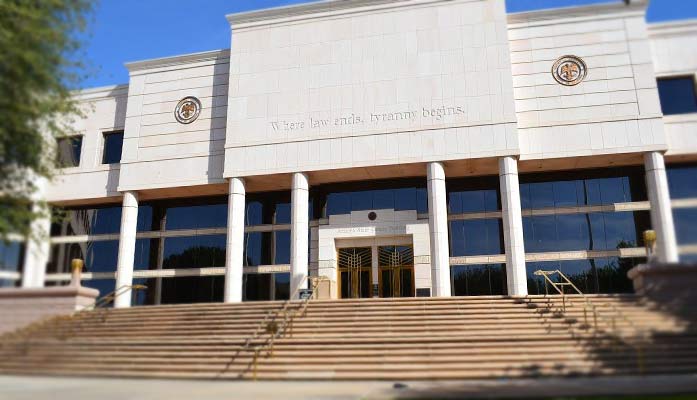
The Arizona Supreme Court is set to hear oral arguments next month in a case that involves whether the Cochise County Board of Supervisors violated one or more state laws in appointing one of their own to a coveted court position in 2019 without asking if anyone else was interested in the job.
During the June 3 hearing, the justices must decide whether the legal challenge of then-supervisor Pat Call’s appointment to the Sierra Vista Justice was brought forth by someone who had standing to do so. An appointment that Arizona Attorney General Mark Brnovich has described in two legal briefs as “unlawful.”
The case centers on the February 2019 appointment of Call as justice of the peace for Cochise County’s busiest justice court, where more than half of the county’s felony prosecutions start. On the day of his appointment, Call took part in public discussions about how to fill the position and even suggested the board forego forming a committee to seek candidates.
He also took part in a non-public, executive session after which the other two supervisors – Ann English and Peggy Judd- immediately voted Call in as justice of the peace. There was no advance notice of Call’s interest in the position nor that he was being considered for appointment. There was also no opportunity for public comments.
Call served as justice of the peace from March 1, 2019 through Dec. 31, 2020. He did not stand for election in last November.
Brnovich has been harsh in his criticism of the supervisors’ actions and he has argued in legal briefings that a judge could still impose sanctions on Call, English, and/or Judd. He has also weighed in on who has standing to bring complaints involving Arizona’s Open Meeting Law and Conflict of Interest statute.
One of those people with standing, Brnovich argues, is David Welch, a Sierra Vista resident who had a misdemeanor case pending in the justice court in February 2019. Welch sued in Cochise County Superior Court just days after the supervisors’ vote in an attempt to void Calls’ appointment due to alleged open meeting and conflict of interest violations.
Welch’s lawsuit was dismissed by an out-of-county judge for a lack of standing to bring the challenge. The judge also said that even if a private citizen had standing, any errors or liability connected to the February 2019 vote were resolved when English and Judd ratified Call’s appointment the next month.
Ratification is a legal process allowing a public body to reaffirm an earlier vote that may have run afoul of Open Meeting Law. But as Brnovich pointed out to the Arizona Court of Appeals, there is nothing in the ratification process which automatically indemnifies a public official from a violation of state law.
He also pointed out there is no ratification process in Arizona’s Conflict of Interest statute, under which public officers like Call are required to announce “a substantial interest in any decision of a public agency” and then refrain from participating in such decision “in any manner.”
The Arizona Court of Appeals overturned the lower court judge’s ruling on standing, finding that Welch, as a taxpayer within the legal boundaries of the Sierra Vista Justice Court, could challenge the appointment. The court of appeals also found Welch had “sufficiently pleaded violations of Arizona’s open-meeting and conflict-of-interest statutes.”
Normally that would have sent the case back to the lower court for further proceedings on the merits of Welch’s case. However, Cochise County officials sought review from the Supreme Court and on May 17 the attorney general filed his second amicus brief about the “unlawful” appointment, the remedies available to a court, and his concern with a taxpayer status threshold for determining standing.
Brnovich points out that standing is already defined in Open Meeting Law as any person “affected by” an alleged violation. Utilizing taxpayer status for status would likely preclude some individuals affected by a violation from being able to assert a claim, he argues. An example is Arizona’s open enrollment policy which allows students to attend a school in one district even if they live in another district’s legal boundaries.
“If a school board were to engage in secret decision-making or other alleged OML or conflict of interest violations, out-of-district parents could be left without standing—even though they would be affected by such violations—because they are not taxpayers of the district,” the brief states.
Oral arguments can be viewed live from the Arizona Supreme Court on June 3 at https://www.azcourts.gov/AZ-Supreme-Court/Live-Archived-Video
by Terri Jo Neff | May 3, 2021 | News
By Terri Jo Neff |
When Gov. Doug Ducey pledged $25 million last month to deploy the Arizona National Guard to the Mexico border he did so after the Biden Administration ignored pleas from state and local law enforcement officials to address the influx of immigrants and smugglers making it unhindered across the border.
The governor noted the National Guard troops would be on State Active Duty to assist with medical operations in detention centers, help with installation and maintenance of border cameras, monitor and collect data from the cameras, and analyze the situation at the border to identify trends in smuggling corridors.
The deployment was well received by two border sheriffs -Cochise County’s Mark Dannels and Yuma County’s Leon Wilmot- who spent the last three months trying to get federal authorities to come up with a plan for the escalating public safety threat and humanitarian crisis at and well beyond the international border.
However, Pima County Sheriff Chris Nanos has insisted his agency does not need National Guard support even though the county shares nearly 130 hundred miles of border with Mexico. The same “no thanks” approach was expressed by Sheriff David Hathaway of Santa Cruz County.
The difference in the positions of the sheriffs falls across political lines – Dannels and Wilmot are registered Republicans, while Hathaway and Nanos are Democrats.
The same political division is reflected in an April 21 letter signed by one county supervisor from each of the border counties in which they chastised Ducey for not asking for their input about the border situation. The signers -all of whom as Democrats- serve as their counties’ representatives on the Arizona Border Counties Coalition.
“We are disappointed that you failed to consult with the various Boards of Supervisors of each border county on this matter,” the Coalition letter states. “If asked, we would have requested assistance for transportation services, specifically buses and drivers, to provide those transportation services that we are now left to arrange on our own.”
The letter was signed by Sharon Bronson, Pima County; Ann English, Cochise County; Bruce Bracker, Santa Cruz County; and Tony Reyes, Yuma County.
Chief of Staff Mark Napier of the Cochise County Sheriff’s Office (CCSO) serves as his county’s point of contact with the Arizona National Guard. Last Thursday more than 30 troops arrived in Cochise County to perform a variety of non-law enforcement duties, including working with an extensive camera system utilized by the Southeastern Arizona Border Region Enforcement (SABRE) team to monitor cross-border traffic.
The troops are also providing support in CCSO’s jail and other clerical activities which allows sheriff’s personnel to deal with “other service demands and address the increase in challenges associated with the border crisis we currently face,” Napier explained.
On Friday, Napier told AZ Free News he and Sheriff Dannels had no advance notice that Supervisor English was signing the letter to Ducey, but they do not see the supervisor’s stance about deployment as being in conflict with CCSO’s position that the border crisis “presents a public safety, national security and human rights issue” which must be addressed in collaboration with federal, state, and local partners.
“The letter expresses some frustration over the lack of engagement between the Governor and Supervisors with respect to the deployment of AZNG personnel,” Napier said. “That is a matter between those Supervisors and the Governor.”
Napier added the Coalition’s letter also states border security is a responsibility of the federal government, “which in fact it is.” And the letter does not deny there is a public safety concern related to the current conditions along the border, he noted.
The Coalition’s letter makes no mention of the frequency or cost of transportation services any of the counties have had to provide or arrange for.