by AZ Free Enterprise Club | Feb 9, 2026 | Opinion
By the Arizona Free Enterprise Club |
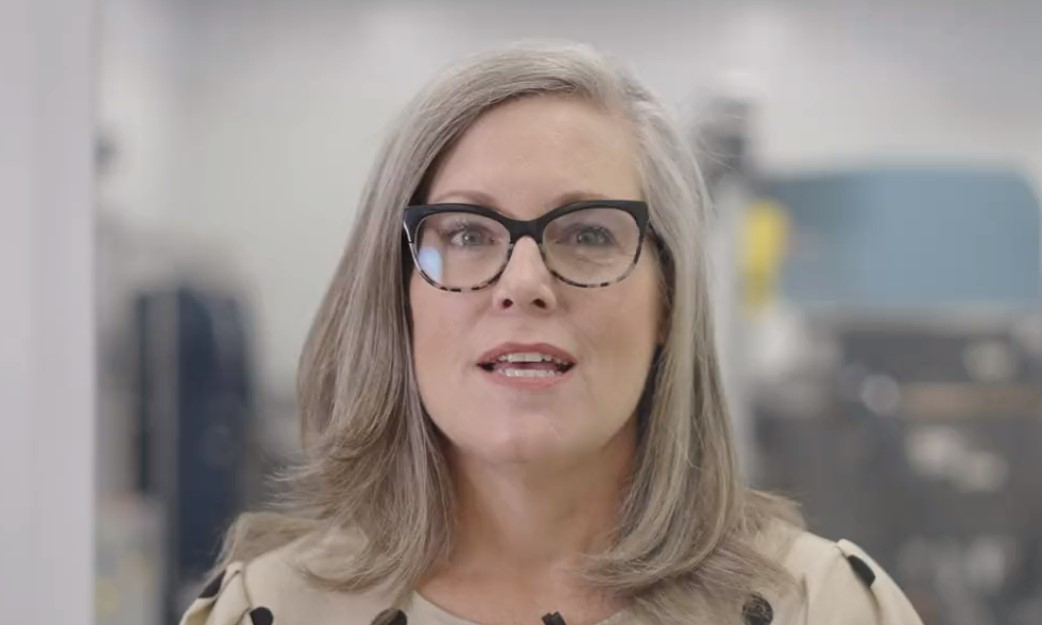
Governor Katie Hobbs rolled out her budget last month and, unsurprisingly, it doesn’t add up.
Not only because her “solutions” don’t match the problems she claims to be solving, like suggesting we can make goods and services more affordable by piling on new taxes and fees, but because her budget quite literally just doesn’t add up.
While it’s become common for governors to release budgets built on rosier revenue assumptions than the Legislature’s more conservative Joint Legislative Budget Committee (JLBC), Hobbs’ proposal relies on projections so fanciful it resembles a fairy tale more than a fiscal plan.
Counting Chickens Before They Hatch
Hobbs’ budget is a $17.7B spending plan ($100M more than last year) that leaves a meager $37.8M balance at the end of FY27. That means her revenue projections leave very little room for error. Yet one of the more obvious facts about her budget is just how likely error-prone these projections are, a fact that Republicans during a joint appropriations hearing were sure to point out.
One of the most speculative assumptions Hobbs is making in her budget proposal is relying on $760 million of “reimbursements” from the federal government for expenditures the state has made for border security since 2021. That is a good chunk of change, and her budget is unworkable without it.
The problem is it is actually way more likely than not that even if the state receives something in the way of reimbursement, it will not be the full amount, and who knows on what timeline. Regardless, it is irresponsible to commit money out the front door that may never come in.
This is nothing new for Hobbs. Just last year she continued a COVID-era program that neither had legislative authorization to continue nor the ongoing financial allocations to support it. That wound up blowing a $122M fiscal hole in the previous year’s budget mid-session that Republicans had to mop up.
The Governor’s budget also depends on tapping the State Land trust for another $1.5 Billion. Setting aside whether its a good idea to raid the land trust set up for various beneficiaries (K-12, Universities, deaf and blind, etc), changing the formula for trust land distributions requires a constitutional amendment that would need to be approved by voters in November.
Hobbs’ “Affordability” Plan is Really a Chaotic Tax-And-Spend Plan
Hobbs wants to brand her budget as improving affordability, but it does just the opposite. Every idea in her plan is built around $1B in new taxes and fees and the hope that the bureaucracy can “manage” the cost of living while literally contributing to its inflation…
>>> CONTINUE READING >>>
by Ethan Faverino | Jan 26, 2026 | News
By Ethan Faverino |
Arizona Governor Katie Hobbs recently released her executive budget proposal for the 2026-2027 fiscal year, totaling $17.7 billion in general funding expenditures. The plan represents a $100 million increase over the $17.6 billion budget approval by the Arizona Legislature for the prior year. According to Glenn Farley, Research and Policy Director at Common Sense Institute Arizona (CSI), the proposal extends a pattern of substantial growth in state spending observed in recent years.
In a recent article, Farley told The Center Square, “This budget continues the trend of massive increases, really historically unprecedented increases in the state’s Medicaid-funded disability program run out of the Department of Economic Security (DES).”
Farley highlighted that the most significant expansions in the proposal stem from Arizona’s Medicaid program, K-12 education, and other health care-related initiatives.
A standout element is the marked growth in the state’s Medicaid-funded disability services program operated by DES, which supports home-based care for Arizonans with disabilities. Farley described these increases as “historically unprecedented,” noting a shift where the largest caseload surge now occurs in the DES disability program rather than traditional drivers like the Arizona Department of Education.
The budget addresses the needs of approximately 62,000 qualified Arizonans by expanding access to home-based services through adjusted subsidy structures for home-based providers. For FY26, the proposal allocates an additional $128.1 million from the general fund to DES, supplemented by $271.9 million in the Department Long Term Care System Fund (DLTCSF).
In FY27, ongoing funding increases include $298.8 million from the general fund and $673 million in the DLTCSF.
Farley noted that Governor Hobbs’ budgets have frequently relied on one-time funding sources rather than sustainable ongoing commitments, a pattern that limits long-term fiscal stability.
At the same time, the proposal conforms to recent federal adjustments under HR 1, which aim to restrain cost growth in Medicaid and SNAP by shifting greater responsibilities onto states.
While this alignment addresses federal requirements, it adds operational complexity without resolving underlying sustainability concerns in Arizona’s expanding health and disability services.
In contrast to the administration’s spending approach, Arizona Republicans introduced a tax relief plan earlier this year, projected to save Arizonans $1.1 billion over the next three years, which Governor Hobbs vetoed.
Farley, who served eight years under the prior administration, observed that budget finalization timelines have shifted under Hobbs from the typical time of March or April to May or June.
He further noted an unusually high volume of significant tax code changes this year, driven by federal updates to adjusted gross income calculations, including the addition of new deductions and exceptions.
Ethan Faverino is a reporter for AZ Free News. You can send him news tips using this link.
by Ethan Faverino | Jan 8, 2026 | Economy, News
By Ethan Faverino |
As Arizona lawmakers prepare to convene for the 2026 legislative session, a leading nonpartisan think tank is warning of a demanding agenda driven by fiscal discipline, persistent housing shortages, and critical water policy decisions.
Katie Ratlief, Executive Director of the Common Sense Institute (CSI), emphasized the need for urgent action from the Legislature and Governor Katie Hobbs to address these issues. In a recent report by The Center Square, Ratlief highlighted that the session will require decisive leadership to tackle spending trends, affordability barriers, and the state’s long-term water security.
Arizona’s budget has expanded significantly over the past decade, rising from approximately $10 billion to nearly $18 billion, with $6 billion of that increase occurring in just the last five years. Ratlief urged policymakers to rein in spending increases and reassess recent commitments to determine whether they remain necessary, warning against expenditures outpacing economic growth.
Housing affordability remains a top concern for CSI Arizona, with the latest quarterly report underscoring ongoing challenges despite some cooling in the market. The average home price stands at $426,164—$53,400 more expensive than pre-pandemic trends—leaving households facing high costs amid elevated mortgage rates.
According to CSI Senior Economist and Research Analyst Zachary Milne, Arizonans now need to work more than 64 hours per month, at the average wage, just to afford a typical home payment, significantly up from the historical average of 45 hours.
Real-time estimates show an instantaneous housing shortfall of 52,846 units in Q2 2025, a 6.9% improvement from the revised 56,812 units in 2024. Arizona faces a cumulative housing deficit of 121,334 units, as of 2024, reflecting years of inadequate construction relative to population growth.
Ratlief believes the housing shortfall is not the result of state policy but of holdups originating within cities, noting that local governments control permitting, building codes, and enforcement—factors that can significantly slow housing development.
CSI revealed that most Arizona counties—including Maricopa, with a projected deficit of 34,737 units—are falling behind demand. Even with recent improvements in permitting, Maricopa County is still building thousands of units short of what is needed annually.
Water policy will also dominate discussions this legislative session, as ongoing negotiations over the Colorado River allocations approach a pivotal February 14, 2026, deadline set by the U.S. Department of the Interior.
This is viewed as likely the final opportunity for the seven basin states to reach a consensus agreement on sharing the river’s water before current operating guidelines expire at the end of the year. With Arizona’s unique constitutional requirement, any agreement reached will require legislative approval, setting the stage for intense debate in the 2026 session. Ratlief indicated that if states finalize a deal, the Legislature will debate and vote on authorizing the Department of Water Resources to sign on, potentially shaping Arizona’s water future for decades.
Ethan Faverino is a reporter for AZ Free News. You can send him news tips using this link.
by Matthew Holloway | Jul 8, 2025 | Economy, News
By Matthew Holloway |
Although the causes are attributed to various factors by different sources, largely dependent on political leanings, one irrefutable fact emerged on Monday. During Governor Katie Hobbs’ tenure, Arizona has plunged from a ranking of 4th place in the nation in job growth, to 47th.
On Monday, Russ Wiles, writing for the Arizona Republic noted, “AZ no longer ranks near the top for job creation,” and asked rhetorically, “What went wrong?”
Citing figures from the U.S. Bureau of Labor Statistics, the Republic reported that Arizona now ranks in 47th place among the fifty states, just ahead of Massachusetts, West Virginia, and Iowa. The report cited a net loss of 1,900 jobs year-to-date in 2025.
In 2020, at the height of the first Trump Administration and under former Gov. Doug Ducey’s tenure, Arizona ranked third in the nation for economic momentum.
In 2019, the Phoenix Metro area even beat out the largest cities in California, Texas, and Florida to take the #1 slot for job growth.
More recently, in a March 2024 statement, Hobbs touted that Arizona ranked 4th in job growth, and tripled the national average in workforce growth. In the pronouncement, which has aged quite poorly, the governor even dubbed herself “Governor Katie Jobbs,” and credited the “81,800 jobs created,” to “investments in housing, healthcare, infrastructure, childcare, and education.”
Meanwhile, a Goldwater Institute op-ed in January, predicting an acrimonious budget battle that materialized over the next five months, pointed out Hobbs’ askew priorities. While the beleaguered Democrat focused on defeating Arizona’s popular Empowerment Scholarship Account program (ESA) and presided over a surge in crime, her failure to account for $800 million in statutorily required Medicaid spending and an affordable housing crisis represented “fiscal mismanagement at its worst.”
AZCentral’s Russ Wiles, in working to answer “What went wrong?” addressed one factor in the decline as “slowing migration, with fewer people moving here from other states,” which dovetails with the affordable housing issue and the Arizona Department of Water Resources (ADWR) rule cracking down on new developments.
Lee McPheters, director of the Economic Outlook Center for Arizona State University’s W. P. Carey School of Business, noted to the outlet, “With domestic migration trending down and international migration dropping off a cliff in 2025, the impetus for population growth has diminished and undoubtedly plays a role here.”
In May, Goldwater launched a legal battle against the Hobbs administration over the ADWR’s controversial new rule imposing the requirement of a 100-year “unmet demand” groundwater supply rule across wide swaths of the state, essentially choking out new housing development.
In addition, as Wiles notes, construction employment has been further weakened by rising material costs, with overall job growth stunted by tariff uncertainty and high interest rates.
Large scale layoffs, such as Nikola Corp.’s 855 jobs lost to its February bankruptcy and Joann Fabrics’ layoffs of 374 employees in January, also factored in heavily. While not directly attributable to Hobbs’ actions, the losses drew a spotlight to a lack of decisive action from Hobbs to attract new employers to Arizona in the short term.
Another factor, unmarked by AZCentral however, has been the $1.6 billion deficit under Hobbs which forced budget cuts, including Department of Economic Security layoffs that directly contributed to the 1,900 net job loss. As Common Sense Institute of Arizona (CSIAZ) explained in June, rather than being caused by Arizona’s flat tax, the shortfall was caused by a massive increase in spending under Hobbs.
“If spending had followed historical trends, Arizona would have had a $4.3 billion surplus rather than a $1.6 billion cash shortfall last year,” CSIAZ wrote.
Hobbs’ vetoes could present the most egregious contribution she’s made. By vetoing 178 total bills in 2025, 73 in 2024, and 143 in 2023, totaling 424 to date, or approximately a third of all bills sent to her desk, Hobbs has prevented the implementation of a comprehensive policy for economic growth from either her administration or Republican leaders in the state legislature from materializing.
Ultimately, Hobbs’ unwillingness to work productively with Republican lawmakers and her active obstruction of legislation to reduce tax burdens, ease regulation, and stimulate job growth may have proven to be as prominent in Arizona economics as it has been in politics. And as prominent Democratic President Harry Truman famously said, “The buck stops here.”
Matthew Holloway is a senior reporter for AZ Free News. Follow him on X for his latest stories, or email tips to Matthew@azfreenews.com.
by Jonathan Eberle | Jun 29, 2025 | News
By Jonathan Eberle |
After weeks of political brinkmanship and competing proposals, Arizona lawmakers have approved a bipartisan state budget that combines Democratic Governor Katie Hobbs’ “Arizona Promise” priorities with over $100 million in conservative-driven spending cuts secured by House Republicans. The compromise averted a potential government shutdown.
The $16 billion spending package reflects a rare show of collaboration in a divided government, incorporating elements from both the governor’s agenda—focused on opportunity, affordability, and social services—and Republican demands for fiscal restraint, public safety funding, and government accountability.
“I am thrilled that the legislature passed the bipartisan and balanced Arizona Promise budget to expand opportunity, security, and freedom in our state,” Hobbs said in a statement. “We showed Arizonans what is possible when we are willing to reach across the aisle and deliver common sense solutions for the people of our state.”
House Republicans, meanwhile, emphasized that the final deal bears the mark of tough negotiations, resulting in meaningful structural reforms and a $100 million reduction in planned spending compared to earlier drafts.
“This revised budget isn’t the one we would have written,” said House Speaker Steve Montenegro. “But with time running out and the risk of a shutdown increasing, we fought for and secured serious improvements. We cut spending, added strong transparency requirements, and locked in public safety pay raises. Those changes matter.”
The final package maintains many of Hobbs’ original proposals while adopting Republican-backed amendments. “This was not a blank check,” said House Majority Leader Michael Carbone. “We held the line on conservative principles, cut unnecessary spending, and demanded accountability. This budget is better because of our efforts.”
While the Arizona Promise budget may carry the governor’s name, its final version reflects the realities of a politically split state government. The result is a package that funds long-term priorities across education, health care, infrastructure, and public safety, while also maintaining fiscal discipline and Republican values like limited government and transparency.
“We’ve led responsibly in a divided government,” Speaker Montenegro said. “We held the line, improved the bill, and protected the priorities of our voters.”
Jonathan Eberle is a reporter for AZ Free News. You can send him news tips using this link.