by Jeff Caldwell | Oct 21, 2023 | Opinion
By Jeff Caldwell |
On Wednesday, October 11, Arizonans learned the budget Katie Hobbs signed into law will possibly have a $400 million shortfall. This means the state won’t have enough money to fund the budget because it’s too big and is spending too much money.
The left wants to blame the budget shortfall on the implementation of former Governor Ducey’s state income flat tax a couple years ago. They also demonize the families participating in the state school choice ESA program. However, if it weren’t for Hobbs’ spending increase of $2 billion and vetoing a $2 billion smaller budget, the state would still have an outlook with a budget surplus.
Let’s review the short history.
In June of 2022, Arizona Governor Ducey signed into law the Fiscal Year 2023 Arizona Budget. The Radical Left and then-Secretary of State Katie Hobbs praised that budget for being bipartisan.
Moving ahead to the most recent 2023 legislative session, Arizona Senate President Warren Petersen and Speaker of the House Ben Toma wanted the new legislature to prioritize their most important responsibility — the state budget. Accordingly, in February, the state legislature passed a continuation of the same $15.8 billion budget from 2022.
Hobbs vetoed it. The budget Hobbs vetoed is the same as the one she applauded after Ducey signed it into law. This year, Hobbs called the budget partisan and extreme. The budget Hobbs decided was good enough to sign into law was $17.8 billion, exactly $2 billion larger than the budget she vetoed.
Hobbs insisted on a budget that is $2 billion larger even while many economists predicted Arizona and the nation are at risk for an economic slowdown due to rising interest rates. Forbes reported, “At the end of 2022, the National Association of Realtors predicted a 15.8% drop in combined sales and prices for the Phoenix-Mesa-Scottsdale [housing] market in 2023.”
The Federal Reserve, the nation’s central bank, currently shows the median home price in the United States is collapsing faster than any other point in recorded history.
If a recession occurs, Arizona will see less tax revenue. This would also have a negative impact on the budget’s revenue because people are spending less money; therefore, the state is collecting less in taxes.
While the Radical Left wants to blame the budgetary shortfall on the flat tax that benefits everyone, one thing is clear. The state of Arizona is spending too much money, and Hobbs’ extra $2 billion budget is destroying Arizona. It is her fault.
Jeff Caldwell currently helps with operations at EZAZ.org. He is also a Precinct Captain, State Committeeman, and Precinct Committeeman in Legislative District 2. Jeff is a huge baseball fan who enjoys camping and exploring new, tasty restaurants! You can follow him on X here.
by Daniel Stefanski | Jun 12, 2023 | News
By Daniel Stefanski |
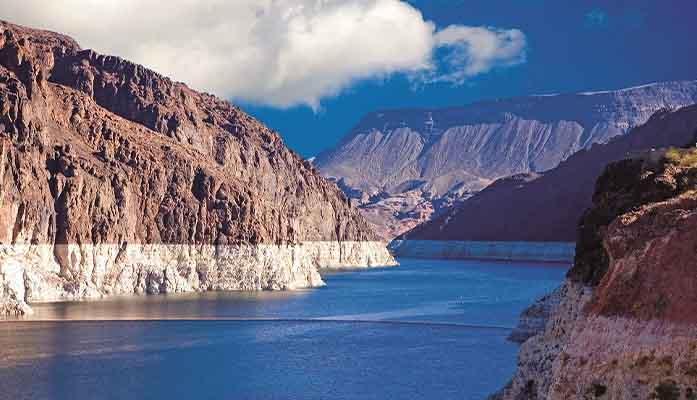
Arizona Republican legislators made sure that water investments received sizable contributions in the recently negotiated budget deal for the state.
In a press release issued last week, Representative Gail Griffin, the Chair of the House Committee on Natural Resources, Energy & Water highlighted a realized commitment to strengthen “Arizona’s water resources by directing over $360 million of state general fund dollars to be allocated to projects and programs that help to promote the conservation, development, and enhancement of water in Arizona.”
Griffin lauded Republicans’ efforts to include this funding for the state’s water security and future, saying, “Never before in our state’s history has water been as important to our state’s economic prosperity and individual liberty as it is today. As Republicans, we will continue to find solutions to Arizona’s most pressing issues, from water security to housing availability. We will continue to make investments in Arizona’s long-term water future.”
The release listed several areas where funds were invested: Water infrastructure projects, Reconstruction of a levee, Design and construction of a recharge basin, Installation of new irrigation systems and xeriscaping, Water project assistance for cities, towns, and irrigation districts in rural counties, Wastewater system improvements, Construction of groundwater delivery infrastructure, Brackish groundwater recovery pilot program, Statewide water resources planning, Water supply and demand assessments, Assured and adequate water supply administration, Stream adjudication support, Rural water studies, Water protection fund for projects that address conservation and watershed improvement, Conservation and drought program, Brackish groundwater study, Water conservation projects, On-farm irrigation efficiency projects, Water quality fee fund, PFAS mitigation, Safe drinking water program, Direct potable reuse of treated wastewater, Water infrastructure and commerce grants, Long-term water augmentation, Rehabilitation and drilling of new water wells.
Earlier this session, Representative Griffin was named as a co-chair of the Joint Legislative Study Committee on Water Security, which was formed by Arizona House Speaker Ben Toma and Senate President Warren Petersen to “convene and solicit information from water users, stakeholders, and the public regarding state solutions to address water security in Arizona.”
When announcing the formation of this committee, Speaker Toma said, “The availability of water for the success of all industries in our state is critical to our economy. Strengthening our existing water resources while we secure our future water supply is a top priority as we work to achieve common-sense solutions for our state. His counterpart in the Senate, Petersen, also stated, “From the 1980s Groundwater Management Act to last year’s historic investment in WIFA, the Legislature has led and will continue to lead the water policy solutions that require legislative action to implement.”
Water policy will most certainly be an issue of contention in a divided government in the years ahead. Republicans in the state legislature and Democrat Governor Katie Hobbs have already proven that they have varying opinions about how to lead the Grand Canyon State forward in this critical area. Democrat Attorney General Kris Mayes has also weighed in with her perspectives on Arizona’s water security, attempting to make sure that her office has a seat at the table for future actions.
Daniel Stefanski is a reporter for AZ Free News. You can send him news tips using this link.
by Daniel Stefanski | May 19, 2023 | News
By Daniel Stefanski |
Arizona’s recently passed budget continues to divide Democrats as they bemoan Governor Katie Hobbs’ failure to negotiate more progressive additions.
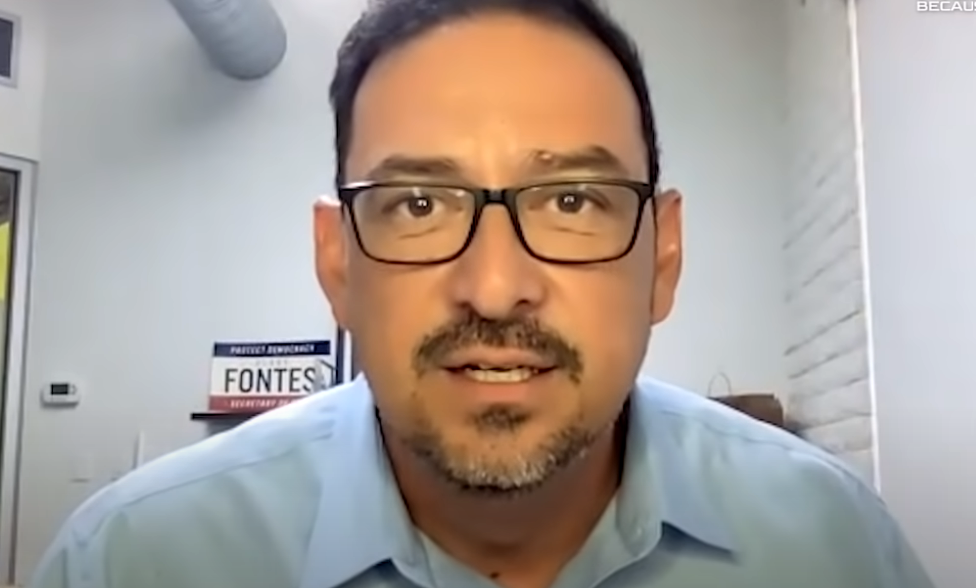
Before the new budget was approved by the Arizona Legislature and signed into law, Democrat Secretary of State Adrian Fontes tweeted, “The present form of the budget proposal fails to fulfill the requirements we’ve conveyed to the Governor and the Legislature. This is because relying on one-time funds cannot address our urgent need for a larger number of SOS staff to boost IT security and offer technical support to the counties. As elections are critical infrastructure, the current budget proposal neglects the significance of maintaining the security and quality of our elections over time.”
After the budget was signed by Governor Hobbs, a Republican lawmaker alleged more discontentment from Fontes. Freshman Representative Austin Smith wrote, “During a House Elections Committee meeting this year @Adrian_Fontes came to testify for the ballot images bill to @electjacqparker, @realAlexKolodin, @azjustinheap, @RJ4arizonaand me. Fontes was storming through the State House yesterday cussing because he didn’t get what he wanted in the state budget for his left-wing pet projects. You CAN question ANYTHING in this country including elections. Only actual fascists and democracy frauds like Adrian Fontes hate it. Pound sand, @Adrian_Fontes.”
A few other individuals added some insight to this revelation by Smith, including Representative Jacqueline Parker, who stated: “Maybe if he stopped calling us fascists & working against us, & did his job better we would care about funding his department more… if I was in charge, A LOT more government agencies would have received much less funding. I thought he was treated too generously, considering…”
Representative Justin Heap said, “Uh oh. SofS Adrian Fontes is fuming about the Budget! He just discovered that the House Elections Committee made sure we stripped his control over millions of HAVA dollars he planned to use to “fortify” our elections. Tough break, Man. Seeya at the Joint Oversight Committee!”
Jen Wright, a former top attorney in Attorney General Mark Brnovich’s administration, tweeted, “Why would Sec. Fontes storm thru the AZ State House upset about the budget? Maybe because @realAlexKolodin & the @AZHouseGOP, & @AZSenateGOP refused to give him unfettered access to the MILLIONS in HAVA money that he had requested? #ElectionIntegrityHeroes #ThankALegislator”
Another freshman representative, Alexander Kolodin, responded to Wright’s post, saying, “Oh Gina Swaboda and I went through his budget MOST carefully. A little legislative oversight never hurt, right?”
Senator Wendy Rogers also chimed in to praise Kolodin for his contributions to the budget: “@repalexkolodin applies THE finest-toothed comb of anybody I know on planet earth… seriously. Picayune. Wonkish. But freakin’ sharp. I’m glad he’s on our side, is all I can say.”
Fontes’ issues with the budget follow the high-profile pushback from Democrat Attorney General Kris Mayes, which occurred before the budget was passed and signed into law. Mayes previously sent a letter to Hobbs and members of the Legislature, writing, “The Legislature and Governor need to go back to work and produce a budget that is in the best interest of all Arizonans. We need a budget that funds essential state services that protect the well-being and safety of all Arizonans. I will continue to fight, especially for our most vulnerable residents, as well as the dedicated, hard-working public servants in the Attorney General’s Office.”
Mayes also threatened legal action if the Legislature swept “the authority of the Attorney General to direct funds received through consent judgments against several pharmaceutical companies for their roles in the opioid crisis.” Republican Representative David Livingston fired back against those statements, tweeting, “Attorney General Mayes should learn the facts first, and accurately convey those facts in committee hearings, before making demands and threats to sue the Legislature and the Governor over the budget.”
Daniel Stefanski is a reporter for AZ Free News. You can send him news tips using this link.
by AZ Free Enterprise Club | May 17, 2023 | Opinion
By the Arizona Free Enterprise Club |
Save Our Schools Arizona (SOS) and some Dem lawmakers were up in arms last week. And anytime that happens, you know you’re probably doing something right.
Last Wednesday, the Republican-led legislature passed the $17.8 billion budget, and it was a big win for students, parents, school choice, and Arizona’s taxpayers. Despite the fact that Governor Katie Hobbs made it clear that she planned to dismantle school choice for all with a full repeal of the beloved Empowerment Scholarship Accounts (ESA), Hobbs signed the budget without any cap or restrictions on the historic program. This should be cause for celebration—unless, of course, you’re SOS or certain Democrat lawmakers.
Predictably, SOS got right to work on spreading lies about the popular ESA program, claiming it would drain K-12 public schools of funding, hurt Arizona’s economy, and even bankrupt the state. That last lie is particularly absurd, but then again SOS has a history of such desperation when its back is against the wall. (Can you imagine being this bent out of shape that children from all walks of life can get an education that best fits their needs?)
The reality is that the ESA program has absolutely exploded during this fiscal year…
>>> CONTINUE READING >>>
by Daniel Stefanski | May 13, 2023 | News
By Daniel Stefanski |
Arizonans who were under the impression that a Democrat governor in office would tip the scale in favor of more progressive policies are readjusting their expectations after the new state budget was signed into law.
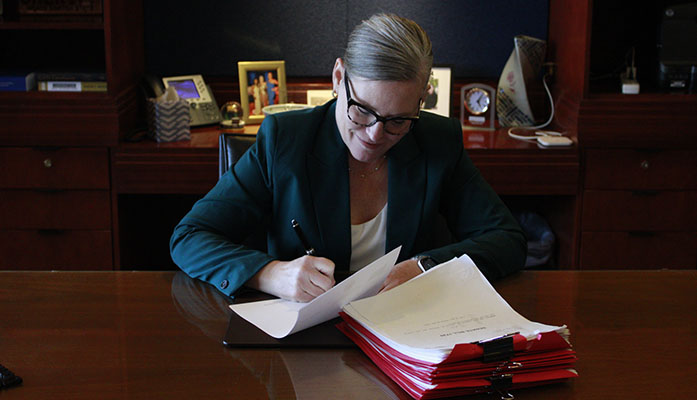
On Friday, Governor Katie Hobbs signed the budget sent to her earlier in the week by the Republican-led Arizona Legislature. The $17.8 billion budget was approved in both the House and Senate with broad bipartisan support, though several Democrats refused to back the compromise.
Many observers thought that with Arizona’s divided government and with the political animosity between state Republicans and Democrats, this budget wouldn’t become a reality until June or later. Veteran communicator Barrett Marson tweeted, “A lot of people said it couldn’t be done. A lot of pundits (me included) said there’d be no budget deal until June/July. We were wrong. Governor Hobbs, President Petersen and Speaker Toma came together to craft a budget with broad bipartisan support. There’s a lot to like. Let’s celebrate.”
Though both sides received concessions in the budget, it appears that Republicans were the significant winners in the deal thanks to the shrewd negotiations employed by Petersen, Toma, and members of their staff. Both chiefs of staff, Josh Kredit (Senate) and Michael Hunter (House), have dealt with the state budget for a number of years and gave their bosses an extreme advantage when coming to terms with Arizona’s chief executive.
Petersen took a victory lap after the governor’s signature ended the budget saga for this fiscal year, stating, “We’re able to do this for our citizens, while also reducing government spending by $300 million. In fact, this is the first budget since 2017 where we have not added any new ongoing spending above formula increases. Additionally, Senate Republicans prevented the Governor and Democrat Legislators from advancing their extremist agenda. State-funded abortions and tuition-free college education for undocumented immigrants will not happen in Arizona. We are not getting rid of state-funded border security resources to keep our communities safe, especially as the Biden Administration foolishly lifts Title 42. We’re also not capping, cutting or eliminating the historic universal school choice program that now has more than 50,000 participants. Needless to say, your Republican Majority at the Legislature will continue to fight to protect Arizona from turning into California at the hands of the radical left.”
After the House cleared the budget on Wednesday, Speaker Toma also championed this major achievement for his chamber and caucus: “From day one, our Majority has been focused on getting the job done for our constituents: putting Arizona families first, protecting the vulnerable, and growing opportunity and freedom. We’re conservatives. We believe you should keep more of your money and the government should spend less. That’s why we believe this is Arizona’s Budget — a budget that reflects our needs, gives back, spends smart, and addresses real issues. We needed a budget that the Governor would sign that accomplishes our goal of putting Arizona families first. This budget accomplishes both.”
Cathi Herrod, President of the Center for Arizona Policy, also praised Republican leaders for protecting the future of family values in the budget. She wrote, “I credit Senate President Warren Petersen and House Speaker Ben Toma for standing strong against any pro-abortion funding or other measures. The popular universal Empowerment Scholarship Account (ESA) program did not get a cap or any restrictions, which is great news for all Arizona families who want to choose the best educational environment for their children.”
The Senate Republicans shared additional highlights from the Fiscal Year 2023 budget:
- Education: $680 million in new education investments, including a $300 million infusion into K-12, an $88 million ongoing increase to per pupil funding, and $183 million for school capital funding
- Public Safety: $256 million, including operational investments for the Departments of Corrections, Public Safety, and Emergency and Military Affairs, as well as $36 million in local sheriff and police department support
- Transportation: $610 million in state and local transportation projects, including $89 million to expand lanes on the I-10, $76 million to expand lanes on the I-17, as well as $54 million in pavement rehabilitation for roads affected by winter weather
- Tax Cuts: $260 million for the Arizona Families Tax Rebate, which will provide up to $750 to taxpayers with children and adult dependents
- Health and Welfare: $342 million, including $150 million for the Housing Trust Fund to develop more affordable housing, $60 million for emergency homeless services and temporary shelters, as well as $14 million specifically allocated for veteran housing and employment services
- Natural Resources: $174 million in natural resource investments, including $143 million in reallocated funding for targeted water-related projects
Daniel Stefanski is a reporter for AZ Free News. You can send him news tips using this link.