by Staff Reporter | Aug 22, 2024 | Education, News
By Staff Reporter |
81 school board races were recommended for cancellation this year by the Maricopa County School Superintendent due to a lack of candidates.
35 districts were impacted. Maricopa County has 58 districts in total, meaning 60 percent of the districts either had no candidates or only one candidate running for a seat.
All but a handful of the races had one individual in the race poised for appointment by default. 72 of those seats were recommended to have the sole candidate appointed to them, with the remaining 9 seats declared vacant due to having no candidates at all.
The following districts have races impacted by the lack of candidates:
- Aguila Elementary School District: three appointments, two vacancies
- Alhambra Elementary School District: three appointments
- Arlington Elementary School District: three appointments
- Avondale Elementary School District: one appointment
- Balsz Elementary School District: one vacancy
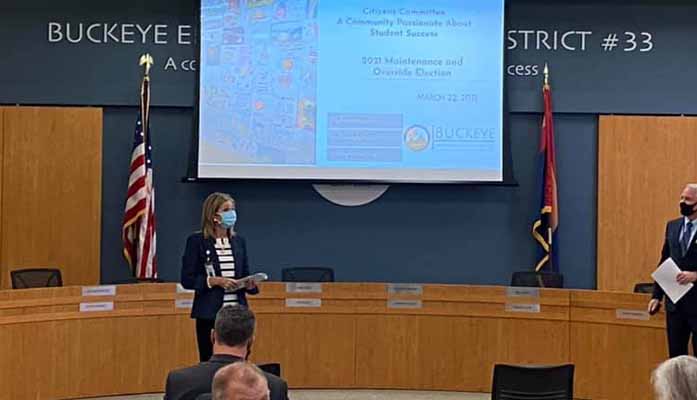
- Buckeye Elementary School District: two appointments, one vacancy
- Cave Creek Unified School District: one appointment
- East Valley Institute of Technology – 4: one vacancy
- East Valley Institute of Technology – 6: one appointment
- East Valley Institute of Technology – 8: one appointment
- Fountain Hills Unified School District: one appointment
- Gila Bend Unified School District: one appointment, one vacancy
- Litchfield Elementary School District: three appointments
- Littleton Elementary School District: three appointments
- Madison Elementary School District: three appointments
- Mobile Elementary School District: three appointments
- Morristown Elementary School District: one appointment, one vacancy
- Murphy Elementary School District: three appointments, one vacancy
- Nadaburg Elementary School District: three appointments
- Osborn Elementary School District: three appointments
- Paloma Elementary School District: three appointments
- Palo Verde Elementary School District: four appointments
- Pendergast Elementary School District: three appointments
- Phoenix Elementary School District: three appointments
- Riverside Elementary School District: one appointment
- Saddle Mountain Unified School District: three appointments
- Sentinel Elementary School District: three appointments
- Tempe Union High School District: three appointments
- Union Elementary School District: two appointments, one vacancy
- West MEC – 3: one appointment
- West MEC – 4: one appointment
- West MEC – 5: one appointment
- West MEC – 6: one appointment
- Wickenburg Unified School District: three appointments
- Wilson Elementary School District: one appointment
Of the recommended appointments, 12 were write-in candidates: three for Aguila Elementary School District, three for Paloma Elementary School District, two for Union Elementary School District, one for Alhambra Elementary School District, one for East Valley Institute of Technology – 6, one for Gila Bend Unified School District, and one for Morristown Elementary School District.
The filing deadline for write-in candidates occurred at the end of July, with the filing period opening at the start of June.
State law authorizes the county school superintendent to either appoint a qualified elector or call a special election to fill the vacant seat.
As part of the former option consisting of an appointment process, the office of county superintendent receives up to three names from the relevant district governing board as well as a full list of candidates who applied with the district. Individuals not on those lists who are interested in being appointed may also apply directly to the office of county superintendent to be considered for appointment.
The office of county superintendent will then filter out applicants through interviews.
Only those who are registered voters in the state and residents of the school district for at least one year immediately preceding the day of the election are considered eligible to serve on a school governing board.
The county superintendent’s recommendations were submitted to the Maricopa County Board of Supervisors for final approval.
AZ Free News is your #1 source for Arizona news and politics. You can send us news tips using this link.
by Terri Jo Neff | Dec 30, 2022 | Education, News
By Terri Jo Neff |
The State of Arizona has initiated a lawsuit against the Buckeye Elementary School District (BESD) and its longtime superintendent Kristi Wilson in an attempt to recover what the attorney general’s office (AGO) contends is public monies “illegally paid” by the district to Wilson in violation of the Arizona Constitution’s Gift Clause.
The 70-page lawsuit filed Wednesday notes BESD paid more than $500,000 to Wilson or on her behalf that was not owed under her employment agreements. The AGO also raises questions about the legality of $1.7 million in “additional compensation paid under three agreements from July 2016 through December 2021, for total compensation of $3,274,505.
As superintendent, Wilson is responsible for 5,200 students across seven elementary schools. Her compensation was about 100 percent higher than the average pay for the superintendents of Arizona’s three largest school districts during the same five-year period.
Wilson and BESD came under investigation by the AGO following a detailed report by the Arizona Auditor General in April which raised questions about whether the additional compensation called for in Wilson’s three employment agreements violated state law.
The auditor’s report had harsh words for district officials, who reportedly omitted “critical information” and other records during the audit. Some officials were also chided for a lack of transparency that kept the public in the dark about Wilson’s performance and her compensation.
Wednesday’s lawsuit is not the first undertaken by Attorney General Mark Brnovich related to Arizona’s Gift Clause, which prohibits the payment of public monies unless such payment serves a public purpose and the value received by the public is not far exceeded by the consideration being paid by the public.
“Transparency and accountability are not electives in our public school districts,” Brnovich stated in announcing the lawsuit against Wilson and BESD. “Hardworking taxpayers expect these public funds to be expended in accordance with the law and the best interest of students.”
Wilson was named BESD’s superintendent in 2013. From FY2014 through FY2016, her annual compensation averaged $172,813. But over the next five years, her annual salary under three employment agreements ranged from a low of nearly $339,000 to a high of nearly $800,000.
The lawsuit states that in comparison, the superintendents at Arizona’s three largest districts earned from $208,600 to $306,179 per year. Another comparison noted by the AGO is that BESD paid its teachers an average of $44,536 in 2019.
Terri Jo Neff is a reporter for AZ Free News. Follow her latest on Twitter, or send her news tips here.
by AZ Free Enterprise Club | Sep 4, 2022 | Opinion
By the Arizona Free Enterprise Club |
Public schools are out of control. And it’s going to get worse if we don’t do something about it. Unfortunately, for far too long, school board elections have been some of the most ignored around our state. But whether you have kids in public school, private school, or homeschool—whether your kids are out of school or you don’t have kids at all—this year’s school board election will affect you.
How? Take a look at some of the worst abuses in public school districts in the past year.
A Financial Mess
As a taxpaying citizen, you probably care a lot about where your dollars go. But most school districts don’t share your same concerns. Mesa Public Schools (MPS) is one of them. Back in March, MPS failed to explain where over $32.3 million of their federal emergency funds slated for COVID-related expenditures went—which should’ve resulted in an audit by the State of Arizona.
But Mesa isn’t the only problem…
>>> CONTINUE READING >>>
by Terri Jo Neff | Apr 15, 2022 | Education, News
By Terri Jo Neff |
The governing board of the Buckeye Elementary School District is coming under fire after the Arizona Auditor General discovered the superintendent of the 5,100-student district received about 100 percent more in compensation than the superintendents of Arizona’s three largest districts made on average.
Kristi Wilson became superintendent of the Buckeye District’s seven elementary schools in 2013. From July 2016 to December 2021, she received total compensation of more than $3.2 million under the terms of three employment agreements, according to a report released April 12 by Arizona Auditor General Lindsey Perry.
Of that, roughly $1.7 million is categorized as “additional compensation,” including nearly $570,000 which Perry’s auditors believe was not owed to Wilson.
The report also contends the District “omitted critical information” and records associated with two of the three employment agreements. The auditors expressed concern that there was a lack of transparency which “did not enable the public to monitor the District and superintendent’s performance.”
Any overpayment could constitute a violation of the Gift Clause in the Arizona Constitution, while violations of Arizona’s public records law can be prosecuted in some instances. As a result, the Auditor General’s findings have been referred to the Arizona Attorney General’s Office for investigation.
Data provided by the Auditor General shows 16 percent of the Buckeye District’s students come from families at or below the poverty rate. And nearly 70 percent of all students qualify for free or reduced lunches.
Furthermore, four of the seven schools had a D or F grade in Fiscal Year 2019. This has resulted in the Arizona Department of Education working with District officials to create an integrated action plan to improve student achievement.
Equally concerning, according to the audit report, is that District students performed below their peer group and students statewide on State assessments in the four fiscal years ending in Fiscal Year 2019. Yet at the same time, the salary and benefits package for Wilson worked out to 54 percent more in per pupil spending for executive administration than the statewide average.
In addition, the average teacher salary in the District was $44,536, about 15 percent below the average in Arizona.
Jane Hunt, the president of the District’s governing board, responded earlier this month to Perry. Hunt did not agree with several of the audit’s findings, but Perry’s staff contends the District’s response contains “certain inaccurate or misleading statements” about the situation.
In one instance, the District contended it had agreed to pay Wilson “a retirement credit” sufficient to cover all tax liability associated it with. Such an arrangement was expressly authorized by the Arizona State Retirement System through the use of post-tax pay, Hunt responded.
But that is not what happened, according to the audit report.
“The District’s assertion that the superintendent’s retirement credits were purchased using post-tax pay is wrong,” the report notes. “ Rather, per the superintendent’s election, the District deducted and sent to the ASRS the superintendent’s retirement credit payments through pre-tax deductions.”
This is an important distinction, Perry’s staff noted, because the District’s failure to correctly apply pre-tax status when calculating Wilson’s additional compensation led to a significant overpayment “to and on behalf of the superintendent.” And that could lead to legal problems for Wilson and the District Board.
The audit report notes that four of the District’s five current governing board members held such positions in April 2016 when the first of the employment agreements was approved to provide the superintendent with additional compensation.