by Staff Reporter | Feb 27, 2025 | News
By Staff Reporter |
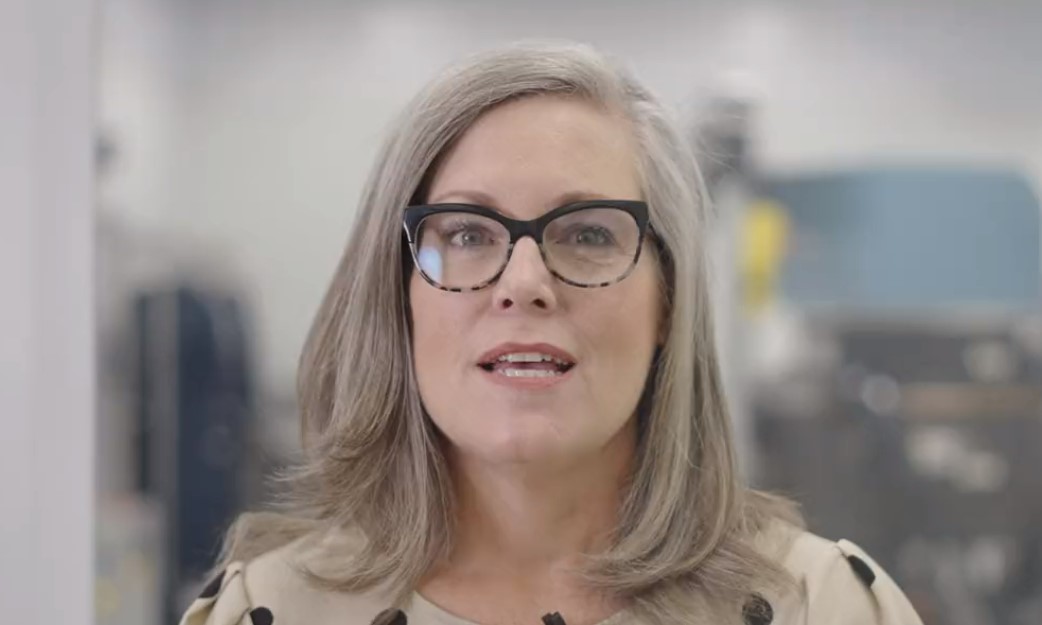
With the 2026 election just around the corner, Governor Katie Hobbs is adopting right-leaning policies and stances.
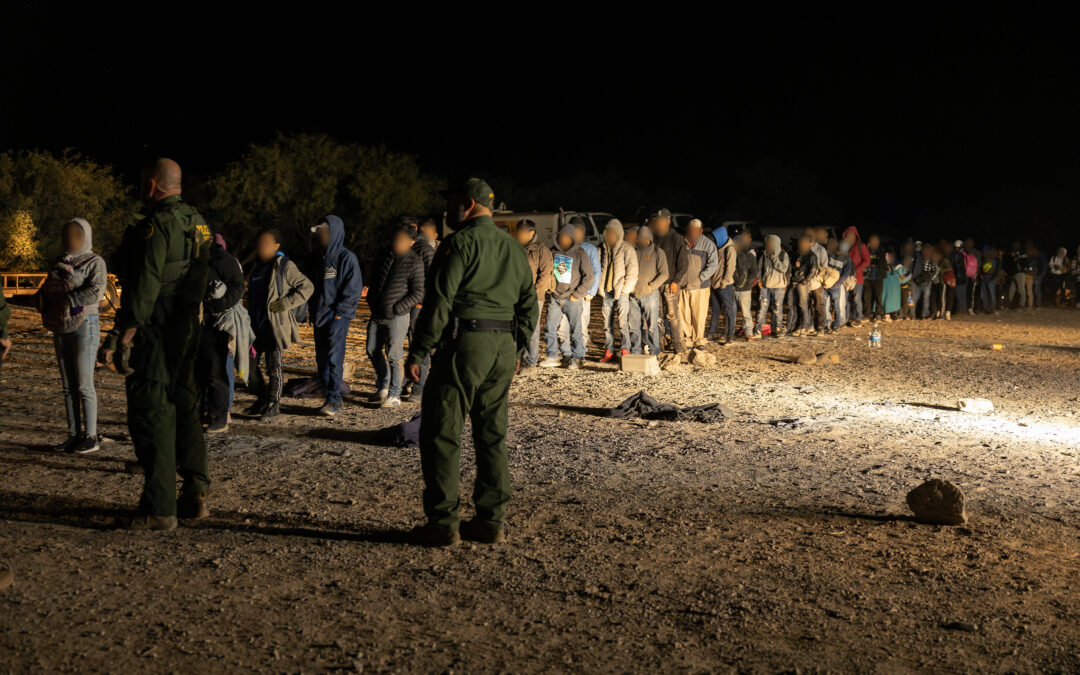
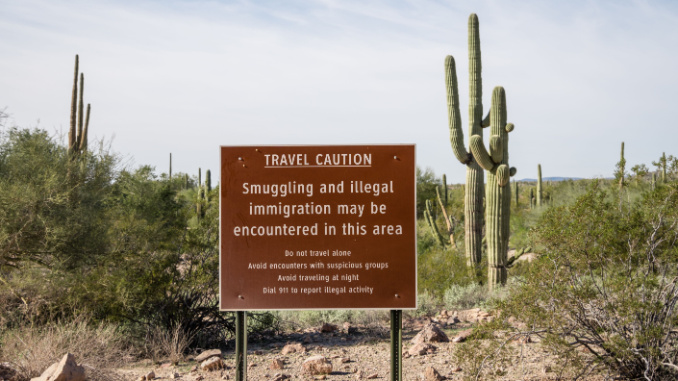
On Tuesday, Hobbs announced the creation of a border task force, Operation Desert Guardian (ODG), to enhance border security. The task force strongly resembles the Border Strike Force (BSF) of Hobbs’ Republican predecessor, Doug Ducey.
This renewed focus on border security and support for a task force marks a significant departure from Hobbs’ initial stance as governor.
Early on in her first months in office in 2023, Hobbs began ending Ducey’s BSF, which included removing shipping containers intended to close off unsealed sections of the southern border. On the campaign trail in the summer of 2022, Hobbs promised to not end the BSF. By November, Hobbs indicated her intent to leave border security and immigration enforcement to the federal government.
Hobbs’ spokesman, Christian Slater, insisted in statements to the media that Hobbs’ task force differed greatly from Ducey’s strike force. However, the two share nearly identical structures and duties.
The BSF launched as an enforcement bureau within the Department of Public Safety’s Criminal Investigations Division. The strike force focused on improvements to addressing border-related crimes (for example: drug trafficking, weapon smuggling, vehicle theft recovery, and violent criminal apprehension) while evaluating and analyzing criminal intelligence and enhancing response capabilities along the border. The BSF combined federal, state, county, tribal, and local law enforcement agencies in the border region to carry out these duties, especially for disruption of transnational criminal organizations (TCOs).
By comparison, ODG also partners with local law enforcement within the border-inclusive counties to disrupt TCO operations and border-related crimes.
Hobbs reversed course on her support for Proposition 123. While still a state senator in 2015, Hobbs opposed the proposition’s arrangement increasing state land trust dollars to fund schools. Last month, Hobbs advocated for the proposition’s renewal as an “essential” means of providing “critical funding” for the state’s public schools and educators.
Hobbs also reversed course on a significant agency pick, Angie Rogers, opting instead to restore Michael Wisehart as director of the Department of Economic Security (DES); her predecessor, Doug Ducey, installed Wisehart.
Last month, Hobbs appointed another Ducey administration veteran, Kathryn “Katie” Ptak, to lead the Department of Child Services.
Some efforts undertaken by the current administration, often seen as red meat right-wing priorities, have backfired recently for the governor. Hobbs created a new six-figure role within DES (chief, or “senior executive consultant,” of the newly-created Office of Veteran & Military Affairs) that mirrors the work already undertaken by the Department of Veterans’ Services (DVS). The position went to Dana Allmond at Hobbs’ behest, the unsuccessful Democratic 2022 legislative candidate and failed gubernatorial nominee. Republican legislative leaders questioned the apparent duplicity of the new DES position and DVS responsibilities.
Per the secretary of state’s office, 11 individuals have filed statements of interest in the governor’s race: Republican candidates Alan White, Karrin Taylor Robinson, George Nicholson, Scott Neely, Donald Mucheck, Christian “Maverick” Grey, Andy Biggs, and Christopher Ames; Green Party candidates William Pounds IV and Lisa Castillo; and Libertarian candidate Barry Hess.
AZ Free News is your #1 source for Arizona news and politics. You can send us news tips using this link.
by Daniel Stefanski | Feb 12, 2025 | News
By Daniel Stefanski |
An Arizona Democrat lawmaker is working to undermine the efforts in her state and nation to enforce the rule of law when it comes to border security and immigration policy.
Last week, Arizona State Senator Analise Ortiz announced that she had introduced the “Immigrant Trust Act.” The purpose of this bill, according to Ortiz, would be “to ensure Arizona’s immigrant communities feel comfortable seeking medical assistance, reporting crimes and completing their day-to-day activities without the fear of deportation.”
In a statement, Senator Ortiz said, “Over the last year, we have seen Republican elected officials at both the state and federal level work to make our country unwelcoming to immigrants. They have pushed racist rhetoric that has caused all immigrants – documented and undocumented – to live in fear. No one should fear that living their normal, every day life could lead to deportation.”
Ortiz added, “While the Arizona Legislature does not have authority to dictate policy at the federal level, we can ensure citizen safety right here at the State Capitol. That is why I have introduced the ‘Immigrant Trust Act’ (SB 1362), which will make the distinction between state, county and municipal law enforcement and federal immigration authorities very clear.”
SB 1362 has been introduced in the face of a drastic change in federal immigration policy, which took place immediately after President Donald J. Trump took the oath of office on January 20 at noon. Since then, the president has prioritized immigration enforcement and border security, which has outraged many on the left, who have sought to protect most of those illegally in the country.
The Democrat legislator’s lengthy statement concluded with the following charge to her colleagues: “Our community is fed up. It is past time to make Arizona a fair and welcoming state where everyone is able to participate in their communities without fear. Passing the ‘Immigrant Trust Act’ is the first step toward making that a reality.”
This bill has been assigned to the Senate Military Affairs and Border Security (MABS) Committee, which is chaired by Senator David Gowan. With Republicans in firm control of the chamber, it has little chance to pass out of the committee – if it is even heard at all.
Daniel Stefanski is a reporter for AZ Free News. You can send him news tips using this link.
by Staff Reporter | Jan 30, 2025 | News
By Staff Reporter |
Over 7,300 illegal aliens have been deported in President Donald Trump’s first week in office, per the Department of Homeland Security (DHS).
DHS published this latest dataset on Monday. Following Trump’s inauguration, DHS and Immigrations and Customs Enforcement (ICE) began posting daily updates with immigration enforcement totals.
DHS reported that among these 7,300 apprehensions were “hundreds of convicted criminals” for crimes such as sexual assault and rape, robbery, burglary, aggravated assault and battery, drugs and weapons offenses, domestic violence, suspected terrorism, firearms trafficking, kidnapping, vehicular manslaughter, driving while impaired, and possession of an illegal substance.
This latest update follows the Senate’s confirmation of South Dakota Gov. Kristi Noem last Saturday as Trump’s DHS secretary.
“Ensuring Americans’ safety and securing the border is President Trump’s and Secretary Noem’s top priority,” stated DHS.
DHS also reported that their novel implementation of deportation flights returned many of these detained illegal aliens to Mexico, Jordan, Brazil, and El Salvador.
In remarks made Monday during the House GOP’s annual Congressional Institute conference, Trump declared his administration’s use of military planes for deportations marked a historic approach to U.S. immigration enforcement.
“For the first time in history, we are locating and loading illegal aliens into military aircraft and flying them back to the places from which they came — and made clear to every country they will be taking back their people,” said Trump.
Per data provided by ICE in their daily enforcement updates, as of Monday there were over 3,500 arrests and 2,650 detainers lodged since Trump took office.
Under Trump, immigration and law enforcement officials have also begun “enhanced targeted operations” on major hotspots for illegal aliens. On Sunday, ICE announced a partnership on such an operation with the FBI, ATF, DEA, CBP, and Marshals Service to enforce immigration law in Chicago, Illinois.
“For the record: targeted enforcement operations are planned arrests of known criminal aliens who threaten national security or public safety,” stated ICE.
Chicago considers itself a “sanctuary city.” Chicago and other cities which adopted this status are now under investigation by the House Committee on Oversight and Government Reform, per a letter sent to local leaders on Monday. Other sanctuary cities named in that letter were New York City, New York; Denver, Colorado; and Boston, Massachusetts.
Although Phoenix declined years ago to declare itself a sanctuary city officially, Phoenix Mayor Kate Gallego maintains a position similar to those maintained by sanctuary city leaders. Last November, in the weeks following Trump’s election, Gallego declared that no city resources would be used for mass deportation efforts.
“I can say without equivocation that as long as I’m mayor, Phoenix will not use its police department—or any city resources whatsoever—to assist in mass deportation efforts by the Trump Administration,” said Gallego in a statement to Arizona’s Family.
Phoenix Police Department policy set years ago requires sergeant approval prior to contacting ICE.
Reportedly, Phoenix city leaders plan to meet privately for legal advice on the Trump administration’s immigration policies. The Department of Justice issued a three-page memo last week directing U.S. attorneys to investigate any state and local officials who refuse to cooperate with immigration enforcement.
“Federal law prohibits state and local actors from resisting, obstructing, and otherwise failing to comply with lawful immigration-related commands or requests,” read the memo from acting Deputy Attorney General Emil Bove.
The Trump administration put in a workaround to these refusals by major cities on immigration enforcement. Several days after Trump’s inauguration, then-acting Homeland Security Secretary Benjamine Huffman issued an internal memo granting immigration enforcement authority to law enforcement agents throughout various agencies, as reported exclusively by The Wall Street Journal.
Days later, the Phoenix office of the DEA announced its partnership with the DOJ and DHS in carrying out illegal alien apprehensions. Like its federal peers, the Phoenix DEA has taken to posting about their work with greater frequency since their Sunday announcement of a federal partnership.
Like Phoenix city leadership, Tucson’s city leaders vowed in a press release to not participate in any federal immigration enforcement efforts.
In his first week in office, Trump’s administration also ended the CBP One app enabling illegal entry into the border, and repealed ex-Secretary Alejandro Mayorkas’ memo limiting ICE agents.
AZ Free News is your #1 source for Arizona news and politics. You can send us news tips using this link.
by Monica Yelin | Jan 27, 2025 | Opinion
By Monica Yelin |
There seems to be significant misinformation surrounding immigration and deportation, and as a legal Colombian migrant, I feel the need to clarify a few things.
First, there is a massive backlog of individuals who already have deportation orders. In most cases, U.S. Immigration and Customs Enforcement (ICE) does not catch these individuals off guard. Most are well aware of their deportation orders and have had ample time to make arrangements, especially if they have children.
At the same time, it’s critical to acknowledge that our country cannot sustain an infinite number of people crossing the border illegally, unvetted, and unchecked. Simply crossing illegally, claiming credible fear, and applying for asylum does not make it right, especially when one did not arrive legally and does not have credible fear. Most individuals who apply for asylum do not qualify, and many fail to follow through with their legal appointments. This process, already overwhelmed by years of backlog, often results in denied claims, something the applicants are frequently aware of.
It’s frustrating to watch media outlets like CNN focus on “gotcha” questions directed at individuals like Tom Homan, instead of addressing the bigger picture with logic and reason. Deportations prioritize criminals and those with criminal backgrounds. If undocumented individuals happen to be caught alongside a criminal, they may also face deportation as collateral. Once the immediate threats to national security are addressed, the system will move on to others. However, this process will take time and require more funding and resources to scale effectively.
We need to set emotions aside and recognize the hard truths: human trafficking and exploitation must end. Migrants are often misled and lured by false promises of opportunities or legal status. Many die during their journey, are trafficked, go missing, or suffer horrendous abuses, including rape. When they arrive, they often become a financial burden and face years of uncertainty.
Given the current situation, and as a legal Colombian migrant, I believe I have the right to speak up. Beyond the logistical and legal issues, I find it deeply disrespectful, both to Americans and to legal immigrants like me, that the previous administration’s open-border policies disregarded the rule of law and encouraged such reckless disregard for human life. The treatment of migrants in this system has been appalling, and it’s heartbreaking to see leaders like Colombian President Gustavo Petro exploit the situation further.
Why are we spending so many resources on undocumented migrants while neglecting veterans, those struggling with addiction, the homeless, and natural-born Americans, naturalized citizens, and legal immigrants? What about DACA recipients, those who filed paperwork, and others who have been waiting for years for real solutions? At the same time, we are sending billions of dollars abroad while our own people are suffering here in America.
In addition, how do you explain all this to Angel Parents, those who have lost their children to crimes committed by undocumented migrants? Their pain and their losses are a stark reminder of the magnitude of this crisis.
I know the current issue with our immigration system is a complicated one, and I want to emphasize that we must have compassion for everyone equally, including undocumented migrants. However, I want to make perfectly clear that the previous administration did not care for you, me, legal immigrants, citizens, and certainly not the undocumented migrants. Many people filed their legalization cases here in America and others filed abroad waiting to be united with their families for years and years. Many refugees in camps and foreign countries are losing hope because it feels like it’s taking an eternity.
And what about those undocumented migrants who have been here for 20 years or more, who have not committed crimes, who pay taxes, own businesses, create jobs, and have U.S. citizen children who are productive members of society? They feel offended because the previous administration forgot them and did not offer a path to legalization but instead opened the border. One could argue that they should be helped before those crossing.
Lastly, I do not approve of illegal immigration in any way. But we must be realistic. They are already here. How about giving them a fine and creating some sort of path to permanent residency if they meet certain very strict criteria? By no means should we enable illegal immigration, but ignoring the realities of the situation is not a solution either.
Our immigration system must reflect fairness, logic, and compassion. This means addressing those who have committed crimes or pose a security threat, while also considering solutions for those who have demonstrated their commitment to contributing positively to this country. It’s a balance we must strive for—one that ensures the dignity of all while upholding the rule of law.
Monica Yelin is the Executive Director of the Hispanic Liberty Alliance.
by Daniel Stefanski | Jan 23, 2025 | News
By Daniel Stefanski |
Immediately following the inauguration of a new President of the United States, a powerful Arizona lawmaker introduced legislation to assist federal efforts to secure the border.
On Tuesday, Arizona Senate President Warren Petersen introduced the Arizona Immigration Cooperation and Enforcement Act (AZ ICE Act).
According to information from a press release, the bill would require “county sheriffs’ departments and the Arizona Department of Corrections to enter into 287(g) agreements with the federal government by January 1, 2026, to support enforcement of federal immigration laws. These agreements allow local law enforcement to help identify and process noncitizens who are in local custody for violating laws. Additionally, the legislation requires law enforcement to comply with immigration detainer requests, preventing criminal illegal aliens from being released back on the streets. The bill also directs funding to law enforcement to ensure that there is sufficient funding in place for implementation.”
In a statement that accompanied his release, Petersen said, “Ending the border crisis requires an all-hands-on-deck approach. This commonsense legislation will not only allow federal and local law enforcement to work together to protect our citizens, but it will also prevent government obstruction. Arizona voters spoke loud and clear last November. They overwhelmingly approved the ‘Secure the Border Act’ that Republicans referred to the ballot because they want the law enforced, and they want safe communities. I look forward to the AZ ICE Act passing the Legislature, and I’m hopeful the Governor will listen to our citizens by signing the bill when it hits her desk.”
Petersen’s release revealed that “Congress enacted section 287(g) in 1996 during the Clinton Administration. Under 287(g), local law enforcement agencies enter into agreements with the federal government to perform specified immigration functions. Local officers then receive formal training from the federal government on the scope of these functions.”
The Senate President’s latest legislative offering continues his leadership on the border lawlessness that permeated throughout the tenure of the Biden administration. Petersen supported many efforts to help Arizona law enforcement and communities protect citizens from the harms created from the porous border, including the Secure the Border Act, which was passed by Republican lawmakers last year and sent to the voters for the November General Election. Arizonans overwhelmingly voted for this ballot measure, which gave local law enforcement more resources and tools to fight back against the effects of illegal immigration around the state – one of those effects being the pervasive spread of fentanyl by cartels and drug smugglers due to the open border.
While Petersen and Republicans at the Arizona Legislature now have a partner in the White House in President Donald J. Trump for their collective efforts to secure the border and safeguard communities around their state, they will likely face continued resistance from Governor Katie Hobbs, a Democrat. Hobbs has opposed most Republican actions to take action on the border from the state’s perspective and purview. Now, though, that Hobbs’ window for re-election in this political cycle has commenced, she may take more steps to align on more areas over border security and enforcement than before in an attempt to convince a majority of voters that she can work across the aisle on matters of significance to the state.
AZ Free News is your #1 source for Arizona news and politics. You can send us news tips using this link.