Another one of Arizona’s middle-of-the-road legislative districts may be represented by a liberal after November’s General Election if enough Democrats and left-leaning independents have their say.
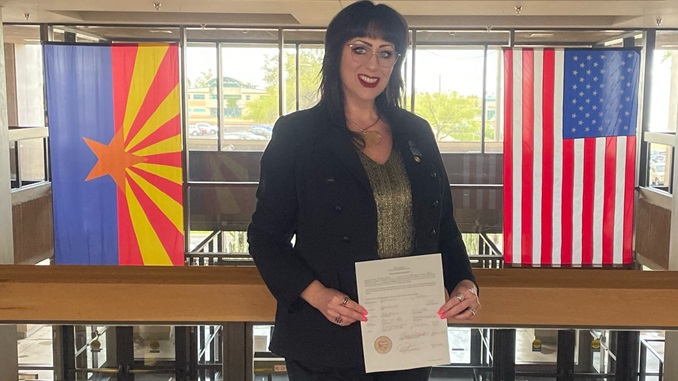
Judy Schwiebert, a Democrat, is running for the Arizona State Senate in Legislative District 2. Schwiebert currently serves as a State Representative for the district. She announced for the seat in June 2023, saying that “we need people who will work together to focus on the toughest challenges facing Arizonans including our teacher, affordable housing, and water shortage crises.”
Schwiebert posted more than 1,600 signatures at the Arizona Secretary of State’s Office earlier this spring to qualify for the ballot.
The Democrat legislator has been endorsed by several left-leaning organizations, including National Organization for Women Arizona PAC, Arizona Education Association, Moms Demand Action, Save Our Schools Arizona, Arizona List, Jane Fonda Climate PAC, the Grand Canyon Chapter of the Sierra Club, Emily’s List, Moms Fed Up, and Human Rights Campaign PAC.
Schwiebert has been a vote for her party’s efforts to stand against border security measures. In 2021, she voted against HCR 2029, which commended the courage of the United States Border Patrol and recognized the role they play in safeguarding Arizona and the U.S. She also co-sponsored HB 2604 in 2023, which would permit the Arizona Department of Transportation to issue a driver’s license or nonoperating ID to a person without legal status in the United States.
This year, she voted against SCR 1042, which proclaimed the legislature’s support for the people and government of Texas in its effort to secure our nation’s southern border.” More recently, Schwiebert refused to support a legislative effort to refer a border security measure to the ballot in this November’s General Election – HCR 2060, voting against the bill when it was considered by her chamber. The proposal, if passed by voters in the fall, would empower local law enforcement to better secure their communities from the increasing calamities from the border crisis.
It’s not just border issues where Schwiebert is showing her true, liberal colors; it’s also the economy where she is demonstrating an inability to moderate to her district’s desires. In 2021, Schwiebert voted no on HB 2113, which would have increased the 25% of allowed charitable deductions in accordance with the average annual change in the metropolitan Phoenix CPI. In 2022, she voted against HCM 2004, which urged Congress to oppose the reporting requirements included in the Biden administration tax increase proposal.
Also in 2022, Schwiebert opposed HB 2389 as one of nine members to vote against changing the time period from one year to six months for an agency that the legislature has granted a one-time rulemaking exemption to review a rule adopted by an agency to determine whether the rule should be amended or repealed. That same year, she voted against creating a TPT exemption for the sale of all machinery and equipment, including off-highway vehicles, utilized for commercial agricultural purposes.
This year, Schwiebert opposed SB 1370, which was coined “the lemonade stand bill.” This legislation exempted a minor or a person who has not graduated from high school from the requirement to obtain a TPT license and pay TPT, use tax, and local excise taxes, if the person’s business gross proceeds of sales or gross income is less than $10,000 per calendar year.
Schwiebert’s leftist leanings didn’t stop with the border and economy. She has a number of votes and bill sponsorships that show her being in lockstep with the Democrats on some of their most radical ideas. In 2023, she co-sponsored HB 2653, which would have established that “restaurants and other food service establishments in the state may only serve water and disposable straws to customers on request.” She also co-sponsored HB 2068, which would have repealed the designation of school sports by biological sex.
Additionally in 2023, Schwiebert voted no on SB 1028, which would have prohibited a person or business from engaging in an adult cabaret performance on public property or in a location where the performance could be viewed by a minor. In this most-recent legislative session (2024), she voted against HB 2591, which would have prohibited a public power entity or public service corporation from entering into contract with a person or company that uses forced labor or oppressive child labor.
Arizona Legislative District 2 is one of the most competitive in the state, with a 3.8% vote spread in the past nine statewide elections. It is very winnable for Republicans, however, as the party has emerged victorious in six out of those nine elections. The district covers a large portion of northcentral Phoenix.
Schwiebert ran unopposed in the July primary election for Democrats. She is facing off against the winner of the district’s Republican primary contest for state senator, incumbent Shawnna Bolick.
AZ Free News is your #1 source for Arizona news and politics. You can send us news tips using this link.
A north central Phoenix legislative district may have a chance to replace its open-borders Democrat state senator in the upcoming November election.
State Senator Christine Marsh is running for reelection in Arizona Legislative District 4 this November. Based on her history of election finishes, Marsh may be in for another close contest in the swing district, and her continued opposition of legislative efforts to help secure the state’s border and support law enforcement may cost her votes in this contest.
Marsh has served in the Arizona Legislature since January 2021. In the November 2020 General Election, she defeated Republican State Senator Kate Brophy McGee by fewer than 500 votes in Legislative District 28 (under the last redistricting lines). The previous election, McGee had bested Marsh by 267 votes in the 2018 General Election.
In the first election under the new redistricting lines for the decade, Marsh won another narrow victory over Nancy Barto by less than 1,200 votes for the right to represent the citizens of Legislative District 4.
Throughout her time in the Arizona Legislature, the Democrat legislator has been a fierce opponent of her state’s meaningful efforts to help secure the border and support law enforcement attempting to protect local communities from many of the harms stemming from the escalating crisis. In 2021, Marsh voted against SCR 1011, which “declare[d] that the Legislature calls on the President and Congress to take immediate and decisive action to secure the southern border and complete the southern border wall.” She also voted against HCR 2029, which “commend[ed] the courage of the United States Border Patrol and recognize[d] the role they play[ed] in safeguarding Arizona and the U.S.”
The following year, Marsh voted no on a $700,000 appropriation from the state General Fund in FY 2023 to the Border Security Fund for the construction and maintenance of a physical border fence (SB 1032). Additionally, she opposed an authorization for the Department of Emergency and Military Affairs “to use up to $250,000 from the Border Security Fund to pay for additional full-time equivalent positions” (HB 2591).
In the first year of her most-recent term in office (2023), Marsh continued her streak of opposition to proposals that would secure the border. She voted no on HCM 2007, which “expressed the legislative desire that Congress enact the State Immigration Enforcement Act.” According to the history provided by the Arizona House of Representatives, this act “would allow states or political subdivisions of states, to enact, implement, and enforce criminal penalties that are prohibited in the criminal provisions of immigration laws.”
This year, Marsh voted no on HB 2157, which would have “prohibit[ed] a court from using a defendant’s deportation as the sole reason for early termination of probation or intensive probation.” She opposed SB 1231, which would have made “it unlawful for a person who is an alien to enter Arizona from a foreign nation at any location other than a lawful port of entry.”
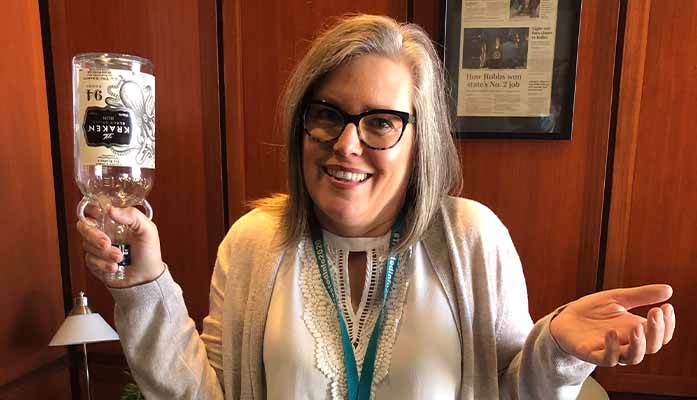
When Democrat Governor Katie Hobbs vetoed SB 1231, she wrote, “This bill does not secure our border, will be harmful for communities and businesses in our state, and burdensome for law enforcement personnel and the state judicial system.”
However, Republicans felt differently about the failure of this bill to receive a green stamp of approval from the governor – especially the sponsor, Senator Janae Shamp. The first-term lawmaker said, “The Republican-controlled Legislature will continue to prioritize closing our border and providing law enforcement with the tools they need. This veto is a slap in the face to them, Arizona’s victims of border-related crimes, and other citizens who will inevitably feel the wrath of this border invasion in one way, shape, or form at the hands of Hobbs and Biden.”
Marsh also voted against SCR 1042, which “proclaim[ed] the Legislature’s support for the people and government of the state of Texas in its efforts to secure [the United States’] southern border.”
More recently, Marsh refused to support a legislative effort to refer a border security measure to the ballot in this November’s General Election – HCR 2060, voting against the bill when it was considered by her chamber. The proposal, if passed by voters in the fall, would empower local law enforcement to better secure their communities from the increasing calamities from the border crisis.
It’s not just her votes in the Arizona Legislature that have propelled Marsh into being one of her party’s leading open-border advocates; it’s also what she has said to others about her extreme left-wing positions about the issue. Earlier in her career, Marsh was interviewed by a group over Zoom and was asked if she would “work to end the collaboration of local law enforcement with ICE in an effort to stop state sanctioned violence against some of our most vulnerable community members and especially our undocumented LGBTQ community.”
The Democrat lawmaker responded, “Yeah, absolutely. Our treatment of the LGBTQ+ immigrants by every level of law enforcement needs to be made more humane, and I will definitely look for ways once in office to make sure that that happens.”
Marsh added, “I actually did quite a bit of research on this particular question and it’s fascinating, and I did not know that there was basically state-sanctioned violence, and I find it just totally offensive.”
According to a website reporting some of Marsh’s key positions and votes, Marsh supposedly “liked a tweet calling for abolishing ICE” back in 2018 from Alyssa Milano.
Marsh ran unopposed for the Democrat nomination for state senator in the July primary election. She will face off against Republican Carine Werner in the November General Election.
According to the Arizona Legislative District 4 Democrat Party, Republicans control 38% of the district’s voter registration, compared to 27% Democrats and 35% Other. In 2022, LD 4 had a higher voter turnout than both Maricopa County and the State of Arizona at 76%.
AZ Free News is your #1 source for Arizona news and politics. You can send us news tips using this link.
A border security champion is seeking to return to the Arizona Legislature for her second term in office.
State Senator Justine Wadsack, a Republican, is running for reelection in Arizona Legislative District 17, which covers Pima County, north of Tucson, including Marana and Catalina. She has resided in Pima County for more than four decades, living in several of its cities throughout this time.
Wadsack is the Vice Chairman of the Senate Education Committee, and a member of the Government, Health and Human Services, Judiciary, and Senate Ethics Committees. Previously, she served as a member of the Director Nominations and Elections Committees.
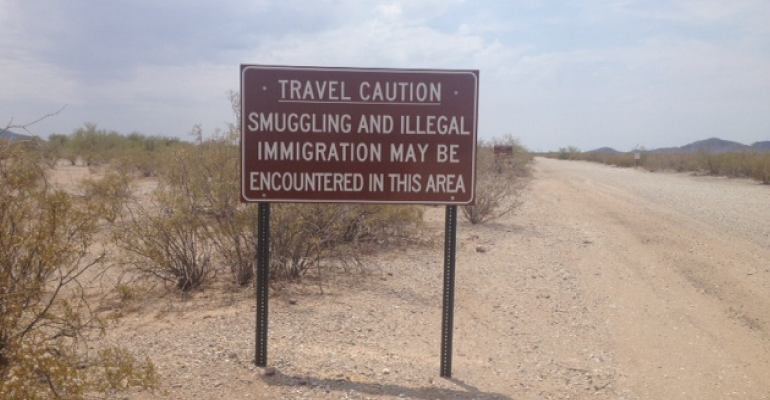
On her campaign website, Wadsack lists “border security” as her number-one issue. She writes that, “Pima County is on the front lines of America’s immigration crisis. The Democratic Party is allowing our people to become dispossessed from our own nation as it allows hundreds of thousands of illegal aliens to violate our sovereignty every month. Arizona’s border is the largest crime scene in the United States, and so many of our domestic problems are symptoms of this core crisis. Until this invasion is stopped and the rule of law upheld, the border must be every Americans’ first priority.”
To that end, Wadsack sponsored SB 1608, which “classifies the unlawful use of an electronic device to smuggle human beings as a class 2 felony and prohibits a person from being released from confinement, if convicted” – according to the purpose provided by the Arizona State Senate. The bill passed with a 16-13 vote (with one member not voting). All Republicans voted in favor of the proposal.
In a statement after the vote, Wadsack said, “Human smuggling is at an all-time high. Cartels are recruiting people, often our children, to participate in smuggling operations using various apps such as Snapchat and WhatsApp. The use of social media platforms to carry out these crimes has grown exponentially and contributes to the humanitarian crisis caused by Biden’s open border policies. Our children, our law enforcement, and our communities are being targeted, and it won’t be tolerated.”
Last year, Senator Wadsack had introduced the same bill, which passed out of both chambers. Governor Katie Hobbs, a Democrat, vetoed the legislation, writing that it “is yet another attempt by the majority to criminalize organizations and individuals who aim to support immigrants and refugees.”
Over the years, law enforcement officials, including Cochise County Sheriff Mark Dannels and former Arizona Attorney General Mark Brnovich, have warned of the dangers on these social media platforms posed to American teenagers, who are highly sought-after targets by cartels and smugglers for illegal couriering activities. In a 2022 op-ed for Fox News, the two officials wrote that “drug cartels are now using SnapChat, Instagram, and other social media apps to recruit American teenagers from around the country to transport migrants and drugs from the border,” and that “high-speed pursuits between these teenagers and local law enforcement have become daily events.”
The two officials concluded their piece by sounding the alarm about the reality on the ground, saying, “As law enforcement officials in our state, we can say with full confidence that we have never seen anything like this crisis at the border and how it is affecting everyday Americans in their communities. While many media outlets have declined to show the American public the disturbing images of increasing high-speed pursuits and other border-related devastation here at home, the death and danger they present are very real; lives are at stake.”
Senator Wadsack, the first-term legislator, also voted for HCR 2060, the Arizona Secure the Border Act, in May. Thanks to its successful passage out of the state House and Senate, this measure will be on the November General Election ballot, giving voters an opportunity to take some border security options into their own hands and to empower law enforcement with more resources to protect Arizona communities.
In August 2023, the Arizona Republican Party named Wadsack as its “Freshman Senator of the Year.” The release from the political organization noted that Wadsack “has persistently fought for common sense laws that benefit all Arizonans, not just those in her district,” and that “Her achievements reflect her ability to work effectively across party lines, embodying the true spirit of bipartisan collaboration.”
The Arizona Coalition of School Board Members also selected Wadsack to be its “Elected Official of the Year” this past February. The group wrote that “While only one of her bills successfully made it through the legislature (later to be vetoed by the Governor), the effort cannot be denied as Senator Wadsack demonstrated a passion for parental rights in the education space. Her bills reflect the AZ Coalition of School Board Member values of academic excellence and transparency.”
Arizona Legislative District 17 leans Republican, with an 8.3% vote spread between Republicans and Demcorats in the past nine statewide elections, according to the Arizona Independent Redistricting Commission. In those statewide contests, Republicans have won all nine of the elections.
Wadsack is running against former legislator Vince Leach for the Republican nomination in the upcoming July 30 primary election. She defeated Leach in a three-way primary two years ago. The winner of this primary race will face off against John McLean, who is running unopposed for the Democrat nomination. McLean is a third-generation Arizonan, who has lived in Pima County for more than three decades.
AZ Free News is your #1 source for Arizona news and politics. You can send us news tips using this link.
Arizona Republicans again got the better of Governor Katie Hobbs with their second installment of a state budget amid a tenuous divided government.
On Saturday night, the Republican-led Arizona Legislature passed the 2024-2025 state budget and adjourned for the year after finishing its tasks. This latest budget was negotiated between Senate President Warren Petersen, House Speaker Ben Toma, and Democrat Governor Katie Hobbs.
“Following last year’s state budget, where Republican lawmakers provided inflationary relief to everyday Arizonans through $274 million in tax rebates distributed to struggling families, as well as a ban on the tenant-paid rental tax taking effect this January, Republicans are again successfully supporting our hardworking citizens while simultaneously reining in spending,” said Senate President Warren Petersen. “In this year’s budget, we defended more than $520 million allocated last year for much-needed transportation projects statewide. We also cut fees for Maricopa County drivers on emissions testing by 5%, and we banned fee increases on Arizonans from state boards for the next two years.”
🚨FOR IMMEDIATE RELEASE: Republicans Eliminate Deficit, Increase Border Security Spending, Fully Fund Public Safety, Protect School Choice, Shrink Government in 2024-2025 State Budget
House Speaker Ben Toma added, “At a time when Arizonans are having to tighten their financial belts, so is state government. The Arizona House of Representatives has passed a fiscally conservative, structurally balanced state budget that solves the nearly $1.5 billion deficit, without touching the rainy-day fund or using budget gimmickry. The budget trims government and protects conservative priorities. It increases funding for local border support operations and assists fentanyl interdiction efforts by law enforcement. It funds transportation and infrastructure and maintains our state’s commitment to water security.”
✅House Approves Fiscally Conservative State Budget that Trims Government and Protects School Choice
“At a time when Arizonans are having to tighten their financial belts, so is state government. The Arizona House of Representatives has passed a fiscally conservative,… pic.twitter.com/yJRtoKAZqb
— Arizona House Republicans (@AZHouseGOP) June 16, 2024
According to a press release from the Arizona Senate Republicans Caucus, some of the highlights from the agreed-upon budget included the following:
Reduction of state spending by $1.7 billion below the 2023-2024 budget (10%);
Reduction of ongoing spending by $330 million; and
Addition of $5 million for local border security support and $4 million for fentanyl interdiction and law enforcement response.
The Senate Republicans also noted that their efforts this year produced a budget that did not add any new taxes, tax increases, or debt. Additionally, the budget did not pull dollars from the rainy-day fund, ensuring that the state would have sufficient funds to draw upon should it experience more stormy weather in future years.
“We tightened the state’s belt by trimming fat from state agencies, and we reallocated unspent tax dollars to the general fund to eliminate the deficit, without irresponsibly tapping into our rainy-day fund,” said Senate Appropriations Chairman John Kavanagh. “Most government operations within the state received a healthy and manageable 3.5% reduction in spending, with a few exceptions. Safe communities free of crime and a secure border are the biggest priorities to Arizonans and Republicans alike, and we want to ensure our budget reflects that. As a result, funding for the Department of Public Safety, the Department of Corrections, and the Arizona Auditor General remains intact, while we’re also investing millions in border security, all without raising taxes or creating new debt.”
“Our budget also reflects our support for our citizens’ Second Amendment rights,” said Senator David Gowan, Chairman of the Senate Committee on Military Affairs, Public Safety & Border Security. “We’re funding two full time positions at the Department of Public Safety to address a backlog of concealed carry permit applications and renewals, with a requirement to prioritize Arizona residents first. This move can have a positive impact in our state by ultimately strengthening the safety and security of our communities as our citizens seek avenues to protect themselves, their families, and their private property. Additionally in this budget, we’re infusing crucial dollars into the Critical Access Hospitals (CAH) located in our rural communities, so these residents have convenient access to emergency care.”
Not every Republican was on board with this budget, however. State Representative Matt Gress explained his “no” vote on the most-recent edition, writing, “This year’s [budget] seems more focused on just ‘getting it done’ than ‘doing it right.’ There’s a reason there is bipartisan opposition. This is not a budget that reflects the shared priorities of Arizonans.”
Gress’ fellow Republican colleague in the chamber, Representative Jacqueline Parker, opined, “Literally the ONLY ones saying good things about this budget are Democrats…”
Literally the ONLY ones saying good things about this budget are Democrats… 🤔 pic.twitter.com/NIW1tSc4KF
— Rep. Jacqueline Parker (@electjacqparker) June 16, 2024
Senator Wendy Rogers weighed in after the vote in her chamber, posting, “This was a solid Republican budget and I voted for it.”
State Representative John Gillette agreed with Rogers’ sentiments, saying, “After a hard fight and two days of voting, we finally passed the 2024-2025 budget with tax cuts and NO new debt. Fiscal responsibility and conservative values prevailed.”
After a hard fight and two days of voting, we finally passed the 2024-2025 budget with tax cuts and NO new debt!
Fiscal responsibility and conservative values prevailed.
Republicans will now have to make the case to Arizona voters in the all-important November General Election about why they should return to power in the state legislature for another two years in a divided government with Governor Hobbs. Throughout the past two years, Republicans have been mostly united and focused on protecting several of their priorities from the clutches of Democrats eager to dismantle values and principles. That balance of power, though, hangs on a knife’s edge as fall awaits.
Daniel Stefanski is a reporter for AZ Free News. You can send him news tips using this link.
Arizona voters will have the opportunity to empower local law enforcement to better secure their communities after the state legislature sent a measure to the November ballot.
On Tuesday, the Arizona House of Representatives passed HCR 2060, the Secure the Border Act, sending the proposal to the November General Election ballot. The vote was entirely along party lines.
🚨Arizona House Gives Final Approval to HCR 2060, Sends “Secure the Border Act” to Voters
“Arizonans need to ask Democrats like President Joe Biden and Governor Katie Hobbs why they are fighting to keep America’s border wide open. It’s unsafe, it’s unsecure, it’s un-American,… pic.twitter.com/MgX7L3f0cI
— Arizona House Republicans (@AZHouseGOP) June 4, 2024
House Speaker Ben Toma, who sponsored the original version of the ballot referral earlier this year, lauded the progress of the measure. Toma said, “Arizonans have had enough and want change. They want safe communities and a secure border. House Republicans do too. That’s why we crafted HCR 2060, the Secure the Border Act, a ballot referral with meaningful reforms to protect the integrity of Arizona’s workforce, strengthen criminal laws, and reinforce the rule of law in this state. Today’s final passage sends this Act to the ballot this November, so the will of Arizona voters is heard.”
The state House gallery was closed during the debate and subsequent vote for the bill, and Democrats made sure their displeasure was known. State Representative Alma Hernandez said, “Shameful. This is the people’s house. The public should have the right to be there. I don’t remember the last time I was here in the past six years when the gallery was closed to the public. They do not want the public watching. If they were so proud of the bill we are going to vote on today, there would be no reason to close down the gallery.”
Shameful. This is the people's house. The Public should have the right to be there. I don’t remember the last time I was here in the past six years when the gallery was closed to the public. They do not want the public watching. If they were so proud of the bill we are going to… https://t.co/C1UVHU35gP
— (((Rep.Alma Hernandez))) (@almaforarizona) June 4, 2024
The Arizona House Republicans Caucus “X” account responded to the accusations, writing, “Due to security concerns prompted by the shameful and illegally disruptive conduct by Democrats and their leftist allies, the House gallery is not open today. However, anyone who wants to come down to the House of Representatives and watch democracy live in action is welcome and the lights are on.”
Due to security concerns prompted by the shameful and illegally disruptive conduct by Democrats and their leftist allies, the House gallery is not open today.
However, anyone who wants to come down to the House of Representatives and watch democracy live in action is welcome… https://t.co/HVrnN4BdBc
— Arizona House Republicans (@AZHouseGOP) June 4, 2024
During final consideration of HCR 2060 in the Arizona Senate last month, a group of protestors disrupted the legislative process with their shouting against the measure, forcing security to remove them from the gallery.
Arizona Senate Republicans also cheered on their colleagues in the other chamber for approving of this border-related ballot measure. After the vote, Senate President Warren Petersen and other Senators issued statements of support for the House’s action to send HCR 2060 to Arizona voters in November. Petersen said, “In the 12 years I’ve served here at the Arizona Legislature, never has the border crisis been as dangerously severe as it is now, costing Arizona taxpayers more than $3 billion in 2023 alone. As soon as Joe Biden took office, he rolled out the welcome mat for illegal crossings and criminal activity. Now, just months away from an election, he issues yet another executive order so that we’ll all of a sudden believe he cares about the chaos he’s constructed. The citizens of this state aren’t buying it, and they will take border security matters into their own hands this November.”
Democrat Governor Katie Hobbs, however, was not pleased with the result. In a series of posts on her official “X” account, Hobbs said, “As I’ve said time and time again: HCR 2060 will hurt Arizona businesses, send jobs out of state, make it more difficult for law enforcement to do their jobs, and bust the state’s budget. It will not secure our border. I have listened to the needs of border law enforcement and have done everything in my power to support their efforts to maintain a safe, secure, and humane border. What’s clear from my conversations with law enforcement on the ground is that HCR 2060 is not the answer.”
As I’ve said time and time again: HCR2060 will hurt Arizona businesses, send jobs out of state, make it more difficult for law enforcement to do their jobs, and bust the state’s budget. It will not secure our border.
— Governor Katie Hobbs (@GovernorHobbs) June 4, 2024
Attorney General Kris Mayes, also a Democrat, echoed Hobbs’ sentiments about the measure, stating, “Further straining law enforcement resources while implementing a measure that could lead to racial profiling is not the answer to creating safer communities. HCR 2060 is a political distraction that will sow seeds of bias and fear without fixing the issues it claims to address.”
Further straining law enforcement resources while implementing a measure that could lead to racial profiling is not the answer to creating safer communities. HCR 2060 is a political distraction that will sow seeds of bias and fear without fixing the issues it claims to address. https://t.co/k2kjIt8Aj1
— AZ Attorney General Kris Mayes (@AZAGMayes) June 4, 2024
The top political party organizations in Arizona also took opposing sides on HCR 2060. The Republican Party of Arizona posted, “It’s long past time to protect our communities, secure our borders, and give Arizonans a voice.”
🚨 @AZHouseGOP just passed #HCR2060, the "Secure the Border Act," and it's headed to the ballot this November.
It's long past time to protect our communities, secure our borders, and give Arizonans a voice. 🇺🇸 pic.twitter.com/EtIqeYted1
— Republican Party of Arizona (@AZGOP) June 4, 2024
The Arizona Democratic Party countered with their own reaction to the passage of the measure, writing, “Today, Republicans again voted to bring back SB 1070 era immigration politics by introducing a ballot referral that mirrors a Texas Law allowing local law enforcement to racially profile people.”
Today, Republicans again voted to bring back SB1070 era immigration politics, by introducing a ballot referral that mirrors a Texas Law allowing local law enforcement to racially profile people.
— Arizona Democratic Party (@azdemparty) June 4, 2024
The efforts from Arizona legislators to send this referral to state voters comes months after Governor Katie Hobbs vetoed SB 1231, the Arizona Border Invasion Act, which would have “ma[de] it unlawful for a person who is an alien (unlawful immigrant) to enter Arizona from a foreign nation at any location other than a lawful port of entry and outline[d] penalties for violations of illegally entering Arizona and provide[d] immunity from civil liability and indemnification for state and local government officials, employees and contractors who enforce this prohibition” – according to the purpose from the state Senate.
Senator Janae Shamp, the sponsor of SB 1231, had vowed in the aftermath of the governor’s veto that members of her party would continue to push forward solutions to combat the border crisis. This week, Shamp took a victory lap after the state House gave the green light to HCR 2060, stating, “The time has come to empower Arizonans to fight back against the tyranny. I wholeheartedly believe the Secure the Border Act will save countless lives, save billions in taxpayer dollars, and strengthen our national security. We must stop the invasion now, otherwise, our beloved Arizona as we know it will be no more.”
Daniel Stefanski is a reporter for AZ Free News. You can send him news tips using this link.