Ever since Arizona passed universal school choice, the Empowerment Scholarship Account (ESA) program has been the target of the Red for Ed teachers’ union, Democrat lawmakers and their corporate media allies. They demand transparency and accountability for alleged abuse of ESA dollars—all while scandal after scandal continues to pop up in our state’s K-12 public schools.
We saw it at the beginning of the year when the Isaac Elementary School District (IESD) was placed under a state receivership after it was determined that it had a budget shortfall of over $12 million! And this wasn’t a surprise. The Auditor General had been sounding the alarm on IESD’s mismanagement of funds for five years!
But where was the corporate media? Where was the digging? Where was the series of articles and threads on X exposing the corruption?
We got none of it. Instead, we have certain Red For Ed reporters, like Craig Harris, attacking Arizona’s popular ESA program with liberal talking points about unspent funds and alleged waste and abuse.
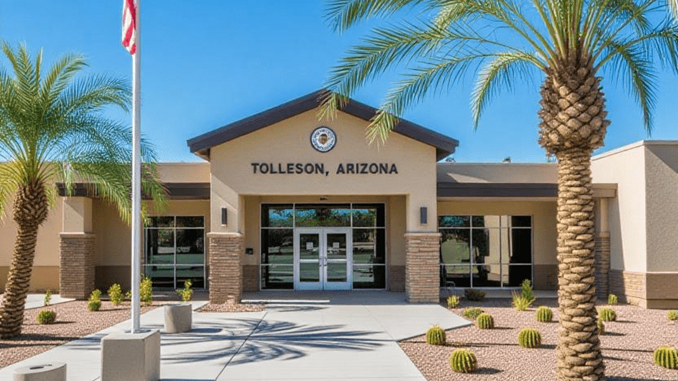
But if the failures of IESD weren’t enough, now we have the sordid financial tale of Tolleson Union High School District, a story so scandalous that it should make every taxpayer’s blood boil…
The Arizona State Board of Education (AZSBE) placed a Phoenix-area school district into receivership over mismanagement of funds.
Isaac Elementary School District (IESD) had a budget shortfall amounting to over $12.3 million, which included over $9.3 million in unrestricted capital and nearly $3 million in maintenance and operations.
In a special meeting held earlier this week, AZSBE voted unanimously to place IESD into receivership.
🚨🚨BREAKING NOW – EMERGENCY MEETING OF AZ STATE BOARD OF EDUCATION – BANKRUPT SCHOOL DISTRICT WITH $12,344,641 BUDGET SHORTFALL TO GO INTO RECEIVERSHIP ▶️ Auditor General presents SBE on timeline of overspending and refusals to comply with internal controls and financial… pic.twitter.com/CGCzhswztt
— TheLegalProcess (v3.0 | Instruction Not Therapy) (@ALegalProcess) January 14, 2025
The auditor general’s office reported during the special meeting that IESD remained among the highest risk districts since December 2020. IESD was also determined to present consistently high risks in change in weighted student count, budget limit reserve, and their financial position.
Despite five years of meetings with IESD to assist with improvements on its deficit general fund balance and loss in student-count-generated revenues, the auditor general’s office reported that their efforts failed to yield improvements.
In a letter to AZSBE last month, the auditor general reported that Maricopa County School Superintendent’s Office and ADE were unable to determine IESD overexpenditure amounts due to IESD submitting an annual financial report for the 2024 fiscal year that was “unreliable and inaccurate.” The auditor general further reported that IESD improperly moved millions of dollars in expenditures into certain funds lacking sufficient cash to support spending, causing those funds to report millions in deficits.
IESD Superintendent Mario Ventura said the auditor general’s findings were “shocking” to him and the school board. Ventura claimed that the 2024 fiscal year was the first time that their district had overspent. Ventura said that the loss of key personnel resulted in their overspending: the district’s grant specialist and two business managers. Ventura also claimed that the rush to spend federal relief funds caused the district to become lax on spending controls.
IESD argued in the special meeting that the outcome of November elections, specifically a proposed bond, could provide an alternative remedy to receivership.
The Arizona Department of Education (ADE) referred IESD to AZSBE for the funds mismanagement.
ADE submitted a letter to the Office of Elementary and Secondary Education last week advising that IESD failed to submit its completion report for federal COVID-19 relief funds by the end of December 2023. This resulted in IESD forfeiting nearly $8.9 million which they had spent but not requested reimbursement. Therefore, ADE petitioned the Department of Education to open the Coronavirus Response and Relief Supplemental Appropriations Elementary and Secondary School Emergency Relief funds to reimburse IESD.
“Because these expenditures were not reimbursed before the end of the liquidation period, the Isaac Elementary School District was required to find other sources of funds to cover these expenditures,” stated ADE Chief Financial Officer Tim McCain. “The overall result of this has been that the Isaac School District is in deep financial hardship that may result in teachers not being paid their salaries to instruct students in the school district.”
Maricopa County Treasurer John Allen warned that IESD staff and educators should deposit or cash any existing paychecks, expressing insecurity over the county’s ability to keep IESD schools open. Allen said that payments would stop in a week’s time.
“I don’t have the money,” said Allen. “It’s not a county responsibility to keep schools open, it’s a state responsibility. I wish I had better news from my office to the constituents of that district.”
Once appointed, a receiver will have 120 days to investigate and submit a report to AZSBE on how to improve IESD finances and a timeline for solvency.
IESD says its day-to-day operations will continue as usual under the receivership.
AZ Free News is your #1 source for Arizona news and politics. You can send us news tips using this link.
None of Arizona’s schools have fully implemented and tested their emergency plans, nor did they fully meet the state’s minimum standards.
The Arizona Auditor General published a new report on Monday finding that no schools throughout the state met Emergency Operations Plan (EOP) Minimum Standards. Those standards were developed jointly by the Arizona Departments of Education (ADE) and Emergency and Military Affairs (DEMA). The auditor general determined that some of the standards were “too vague, may be impractical, or lack a clear purpose,” therefore hindering adequate adherence.
In its report, the auditor general found that most schools had fewer than half of EOP Minimum Standards, and some charter schools didn’t have any EOPs.
“Most schools we visited had not provided emergency procedures training to all staff, including substitute teachers; had not conducted all required safety drills; and had not posted certain safety reference materials, which could affect their preparedness to respond to emergencies,” read the auditor general’s report summary.
The auditor general determined that all schools needed increased outreach, guidance, and training on emergency planning.
Schools don’t have the entire burden of change on them, however. The auditor general also determined that ADE and DEMA had greater responsibilities ahead of them to ensure improved EOP Minimum Standards compliance: ensuring charters know their responsibilities to develop EOPs, analyzing staffing and resources needed to initiate compliance monitoring processes, communicating the monitoring plan and authority resource needs to the governor and legislature, evaluating what additional guidance is needed for school compliance and providing necessary assistance, and completing a comprehensive standards review with stakeholder involvement and working with stakeholders to clarify emergency response agencies’ roles in EOP development.
While ADE agreed to the changes recommended by the auditor general, DEMA did not.
In its response, DEMA said it didn’t have the opportunity to review the entire unredacted auditor general’s report, nor did it have an opportunity to review any of the EOPs the auditor general reviewed to reach its conclusion. The auditor general issued a response clarifying that the confidential draft report provided to DEMA only redacted those references concerning other entities unrelated to DEMA and its responsibilities, and that three other entities were given similarly-redacted reports.
DEMA further asserted that state law didn’t authorize its agency to develop EOPs for every district or charter; rather, DEMA said that the State Board of Education and ADE bore statutory responsibility for supervising and regulating public school conduct.
“Industry practice is to develop generalized planning standards which set a minimum threshold that allow each school district the flexibility to tailor their EOP to their unique circumstances or particular needs,” said DEMA. “As the primary agency responsible for enforcing standards with school districts, DEMA contends that it is ADE’s responsibility to inform districts of statutory requirements to adopt EOPs meeting the minimum standards. DEMA understands that ADE has full-time school safety and preparedness planners that can support this purpose and has an opportunity to communicate any additional resource needs to further effect this recommendation through their Audit response process.”
The auditor general’s response also addressed these refusals from DEMA, noting that it hadn’t required DEMA to develop school EOPs but rather evaluate whether additional outreach, guidance, and training would help schools better plan for safety emergencies.
The Arizona State Board for Charter Schools also refused some of the auditor general’s recommendations. The charter board said that it agreed with the auditor general and the state on the importance of EOPs, but that it lacks the “resources or subject matter expertise” for monitoring and enforcing compliance with minimum EOP standards.
“The Charter Board believes it is appropriate for a state-centralized review process to be established to monitor whether EOPs meet the required minimum standards. This process would ensure that both charter and district schools are held to the same standards of review and oversight,” said the board. “Furthermore, it would assign the responsibility of evaluating whether EOPs substantively meet the Minimum Standards to the appropriate agency—one with the necessary resources and expertise to effectively monitor compliance.”
AZ Free News is your #1 source for Arizona news and politics. You can send us news tips using this link.
A Republican lawmaker is responding to a glaring report about an alleged misuse of Arizona taxpayer funds of historic proportions in Santa Cruz County.
Late last month, Arizona State Representative Matt Gress, the House Chairman of the Joint Legislative Audit Committee (JLAC), issued a response to an investigatory report by the Arizona Auditor General’s Office over “alleged significant financial misconduct by the former Santa Cruz County Treasurer.” The potential misappropriation of funds may have come close to $40 million.
Earlier this year, former Santa Cruz County Treasurer Elizabeth “Liz” Gutfahr resigned her office, just days after Chase Bank flagged the financial irregularities. Multiple law enforcement jurisdictions are investigating the actions from the office over the past decade.
In a statement, Gress said, “The actions detailed in the Arizona Auditor General’s report are deeply disturbing and represent a significant betrayal of public trust. This case would stand as one of the worst instances of county financial misconduct in Arizona’s history, underscoring the need for more stringent oversight and accountability in the management of public resources. It is particularly concerning that, despite the County’s authorization, one of the County’s financial institutions may not have fully cooperated with the Auditor General’s investigation. Any refusal to provide additional information only heightens the severity of the situation and underscores the need for greater transparency.”
On August 26, Arizona Auditor General Lindsey Perry sent the report to Governor Katie Hobbs, Attorney General Kris Mayes, Members of the Arizona Legislature, the Santa Cruz Board of Supervisors, and the Assistant U.S. Attorney at the U.S. Department of Justice. Perry’s report stated that “Our investigation revealed that from March 2014 through March 2024, the Treasurer allegedly took $39,472,100 when she made at least 182 unauthorized wire transfers from 2 County Treasurer’s Office bank accounts to business bank accounts connected to her. To help conceal her actions, the Treasurer allegedly failed to record her unauthorized wire transfers in the County Treasurer’s accounting system and lied to and/or provided numerous false investment statements, cash reconciliations, and Treasurer’s Reports to County entities, officials, and employees; a County financial consultant; and/or the Arizona Auditor General (Office).”
The report made nine recommendations to county officials and two to the Arizona Legislature.
Gress showed his willingness to work on legislation in the next session to help prevent this kind of situation from ever happening again in Arizona. He said, “I intend to introduce legislation in the next session that will expand the authority of the Arizona Auditor General, giving the office independent access to financial institution records directly from the institutions themselves. This will ensure that auditors have more tools necessary to uncover and address financial misconduct, even when internal controls fail. Additionally, I am considering introducing legislation to require newly elected or appointed county treasurers and their deputies to meet specific training requirements, better equipping them to manage public funds responsibly.”
The first-term legislator concluded his statement, writing, “I commend the diligence of the Auditor General’s Office and the law enforcement agencies involved in bringing these issues to light. Moving forward, it is imperative that the County implements the nine recommendations made by the Arizona Auditor General to establish stronger safeguards to prevent such abuses and ensure that public officials are held to the highest standards of integrity. We owe it to the citizens of Arizona to protect their hard-earned tax dollars from fraud and corruption by arming the Arizona Auditor General with additional tools to uncover financial misconduct.”
Daniel Stefanski is a reporter for AZ Free News. You can send him news tips using this link.
The state’s Democratic leaders, Governor Katie Hobbs and Attorney General Kris Mayes, have been taking aggressive action to undo school choice in Arizona, even as the Auditor General has exposed another public school district for poor finances.
Earlier this month, Mayes launched an investigation into the usage of school choice funds to purchase supplementary materials. Mayes also submitted a letter to the Department of Education ordering parents to submit a curriculum for all requests for supplemental materials.
Meanwhile, over 40 school districts were determined to not be in compliance with audit reporting requirements for the 2023 fiscal year. The latest public school district to be reported on by the auditor general, Baboquivari Unified School District (BUSD), not only spent nearly $500,000 on out-of-state travel for trainings and conferences found to be “unnecessary and potentially wasteful” in under two years — it spent over $8,400 for its board to hold board meetings and retreats out of town at a casino.
The BUSD Board traveled to Desert Diamond Casino in Tucson — over 115 miles round trip — where they addressed agenda items that the auditor general determined weren’t preclusive to public attendance. The board held three special meetings and five weekend board retreats at this casino.
The auditor general noted that these meetings were potentially in violation of the state’s open meeting laws.
In its response to the audit, BUSD said that if it were to have meetings out of town again, such as in a casino, it would ensure the public could watch via livestream or other methods.
The auditor general also noted that BUSD potentially violated the state constitution’s gift clause requirement with its $500,000 travel expenses. The report cited a specific instance of several thousand spent on an individual involved with overseeing education on behalf of the tribal government, not employed by the district, to travel and attend an educator training course in Georgia: an expense the district couldn’t show it approved in advance.
A majority of the objectionable travel expenses, over $340,000, occurred when BUSD sent staff to an out-of-state professional development conference. That mass expense included the attendance of a “substantial” number of non-educators — including a custodian, IT staff, business office staff, and Board members — and a repeat trip for seven staff members.
The auditor general found that if BUSD had excluded non-educators from the conference, the district would have nearly halved its costs. Further, if BUSD had chosen to only send a handful of “key employees” capable of training the other staff members, the district could have saved 97 percent of its costs. What’s more, the conference had a virtual training option, which would have eliminated the large expense of travel costs to the district entirely.
During the audit, BUSD indicated to the auditor general that they wanted to send nearly all of its staff to the conference to “energize and motivate teachers and staff” in order to improve student attendance and achievement.
In the last reporting year (2022-23), BUSD had “significantly lower” student achievement than its peer districts and the statewide average. Only two percent of students passed state assessments in math (compared to 27 percent), six percent in English (compared to 33 percent), and three percent in science (compared to 23 percent).
In its response to the auditor general, BUSD said that its business office was aware and had questioned the excessive travel and training costs, but the superintendent at the time had dismissed their concerns.
According to the auditor general, there were other, more critical needs in which the district could have instead applied that excessive spending.
“[T]ravel expenditures did not always comply with State requirements and may not have provided intended benefits,” read the report. “In addition to travel costs exceeding State travel policies and spending limits, the District could have saved at least $389,000 that it could have used for other District priorities, such as increasing teacher pay, by limiting the number of District staff and Board members attending conferences.”
BUSD was found to have ignored spending limits for lodging, overpaid staff and Board members for meals, failed to document its record of payments to staff members for travel expenses, and failed to ensure preapproval of travel expenditures.
The excessive spending resulted in BUSD spending over double per student on administration than its peer districts on average. The auditor general also found BUSD had operated schools below capacity, which also contributed to the higher spending.
Since BUSD failed to maintain transportation records, per the report, the auditor general was unable to have a complete scope of review of the district’s school bus and fleet vehicle maintenance, inspection, and mileage documentation and procedures.
BUSD didn’t have documentation to support that it performed the required school bus preventive maintenance. The district also didn’t maintain the required records for fleet vehicles, nor could it show that it safeguarded and monitored fleet vehicles to prevent unauthorized use, theft, or damage.
Finally, the auditor general found that BUSD failed to comply with requirements to protect students and safeguard public monies and sensitive computerized data. BUSD lacked internal controls for conflicts of interest, payroll, and credit cards. This resulted in an increased risk for unauthorized purchases and fraud with public monies. BUSD also assigned too much access to its accounting system and failed to secure its IT equipment.
AZ Free News is your #1 source for Arizona news and politics. You can send us news tips using this link.