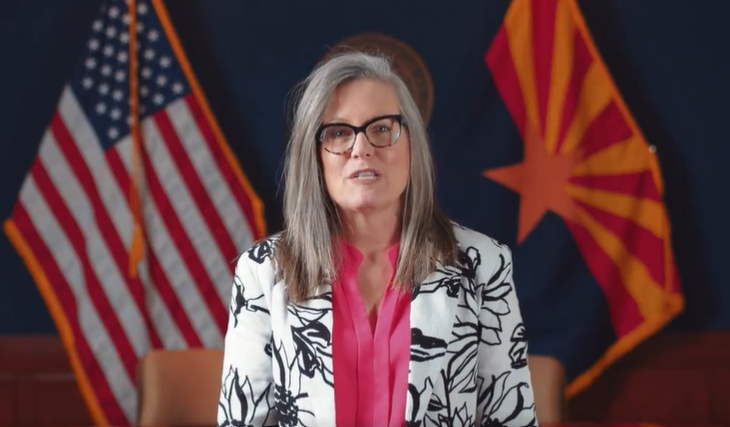
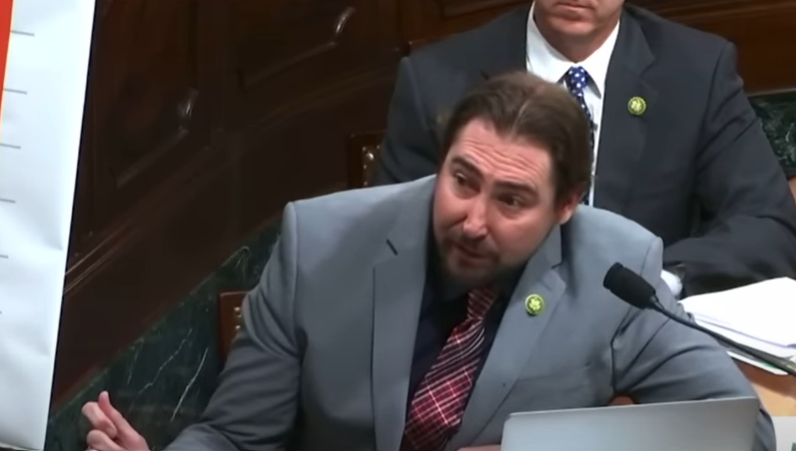
A law firm with close ties to Gov. Katie Hobbs has benefited from a series of government contracts within her administration totaling over $6 million.
Coppersmith Brockelman PLC has been awarded legal counsel contracts for multiple state agencies, according to initial reporting by FOIAzona.
The law firm, which has been a go-to for top Democrats, is also providing legal counsel to Hobbs’ secretive inaugural fund. The firm has disclosed its defense of Hobbs’ inaugural fund as one in a list of conflict-of-interest matters considered adverse to state interests.
Two of the firm’s partners have been appointed to high court positions in recent years. In 2022, Roopali Desai was appointed to the Ninth Circuit Court of Appeals; she administered Hobbs’ oath of office months later in January 2023. Earlier this year, Hobbs appointed Andy Gaona to the Arizona Court of Appeals.
Last year, one of Hobbs’ general counsel members, Bo Dul, joined Coppersmith Brockelman. Prior to joining the Hobbs administration, Dul had been senior counsel at States United Democracy Center, where she represented Hobbs pro bono.
Coppersmith Brockelman has contracts to provide counsel to the Department of Health Services (DHS), Arizona Department of Administration (ADOA), Arizona Department of Water Resources (ADWR), and the Arizona Health Care Cost Containment System (AHCCCS).
For all of the agencies, contracts were listed as “competition impracticable” — meaning the state didn’t undergo the competitive bidding process to award those contracts. For example, ADOA designated Coppersmith Brockelman in a 2024 competition impracticable procurement authorization form as having “specialized expertise” with DHS contracts.
The law firm received two contracts in 2024, two contracts in 2025, and one so far this year.
The two contracts in 2024 were for DHS and ADOA.
One of the 2024 contracts was for DHS litigation claims related to Sober Living Assisted Facilities at the request of Hobbs’ office; that contract has an initial estimated cost of up to $3 million, with listed counsel rated at anywhere from $350 to $500 per hour, paralegals listed at $150 per hour, and a legal assistant listed at $50 per hour.
The other 2024 contract was for civil claims against ADOA following a disqualification notice filed by Attorney General Kris Mayes. The contract had an initial estimated cost of up to $2 million, with listed counsel rated from $350 to $400 per hour, a paralegal for $150 per hour, and a legal assistant for $50 per hour.
The two contracts in 2025 were for ADWR and AHCCCS.
One of the 2025 contracts was for ADWR related to two separate actions filed in Maricopa County Superior Court pertaining to groundwater rules and regulations. Counsel rates were $400 and $425 per hour, with an estimated cost of up to $120,000 per year.
The other 2025 contract was to provide miscellaneous legal counsel for AHCCCS, with an initial estimated cost of $100,000 that was extended earlier this year to $200,000. Counsel rates were listed as $350 to $475 per hour, and an associate for $275 per hour.
The contract this year concerned ADWR’s involvement in an appeal and special action lawsuit on the assured water supply program: Home Builders Association of Central Arizona v. Arizona Department of Water Resources. The contract listed an initial estimated cost of up to $600,000. The state justified competition in this contract as impracticable because ADWR’s in-house attorneys were handling other litigation as well as Hobbs’ policy priorities.
AZ Free News is your #1 source for Arizona news and politics. You can send us news tips using this link.
The Arizona Department of Health Services (ADHS) has issued standing orders for access to the latest COVID-19 and influenza vaccines.
These standing orders grant authority to authorized healthcare professionals to administer the vaccines to all individuals aged six months and older, including pregnant women.
These authorized healthcare professionals include physicians, physician assistants, advanced practice registered nurses or nurse practitioners, and pharmacists. Additionally, pharmacists may delegate the administration of both vaccines to an active, licensed, trained intern and pharmacy technicians under pharmacist supervision.
ADHS explained in a press release that it issued the standing orders amid uncertainty with the schedule and timing of the next meeting by the Centers for Disease Control’s Advisory Committee on Immunization Practices (ACIP), the entity responsible for developing vaccine schedule recommendations.
ACIP canceled the first two of three meetings scheduled for this year, one in March and one in June, due to ongoing litigation. The third meeting is scheduled to take place from October 21-23. The American Academy of Pediatrics (AAP) sued the Department of Health and Human Services over ACIP appointments made by Secretary Robert F. Kennedy Jr. and the new childhood immunization schedule.
ADHS identified COVID-19 and influenza as “major” and “significant” causes of morbidity in its respective standing orders.
Dr. Richard Carmona, ADHS public health medical advisor and the nation’s former surgeon general, said the standing orders ensured “safe and timely access” to the vaccines necessary for preventing severe illness and death.
The American Academy of Family Physicians (AAFP) and AAP recommend the influenza vaccine once or twice per year for children aged six months to approximately nine years old, and once per year for minors from approximately nine to 18 years old. For adults, the AAFP recommends the influenza vaccine between the ages of 19 and 64 years old; the recommended schedule did not provide a specific dosage amount.
The AAFP and the AAP recommend the COVID-19 vaccine once or more per year for children aged six months to 18 years old. For adults, the AAFP recommends one or more doses of the COVID-19 vaccine for individuals between the ages of 19 to 64 years, and two or more doses for those aged 65 years or older.
The American College of Obstetricians & Gynecologists recommends that all pregnant and lactating women receive the COVID-19 vaccine and booster shots.
So far for the ADHS 2025-2026 respiratory illness reporting season — which runs from November 2025 through October 2026 — there have been more than 19,000 confirmed cases of COVID-19 and approximately 49,700 confirmed influenza cases.
The latest ADHS data on the leading causes of mortality in Arizona from 2023 reported that COVID-19 was the 11th leading cause of death and influenza and pneumonia were the 13th leading cause of death; just over 950 deaths were attributed to COVID-19 and slightly more than 900 deaths were attributed to influenza and pneumonia.
COVID-19, influenza, and pneumonia accounted for approximately 3% collectively of the 16 leading causes of death identified in 2023.
The top three identified leading causes of death — heart disease, malignant neoplasms, and accidents — accounted for approximately 62% of deaths that year.
AZ Free News is your #1 source for Arizona news and politics. You can send us news tips using this link.
A bipartisan bill aimed at reducing overlapping health care regulations and establishing statewide standards for behavioral health technicians is headed to Gov. Katie Hobbs after clearing the Arizona Legislature with broad support.
SB 1162, sponsored by Sen. Hildy Angius (R-LD30), would require the Arizona Department of Health Services (ADHS) and the Arizona Health Care Cost Containment System (AHCCCS) to review duplicative licensing, compliance, inspection, auditing, and reporting requirements affecting health care institutions.
SB 1162 passed the Senate on final reading Tuesday in a 28-1 vote after previously passing the House in April by a 49-8 vote. The bill was transmitted to the governor on Wednesday.
🚨FOR IMMEDIATE RELEASE: Senator Angius Advances Bipartisan Health Care Reform Legislation to the Governor
Angius said the measure is intended to reduce duplicative regulation while maintaining oversight and patient safety.
“Government works best when it focuses on protecting people, not creating layers of unnecessary bureaucracy,” Angius said in a statement. “SB 1162 takes a commonsense approach by identifying regulatory overlap between state agencies and reducing administrative burdens that pull health care providers away from patient care.”
Under the bill, ADHS and AHCCCS would be required to review areas of overlap involving licensing, certification, enrollment requirements, on-site surveys, inspections, audits, compliance activities, data collection, reporting requirements, corrective action processes, and enforcement procedures applicable to health care institutions.
The legislation directs the two agencies to identify opportunities to eliminate or reduce duplicative, redundant, or inconsistent requirements while maintaining patient safety and regulatory oversight. It also requires the agencies to coordinate or align policies, procedures, and operational practices to minimize administrative burdens on health care institutions.
The bill states that nothing in the measure requires action inconsistent with federal Medicaid conditions of participation, conditions of payment, or other applicable federal requirements.
SB 1162 would also require ADHS to submit a written report to the House and Senate Health and Human Services committees by Dec. 31, 2026, and every four years thereafter. The report must summarize the review’s findings, identify any duplication or overlap, and include recommendations for statutory, regulatory, or administrative changes.
The measure also adds a new article to state law governing behavioral health technicians. Under the bill, a behavioral health technician must be at least 18 years old, possess a high school diploma or equivalent, and successfully complete required background checks before serving in the role.
Before providing supervised direct services, behavioral health technicians would be required to complete training covering behavioral health system orientation, confidentiality and compliance, professional boundaries and ethics, crisis response and de-escalation, and trauma-informed and recovery-oriented care.
The bill defines a behavioral health technician as a person employed by a behavioral health facility or a hospital authorized to provide psychiatric services who provides behavioral health services under the supervision or clinical oversight of a licensed behavioral health professional or a registered nurse working within the nurse’s scope of practice.
The legislation also limits behavioral health technicians to delegated clinical and support functions consistent with their demonstrated training and competence, as well as the policies and procedures of the employing behavioral health facility or hospital.
The House summary of the bill states that a behavioral health technician would not be authorized to diagnose medical or behavioral health conditions, prescribe medications, or provide services beyond those delegated and supervised by a licensed behavioral health professional or licensed registered nurse.
“At the same time, this legislation strengthens standards for behavioral health technicians who play a critical role in serving some of Arizona’s most vulnerable individuals,” Angius said. “Patients deserve qualified professionals, clear accountability, and a behavioral health system that puts care first.”
SB 1162 was first introduced in January and received unanimous support in the Senate Health and Human Services Committee. It passed the Senate in March on a 29-0 vote before being amended in the House. After the House approved the amended bill, the Senate concurred with the changes on Tuesday.
Sen. Angius’ bill now awaits action from Gov. Hobbs.
Congressman Eli Crane (R-AZ02) welcomed a Federal Emergency Management Agency (FEMA) announcement Tuesday that multiple Arizona health care providers, tribal entities, and state agencies are receiving federal funding through grants released by the agency.
The grants were awarded to the Arizona Department of Emergency & Military Affairs, the Arizona Department of Health Services, Dignity Community Care, Dignity Health, the Havasupai Tribe, HonorHealth, and Valleywise Health.
More than $5.5 million of the funding is designated for the Havasupai Tribe to repair damage caused by flash flooding in 2024. The project includes replacing four damaged bridges with structures designed to withstand major flood events, including 100-year flood events. The funding will also support fencing and erosion-control systems intended to protect ancestral burial grounds and culturally significant tribal sites.
In a statement released by his office, Crane said, “On behalf of rural Arizonans, I’m grateful to President Trump, Secretary Mullin, Associate Administrator Phillips, and agency personnel for delivering this reimbursement. This funding will strengthen health care across our state, as well as provide meaningful assistance for the Havasupai Tribe.”
“I also appreciate the work of Chairman Garbarino and Arizona’s congressional delegation,” he added, specifically highlighting the efforts of Rep. Andy Biggs (R-AZ05), whom he said, “demonstrated considerable leadership behind the scenes to resolve these long overdue needs.”
Today, @fema announced the release of federal grants to strengthen Arizona’s health care system and support tribal infrastructure.
“We will continue to partner with the Trump administration to deliver wins for all Arizonans,” Crane said.
The Havasupai Tribe, located within Arizona’s Second Congressional District, was among the entities identified in the release. Crane’s district includes a significant number of tribal communities throughout northern and eastern Arizona.
The announcement follows a series of recent federal and congressional discussions surrounding rural infrastructure, tribal services, and health care access in Arizona communities. Last week, Crane participated in a Federal Partners Forum in Prescott focused on rural Arizona infrastructure and coordination between federal, state, and local agencies.
Arizona Senator Carine Werner (R-LD4) renewed her demand for transparency and accountability within the Arizona Health Care Cost Containment System (AHCCCS) before the committee’s latest special oversight hearing on Thursday, January 29th.
Following months of intense investigation—including multiple hearings, extensive document requests, and sworn testimony—the committee has uncovered persistent systemic failures at AHCCCS that continue to undermine Arizona’s provider network and block vulnerable patients from accessing essential care.
Providers remain unable to fully participate in the system, with critical services constrained and families in crisis struggling to access timely and appropriate care. “This is no longer just a policy failure. It’s a public health and safety crisis,” stated Senator Werner. “Decisions made inside AHCCCS dismantled parts of our provider network and robbed Arizonans of the care they desperately need. Leadership appearing before the committee has repeatedly failed to provide clear, complete answers regarding enforcement decisions, provider terminations, and the internal actions taken after billions of dollars in Medicaid fraud were uncovered.”
During the current legislative session, Werner has introduced several bills to improve oversight, reinforce accountability, and require AHCCCS and the Arizona Department of Health Services to fulfill their obligations to patients, legitimate providers, and Arizona taxpayers.
While expressing cautious optimism regarding the leadership of the newly appointed AHCCCS director, Senator Werner emphasized that personnel changes alone are insufficient to resolve the deep-rooted issues uncovered by the committee’s ongoing investigation.
“The committee remains cautiously optimistic that newly appointed Director Ginny Rountree can begin stabilizing the agency, but the oversight record makes clear that leadership changes alone will not resolve the systemic breakdown exposed through the investigation,” explained Werner. “The Senate Health & Human Services Committee will continue its work until access to care is restored, trust is rebuilt, and meaningful accountability is achieved within Arizona’s Medicaid system.”
Ethan Faverino is a reporter for AZ Free News. You can send him news tips using this link.