by Staff Reporter | Apr 28, 2026 | News
By Staff Reporter |
Rep. Andy Biggs (R-AZ-05) introduced legislation this week to create stronger rules on court-ordered federal oversight of police.
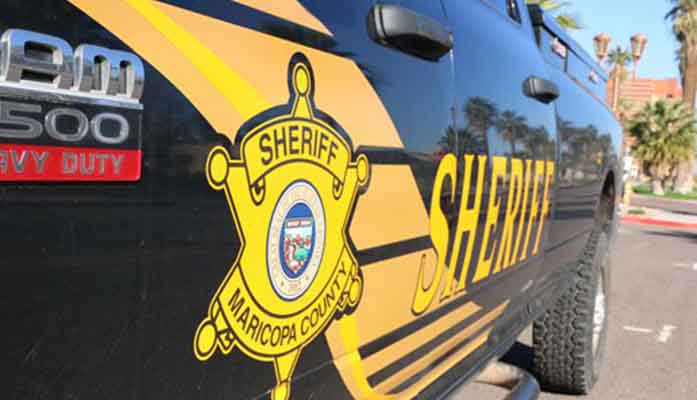
The proposed bill is a direct response to the ongoing monitorship of the Maricopa County Sheriff’s Office (MCSO), which began well over a decade ago following racial profiling allegations under the administration of former Sheriff Joe Arpaio.
Biggs’ Monitor Accountability Act would further limit federal district courts’ discretion on monitor selection and duration.
The bill as written would limit monitors to five years of service, prohibit courts from reappointing the same monitors under the same court order, prohibit monitors from coming from the same law firm or employer, cap monitor compensation and encourage courts to require pro bono or reduced-cost work, require public comment on proposed monitors prior to court appointment, limit extensions of monitorship to those without substantial and sustained compliance, and require case reassignment to a different judge after six years.
Additionally, the Monitor Accountability Act would apply retroactively to monitorships older than six years. This would ensure Maricopa County — Biggs’ impetus for the bill — secures a new monitor and judge.
The costs associated with the monitorship have neared $350 million according to Biggs and the county, about a tenth of which has gone to the court-appointed monitor and his firm. Proponents of continued monitorship counter that the actual cost of the monitorship amounts closer to $60 million.
Biggs, who is running to unseat Gov. Katie Hobbs this November, released a statement claiming that the MCSO monitorship, among others, has become exploitative.
“The federal monitor’s continued existence in our county and propensity for moving the goalposts from his original charge only serves to exploit taxpayers and undermine the brave work of the men and women who serve our communities — and this is only one of dozens of similar arrangements across the country,” said Biggs. “It’s time for Congress to take back the reins from rogue judges and monitors who have exceeded appropriate bounds.”
Cochise County Sheriff Mark Dannels joined Biggs’ statement with support for the bill as a corrective measure to prevent further exploitation of the monitor system.
“We’ve seen this problem first-hand in Arizona: Maricopa County has been the victim of a rogue monitor for more than 13 years, costing taxpayers hundreds of millions of dollars and shifting resources away from keeping the community safe,” said Dannels.
The Maricopa County Board of Supervisors filed a motion to end the monitorship last December, and in February testified to a House Judiciary Committee hearing on their effort in court. Biggs led that subcommittee hearing.
The board has pleaded for relief from what it claims to be indefinite taxpayer spending to keep up with ever-moving goalposts.
The Goldwater Institute has also requested the court to publicize the invoices associated with MCSO’s monitorship.
“[T]he government should not be allowed to keep such information secret unless there’s good reason, and even then, they’re required to specify what those reasons are,” stated the organization’s vice president of legal affairs, Timothy Sandefur.
The Department of Justice, who initially filed the lawsuit under former President Barack Obama along with the ACLU, signaled support for an end to MCSO’s monitorship.
AZ Free News is your #1 source for Arizona news and politics. You can send us news tips using this link.
by Staff Reporter | Apr 21, 2026 | News
By Staff Reporter |
Gov. Katie Hobbs offered a false justification for her veto of legislation to rename a freeway after conservative activist and Turning Point USA (TPUSA) founder Charlie Kirk.
After backlash over her formal justification for vetoing Senate Bill 1010, Hobbs offered another explanation: she falsely claimed that renaming part of the Loop 202 freeway after Kirk would replace the part of the freeway honoring another individual: the late congressman Ed Pastor.
Pastor, a Democrat, served in the House of Representatives for nearly 25 years, from 1991 to 2015. Pastor died in 2018. His daughter, Laura Pastor, serves on the Phoenix City Council.
Contrary to what Hobbs claimed, the bill had a specific carveout to preserve Pastor’s portion of the freeway.
“That the underlying segments of the Charlie Kirk Loop 202 would retain their names and designations and those underlying segments are the Red Mountain Freeway, the Santan Freeway, and the Congressman Ed Pastor Freeway,” stated the bill.
Arizona Senate President Warren Petersen, a Republican candidate for attorney general, sponsored the bill. Ahead of her veto, Petersen urged Hobbs to continue Arizona’s tradition of honoring legacy by awarding recognition based on impact and not politics.
“Charlie Kirk called Arizona home and built a national movement rooted in free speech, civic engagement, and American values. He inspired millions, especially young people, to get involved and speak up,” said Petersen. “If the governor vetoes this bill, she’s sending a clear message: recognition now depends on political agreement.”
Six years after founding TPUSA in 2012, Kirk moved its headquarters to Phoenix in 2018. Since 2021, the organization has held its annual conference, AmericaFest, in the city.
TPUSA’s student and lifetime membership total runs in the millions, and they have impacted millions more in America and nationally. The organization also manages thousands of college and high school chapters.
Kirk was assassinated last September while speaking at a TPUSA event at Utah Valley University.
The campaign for Republican gubernatorial candidate Andy Biggs, currently congressman, issued a press release on the matter accusing Hobbs of misleading Arizonans intentionally.
“Not only was Katie Hobbs’ decision to veto the Charlie Kirk Loop 202 bill petty and callous, she’s now shamefully misleading Arizonans about why she did it,” said Biggs campaign senior advisor Drew Sexton. “This was a dishonest, partisan act by a weak and ineffective governor who has consistently failed to rise to the moment and lead our state.”
Hobbs’ initial justification for the veto, the one she gave formally, said that lawmakers needed to avoid politicized individuals when choosing who to honor.
The veto letter was a regurgitation of her previous veto letter for another bill seeking to honor Kirk’s legacy.
The governor also vetoed legislation that would have enabled Arizona drivers to purchase a specialty license plate honoring Kirk’s memory.
“I will continue working toward solutions that bring people together, but this bill falls short of that standard by inserting politics into a function of government that should remain nonpartisan,” wrote Hobbs.
Hobbs expressed sorrow over Kirk’s assassination, but said that wasn’t enough to overshadow his political background.
AZ Free News is your #1 source for Arizona news and politics. You can send us news tips using this link.
by Staff Reporter | Apr 16, 2026 | News
By Staff Reporter |
Rep. Andy Biggs (R-AZ-05) announced he has raised nearly $3 million to date, and has over $1 million cash on hand.
Following the aggregate donations of multiple contributors, the biggest donations to Biggs’ campaign came from Biggs’ federal campaign, Biggs2016, amounting to $50,000, and the Freedom Club PAC which gave over $16,000.
Arizona campaign funding data reports fellow Republican congressman and gubernatorial candidate David Schweikert as having raised nearly $900,000, and having nearly $300,000 cash on hand.
Schweikert’s top donors came from Schweikert’s own coffers. $572,00 came from Schweikert’s federal campaign committee, Friends of David Schweikert. $115,000 came from Schweikert himself.
Even combined, the pair doesn’t come close to the amount in the Democratic governor’s campaign coffers.
Incumbent Gov. Katie Hobbs has raised over $5.7 million since last year, and has over $6 million in cash on hand.
Unlike Biggs and Schweikert, Hobbs had multiple large donors outside of multiple contributor aggregates, mainly unions: Unite Here Tip Campaign Committee ($11,000), United Food and Commercial Workers Union of Arizona Local 99 ($11,000), AFSCME People ($11,000), Arizona Education Association ($11,000), and Hollywood star Jennifer Garner ($10,000).
Hobbs also received nearly $250,000 in non-contribution income from Copper State Values, a political action committee established and chaired by Hobbs’ campaign manager, Nicole Demont.
Demont established the PAC in December 2024, and teamed up with leading dark money handler Dacey Montoya (“The Money Wheel”), who serves as the PAC’s treasurer. Funds from the PAC began benefitting Hobbs’ campaign last June.
Other than a few contributions to outside organizations, it appears Copper State Values functions as a funding arm for the Hobbs campaign.
Copper State Values has made payments to a number of companies which Hobbs has paid for services, including $150,000 to the California-based Capital Strategies, which has Hobbs listed under its clientele; nearly $7,000 to Pingdex for calls; and $40,000 to Monteverde Strategies.
The non-contribution income covered shared expenses between the Hobbs campaign and the PAC: acquisition, office supplies, insurance, professional services, rent, finance consulting, payroll, postage, mailers, utilities, fuel, food and beverage, fundraising event, travel, and health insurance.
Multiple donations came from the health sector: Centene Management Company, the Missouri-based largest Medicaid managed care organization in the nation; PhRMA, the D.C.-based biopharmaceutical trade association; 7WireVentures, an Illinois-based backer of digital health companies; Paradise Valley healthcare executive Reginald Ballantyne; Scottsdale-based Priority Ambulance; Ohio-based Elevance Health; UnitedHealth Group; CVS Health.
Others donations coming from special interests included Google, NextEra Energy Resources, a Florida-based wholesale electricity supplier; DraftKings, the Massachusetts-based online sports gambling giant; Sports Betting Alliance; DoorDash, the food delivery service giant; Casey Wasserman, with the major California talent agency Wasserman; Green Valley-based cell tower and telecommunications attorney John Pestle; California-based solar developer Mark Boyadjian for Arevia Power; Tempe-based Carvana; and California-based clean energy developer Clearway Renew Consolidated Devco.
Multiple donations to the PAC came from the real estate sector: California-based Klein Financial Corporation; Verde Investments, a Tempe-based real estate firm; James Edward Pederson, a Phoenix-based founder of the Pederson Group; Mark Breen, and Scottsdale-based president of Atlantic Development & Investments.
Other sizable donations came from the Arizona Beverage Association; Marcia Grand, Tucson retiree and wife to late trial attorney Richard Grand; the Salt River Pinta-Maricopa Indian Community; Arizona Democratic Party; Democratic Governors Association; D.C.-based Laborers International Union of North America; and Illinois-based racial justice group Communities United.
Karrin Taylor Robson, who suspended her campaign earlier this year, accumulated over $4.7 million for her gubernatorial run. Over $2.2 million of that came from her own pockets. Her cash balance sat at $1.1 million.
AZ Free News is your #1 source for Arizona news and politics. You can send us news tips using this link.
by Ethan Faverino | Mar 31, 2026 | News
By Ethan Faverino |
Arizona Senate President Warren Petersen sharply criticized Governor Katie Hobbs last week for vetoing Senate Bill 1010, which would have designated the Loop 202 as the “Charlie Kirk Loop 202.”
Petersen accused the governor of breaking Arizona’s long-standing nonpartisan tradition of honoring individuals based on their impact and contributions to public life rather than political alignment.
“Governor Hobbs didn’t just veto a bill. She broke with a long-standing Arizona tradition of recognizing impact over politics,” stated President Petersen. “Charlie Kirk inspired millions of Americans to engage in their communities, speak freely, and exercise their First Amendment rights. He built something that reached far beyond Arizona, and he brought that energy right here to our state. That kind of influence matters.”
Petersen emphasized that Arizona has historically honored service and civic contributions without requiring political agreement. He pointed to the precedent of naming a portion of the same Loop 202 after the late Congressman Ed Pastor, a Democrat, as a tribute to his service.
“Arizona has never required political agreement to recognize someone’s contribution to public life. We’ve recognized impact, service, and people who’ve shaped conversations and encouraged others to participate,” added Petersen. “This veto makes it clear that standards have changed. It tells people that recognition now depends on political alignment, not contribution. That’s not how Arizona has ever approached these decisions, and it’s a disappointing shift for our state.”
Gubernatorial candidate, Congressman Andy Biggs, also condemned Hobbs’ veto, saying, “Katie Hobbs wants us to forget about Charlie Kirk. We won’t. And we will honor him in November by voting her out of office.”
The bill directed the Arizona Department of Transportation to install appropriate signage, specified that the designation would not supersede existing names (such as Red Mountain Freeway, Santan Freeway, and Congressman Ed Pastor Freeway), and carried no anticipated fiscal impact to the state’s General Fund. It also required the new name to appear in official state records and documentation.
In her veto message, Governor Hobbs stated:
“Today I vetoed SB1010.
Charlie Kirk’s assassination is tragic and a horrifying act of violence. In America, we resolve our political differences at the ballot box. No matter who it targets, political violence puts us all in harm’s way and damages our sacred democratic institutions.
I will continue working toward solutions that bring people together, but this bill falls short of that standard by inserting politics into a function of government that should remain nonpartisan. Any renaming of a highway must follow the current process through the Arizona State Board on Geographic and Historic Names and not be circumvented by the Legislature.”
The veto marks the second time this session that Governor Hobbs has rejected legislation honoring Kirk, following her earlier veto of a bill proposing a specialty license plate in his memory.
Ethan Faverino is a reporter for AZ Free News. You can send him news tips using this link.
by Staff Reporter | Mar 25, 2026 | News
By Staff Reporter |
Maricopa County leaders say it’s time to bring federal monitoring to an end for a judgment made nearly 15 years ago.
President Barack Obama’s Department of Justice (DOJ) and the ACLU alleged racial profiling in a lawsuit against the Maricopa County Sheriff’s Office (MCSO) under former Sheriff Joe Arpaio. A federal court found MCSO to be guilty in 2011, and placed the department under a federal monitor to achieve reforms.
Last December, Maricopa County filed a motion to end that federal oversight. Then, last month, Maricopa County Board of Supervisors Vice Chair Debbie Lesko followed up on that termination request before a subcommittee of the House Judiciary Committee. Joining Lesko were MCSO Community Advisory Board member Felix Garcia and Goldwater Institute’s vice president for litigation and general counsel Jon Riches.
The trio emphasized in their individual testimonies how county spending has gone on “indefinitely” to meet the “moving goalposts” of federal oversight.
Rep. Andy Biggs (R-AZ-05), gubernatorial candidate, led the subcommittee hearing, “The Monitoring Racket: The Grift That Keeps on Giving.”
This month, another Maricopa County leader spoke up to advocate once again for an end to federal oversight. Supervisor Mark Stewart published a Substack article criticizing the federal government’s lack of interest in removing the federal monitor.
Stewart and county leaders say the oversight has cost the county nearly $350 million (though proponents of the oversight such as the ACLU argue that county inflated this total with unrelated costs and the real total is far less: around $60 million).
“Notably, over the past five years, there has not been a single sustained claim of racial profiling. Yet federal oversight remains in place, costing Maricopa County taxpayers nearly $350 million,” stated Stewart. “Even as compliance has been achieved and maintained, Maricopa County residents continue to bear the financial burden of prolonged oversight. Hindering resources that could otherwise be invested directly into public safety, training, hiring, and community engagement.”
The county’s millions spent in compliance efforts over the years have yielded reforms to include the implementation of body-worn cameras, structured constitutional policing curriculum, and data-driven accountability policies.
About ten percent of the $350 million estimate given by the county for compliance payments, over $30 million, was given to the court monitor Robert Warshaw.
Warshaw has faced allegations of capitalizing on a financial incentive to continue his federal oversight, not only in Arizona but in municipalities within other states. He has earned tens of millions over his years as a federal monitor.
Elected officials say MCSO has met and exceeded criteria for resolving the issues found by the court, yet the monitoring activities have not only continued but in recent years gone beyond the initial scope of the court findings.
The ACLU and the district judge in the case, G. Murray Snow, acknowledged last October that MCSO reached Phase One compliance with the 2011 court order.
“Courts are often called upon to correct past failures. They are also uniquely positioned to recognize when those corrections have taken hold,” said Stewart. “Maricopa County has reached that point. The progress is undeniable, leadership is strong, and the time has come to move forward.”
AZ Free News is your #1 source for Arizona news and politics. You can send us news tips using this link.