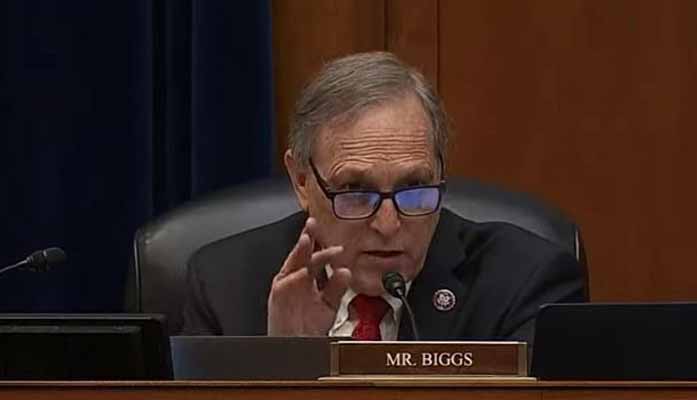
Rep. Andy Biggs (R-AZ5) has introduced legislation that would establish a federal pathway for patients with life-threatening or severely debilitating diseases to access individualized investigational treatments when no approved treatment options remain.
According to a press release from Biggs’ office, the Right to Try for Individualized Treatments Act was introduced this week by Biggs and Rep. Diana Harshbarger (R-TN), with companion legislation introduced in the U.S. Senate by Sen. Ron Johnson (R-WI).
The legislation builds on the original federal Right to Try Act, which was signed into law by President Donald Trump and provides terminally ill patients access to certain investigational treatments that had not yet received full approval from the U.S. Food and Drug Administration (FDA).
“One of my first efforts upon taking office in January 2017 was to partner with Senator Ron Johnson to champion Right to Try, which we passed through both the U.S. House and Senate,” Biggs said. “Many of us know people who are terminally ill and desperately seeking to extend their lives. Right to Try gives these individuals hope, freedom, and power to try potentially life-saving drug therapies.”
Biggs said supporters of the original legislation sought to provide patients with additional treatment options when facing terminal illnesses and that the new proposal would build upon that framework.
“Our coalition was unwilling to let one more American die without this chance, and we are motivated to build on this original bill with the Right to Try for Individualized Treatments Act,” Biggs said. “I am honored to again help lead this bill in the U.S. House, and I pray we can quickly send it to President Trump’s desk to be enacted into law.”
According to the bill sponsors, the legislation is intended to address advances in precision medicine and genomics that have enabled treatments tailored to individual patients. The lawmakers argue that existing regulatory pathways were designed for therapies intended for broader patient populations and do not adequately accommodate patient-specific treatments.
“We are entering a new era of medicine where breakthroughs in genomics and precision therapies can create treatments designed specifically for an individual patient, but our regulatory system was built for a different time and simply hasn’t kept up,” Harshbarger said. “This legislation makes sure patients have a clear, durable path to pursue individualized treatments when all other options have failed.”
Under the proposal, patients diagnosed with life-threatening or severely debilitating diseases could access investigational individualized therapies under physician supervision when no approved treatment options remain. Patients would need a physician’s recommendation before receiving treatment, which would be administered in qualified healthcare facilities that meet federal safety and quality standards and are subject to Institutional Review Board oversight and informed consent requirements.
Johnson said the measure would expand upon the original Right to Try framework by addressing therapies developed for individual patients and rare diseases.
“Right to Try 2.0 builds on that success and would provide access to individualized, rare disease and one-patient therapies that the current regulatory environment has yet to accommodate,” Johnson said. “This is about medical freedom and putting doctors and patients at the top of the treatment pyramid.”
The legislation would also establish a statutory framework for individualized treatments rather than relying solely on administrative guidance. According to Biggs’ office, the FDA released draft guidance in February outlining a framework to support the development of individualized therapies, but the sponsors argue congressional action is needed to create durable patient protections and access pathways.
The Goldwater Institute, which helped pioneer the original Right to Try movement that was enacted into federal law in 2018, also advocated for the introduction of the Right to Try for Individualized Treatments Act.
In a statement, Goldwater Institute President and CEO Victor Riches said, “No American should be forced to beg the government for permission to try to save their own life, and no bureaucrat should prevent a patient from accessing cutting-edge therapies. The Right to Try for Individualized Treatments opens the door to the latest advances in medical treatment and brings the federal government into the 21st century.”
While medical technology has evolved at a breathtaking pace, regulatory systems remain stuck in an era of mass-produced drugs.
The Right to Try for Individualized Treatments Act will ensure that our laws keep pace with modern innovation, removing the bureaucratic barriers that…
— Goldwater Institute (@GoldwaterInst) June 9, 2026
The proposal also has roots in Arizona. According to the release, Right to Try legislation received nearly 80 percent support in the Arizona Legislature in 2014 during Biggs’ tenure as a state lawmaker. The release states that Right to Try policies have since been adopted in 41 states, while “Right to Try 2.0” laws addressing individualized treatments have been enacted in 17 states, including Arizona.
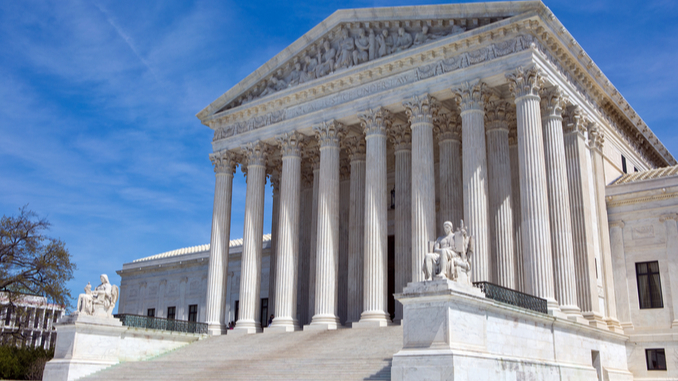
Rep. Andy Biggs is advancing a constitutional amendment to permanently set the size of the U.S. Supreme Court at nine justices. He says the proposal would prevent future attempts to expand the Court through legislation.
According to a statement released by Biggs’ office, House Joint Resolution 1 would amend the U.S. Constitution to require that the Supreme Court consist of one chief justice and eight associate justices. The proposal seeks to place the Court’s size in the Constitution rather than leaving it subject to change by Congress.
The resolution was introduced at the start of the 119th Congress and referred to the House Judiciary Committee.
On June 3, the House Judiciary Committee voted 15-8 to advance the proposed amendment. According to Reuters, the vote fell largely along party lines, with Republican members supporting the measure and Democratic members opposing it.
During the committee proceedings, Biggs framed the proposal as a response to court-packing efforts.
“How can the Supreme Court protect Americans from government overreach if the same government can pack the Court whenever it dislikes a ruling?” Biggs asked. His office stated that the resolution is intended to preserve judicial independence and to prevent future court expansion efforts.
“Our nation’s founders built a system of checks and balances to protect citizens from concentrated power – a central part being the U.S. Supreme Court, whose duty is to defend the rights and freedoms of every American, not to serve as a political tool for any party,” Biggs said. “The judiciary was designed to be the quiet guardian of liberty, insulated from the passions of the moment. Unfortunately, special interests have been increasing their attacks on the Court, threatening to pack this iconic American institution to ensure favorable outcomes for their causes. The goal is not ethics or protecting rights but gaining power and intimidating the Court.”
This week, the U.S. House Judiciary Committee passed H.J. Res. 1, which proposes an amendment to the Constitution of the United States to require that the Supreme Court of the United States be composed of nine justices.
The U.S. Constitution does not specify the number of Supreme Court justices. Congress has altered the Court’s size several times throughout American history, with the number of justices ranging from five to ten before being set at nine by statute in 1869. The Court has remained at nine members since that time.
Supporters of the amendment have cited proposals by some Democrats in recent years to increase the number of Supreme Court justices. Opponents have argued that Congress should retain its constitutional authority to determine the Court’s size and structure through legislation.
“The ongoing and escalating assault on the U.S. Constitution and Supreme Court must stop,” Biggs noted. “That is why I have introduced this constitutional amendment to fix the number of justices at nine. This action will protect the Court’s legitimacy, preserve the checks and balances that safeguard our cherished freedoms, and ensure every American’s rights remain secure – no matter who holds political power. I’m grateful for my colleagues’ support of this amendment, and I look forward to its passage on the U.S. House floor.”
Constitutional amendments face a high threshold for approval. A proposed amendment must receive support from two-thirds of both the U.S. House of Representatives and the U.S. Senate before being sent to the states for ratification. Ratification requires approval from three-fourths of the states.
The last newly proposed constitutional amendment to clear Congress and be ratified by the states was the 26th Amendment, setting the national voting age at 18 in 1971. The D.C. Voting Rights Amendment was passed by Congress in 1978 but failed to meet the state ratification requirement before its statutory deadline expired. The 27th Amendment, which bars changes to congressional compensation from taking effect until after an intervening House election, was ratified in 1992; however, Congress originally passed it in 1789 as part of the Bill of Rights package.
Arizona House Majority Leader Michael Carbone (R-LD25) has endorsed Congressman Andy Biggs for Governor, praising his proven ability to unite lawmakers and advance conservative priorities through collaboration with the Legislature.
Carbone, who represents Maricopa County’s West Valley, becomes the 44th current or former state legislator to publicly back Biggs and the first member of State House leadership to do so.
“We need conservative leadership ready to work with the Legislature and advance policies that bring down the cost of living on Arizonans so our state can prosper,” stated Carbone. “Andy Biggs is the best choice to do that from day one as Governor. He understands the legislative process at the Capitol and knows what it takes to make our state thrive. He’ll be a great advocate for the West Valley and for all of Arizona as Governor.”
Carbone also joins the growing list of West Valley elected officials supporting Biggs, including U.S. Congressman Abe Hamadeh, Maricopa County Supervisor Debbie Lesko, Arizona State Senator Janae Shamp, and Arizona State Representatives Nick Kupper, Lisa Fink, Michele Peña, David Livingston, and Beverly Pingerelli.
“Majority Leader Carbone has been a champion for thoughtful conservative policies, like expanding our nuclear capabilities to bring utility costs down and supporting pro-growth policies for our Arizona small businesses,” said Congressman Biggs. “Our campaign is focused on building out our support amongst Republican leaders and voters with a positive vision that brings our party together. With less than three weeks until ballots go out for the Republican primary election, we are well prepared for a victory on July 21st before defeating Katie Hobbs in November.”
Biggs has consistently maintained a commanding lead in the Republican primary field, according to multiple independent polls conducted since September 2025. A survey by NextGen Polling found Biggs ahead by 42%, while Emerson College showed him leading by 33%. GrayHouse reported a 24% advantage and Pulse Decision likewise found Biggs leading by 24%.
The most recent poll, conducted by Noble Predictive Insights, lists Biggs leading the Republican primary field by 30%. The study, conducted May 5-7, 2026, among 996 registered voters in Arizona including 375 registers Republicans, shows Biggs rising to 48% — up from 40% in February.
Biggs leads across key GOP demographics, including:
Men: 50% Biggs – 21% Schweikert
Women: 46% – 15%
Voters Aged 65+: 57% – 17%
Conservatives: 52% – 16%
Trump Supporters: 55% – 16%
Hispanic Republicans: 57% – 9%
Biggs is the only candidate in the Arizona Republican gubernatorial primary endorsed by both President Trump and the late Charlie Kirk. Additional high-profile support includes endorsements from Turning Point CEO Erika Kirk, Arizona Congressmen Eli Crane, Paul Gosar, Abe Hamadeh, and Texas Governor Greg Abbott, and Maricopa County Supervisors Debbie Lesko and Mark Stewart.
Biggs has also secured backing from influential conservative organizations including Turning Point Action, Moms for America Action, and Gun Owners of America-Arizona Chapter. Law enforcement support includes former Pinal County Sheriff Mark Lamb, Pinal County Attorney Brad Miller, the Arizona Law Enforcement Association, and the Arizona Council of Prisons Locals.
Rep. Biggs leads all Republican gubernatorial candidates in fundraising, with $2.7 million raised and $1.1 million cash on hand, an advantage of more than 10:1 over his closest primary competitor. He has set multiple personal funding records throughout the 2026 cycle.
Ethan Faverino is a reporter for AZ Free News. You can send him news tips using this link.
Ranchers in Arizona and across the nation secured a step toward a potentially major grazing rights victory from the federal government following the intervention of a coalition of Arizona’s Republican congressmen.
Republican Reps. Andy Biggs (AZ-05), Juan Ciscomani (AZ-06), Eli Crane (AZ-02), and Paul Gosar (AZ-09) successfully petitioned the Department of the Interior (DOI) to issue a newly proposed grazing rule that purports to give ranchers greater flexibility and security for their work.
Biggs offered his support for this proposed rule, announced by the DOI on Monday. Biggs promised to Arizonans in a press release that the rule would prioritize American ranchers and food security.
“Under the previous administration, cattle ranchers were forced to reduce their herd counts because of federal mandates and orders cutting public grazing land use. This administration knows how critical it is to protect our great ranchers and allow these families to provide abundant food to the American people.”
DOI Secretary Doug Burgum issued a similar commitment to ranchers about the impact of the rule.
“For too long, ranchers and land managers have been forced to work under outdated rules that do not match today’s challenges,” said Burgum. “President Trump has made it clear that we must cut red tape, support the people who feed our nation and ensure our public lands remain healthy for future generations. These updates will help us do exactly that.”
The proposed rule promises to streamline grazing administration and expand rangeland health standards. As part of this approach, the Bureau of Land Management was directed to update definitions, simplify processes, and clarify regulatory language.
Last December, Biggs sent a letter requesting actionable support on expanding and rebuilding American cattle to Burgum, Department of Agriculture (USDA) Secretary Brooke Rollins, Forest Service Chief Tim Schultz, and Fish and Wildlife Service Director Brian Nesvik.
Ciscomani, Crane, and Gosar signed onto Biggs’ letter, which asked the agency heads to resist influencing from “extreme environmental causes.” Certain environmental advocates — most in progressive circles — believe cattle grazing to be environmentally devastating.
“Ranchers are not the problem. They are the solution,” said Biggs. “Yet outdated regulations and false claims continue to punish them, while predators such as the Mexican wolf devastate herds under the shield of a misapplied endangered species designation.”
Biggs claimed that he’d received reports of cattle ranchers forced to reduce herd counts due to government mandates and orders impacting the use of public grazing lands, and asked the agencies to review their processes, rules, and regulations for adverse impacts on American ranchers.
“At a time when rebuilding the domestic cattle herd is vital to our food security and rural livelihoods, these mandates are unacceptable,” wrote Biggs.
U.S. cattle operations have been on the decline for nearly a decade despite increased demand — the lowest in over 70 years. USDA reporting from last year reflected that cattle operations dropped by 17% while demand grew by 10%.
Biggs echoed the sentiments of blame regularly expressed by the average American rancher: increasing pressures from bureaucratic red tape magnifying other issues like the rising costs of supplies, namely feed, and environmental pressures, namely drought.
The DOI will continue to gather public input for the proposed rule affecting grazing management on public lands until July 13. The BLM is scheduled to host a virtual information session about the proposed rule on June 11 from 5 to 7 p.m. MT.
AZ Free News is your #1 source for Arizona news and politics. You can send us news tips using this link.
The White House Office of National Drug Control Policy (ONDCP) paid a visit to Arizona last week.
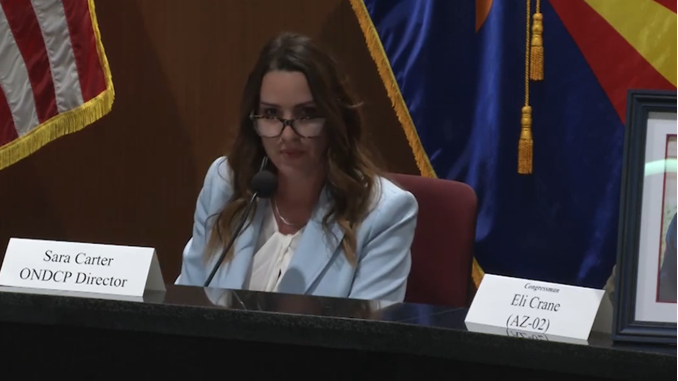
Sara Carter, director of the ONDCP, came to address Arizona’s unique situation with its ongoing drug crisis. Arizona was one of few states to experience an increase in drug overdose deaths rather than a decrease in 2025. Not only that: Arizona had the most drug overdose deaths last year.
While drug overdose deaths decreased 31% nationwide, Arizona experienced a 30% increase in drug overdose deaths.
Republican Rep. Andy Biggs (AZ-05) hosted Carter’s visit to Arizona, and Republican Rep. Eli Crane (AZ-02) joined the pair for meetings according to a press release from Biggs. These meetings were also attended by Drug Enforcement Administration officials, tribal partners, local law enforcement, and Angel Families.
Angel Families include all family members of individuals victimized or killed by criminal illegal aliens. Nearly all of the Angel Families in attendance last week were those whose loved ones fell victim to the crimes and violence resulting from drug cartel activity.
Eight of those families testified at a roundtable hosted at the Arizona State Capitol on Friday. These families claimed that the deaths of their loved ones were preventable through stricter immigration enforcement policies.
Among those to testify were Mary Ann Mendoza, who recounted how her son, Mesa police officer Brandon Mendoza, was killed in 2014 by an illegal alien drunk driver who had a criminal record dating back to 1994 and was living as a fugitive at the time of the crash.
Doug and Patricia Quets shared how their adult son Nicholas Quets, a Marine veteran, was murdered by Sinaloa cartel members in 2024.
Fernando Basurto explained that his grandson, Fernando Jose Basurto Jr., was about to graduate high school and had plans to enter the Air Force when he was murdered by a criminal illegal alien in 2016, who had been released shortly prior to the murder. Basurto said that former Sen. Martha McSally initially soured him on Congress because she refused to see their family to discuss Fernando Jose’s murder.
Patti Fox testified alongside her adult daughter, Carissa Aspnes, who was struck and severely disabled by an illegal alien running a stop sign in 2025. Carissa — a second-generation American on her grandmother’s side, a legal immigrant from Thailand — suffered a traumatic brain injury and now requires full-time care. Fox said local investigators initially covered up the fact that Carissa’s assailants were illegal aliens who entered the country under the Biden administration.
Karen Griffin explained that her teen son, Tyler Griffin, passed away in 2020 after taking a pill he believed to be Tylenol, but was actually laced with fentanyl.
Similarly, Anne Fundner shared that her 15-year-old son, Weston Fundner, passed away in 2022 after taking pills laced with fentanyl.
Carter promised to incorporate those suggestions from Friday’s roundtable into legislative proposals and policies put forth by the Trump administration.
Attendees included Reps. Quang Nguyen (R-LD-1), Nick Kupper (R-LD-25), and Lisa Fink (RLD-27); Sen. Carine Wrner (RLD-4); Maricopa County Supervisor Debbie Lesko; Queen Creek Mayor Julia Wheatley; and Art Del Cueto, formerly president of the National Border Patrol Council.
As part of its mission to address the drug crisis, ONDCP has taken a special focus on Arizona’s increase in drug overdose deaths, especially those involving fentanyl. It is the belief of the Trump administration, and Biggs and Crane, that the border policies of former President Joe Biden are to blame for Arizona’s ongoing drug crisis.
Carter commended Arizona as taking steps to fight back against the drug crisis.
“These communities know firsthand the devastating impact of illicit drugs,” said Carter. “President Trump and his administration will continue to fight for our citizens until every American is free to live a safe and healthy life, free from the scourge of illicit drugs.”
Earlier this month, ONDCP released a 200-page National Drug Control Strategy for 2026.
Under this administration, Trump has signed legislation classifying fentanyl-related compounds as Schedule I drugs; designated cartels as foreign terrorist organizations; designated illicit fentanyl and its core precursor chemicals as weapons of mass destruction; and signed legislation expanding the border wall and increasing deportations.
AZ Free News is your #1 source for Arizona news and politics. You can send us news tips using this link.