by Corinne Murdock | May 3, 2022 | News
By Corinne Murdock |
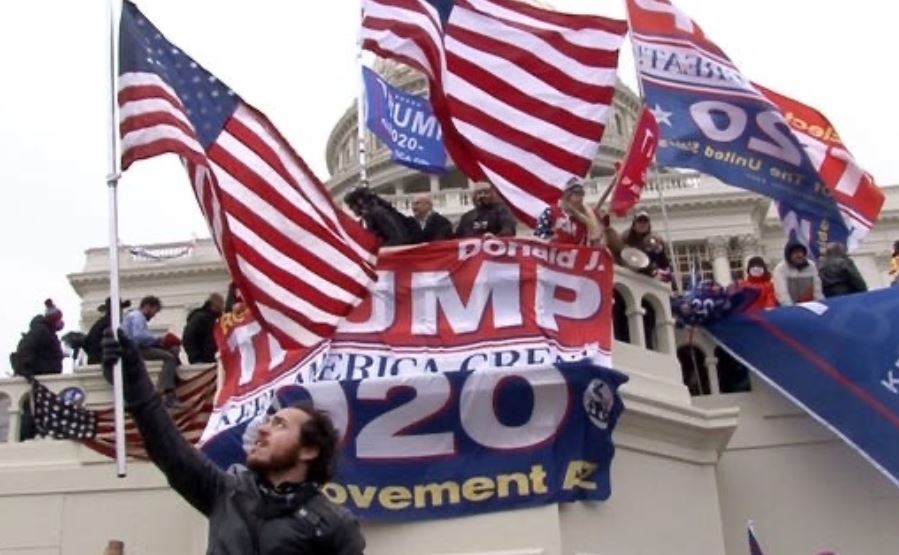
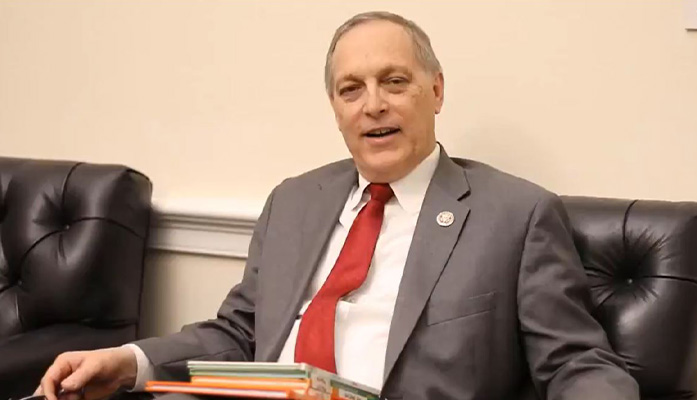
The U.S. House Select Committee investigating the January 6, 2021 incident announced on Monday that it requested a meeting with Congressman Andy Biggs (R-AZ-05). The committee called cooperation “a patriotic duty.” They asked that Biggs meet with them as soon as next Monday.
In a letter, the January 6 Committee informed Biggs of four of an undisclosed number of issues it wished to discuss.
The first issue concerned his participation in meetings to reject the election results, citing one House Freedom Caucus meeting which discussed a plan for former Vice President Mike Pence to refuse certain states’ electoral votes. The second issue concerned claims from Ali Alexander — an organizer of Stop the Steal, a campaign to resist the 2020 election results — that Biggs helped organize the January 6 protest. The third issue concerned Biggs’ communications with former President Donald Trump’s Chief of Staff Mark Meadows that reportedly marked efforts to persuade elected officials in overturning the 2020 election. The fourth issue concerned Biggs’ name appearing among those requesting presidential pardons for involvement in election overturning efforts.
The committee said that it would use Biggs’ cooperation to “make informed legislative recommendations.”
In raising each issue, the committee associated Biggs’ relation to Trump’s attempts to undermine American democracy and the Constitution, as well as Alexander’s calls for violence preceding January 6.
Biggs hasn’t issued a statement on the committee’s letter.
The committee also requested cooperation from Congressmen Mo Brooks (R-AL-05) and Ronny Jackson (R-TX-13). Each congressman received a letter tailored to their involvement in the January 6 rally and Capitol breach.
Brooks’ letter concerned his public remarks on a televised interview with CBS News and a press release in March. He claimed that Trump asked him to rescind the 2020 election results. Brooks said that he refused. The committee wanted to glean from Brooks additional evidence that Trump intended “to restore himself to power through unlawful means,” in a manner adverse to the Constitution.
Jackson’s letter was the lengthiest. It included encrypted text messages from the founder and various members of Oath Keepers, a right-wing militia organization formed to defend the Constitution against perceived violations from government. Those messages asked members that breached the U.S. Capitol on January 6 to locate and protect Jackson because he had “critical data to protect.”
The committee asked Jackson why those charged with seditious conspiracy were attempting to protect him. Additionally, they asked Jackson to expound on his participation in the rally preceding the Capitol breach and efforts to barricade the House Chamber during the breach.
Like Biggs, neither Brooks or Jackson have issued statements on their committee letters.
Corinne Murdock is a reporter for AZ Free News. Follow her latest on Twitter, or email tips to corinne@azfreenews.com.
by Corinne Murdock | Apr 23, 2022 | News
By Corinne Murdock |
Congressmen Andy Biggs (R-AZ-05) and Paul Gosar (R-AZ-04) and State Representative Mark Finchem (R-Oro Valley) will not be disqualified from the upcoming midterm elections for organizing the January 6 protest, a judge ruled on Friday.
The question before the court was whether the three candidates violated Section 3 of the Fourteenth Amendment, also known as the “Disqualification Clause.” Maricopa County Superior Court Judge Christopher Coury dismissed the case, ruling that the plaintiffs had no right of action to determine such a violation under the Constitution or supporting law.
Coury explained that the lawsuit’s argument for exercising the 14th Amendment contradicted legal precedent: the 1869 ruling for In Re Griffin, for example. Coury wrote that precedent, coupled with context of the amendment within the article, empowered Congress to exercise the 14th Amendment — not individual states or the people.
“[T]he Constitution provides legislation enacted by Congress is required to enforce the disqualification pursuant to the Disqualification Clause. Aside from criminal statutes dealing with insurrection and rebellion which Congress has enacted (lawsuits which require the government, not private citizens, to initiate), Congress has not passed legislation that is presently in effect which enforces the Disqualification Clause against the Candidates,” wrote Coury. “The text of the Constitution is mandatory. It sets forth the single arbiter of the qualifications of members of Congress; that single arbiter is Congress. It would contradict the plain language of the United States Constitution for this Court to conduct any trial over the qualifications of a member of Congress.”
The judge also rejected the argument that Arizona law enabled a private right of action to enforce the Disqualification Clause where the Constitution and federal law didn’t. Coury distinguished the term “prescribed” from “proscribed,” ruling that the Arizona law in question encompassed requirements for holding office, not disqualifications. Coury added that his interpretation was consistent with state and federal precedent.
Coury also noted that none of the three men were charged with or convicted of insurrection or rebellion. He refused to rule on the merits of the allegations of insurrection made against Gosar, Biggs, and Finchem.
The lawsuit was filed by Free Speech For People, a Democrat-backed, progressive nonprofit. The organization was ruled against last month as well in a similar lawsuit against Congressman Madison Cawthorn (R-NC-11). Another one of their similar lawsuits against Congresswoman Marjorie Taylor Greene (R-GA-14) had a hearing on Friday.
Corinne Murdock is a reporter for AZ Free News. Follow her latest on Twitter, or email tips to corinne@azfreenews.com.
by Corinne Murdock | Apr 21, 2022 | News
By Corinne Murdock |
A Democrat-backed nonprofit wants State Representative Mark Finchem (R-Oro Valley), Congressman Andy Biggs (R-AZ-05), and Congressman Paul Gosar (R-AZ-04) disqualified from the upcoming midterm election for organizing the January 6 protest.
Arizona State University (ASU) law professor and legal expert Ilan Wurman told “The Conservative Circus” that the lawsuit not only misinterprets constitutional law but represents the bad habit of both parties to weaponize the Constitution.
“Just after the Civil War, this clause of the Fourteenth Amendment was enacted to prevent individuals who had been office holders, federal and state office holders, who had taken an oath to uphold the Constitution, who then seceded from the Union, unconstitutionally seceded from the Union, and then took up arms against the government of the United States. By the way, that is an insurrection,” explained Wurman.
The nonprofit, Free Speech for People, invoked the Fourteenth Amendment to argue that Finchem, Biggs, and Gosar were responsible for the U.S. Capitol intrusion because they helped organize the preceding protest.
The lawsuit against Finchem, Biggs, and Gosar is part of a national campaign to “ban insurrectionists from the ballot” under Section 3 of the Fourteenth Amendment: the “14Point3 Campaign.” Congresswoman Marjorie Taylor Greene (R-GA-14) and Congressman Madison Cawthorn (R-NC-11) also face lawsuits under the campaign. Last month, a federal judge in North Carolina ruled in favor of Cawthorn.
Section 3 of the Fourteenth Amendment reads as follows:
“No person shall be a Senator or Representative in Congress, or elector of President and Vice-President, or hold any office, civil or military, under the United States, or under any State, who, having previously taken an oath, as a member of Congress, or as an officer of the United States, or as a member of any State legislature, or as an executive or judicial officer of any State, to support the Constitution of the United States, shall have engaged in insurrection or rebellion against the same, or given aid or comfort to the enemies thereof. But Congress may by a vote of two-thirds of each House, remove such disability.”
The nonprofit behind the lawsuit, Free Speech for People, also filed another lawsuit last month against the Federal Election Commission (FEC) concerning the debunked Russiagate collusion.
Finchem called the lawsuits “desperate.”
Corinne Murdock is a reporter for AZ Free News. Follow her latest on Twitter, or email tips to corinne@azfreenews.com.
by Corinne Murdock | Mar 21, 2022 | News
By Corinne Murdock |
Congressman Andy Biggs (R-AZ-05) and the rest of the House Committee on Oversight and Reform are probing the Federal Aviation Administration (FAA) decision last fall to ban media outlets’ drones from flying over the southern border.
On Monday, the committee announced that its ranking member, Congressman James Comer (R-KY-01), sent a response letter to FAA Administrator Steve Dickson. According to their press release, “heavily redacted documents” provided by the FAA in response to an initial committee letter revealed that an FAA headquarters manager believed that banning drones would be illegal initially. However, an “unknown U.S. Customs and Border Protection official” called the manager and convinced that person to change their mind.
“The FAA’s decision to abruptly reverse course on the legality of banning media drones raises questions about potential political interference at the agency to hide President Biden’s border crisis from the public,” read the letter. “That telephonic or other assistance apparently changed FAA’s opinion on the legality of issuing a TFR. Ultimately, the TFR was issued later that evening, raising concerns about its legality and FAA’s rationale for changing its position. These emails call into question FAA’s conduct, particularly where a TFR may have been issued improperly and for the purpose of disrupting media attention related to the border crisis. The American people have a right to transparency when it comes to President Biden’s failed border and interior enforcement policies.”
The FAA first announced its ban in mid-September of last year. At the time, media outlets were informed that the ban was a Temporary Flight Restriction (TFR) of two weeks. It’s now been a little over six months.
However, the FAA reversed course again after some resistance from the media. Fox News received clearance to fly its drones the next day. In a later tweet, the FAA encouraged other outlets to apply for clearance. An FAA spokesperson later told Fox News that Border Patrol requested a temporary flight restriction because drones were interfering with those flights made by law enforcement.
The ban occurred after media outlets filmed the tens of thousands of illegal immigrants crossing the Del Rio, Texas area of the border, especially focusing on those huddled under a bridge.
The committee requested more documents from the FAA pertaining to all documents and communications referring or relating to the day of the TFR, unredacted copies of the emails given to the committee, documents and communications from Biden’s inauguration to present regarding the legality of issuing the TFR, and an explanation of the legal basis relied on by the FAA to issue the TFR.
Corinne Murdock is a reporter for AZ Free News. Follow her latest on Twitter, or email tips to corinne@azfreenews.com.
by Corinne Murdock | Jan 30, 2022 | Education, News
By Corinne Murdock |
Arizona State University (ASU) President Michael Crow faced questioning from State Representative Jake Hoffman (R-Queen Creek) concerning the root of some of the university’s controversies that made national headlines. However, it wasn’t Crow’s fate to face Hoffman’s inquisition alone — he found an intercessor in Chairwoman Regina Cobb (R-Kingman).
Hoffman posed questions during Wednesday’s House Appropriations Committee meeting relevant to ASU’s funding. The legislator’s first question pertained to the cancellation of a fundraiser for a conservative program at ASU: the Political History and Leadership (PHL) program.
As AZ Free News reported last week, ASU’s initial response to the event cancellation was murky. Out of the three reasons given to various individuals involved in the situation, Crow asserted that an unnamed staff member’s failure to follow planning policy was the reason for the event cancellation, which he insisted was really a postponement. At the time, ASU spokesman Jerry Gonzalez concurred with that statement.
“The event at the Desert Botanical Garden was canceled due to a breach of scheduling protocol by a faculty member in the School of Historical, Philosophical and Religious Studies,” stated Gonzalez. “The university welcomes the opportunity for this event to be rescheduled following the required protocols.”
However, several of the scheduled speakers for the event were informed by ASU officials prior to publication of our report that the event was canceled due to an uptick in COVID-19 cases. Those speakers were informed that Crow wasn’t aware of the event or its cancellation at the time. Others reported that the choice of speakers was deemed too controversial: Congressman Andy Biggs (R-AZ-05) and former Utah congressman and Fox News contributor Jason Chaffetz.
Hoffman addressed this most recent controversy first in his line of questioning for Crow. The representative’s question flowed seamlessly with Crow’s closing request: that the legislature afford more funding for ASU’s “Freedom School”: the School of Civic and Economic Thought and Leadership (SCETL). Hoffman applauded SCETL, but asked about the treatment of the PHL program.
“I’m wondering how you feel about the political history and leadership program that you canceled the event on?” asked Hoffman. “How come that doesn’t get the same level of praise considering its disproportionate impact on the department?”
Crow responded that the event was delayed, not canceled, and blamed an unnamed faculty member for not following proper schedule procedures, which he didn’t elaborate. He promised that the event was rescheduled.
“This is an event I’m very familiar with. We’re very happy to host that event, we’re very happy to host all of the individuals that are coming to the event,” said Crow.
When Hoffman attempted to follow up with another question, Cobb said Hoffman’s line of questioning wasn’t appropriate for the subject.
“That’s a question that shouldn’t have been asked, so don’t do a follow-up on that one,” said Cobb.
Hoffman responded that they could discuss the subject later and insisted he wasn’t done.
“Well, you’re only addressed to when I addressed you,” said Cobb.
“Which you have already authorized,” responded Hoffman.
“I said ‘Don’t follow up,’ and you said, ‘Okay, then.’ Do you want a different question, Mr. Hoffman?” asked Cobb.
“I want less hostility from my chairman. That’s what I’d like,” responded Hoffman.
Cobb repeated whether Hoffman would like to ask a different question, and Hoffman confirmed. Hoffman then asked what Crow was doing about the multiple incidences of high-profile racism on his campus.
“Unfortunately the racism that we’re seeing is permeating from a cultural and institutional level[,]” asserted Hoffman.
Before Crow could respond, Cobb intervened with an assertion that Hoffman’s question wasn’t relevant to their budget material being reviewed that day. Cobb would only interrupt Hoffman as he attempted to ask her if or when the committee would bring Crow back for questioning on the subject of additional funding.
“Are you going to have him back to testify in front of us so we can ask him that question? Because if you expect us to sign off on more funding for ASU…” said Hoffman.
Cobb ignored Hoffman and called on State Representative Lorenzo Sierra (D-Avondale), who lavished praise on Crow for his work. When Sierra said to Crow that he only had one question for him, Cobb chimed in to say, “Thank God,” and chuckled to herself. At that point, a soft, inaudible exchange occurred between Cobb and an unknown male as Sierra continued to address Crow. It is unclear whether that exchange was related to Cobb’s next response; after Sierra finished asking Crow about what work ASU was doing with the state’s economic agencies, Cobb chimed in again to accuse legislators of grandstanding.
“Again, that’s off the subject. I really want to stick to the appropriations. We got a lot of people here to speak today, we can grandstand all we want to —” said Cobb.
Hoffman interrupted Cobb to call a point of order.
“This is not grandstanding from Sierra or myself. These are things that will impact how we vote on funding for this man’s school,” insisted Hoffman.
Cobb seemed to agree.
“And what we’re talking about is the funding right here, okay…” said Cobb.
“Correct. And he’s standing in front of us and we have material questions for Arizona State,” responded Hoffman.
Cobb disagreed. She insisted that she determined neither Sierra or Hoffman’s questions were relevant to the task at hand, but refused to elaborate why. Hoffman insinuated that there was no point to the committee’s presence, if what Cobb said was true.
“So this is just a dog and pony show?” asked Hoffman.
“No, this is to let us know what their initiatives are this year. That’s what they’re here to do, is to let us know what their education initiatives are coming forward to this year,” said Cobb.
When Hoffman attempted to insist that Crow should answer to “substantive questions, like issues of racism on campus,” Cobb threatened him with removal from the committee if he didn’t stand down.
It appeared that Cobb’s refusal to allow any substantive questions caused the remainder of the committee to dare not pose any questions of their own. Several questions from State Representative John Kavanagh (R-Fountain Hills) were permitted prior to Cobb shutting down the subject: Kavanagh asked about foreign enrollment and online learning trends.
In a statement to AZ Free News, Hoffman expressed disappointment that Crow didn’t step up and answer for the controversies plaguing ASU.
“Michael Crow’s refusal to answer for the extremely concerning allegations of institutionalized racism, viewpoint discrimination by professors, and rampant wokeism at Arizona State University during yesterday’s House Appropriations Committee is yet another glaring example of his utter disdain for any level of transparency, oversight and accountability,” stated Hoffman. “Under his watch, racism and wokeism by professors and staff has led to an increase in high profile incidents of discrimination on campus, yet when questioned during his testimony in front of the state’s top appropriators he chose to hide behind Ms. Cobb, the committee chairwoman. Mr. Crow’s appalling behavior has given legislators merely one more in a long line of reasons to oppose any new funding for his university.”
Corinne Murdock is a reporter for AZ Free News. Follow her latest on Twitter, or email tips to corinne@azfreenews.com.