by Staff Reporter | Oct 27, 2025 | Education, News
By Staff Reporter |
Arizona education leaders want their students to be ready for the dawning age of artificial intelligence (AI).
The state is now the leader in the nation for percentage of students using AI tools. State Superintendent Tom Horne announced this development on Thursday in a press release.
“I am a strong supporter of AI as a classroom tool to assist, but not replace, educators,” said Horne. “So far, about 4,000 educators statewide are using this system, and I encourage more teachers to sign up. It is an invaluable resource that helps educators do their jobs more effectively.”
Over 170,000 students — representing 16 percent of the state’s public school student population — are using AI-powered tutoring to improve their academic performance.
These students rely on the AI education system Khanmigo within Khan Academy. Horne called the sweeping adoption of the tools “tremendous.” The Arizona Department of Education invested $1.5 million for Khamingo access last year.
Horne said he selected Khanmigo for its tutoring approach: guiding students through the critical thought process, rather than merely providing answers.
“It engages students by asking questions that guide them to discover solutions on their own,” said Horne. “This approach delivers rigorous, individualized Socratic-style tutoring — a proven method for improving academic outcomes.”
The “Socratic” method referenced by Horne concerns arriving at answers through a series of open-ended questions structured to encourage critical thinking.
An example of Khanmigo’s phrasing provided in the press release (solving for “m” in the sample math problem, 3 – 2(9+2m) = m) showed how the tool prioritizes guiding the student to work through problems.
“Let’s work through it together! What do you think the first step should be to solve this equation?”
Khanmigo conversations are also recordable and viewable by teachers.
The over 4,000 Arizona educators mentioned by Horne rely on an online AI platform called the Arizona Digital Educators Library (ADEL). This platform assists educators with creating lesson plans and classroom materials that meet the state’s academic standards.
ADEL also has 50 ambassadors to increase educator usage throughout the state. There are over 57,000 educators in the state: over 47,000 in district schools and nearly 10,000 in charter schools.
As Horne explained in his State of Education speech in January, educators can use Khanmigo to strengthen student weaknesses revealed through testing.
“Today, when a teacher gives a test, some students get 90 percent, others get 70 percent. Those with 70 percent are moved to the next grade, missing 30 percent of the knowledge they need for continuing their studies. They are lost,” said Horne. “With Khanmigo, the teacher can say ‘here is what you did not learn, use Khanmigo to tutor you on that subject.’”
State Senator Jake Hoffman, founder of the Arizona Freedom Caucus, expressed support for the implementation of AI tools in schools. Hoffman said AI posed a greater threat to the American worker than Russia, China, and nuclear war.
“If K-12 public schools and public universities are not aggressively retooling every aspect of their operation to equip students with the skills to survive in this new AI age, they’ve already failed,” said Hoffman.
AZ Free News is your #1 source for Arizona news and politics. You can send us news tips using this link.
by Jonathan Eberle | Jun 2, 2025 | News
By Jonathan Eberle |
Health insurers in Arizona will soon be required to involve a licensed physician before denying medically necessary care, under a new law aimed at increasing oversight and accountability in coverage decisions. House Bill 2175, introduced by Republican House Majority Whip Julie Willoughby (R-LD13), was signed into law after receiving strong bipartisan support in the state legislature.
The legislation mandates that an Arizona-licensed medical director must personally review any denial based on medical necessity, whether it involves a prior authorization or a claim. Crucially, the reviewing physician must exercise independent medical judgment and cannot rely solely on automated tools or artificial intelligence systems.
“This law ensures that a doctor, not a computer, is making medical decisions,” said Willoughby in a statement. “If care is denied, it should be by someone with the training and ethical duty to put patients first.”
The law is set to take effect on July 1, 2026, allowing insurers more than a year to adapt their internal procedures. The delayed implementation aims to give companies time to bring their policies into compliance, including staffing licensed physicians for the review process.
The measure comes amid growing national scrutiny over how insurers use algorithms and automated decision-making tools in the claims process. Critics argue that such systems can lead to denials of care without adequate clinical oversight, potentially putting patient health at risk.
Supporters of HB 2175 say the law provides a necessary check on those systems and re-centers medical decision-making around qualified professionals who are accountable to both patients and state standards.
“Arizona families deserve real oversight when it comes to life-changing medical decisions,” Willoughby said. “This law puts patients ahead of profits and restores a layer of accountability that’s long overdue.”
The new policy aligns with the House Republican Majority Plan, which emphasizes individual rights and system transparency. While the law’s primary sponsors are Republican, it passed with bipartisan support, reflecting broad legislative agreement on the need for more oversight in insurance determinations.
The implementation of HB 2175 will be closely watched by healthcare advocates, insurers, and policy analysts as Arizona becomes one of the latest states to regulate the use of AI in healthcare decision-making.
Jonathan Eberle is a reporter for AZ Free News. You can send him news tips using this link.
by Daniel Stefanski | May 30, 2024 | News
By Daniel Stefanski |
The Arizona Legislature has sent a bill to the governor that would strengthen protections for political candidates.
Last week, the Arizona Senate approved SB 1359, which would “require a person who distributes a deceptive and fraudulent deepfake of a candidate within 90 days before an election to include a clear and conspicuous disclosure that the media includes content generated by artificial intelligence (AI) and subjects a person that fails to disclose a deepfake as outlined to a civil penalty” – according to the purpose statement from the state Senate.
Senator Frank Carroll, the sponsor of the bill, noted in the Arizona Senate Republicans weekly newsletter that his proposal received “near unanimous support.”
In February, Carroll’s legislation had passed out of the Arizona Senate with an overwhelmingly bipartisan result of 24-4 (with two members not voting). After it was transmitted to the Arizona House of Representatives, it was amended and received a 56-0 tally earlier this month (with four members not voting). The Senate then concurred with the changes from the other chamber with a 25-1 vote (with four members not voting).
Senators Bolick, Gowan, Petersen, and Shamp joined as co-sponsors of the legislation.
On the Arizona Legislature’s Request to Speak system, representatives from the Arizona Secretary of State’s Office, Arizona National Organization for Women, and State Conference NAACP signed in to support the bill. A representative from the American Civil Liberties Union of Arizona indicated opposition to the legislation.
Daniel Stefanski is a reporter for AZ Free News. You can send him news tips using this link.
by Corinne Murdock | Aug 12, 2023 | Education, News
By Corinne Murdock |
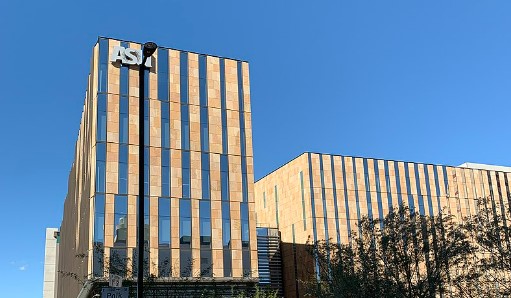
Applicants to Arizona State University’s (ASU) law school may have to take their admissions test on their own, but they won’t have to do their own applications.
ASU Sandra Day O’Connor College of Law will now allow applicants to use generative artificial intelligence (AI) to complete their applications. In a press release at the end of last month, the law school stated that generative AI will be a necessary tool for upcoming lawyers.
“In our mission to educate and prepare the next generation of lawyers and leaders, law schools also need to embrace the use of technology such as AI with a comprehensive approach,” stated the school.
Stacy Leeds, Willard H. Pedrick Dean and Regents Professor of Law, added that generative AI also allowed for more equitable admissions.
“Our law school is driven by an innovative mindset. By embracing emerging technologies, and teaching students the ethical responsibilities associated with technology, we will enhance legal education and break down barriers that may exist for prospective students,” said Leeds. “By incorporating generative AI into our curriculum, we prepare students for their future careers across all disciplines.”
Generative AI consists of large language model (LLM) tools: one of the most popular models is ChatGPT.
Last month, two New York lawyers were sanctioned for relying on a ChatGPT-generated brief that cited fake cases. The judge punished the pair for not conducting a proper review of the AI brief and for insisting that the fake cases cited were real, not for relying on generative AI in the first place.
The pair paid $5,000 for their oversight. The lawyers stated that they didn’t know that ChatGPT could create fake cases. However, the lawyers’ firm issued a statement disagreeing that the use of generative AI constituted bad faith.
“We made a good faith mistake in failing to believe that a piece of technology could be making up cases out of whole cloth,” stated the firm.
The New York lawyers may well become a case study at ASU. ASU’s law school also offers courses through its Center for Law, Science, and Innovation (LSI) on the legal questions of AI use, especially within the legal field.
One of LSI’s AI-centered projects, the Soft Law Governance of Artificial Intelligence, proposes using “soft law” governance for AI rather than existing legal frameworks. Soft law is a blanket term for recommendations or guidelines, rather than law. The project is funded by the Charles Koch Foundation.
ASU’s law school began allowing AI-generated applications this month.
Corinne Murdock is a reporter for AZ Free News. Follow her latest on Twitter, or email tips to corinne@azfreenews.com.