by Daniel Stefanski | Feb 7, 2025 | News
By Daniel Stefanski |
A powerful Arizona legislator is continuing to shine the light on the governor’s reported shenanigans with the state’s finances.
Earlier this week, Arizona State Senator T.J. Shope introduced SB 1612 “to hold the Executive Branch accountable and prevent any future conflicts of interest from arising within the state procurement process” by “remov[ing] an exemption allowing the Arizona Health Care Cost Containment System (AHCCCS) to create their own procurement code.” The bill would also “prohibit an agency and state employees from destroying notes and documents created during a request for proposal (RFP) [and] require anyone responding to a state issued RFP or applying for a state administered grant to disclose any donations made to the Governor and campaign affiliates.”
Arizona Senate President Warren Petersen is a cosponsor of the legislation.
The need for this bill, according to Shope’s press release, became heightened after “an administrative law judge concluded AHCCCS improperly awarded contracts for healthcare services for 26,000 elderly and physically disabled individuals enrolled in the Arizona Long Term Care System…based on several factors, including violations of statutes and rules by AHCCCS, prejudice, a lack of transparency, contract awards based on best interests of the agency and not the state, an arbitrary and flawed ranking system of bid proposals, as well as deceptive criteria provided by AHCCS to health care companies on the evaluations of their bid proposals.”
In a statement accompanying the announcement of his bill, Senator Shope said, “The Hobbs Administration has a track record of engaging in questionable and unethical practices where favoritism is given, using taxpayer dollars, to those who are close to or have provided benefits to the Governor, her cabinet, and her allies. This legislation should help address these scandals and prevent future unfair advantages from being provided. Arizonans expect their elected officials to make decisions based on what’s best for the state and its citizens; not what’s best for their own personal agendas and political bank accounts.”
Last year, The Arizona Republic broke a story about the Arizona Department of Child Safety “approv[ing] what amounts to a nearly 60% increase in the rate that Sunshine Residential Homes Inc. charges to care for a child for a day.” The alleged action to approve the rate increase for the one organization was made while “DCS has denied pay increases to home operators and cut loose 16 providers during the contract renewal process.” The Republic also asserted that “no other standard group home provider was approved for any rate increase during Hobbs’ tenure.”
After the story ran in the Republic, Shope sent a letter on June 5 to both Attorney General Kris Mayes and Maricopa County Attorney Rachel Mitchell, asking both officials to “examine the facts surrounding the Department of Child Safety’s alleged decision to approve a nearly 60% rate increase for Sunshine Residential Homes and determine if conduct by any of the involved parties warrants a criminal or civil investigation.”
Daniel Stefanski is a reporter for AZ Free News. You can send him news tips using this link.
by Staff Reporter | Nov 16, 2024 | Education, News
By Staff Reporter |
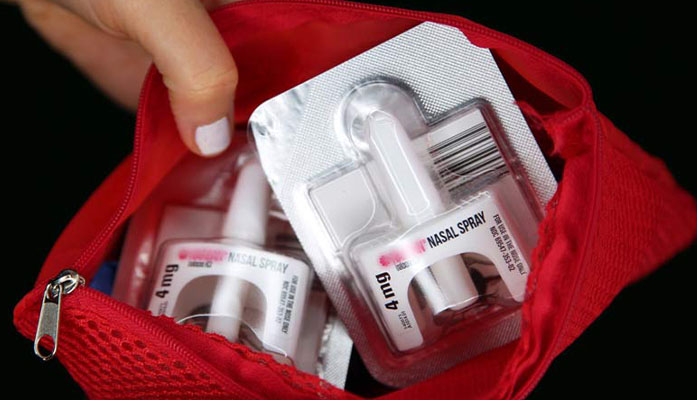
Arizona schools will be receiving a supply of overdose kits to address the increased impact of drugs on students.
The Arizona Department of Emergency & Military Affairs (DEMA) began delivering over 16,000 Narcan anti-overdose kits to schools on Wednesday. The Arizona Department of Education (AZED) oversaw the initial deliveries across all 15 counties.
In a press release, Superintendent Tom Horne said these kits were a lifesaving preventative to the increased presence of illicit substances in the state.
“Lives will be saved because these kits will be in schools throughout Arizona,” said Horne. “The STOP-IT Task Force has done incredible work to address the Fentanyl crisis among school-aged children and this is a major step to protecting the lives of students and raising awareness of this terrible scourge.”
The Narcan kit deliveries are part of AZED’s Overdose Preparedness & Intelligence Taskforce (STOP-IT), a new task force established this year to address the growing opioid epidemic. The idea for placing kits in schools came out of a meeting back in May.
The Arizona Department of Health Services (AZDHS) provided the Narcan kits at no cost to the state, and the Arizona Health Care Cost Containment System (AHCCCS) will provide training.
The kits come with flyers on training resources, information on county health agency partners, an announcement of an upcoming comprehensive STOP-IT Toolkit release, and a QR code taking the user to real-time training on Naloxone Resources from AHCCCS.
STOP-IT co-chairs are Holly Geyer from the Mayo Clinic and Mike Kurtenbach with AZED, leading over 60 representatives across various government agencies, schools, healthcare entities, law enforcement, and other organizations.
Geyer credited the initiative’s success to the collaborative strengths of Arizona agencies in Thursday’s press release.
“The STOP-IT naloxone distribution initiative could not have materialized without the unprecedented collaboration between the Department of Education, the Department of Health, AHCCCS and the National Guard,” said Geyer. “The representatives appointed through these agencies proved themselves strategic problem solvers who prioritized the mission and produced outcomes that far exceeded the taskforce’s original targets. Because of their resolve, we are proud to offer schools more than just naloxone. We can offer confidence in the safety of our school campuses and parental peace of mind.”
DEMA director Kerry Muehlenbeck said that their team’s logistical support for tackling drug overdose incidents ensured a better approach to their ultimate goal of reducing drug demand.
“Through this multi-agency initiative, we build stronger communities and support wellness in our future generations,” said Muehlenbeck.
Schools signed up for Narcan kits through the AZED’s online form, with the permission of their district or charter approval first. Further information about the kit distribution and application was submitted in a memo sent to schools across the state last month.
Per AZED, these overdose kits will be continually replenished to ensure schools’ continued ability to handle opioid emergencies.
Arizona reported over 1,900 opioid-related deaths and over 4,000 overdoses last year. 26 of those opioid-related deaths were among minors (those under the age of 17).
So far this year, AZDHS has recorded over 3,200 non-fatal opioid overdoses and over 1,000 confirmed opioid deaths. The total deaths among minors for this year amount to less than 10.
AZ Free News is your #1 source for Arizona news and politics. You can send us news tips using this link.
by Staff Reporter | May 23, 2024 | News
By Staff Reporter |
Governor Katie Hobbs announced that she would be recognizing birth control as a right, starting with state employees.
The governor issued an executive order on Monday announcing free birth control for state employees, and ordered the state’s Medicaid agency, Arizona Health Care Cost Containment System (AHCCCS), to expand contraception access to its members.
The state already issues oral contraceptives to employees at no cost, but only through a prescription. Hobbs’ executive order got rid of the prescription requirement, ordering the Arizona Department of Administration (ADOA) to cover the cost of current and future over-the-counter contraceptives for state employees.
Hobbs referenced Senate Majority Leader Sonny Borrelli’s take on contraceptives as a criticism of Republicans hesitant to make birth control a right for Arizonans through legislation dubbed the “Right to Contraception Act.”
“While members of our legislature would rather tell Arizona women to put aspirin between their knees than pass the Arizona Right to Contraception Act, I will continue to do everything in my power to protect our reproductive freedom and ensure every Arizonan can access contraception,” said Hobbs.
Earlier this month, the governor signed into law a repeal of the longstanding and, until the past year, dormant total abortion ban. Now, state law only restricts abortions after 15 weeks.
The governor’s most recent executive order declared that contraceptives qualify as “essential health benefits” (EHB) required of health plans by the Affordable Care Act (ACA), or “Obamacare.” And, recent changes to the Code of Federal Regulations (CFR) enabled states to have more flexibility to determine its EHB-benchmark plan set of benefits.
Only the prescription contraceptives qualified as EHB, not over-the-counter ones. Hobbs’ executive order changed that. For now, that only applies to Opill, the only FDA-approved over-the-counter birth control option.
Excluding the universities and Board of Regents, both of which operate their own personnel systems, nearly 56 percent of the state’s nearly 38,300-strong workforce is female: around 21,300 individuals.
Age ranges weren’t defined by ADOA’s annual report, though the average age across both genders was about 44 years old, under the average age of menopause.
The retail price of Opill, the over-the-counter targeted by Hobbs’ executive order, retails at up to $20 per month for a one-month supply.
ASU has more than 20,600 employees. According to their last 10-year report of campus demographics ending in 2022, the university had nearly 10,600 female employees, though the age ranges weren’t disclosed.
The University of Arizona reported nearly 16,700 employees last fall, with about 56 percent of them identifying as female. Age wasn’t disclosed.
Northern Arizona University’s annual report shared they had over 4,600 total faculty and staff last year, not distinguished by gender or age.
ADOA will also be required to provide several reports to Hobbs’ office, one of which will be on benefits and feasibility of access expansion for state employees. That report will be due by June 30.
Another report with ADOA and the Department of Insurance and Financial Institutions will study the benefits and feasibility of a new Arizona Essential Health Benefits Benchmark Plan mandating reproductive healthcare benefits for individual and small group private health insurance plans, including prescription and over-the-counter contraceptives, reversible contraceptives, infertility treatment, and in vitro fertilization.
AZ Free News is your #1 source for Arizona news and politics. You can send us news tips using this link.
by AZ Free Enterprise Club | Jan 21, 2023 | Opinion
By the Arizona Free Enterprise Club |
The people of Arizona do not want to turn our state into the next California. But just a few weeks into her reign as governor, Katie Hobbs has made it clear—that’s exactly what she intends to do. Last week, Hobbs released her first budget plan, and it’s nothing more than a liberal wish list of big spending, extreme proposals, and corporate welfare designed to reward her special interest friends.
Her first target is education, and she wasted no time going after Arizona’s expansion of Empowerment Scholarship Accounts (ESAs). Yes, the program that is so popular that it overwhelmed the Department of Education’s website immediately after launch—the one that even some Democrats have openly supported. Despite being a private schooler herself, Hobbs wants to dismantle school choice for all with a full repeal of universal ESAs. And that’s just the start…
>>> CONTINUE READING >>>
by Corinne Murdock | Oct 5, 2022 | News
By Corinne Murdock |
Last Thursday, the Arizona Auditor issued a report finding that the state’s Medicaid agency, the Arizona Health Care Cost Containment System (AHCCCS), failed to fulfill four major aspects of its services, including a year delay on average to investigate over half of fraud or abuse incidents.
AHCCCS provides health care coverage to over 2.4 million Arizonans: about 33 percent of the population.
In all, the audit report determined that AHCCCS also failed to: review health plans every three years as required, make correct eligibility determinations, ensure that health plans oversaw providers in two key areas, and establish oversight processes for its Housing Program and Administrator.
In order to remedy these issues, Auditor General Lindsey Perry issued 22 distinct recommendations. AHCCCS agreed to implement all 22 of Perry’s recommendations without contest.
AHCCCS explained that no federal or state regulations mandated the completion of preliminary investigations within 3 months, like Perry recommended, but agreed it was best practice and would adopt that protocol. Likewise, AHCCCS explained it would adopt a self-auditing process to review eligibility determinations, despite there not being any federal or state regulations for such quality assurance reviews.
AHCCCS also noted that its lack of eligibility reviews was due to understaffing caused by the COVID-19 pandemic.
The audit may also result in a change to state law. AHCCCS noted that it wasn’t able to create a monthly report as required by statute. This report — which was to be sent to the governor, the house speaker, and the senate president — was meant to include Title XIX and non-Title XIX categories that outlined the persons served, the units of service, and the amount of funding provided for client services and the amount provided for regional behavioral health authority administration and case management expenses.
In addition to the negative findings of the audit report, AHCCCS is facing a lawsuit filed by several federally-qualified health centers. The community health centers claim that AHCCCS is wrong to deny reimbursements for dentists, podiatrists, optometrists, and chiropractors. Earlier this month, the Ninth Circuit Court of Appeals reversed a decision dismissing the lawsuit.
Arizona Alliance for Community Health Centers sued AHCCCS, joined by Canyonlands Healthcare, Chiricahua Community Health Centers, Desert Senita Community Health Center, Mariposa Community Health Center, Marana Health Center, Mountain Park Health Center, Native Health, North Country Healthcare, Sun Life Family Health Center, Sunset Community Health Center, and United Community Health Center-Maria Auxiliadora.
Corinne Murdock is a reporter for AZ Free News. Follow her latest on Twitter, or email tips to corinne@azfreenews.com.