by Voice of Chandler | Jan 12, 2023 | Opinion
By The Voice of Chandler |
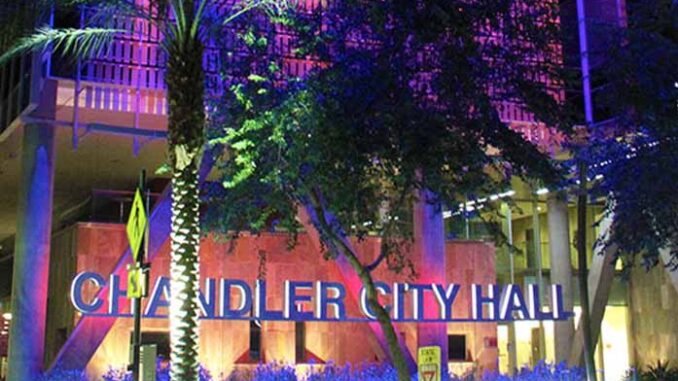
Last month, the City of Chandler unanimously passed Resolution 5656 to reject the proposed ‘Landings on Ocotillo’ high-density housing project. From the start, the developer has been smearing our neighbors for no other reason than we support the plans that have been voted on and approved for our community.
Along with the city, we support additional affordable housing for the community. But the fact is, this isn’t about affordable housing. If it were, then the developer—and their high-paid zoning lawyers, PR firms, and nonprofits—would have found a way to make the project work at one (or more) of the 14 other sites that fit within existing planning.
This is about profit. And to make matter worse, in just 15 years, this housing can (and probably will) convert to regular market rate housing. This means that the subsidies will go away, and the tenants who need the subsidies will get kicked out.
The reality is that the City of Chandler has already approved multiple affordable housing projects in line with the voter-approved City Master Plan. In October, the City of Chandler approved a large public housing development for seniors. In November, the City approved hundreds of affordable housing units in its Downtown District. Resident and neighborhood opposition groups have been unanimous in their support for affordable housing, which can be further evidenced by their 85% affirmative vote on the Chandler General Plan.
The problem is that the high-density housing project (Landings) proposed by the Developer (Dominium) is on an unsuitable county island site. Development as a multifamily living site is incompatible with the voter-approved General Plan, the Chandler Water Master Plan, and the Chandler Airpark Area Plan, as noted by the City Council in Resolution 5656.
Given that Arizona is a desert, the largest issue is the incompatibility with the Chandler Water Master Plan—the site in question does not have the water capacity to support any form of housing. The City allocates water in accordance with the Chandler Water plan depending on intended use and zoning. The site in question is currently zoned for farming with the plan to rezone it to light industry or employment under the Chandler General Plan and Chandler Airpark Plan. Light industrial/employment is allocated 121 gpd per 1,000 ft, whereas the proposed multifamily housing requires over twice that amount at 253 gpd per 1,000 ft. If this project were approved, the site would have grossly insufficient water. Neither Dominium nor its representatives have addressed in the media or to government officials how they will supply the 102 gpd shortfall. With existing drought conditions, Chandler is currently under Tier 2 water shortage restrictions. There is simply not enough water to support this proposed development at this location.
The assumption that this land would be used for light industrial uses has been the basis for other plans like traffic planning. Using this land for housing instead of light industrial would increase the number of cars on the road in an area that already has the highest traffic incidents with a record injury rate when compared to the rest of southern Chandler. The full impact on traffic from current construction projects is yet to be felt in this already congested area, and this unplanned project would only make it worse.
The City of Chandler offered Dominium fourteen other locations for consideration that are in line with existing plans. Dominium refused to consider these other locations. Instead, it is focused on this specific parcel of land. The alternate locations are smaller, but they have the requisite water allocation and would fit within the parameters of the voter-approved Chandler Master Plan.
The everyday residents who live and work in this neighborhood were all universally opposed to the project at the City Council meeting. Those who spoke in favor were from other cities and organizations. Should special interest groups and outside actors determine what is best for a city? Is the voice and concern of the neighbors and residents inferior to that of a deep-pocketed developer with the right political connections?
Enough is enough. Where a voter-approved plan exists, we the people should always have final say—not some multi-million-dollar corporation. And when this case is brought before the Maricopa County Board of Supervisors this year, they must affirm this important principle.
The Voice of Chandler is a group of concerned Chandler residents fighting for the rights of We The People. You can find out more about their work here.
by Corinne Murdock | Jan 1, 2023 | News
By Corinne Murdock |
Flagstaff Mayor Becky Daggett will focus first on addressing climate change and affordable housing.
Daggett issued this promise during her swearing-in at last week’s city council meeting. She said she would direct her staff to tackle these two issues first.
“[We are going to emphasize] affordable housing and climate action, and also scheduling meetings with the public and really trying to hit the ground running,” said Daggett.
Affordable housing and climate action are the leading two of several priorities Daggett pledged on the campaign trail. After those priorities, Daggett listed small business growth, job creation, and increased investment in “greener” multi-modal transportation: pedestrian pathways, biking, and busing.
A week prior to her swearing-in, Daggett attended a bipartisan meeting with 12 other mayors to discuss housing as well as public safety, American Rescue Plan funds, Bipartisan Infrastructure Law, and CHIPS and Science Act. Daggett met with President Joe Biden, the White House Intergovernmental Affairs staff, Domestic Policy Council Director Susan Rice, Transportation Secretary Pete Buttigieg, Labor Secretary Martin Walsh, and Housing & Urban Development Secretary Marcia Fudge.
Both Daggett and the former mayor, Paul Deasy, ran their campaigns on promises to tackle climate change and affordable housing. On the trail, Daggett indicated that she would lean into higher density housing (high rise apartments, etc.) or missing middle housing (duplexes, townhomes, bungalow courts, carriage houses, etc.) to expand neighborhood walkability. Daggett also indicated a desire to reduce parking minimums.
Daggett noted that state law precludes Flagstaff from implementing its ideal affordable housing initiatives. Daggett said that until state law relaxes, the city would rely on incentives such as Low-Income Housing Tax Credits, partnerships with nonprofit and for-profit developers on city-owned land, and prioritize affordable housing during budget talks.
Climate change has been a winning topic for Flagstaff’s voters for the better part of the past decade; former mayor Coral Evans committed the city to carbon neutrality by 2030, a plan which Daggett supports. Affordable housing presents a newer concern prompted by the hot-turned-cold housing market, combined with the glut of short-term rental properties in the area.
Last June, Daggett and the Flagstaff City Council passed a Carbon Neutrality Plan. The plan noted that every action would integrate equity as a foundational element. The council pledged to encourage alternatives to cars such as walking, biking, rolling, and busing; reduce citizens’ dependence on driving; electrify its buses; expand micro-mobility devices; support citizens’ transition to electric vehicles; transition to 100 percent renewable electricity for municipal needs; increase renewable energy installations and usage in new buildings while supporting solar installations on existing buildings; reduce or remove natural gas usage in municipal buildings; encourage electrical grid reliance on new buildings; require new homes to be net zero energy homes by 2030; encourage sustainable consumption; divert waste from the landfill; reduce organic waste to the landfill to feed people; and develop a portfolio of local and regional carbon dioxide removal initiatives to achieve carbon neutrality.
Last August, Daggett said she would look to use American Rescue Plan Act funding to expand emergency shelter and affordable housing initiatives. In June, Daggett said that the city should apply its $5 billion budget surplus to climate action and affordable housing.
According to Flagstaff’s profile on the Global Covenant of Mayors for Climate & Energy (GCoM), the city has about 971,600 annual GHG emissions. It’s completed five out of nine phases spanning mitigation, adaption, and energy access & poverty initiatives.
GCoM is a coalition of over 11,500 cities and local governments across six continents and 142 countries pledging to lower emissions and establish climate resiliency. GCoM is co-chaired by Michael Bloomberg, former New York City mayor, and Frans Timmersman, European Commission executive vice president for the European Green New Deal.
GCoM ex-officio members include Patricia Espinosa, UNFCCC executive secretary; Maimunah Mohd Sharif, UN-Habitat executive director; and the Global Covenant of Mayors executive director. On the board are the mayors of Guelph, Canada; Warsaw, Poland; Heidelberg, Germany; Colombo, Shri Lanka; Kloto 1, Togo; Makati, Philippines; and Hobart, Australia.
Phoenix is also a member of GCoM, with reported annual GHG emissions of 16.45 million.
Corinne Murdock is a reporter for AZ Free News. Follow her latest on Twitter, or email tips to corinne@azfreenews.com.
by Terri Jo Neff | Apr 19, 2022 | Economy, News
By Terri Jo Neff |
Last October, the Arizona Department of Housing published a Notice of Funding Availability which resulted in more than 20 developers expressing interest in sharing $24.5 million which came available to help fund affordable housing projects.
Nine applications came in by the end of January for a total of nearly 1,200 units; all but two of the applications were for projects in Maricopa or Pima counties. One was for a project serving Yuma County, while the other is the long-awaited second phase of an affordable housing complex in Sierra Vista being developed by Walling Affordable Communities, LP.
Glenn and Mary Walling specialize in the development of affordable housing apartment projects across Arizona and have been involved in bring more than 1,500 residential units to the market utilizing tax credits. One of the projects was Casa Del Sol in Sierra Vista, where Mary Walling grew up.
Casa Del Sol – Phase One of the project brough 88 badly needed low income adult housing to the area, which is home to the U.S. Army’s Fort Huachuca. Planning for Phase Two began in 2019 with the use of Federal Low Income Housing Tax Credits as part of the funding mechanism.
But COVID-19 in 2020 and then uncontrolled price increases and labor challenges throughout 2021 put pressure on the company’s plans. Walling turned to the Arizona Department of Housing, which began offering a competitive State Low Income Housing Tax Credit program in further support of bringing as many affordable housing units to market as possible.
ADOH also made available the $24.5 million pool to help provide several projects with some gap financing to address the unrelenting surge in costs. In late February, the Wallings were told by ADOH that underwriting for the Casa Del Sol project could still take another 60 days.
But on March 31, ADOH told AZ Free News that underwriting was completed and the developer has received their award.
“We at the Arizona Department of Housing are proud to help fund this exciting project to bring much-needed affordable housing to Cochise County,” Sheree Bouchee – ADOH Rental Programs Administrator. “We are thrilled to collaborate in creating housing solutions for rural Arizona communities.”
It was welcome news for city officials in Sierra Vista, where there are currently only 503 affordable housing units despite the fact more than one-third of Cochise County’s 125,000 residents live in the area. The presence of Fort Huachuca and the city’s proximity a U.S. Border Patrol station near Bisbee has led local rents outpacing the ability of many non-government employees to afford local housing.
According to Sierra Vista spokesman Adam Curtis, the city staff worked with the Wallings to waive some fees and approve modifications to code requirements to help facilitate and incentivize the project. Those actions were consistent with strategies identified in the City’s voter-approved Vistas 2030 General Plan.
And with the site plan approved and a building permit already issued, city officials are looking forward the announcement of a ground-breaking ceremony.
“The second phase of Casa Del Sol will be a welcomed and much needed addition to our West End,” Community Development Director Matt McLachlan said. “The Wallings have a tremendous track record of building high quality affordable housing in our community and have been a great partner in advancing the City’s affordable housing goals.”
Tucson-based Tofel Dent Construction will serve as general contractor for Phase Two, which encompasses more than five dozen new units and a swimming pool to complement the existing recreation center. The hope now is for construction to begin in late summer with occupancy set for the end of 2023.
In the meantime, the Wallings are already moving forward with plans for Phase Three which could be ready for occupancy by the end of 2024.
News of ADOH’s assistance for the Casa Del Sol project is just one of the recent efforts across the state to address Arizona’s lack of affordable housing.
Last week the Maricopa County Board of Supervisors approved applying $17 million of American Rescue Plan Act (ARPA) funds toward adding more than 600 new units to the Valley’s affordable housing stock. Arizona Housing, Inc. will received $8 million of those funds to convert an existing hotel in central Phoenix into 50 permanent, supportive housing units.
In addition to the living spaces, the property will include on-site case management services to provide residents with employment assistance and social services options. Maricopa County says construction could begin yet this year with estimated completion in Summer 2023.
The remaining $9 million will support the construction of affordable rental projects in the West Valley and in central Phoenix. The Centerline on Glendale will go up at the southeast corner of 67th and Glendale Avenues. The 368-unit project by The Gorman Group will take place in two phases, starting with 186 units.
“It’s going to take awhile to get our inventory where it needs to be, but the addition of nearly 400 new rentals in the heart of Glendale is an example of how we can address our affordable housing shortage one investment and one partnership at a time,” said Maricopa County Supervisor Clint Hickman.
In downtown Phoenix, Ulysses Development is slated to construct a 192-unit affordable rental complex called Salt River Flats. It will be built near Broadway and 14th Street, with an expected opening in Spring 2024. All of the unit figures are estimates.
by Terri Jo Neff | Nov 5, 2021 | News
By Terri Jo Neff |
Nearly $41 million has been pledged by Gov. Doug Ducey to provide transitional housing in an effort to reduce homelessness across Arizona, including within Native American communities and for residents with special needs.
“These funds will help families and individuals who are struggling access transitional housing options and equip them with the skills and support needed to secure permanent, reliable housing,” Ducey said Thursday in announcing the funds. “There are a wide range of organizations and programs across the state that help Arizonans succeed — and I’m grateful for all they do to support those in need.”
The Arizona Housing Coalition will be responsible for allocating $10 million of the State Fiscal Recovery Fund funds to organizations which serve those impacted by homelessness. Another $7.2 million will go to Native American Connections for the acquisition of a 58-bed transitional housing facility in the West Valley for youth experiencing homelessness.
The Arizona Coalition to End Sexual and Domestic Violence (ACESDV) will distribute $7.5 million to domestic violence service providers for safe housing options for survivors in need of support. ACESDV will also distribute $4 million to domestic violence providers specifically serving Native American Tribes.
Meanwhile, $5 million has been given to Chicanos Por La Causa to hire personnel who will assist with rental applications and housing relocation, as well as provide referrals to other community resources, while $2.5 million is being provided to Home Matters to Arizona to further the group’s efforts to expand affordable housing options and to support providers that focus on transitional, homeless and domestic abuse shelters.
Habitat for Humanity Tucson has been allocated nearly $1.9 million to create a community-based job training program and to build and repair affordable housing.
Other funding announced by the Governor includes:
- $500,000 to one-n-ten to provide safe and reliable housing to LGBTQ+ youth in need of shelter.
- $434,276 for Tanner Community Development Corporation to provide more housing options for veterans facing homelessness.
- $362,047 for Circle the City to strengthen mental health services for those experiencing homelessness by creating a street outreach team.
- $300,000 for Native Americans for Community Action to expand its services that individuals experiencing homelessness utilize.
- $250,000 for Primavera Foundation to renovate and expand affordable housing units.
- $250,000 for First Place Arizona to offer independent living outreach, health programming, community engagement and mental health coordination to neurodiverse Arizonans.
- $250,000 for Southern Arizona Aids Foundation to support counseling and housing programs and those living with HIV/AIDS and LGBTQ+ youth facing housing insecurity.
- $250,000 for Tohdenasshai Committee Against Family Abuse to hire personnel to assist with childcare at the shelter in Navajo Nation and to assist with transportation to housing appointments and other services for victims.
- $55,000 for Free Arts to provide children in shelters and facilities with art supplies.
- $50,000 for Streets of Joy to provide shelter and counseling services to underserved individuals with mental illnesses and inmates recently reentering society, helping them transition to an independent lifestyle.
The governor’s announcement comes on the heels of two other housing related funding opportunities also announced this month. On Nov. 1, Ducey and Arizona Department of Housing (ADOH) Director Tom Simplot announced $197 million to launch the Homeowner Assistance Fund, helping Arizona homeowners struggling financially to pay their mortgage and other home-related expenses.
Then on Nov. 2, the distribution of $15.35 million in federal funding to support programs aimed at combating homelessness throughout Arizona was announced, with emphasis on immediate, transitional options
“Transitional housing is a great steppingstone to helping more Arizonans access permanent housing solutions, and it’s important that our fellow Arizonans have access to those resources. My thanks goes to Governor Ducey for all his work to support the Arizona Department of Housing’s efforts to connect vulnerable Arizonans with safe housing.”
Thursday’s $40.7 million funding announcement is part of $90 million in federal COVID-19 relief funds available to Arizona to address affordable housing, homelessness, and other family issues such as childcare shortages and increased domestic violence made worse by the pandemic.