At a recent Senate hearing, Health and Human Services Secretary Robert F. Kennedy Jr. said something I never thought I’d hear from a top federal health official: “I don’t think people should be taking medical advice from me.”
That wasn’t a dodge. That was honesty. And, frankly, it’s a breath of fresh air.
For too long, health bureaucrats in Washington have believed their job is to dictate Americans’ medical decisions. That mindset led to lockdowns, mandates, censorship, and the sidelining of safe, effective tools that were widely distributed earlier in the pandemic, such as monoclonal antibodies (mAbs). Secretary Kennedy’s testimony suggests a different view: the role of government is not to play doctor, but to protect the freedom of every American to decide what’s best for their own health.
That’s the right idea and the essence of true healthcare choice.
Contrast this with the last administration. Under President Joe Biden, Americans were forced to choose between a vaccine they didn’t want — with a plethora of boosters — and continued restrictions on their liberties.
Biden didn’t promote vaccine choice. He aggressively pushed vaccines and boosters as the primary defense from COVID. Meanwhile, monoclonal antibodies — preventive and therapeutic tools that cut the risk of hospitalization and death as high as 74% and 84% in high-risk patients — were pushed aside. The administration significantly scaled back their distribution even though mAbs successfully treated President Donald Trump and were backed by countless doctors who called for broader access.
Why? Because the Biden White House chose to prioritize vaccination above all else. It preferred to micromanage Americans’ care rather than empower families to make informed decisions.
That wasn’t science, it was politics. And Americans paid the price.
As my son Kentucky Senator Rand Paul, also a medical doctor, said countless times, some patients were even denied mAbs due to what he described as “partisan political games” — namely, the politically-charged FDA guidance that many hospitals felt pressured to follow throughout the pandemic. Five years later, the FDA still hasn’t fully approved a monoclonal antibody product.
That’s not “following the science” or respecting the people’s right and ability to make their own health care decisions. That’s the worst type of government overreach — micromanaging your medical decisions by erecting regulatory roadblocks designed to limit your options by and control what treatments and preventatives you can access. When Washington dictates what care you’re allowed to pursue, what opinions you’re allowed to hear, and what shots you’re required to take, you’re no longer living in a free country.
Now, under a new administration and with Secretary Kennedy at the helm of HHS, there’s an opportunity to chart a new course — one rooted in freedom, not fear.
Americans should have access to vaccines if they want them, but they should also have access to alternatives like mAbs. They should be allowed to hear all sides of a medical debate, not just the one approved by government “experts.” And they should be trusted to make informed choices for themselves and their families.
Secretary Kennedy’s comments may not have pleased the political class, but they honored the principle this country was founded on: government serves the people, not the other way around.
Real health policy doesn’t come from control. It comes from having confidence in the American people to make their own choices. At this early stage, I’m so glad that Secretary Kennedy seems to understand as much.
Trump’s One Big Beautiful Bill (BBB) that passed the House of Representatives last month contained numerous wins for the American people: permanent tax relief, funding for border security, an expansion of Health Savings Accounts, and even a new program to expand school choice. But arguably the most impactful accomplishment in the BBB was their success in taking a machete to the labyrinth of green new scam tax subsidies created by Joe Biden and the Democrats through the inflation-creating Inflation Reduction Act (IRA). That alone makes it the most beautiful feature of the Big Beautiful Bill.
The House’s version included key provisions sunsetting some of the worst subsidies authorized under the IRA, including:
Ending the Clean Electricity Production Tax Credit (PTC) and the Clean Electricity Investment Tax Credit (ITC) for any project that doesn’t start within 60 days of the enacting legislation and isn’t in service by 2028;
Ending the Clean Electricity Investment Credit and Transferability of Tax Credits for Wind and Solar;
Eliminating the Tax Credit for Residential Solar and Rebates for “Green” Products;
Repealing the Electric Vehicle Credit designed to Force Manufacturers to Abandon Gas Powered Vehicles.
The rollback of these subsidies in the House BBB was a monumental feat, especially given the army of lobbyists hired by the green energy grifters to defend these subsidies on Capitol Hill. In fact, the big spenders in the GOP caucus almost succeeded in stopping the subsidy rollback. If not for the stalwart efforts of the House Freedom Caucus and the White House stepping in at the last minute of negotiations, the green scam subsidies would not be on the chopping block.
But now the bill is in the Senate, and the initial draft released of the revised Big Beautiful Bill by Senate Finance Chair Mike Crapo is anything but big or beautiful…
Our Republic depends on the integrity of every ballot and the trust the American people place in the electoral system. That trust is on the line, and I am here to continue sounding the alarm.
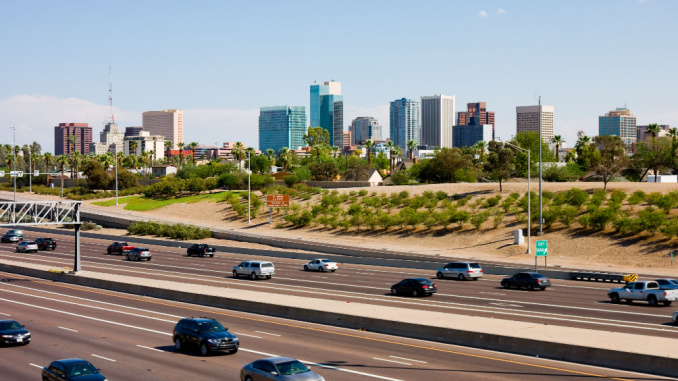
After reviewing credible, disturbing reports regarding Runbeck Election Services and Maricopa County’s handling of ballots during the 2024 General Election, I have formally called on Attorney General Pam Bondi to launch a federal investigation into whether basic election protocols were violated.
This is not partisan theater. The allegations are signs of possible systemic failures or a complete disregard for the chain of custody that protects every legal vote.
As a former prosecutor and Army Reserve intelligence officer, I do not jump to conclusions. I review the facts at hand, and I believe in due process and evidence.
But I also believe that when red flags are waving this high and wide, public servants have a duty to act.
During my time representing the people of Arizona, I have seen firsthand how trust in our elections has declined. In 2022, polling showed that more than half of Arizona voters doubted whether the official vote count reflected all legal votes. That level of public distrust is toxic to a functioning democracy, and it cannot be ignored.
Election security is national security.
In both 2020 and 2022, Arizona faced scrutiny from all sides. We endured hand counts, audits, lawsuits, and national attention. The public was told repeatedly that every vote was counted, every procedure followed. However, if the most basic rules surrounding ballot security were violated, then those assurances are meaningless.
The American people deserve to know the truth.
That is why I am asking the Justice Department to determine whether Runbeck provided a secure environment for ballot printing, transportation, and storage.
If all procedures were followed correctly, then all involved should welcome a federal investigation and seek to reaffirm public confidence. If those procedures were ignored or manipulated, then we need immediate corrective action and full accountability. A transparent process benefits everyone, regardless of political party.
Reports have indicated that there was no meaningful safeguards or oversight in place at all times. That is not just bad optics. That is a recipe for disaster. Even the appearance of impropriety damages voter confidence and invites division across the country.
As a representative for Arizona’s 8th Congressional District, I take my oath to protect our Constitution seriously. That includes the right of every American to participate in a fair election. When systems break down or appear compromised, it is not enough to hope for the best. We must act to investigate, fix them, and restore faith in the system.
Some critics will try to paint this investigation as just another political stunt. They will try to lump it in with previous election disputes to dismiss it out of hand. But that misses the point entirely. This request is not being driven by partisanship. It is being driven by facts, by public concern, and by a genuine desire to strengthen our democratic institutions.
We are not repeating past fights. We are demanding answers in the present. We are relying on the lawful, nonpartisan authority of the Justice Department to get to the bottom of this. We are asking for transparency, not a political advantage.
So, what does this mean for the people of Arizona? It means you are not being ignored. Your concerns about the integrity of our elections are being taken seriously. Your right to have your voice heard is being defended.
To the American people watching this unfold, know this: we are not looking to undermine democracy. We are looking to restore and strengthen it.
We are not interested in sowing chaos. We are committed to restoring order and confidence. Because when trust in elections breaks down, the entire system begins to fracture.
I will keep pushing for this investigation until the necessary action is taken. I will not back down from the responsibility to represent the people of Arizona with clarity, courage, and conviction. Our elections are too important to be left in doubt. Let’s fix this now before it is too late.
Around the country, the “war on cars” has become apparent. From New York’s congestion pricing scheme to the onslaught of road diets and protected bike lanes to “reallocate” the public space away from cars, there is hardly anywhere you can travel without experiencing the increased hassle and cost of driving your personal vehicle.
Despite the Trump administration’s efforts to reverse the woke transportation trends at the U.S. Department of Transportation under former Secretary Pete Buttigieg, many state and city governments remain committed to punishing drivers.
One specific tool being used to implement the anti-car, woke transportation agenda is vehicle mileage limits and taxes. For example, in Washington State, they passed a law that sets a target of reducing vehicle miles traveled per capita by 50% by 2050. Their department of transportation is empowered to create policies and strategies that would effectively force people to give up their cars. And of course, for our neighbors to the West, California lawmakers have proposed a mileage tax or “road charge” determined by how many miles a person drives in an effort to reduce carbon emissions and endlessly subsidize their failed transit system. Implementing this would require invasive measures such as reporting odometer readings or installing “special plug-in devices.” This kind of Orwellian intrusion on our freedom to travel privately has no place in any American city, even in California…
The week just passed was a rough one for California Governor Gavin Newsom. Early in the week, Newsom’s complete lack of leadership in his home state combined with a similar dereliction of duty by Los Angeles Mayor Karen Bass to justify President Donald Trump’s move to activate both the National Guard and 700 U.S. Marines to move into downtown Los Angeles to control escalating riots there.
As if that weren’t humiliating enough, President Trump held a White House ceremony Thursday during which he signed a series of three resolutions passed under the Congressional Review Act (CRA) designed to kill California’s electric vehicle (EV) mandate which has been a centerpiece of Newsom’s regulatory policies.
“Under the previous administration, the federal government gave left-wing radicals in California dictatorial powers to control the future of the entire car industry all over the country,” Trump said in remarks preceding the signing. “It’s been a disaster for this country.”
In response, Newsom said in a statement, “The weaponization of the Congressional Review Act to attack California’s waivers is just another part of the continuous, partisan campaign against California’s efforts to protect the public and the planet from harmful pollution.” It’s pretty weak sauce, but it’s all he has at this point.
Well, except for another round of lawfare, that is. Within minutes of Trump’s affixing his signature (no autopen involved) to the resolutions, California Attorney General Rob Bonta had filed a lawsuit challenging the resolutions in the U.S. District Court for the Northern District of California. Bonta was joined by Democrat attorneys general from 10 other states.
KCRA Channel 3 TV in Sacramento pointed out that this suit is the 26th time Bonta has sued the Trump administration since January. Bonta admitted during his press conference that his office has already spent $5 million in pursuing its Trump-focused lawfare agenda, but no worries: The state assembly recently authorized a $25 million boost to Bonta’s budget to continue his Quixotic strategy.
repeal a waiver under the clean air act issued by the Biden EPA in 2023 which allows California to mandate all new cars sold by 2035 be what the California Air Resources Board (CARB) classifies as “zero emissions vehicles,” or ZEVs;
block rules requiring zero-emission sales targets for commercial trucks; and
eliminate higher standards for heavy-duty diesel engines to reduce smog-forming nitrogen oxide pollution.
The central claim in Bonta’s lawsuit is that Congress’s use of the CRA to revoke California’s Clean Air Act waivers is unprecedented and illegal. Enacted in 1996, the CRA gives congress authority to revoke regulations that are finalized by an outgoing administration. Passed on a bipartisan vote of congress, it is designed to limit the exact sort of effort witnessed in the final months of the Biden administration to shove through as many new regulations as possible before leaving office.
CRA actions are exempt from the Senate filibuster and not subject to judicial review. However, because the CRA has rarely been invoked since it became law, it has never previously been used to rescind a waiver issued by EPA or any other federal regulator. Bonta is banking on the federal courts being willing to intervene based on an argument that the issuance of a waiver does not constitute a regulatory action. While what we’ve seen over the last five months indicates a likelihood that Bonta and his fellow plaintiffs will be able to shop for a district court judge who will be willing to issue a temporary injunction, their prospects of prevailing at the appellate level or the U.S. Supreme Court seem dim.
Sen. Shelley Moore Capito (R-W.Va.), who authored one of the resolutions, frames the issue as a defense of consumer choice, telling Politico, “These mandates force Americans into vehicles they don’t want or can’t afford, all while ignoring the realities of our grid and supply chains.” The reality is that few Americans really want to buy EVs, which is the motivator for Newsom’s attempt to force them.
It’s all bad news for Gov. Newsom, who has been relegated to a complaining bystander in his own state as others act to address problems of his own creation. That’s no way to run a state, Governor.
David Blackmon is a contributor to The Daily Caller News Foundation, an energy writer, and consultant based in Texas. He spent 40 years in the oil and gas business, where he specialized in public policy and communications.
One of President Trump’s most important campaign promises was to bring accountability and transparency to federal government spending. Under the newly created Department of Government Efficiency (DOGE), his administration didn’t waste any time getting to work.
Within weeks of Trump’s inauguration, DOGE had uncovered billions of dollars in waste and abuse of taxpayer funds under the United States Agency for International Development (USAID). Here are just a few of the ways the Trump administration discovered USAID was spending your tax dollars:
$1.5 million to “advance diversity, equity, and inclusion in Serbia’s workplaces and business communities.”
$2 million for sex changes and “LGBT activism” in Guatemala.
Millions to EcoHealth Alliance — which was involved in research at the Wuhan lab.
$1 million to boost French-speaking LGBTQ groups in West and Central Africa through the State Department.
$15 million for condoms to the Taliban through USAID.
This list barely scratches the surface of the waste and abuse that was discovered. But now, it appears it’s not just the federal government that’s been throwing your money around to outlandish woke initiatives. Arizona may have its very own USAID scandal…