by Staff Reporter | May 26, 2026 | News
By Staff Reporter |
Data from the Federal Bureau of Investigation (FBI) reveals that assault constitutes the crime most commonly committed in Arizona.
An analysis of the latest data available on the Law Enforcement Agency Reported Crime Analysis Tool (LEARCAT), a Bureau of Justice Statistics database, found nearly 38,700 incidents of simple assault in 2024. This data is limited to the state’s participating law enforcement agencies.
Simple assault refers to both assaults and attempted assaults where the perpetrator didn’t use a weapon or where the victim didn’t sustain a serious or aggravated injury. This classification includes stalking, intimidation, coercion, and hazing, per the FBI.
The research, conducted by the Injury Lawyer Team, estimated that simple assaults occurred about once every 14 minutes in the state.
The second-most common crime reported in Arizona was shoplifting (30,800 incidents), followed by destruction, damage, or vandalism of property (27,500 incidents); drug equipment violations (27,400 incidents); all other larceny (21,100 incidents); drug or narcotic violations (21,000 incidents); motor vehicle theft (10,500 incidents); aggravated assault (10,100 incidents); theft from a motor vehicle (10,100 incidents); and burglary and breaking and entering (9,700 incidents).
Arizona experiencing simple assault as its most common crime was consistent with the national trend. In 2024, there were over two million recorded incidents of simple assault nationwide. 28 states reported simple assault as their most common crime.
Preliminary data from the FBI’s Uniform Crime Reporting Program reflected a decline in violent crime in 2025 so steep that it could prove historical, per FBI Director Kash Patel. Overall, violent crime was predicted to have decreased by an estimated 9%.
“The 2025 crime data in this report shows the single largest decrease in violent crime and murder since 1937 – as well as huge decreases across the board in terms of aggravated assault, rape, and robbery,” said Patel. “Over the last 14 months, we made major transformations at the FBI, and these results show those changes are working. This FBI will continue to stack these wins for the American people under President Trump and always Back the Blue every step of the way.”
Murder and non-negligent manslaughter decreased by an estimated 18%; rape decreased by an estimated 7%; robbery decreased by an estimated 18%; and aggravated assault decreased by an estimated 7%.
The program received data from more than 17,000 agencies representing 96% of the population (in 2024, the program relied on data from nearly 16,700 agencies).
Part of this preliminary steep decline came from data submitted by the Phoenix Police Department. Phoenix police reflected a decline in violent crime, including homicide, over the last few years.
2025 had 1,000-plus fewer incidents of violent crime reported than 2024.
Arizona Department of Public Safety (AZDPS) data agrees with this pattern of decline in violent crimes reflected by Phoenix police. AZDPS reported that violent crime — more than 27,100 cases with 44% clearance rate — declined by more than 13% compared to 2024.
AZDPS data also reflected an overall decline in violent crime over the past five years.
AZ Free News is your #1 source for Arizona news and politics. You can send us news tips using this link.
by Staff Reporter | May 25, 2026 | News
By Staff Reporter |
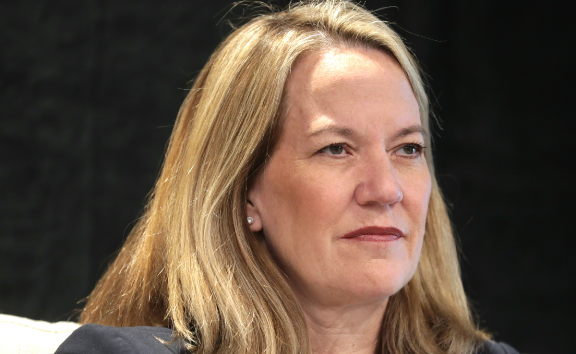
Arizona Attorney General Kris Mayes advised the Maricopa County Board of Supervisors to ignore Recorder Justin Heap’s claim of exclusive authority on drop box establishment.
Mayes sent a letter to the board and Heap on Friday claiming Heap’s counsel had made “unfounded threats of criminal liability” for telling the board that they would face felony charges for managing ballot drop boxes.
Mayes cited the state’s current and past two Elections Procedures Manuals (EPMs) to back her assessment. The EPMs recognized that boards of supervisors or their designees approve all ballot drop-off locations and drop-boxes.
“Justin Heap is wrong about drop boxes,” said Mayes. “He should immediately work with the Maricopa County Board of Supervisors in good faith to ensure a well run [sic] election.”
Notice from Heap’s counsel closely preceded a vote taken by the board earlier this week to designate 12 drop box locations throughout the county for the upcoming primary election in July. These drop boxes are scheduled to become active at the end of June.
Heap claimed the board never consulted him about the proposed drop box locations.
Heap has maintained that the board unlawfully awarded themselves control over ballot drop boxes, according to a recent ruling from the Arizona Superior Court.
The board was ruled to have unlawfully usurped the recorder’s elections authority and resources. The court determined the board didn’t have the “plenary authority” it claimed over elections administration, and ordered the board to restore key elections functions and resources to the recorder, especially the IT staff, servers, databases, software, and elections systems.
“The Court has already ruled that the Board does not have unlimited authority over elections, yet it continues attempting to exercise powers Arizona law assigns to the Recorder,” said Heap.
Heap also claimed the board tried to bring him into their meeting for “a surprise public interrogation” on short notice.
The board plans to appeal the ruling; Heap expressed concern that ongoing litigation this late in the election season will cause legal and operational issues.
Vice chair of the board, Debbie Lesko, told “The Conservative Circus” on Friday that she and the rest of the board have worked earnestly “in good faith” to avoid this ongoing court battle with Heap. Lesko argued that it wasn’t possible for the board to abide by the superior court ruling.
“This is really complicated and it’s not black and white,” said Lesko. “There’s competing state laws that say both the recorder and the elections department have jurisdiction over the same exact election procedures in some cases.”
On Thursday, Lesko and Chair Kate Brophy McGee petitioned Heap in a public statement and letter to agree to public, recorded meetings to negotiate elections administration.
The letter claimed that certain progress between the board’s elections department and recorder’s office concerning this month’s jurisdictional elections and the July primary elections were later refused by Heap.
AZ Free News is your #1 source for Arizona news and politics. You can send us news tips using this link.
by Ethan Faverino | May 25, 2026 | News
By Ethan Faverino |
The Republican Study Committee (RSC) held a fraud roundtable last week, led by Representative Brandon Gill (TX-26), calling for aggressive action and criminal prosecutions in response to a major Medicaid fraud scheme in Ohio uncovered by investigative reporting.
The event follows a Daily Wire investigation by reporter Luke Rosiak, which revealed how convicted felons and foreign nationals established 288 shell companies to fraudulently bill taxpayers for home health services that were never even provided.
The scheme defrauded Ohio’s Medicaid program of approximately $250 million. One single building in Columbus reportedly housed 94 fake companies that billed out $66 million.
Rosiak exposed the operation in about two months by analyzing publicly available data that state Medicaid officials had allegedly overlooked for four years.
Rep. Gill, who chairs the newly formed House Oversight Committee Task Force on Defending Constitutional Rights and Exposing Institutional Abuses, announced that the task force will launch a formal investigation equipped with subpoena power to pursue accountability and issue criminal referrals.
“Whenever you bring in infinity third worlders into American society from low trust countries, you kind of expect low trust behavior, and that’s what we’ve seen here,” stated Gill. “The American people want to know that their tax dollars are actually being used for the American people, not for foreigners, not for fraudsters. Our job is to stop it, to get the bad guys in jail by issuing criminal referrals.”
The roundtable aligns with broader Republican efforts to combat waste, fraud, and abuse in federal healthcare programs. These initiatives build upon the White House Fraud Task Force established by President Donald Trump and Vice President JD Vance, which has already deferred billions in Medicaid reimbursements from non-compliant states and imposed a hold on new hospice and home health care licenses until integrity requirements are met.
RSC Vice Chair Ben Cline (VA-06) emphasized the impact on legitimate beneficiaries: “Fraud is not a victimless crime. Fraudsters steal money from innocent people who are meant to benefit from these programs, Medicare, Medicaid, home health. One of the main weapons that we have is transparency.”
Additional remarks from members in attendance included:
- Rep. Michael Cloud (TX-27): “It’s unfortunate when people come to this country, have no intent in helping build this country, but are just simply here to defraud the American citizens who are here and working to build this country. The waste, fraud, and abuse is turned into a money laundering scheme for leftist organizations.”
- Rep. Laurel Lee (FL-15): “We are not providing federal funding for the purpose of subsidizing negligence, incompetence, or corruption. Every dollar that is stolen is $1 that is no longer available for vulnerable Americans who actually need these services.”
- Rep. Tim Burchett (TN-02): “We found over a trillion dollars in duplication and increased bureaucracy. Every time the Democrats holler and say, ‘Oh, you’re cutting this program,’ you’re damn right. We’re cutting the waste, abuse, and fraud.”
- Rep. Mike Kennedy (UT-03): “This criminal behavior is enriching filthy individuals who deserve to be in jail. If there are doctors on the tape, they should do the perp walk and go to jail. Their license should be taken and never returned.”
- Rep. Abe Hamadeh (AZ-08): “This is not just going to be hearings after hearings. It’s going to be arrests and prosecutions. We have to end this now. What we’re uncovering is criminals.”
Republicans characterized the Ohio Medicaid scam as a stark example of systemic vulnerabilities in federal healthcare programs that deflect critical resources away from the people who depend on these services.
The roundtable highlighted the GOP’s commitment to greater transparency, aggressive enforcement, and criminal prosecutions to protect taxpayer dollars and restore integrity to these programs.
Ethan Faverino is a reporter for AZ Free News. You can send him news tips using this link.
by Ethan Faverino | May 25, 2026 | News
By Ethan Faverino |
Las Vegas may market itself as “Sin City,” but new 2026 data reveals it doesn’t even crack the top five when measuring where Americans actually live their most indulgent lifestyles.
A comprehensive study commissioned by PokerTube analyzed nightlife density, adult entertainment venues, single population rates, STI prevalence, and excessive drinking through a weighted index — offering one of the clearest looks at America’s true party capitals.
New York City claimed the top spot with a commanding composite “sin” score of 8.85/10. New York City overwhelmed competitors with 3,822 bars and 422 nightclubs (the highest totals nationwide) plus 79 adult stores. Nearly 46.8% of men and 44% of women are single, and the city logged a chlamydia rate of 558.4 cases per 100,000 residents.
Phoenix, Arizona, delivered one of the biggest surprises of the study, ranking second place nationally with a “sin” score of 8.77/10. Phoenix stands out with 925 bars and 122 nightclubs. Phoenix also features 46 adult stores, 11 casinos, and one of the higher excessive drinking rates in the top 10 at 18.81%.
Public health data paints an equally intense picture with Phoenix recording 552.5 chlamydia cases and 296.6 syphilis cases per 100,000 residents. With 44.65% of men and 37.52% of women single, Phoenix has earned its reputation as a major nightlife and entertainment hub.
Tucson, Arizona, ranked 15th on the list with a score of 7.96/10. It has 245 bars, 21 nightclubs, 7 casinos, and 46 adult stores. Tucson shares the same elevated state-level STI rates (552.5 chlamydia and 296.6 syphilis per 100K) and excessive drinking rate (18.81%), with 48.05% of men and 41.72% of women single.
Las Vegas fell to 7th place with a score of 8.48/10, despite leading the nation in casinos (292) and posting a strong number of strip clubs (17). Researchers noted that Vegas appears built more for tourism than resident-driven sin, with lower single-resident percentages (39.51% single men and 34.02% of single women) and more moderate excessive drinking rates (14.89%) compared to the top cities.
America’s Top 5 Most Sinful Cities (2026):
1. New York City, NY (8.85): 3,822 bars, 422 nightclubs, 79 adult stores, 558.4 chlamydia rate per 100k, 17.51% excessive drinking.
2. Phoenix, AZ (8.77): 925 bars, 122 nightclubs, 11 casinos, 46 adult stores, 296.6 syphilis rate per 100k, 18.81% excessive drinking.
3. Miami, FL (8.75): 1,961 bars, 386 nightclubs, 107 casinos, 10 strip clubs, 498.9 chlamydia rate per 100k, 17.18% excessive drinking.
4. Houston, TX (8.69): 1,844 bars, 345 nightclubs, 51 adult stores, 238.6 syphilis rate per 100k, 18.25% excessive drinking.
5. Dallas, TX (8.61): 891 bars, 157 nightclubs, 58 adults stores, 49.10% single men, 42.50% single women, 18.25 excessive drinking.
America’s Top 5 Least Sinful Cities (2026)
1. Fort Wayne, IN (4.46): Only 112 bars, 14 nightclubs, 0 casinos, 0 strip clubs, 491 chlamydia rate per 100k, 62.8 syphilis rate per 100k.
2. Virginia Beach, VA (4.58): 141 bars, 14 nightclubs, 1 casino, lowest syphilis rate in the study at 22 per 100k.
3. Little Rock, AR (4.78): 89 bars, 16 nightclubs, 13 adult stores, 0 casinos, 0 strip clubs, 15.42% excessive drinking.
4. Knoxville, TN (4.80): 124 bars, 13 nightclubs, 0 casinos, 0 strip clubs, 107 syphilis rate per 100k, 16.89% excessive drinking
5. Tallahassee, FL (4.92): 99 bars, 15 nightclubs, 0 casinos, 0 strip clubs 104.7 syphilis rate per 100k, 17.18 excessive drinking
Ethan Faverino is a reporter for AZ Free News. You can send him news tips using this link.
by Staff Reporter | May 24, 2026 | Education, News
By Staff Reporter |
Arizona State University (ASU) will be offering more affordable bachelor’s degrees to the 2.1 million community college students in California.
ASU announced on Tuesday that it was expanding the California Community College Achievement Plan (CCCAP) to create transfer pathways at all 116 community colleges in California.
The university decided to capitalize on the small transfer rate (10%) of California students going from community college to a four-year university.
ASU’s chief operations officer for EdPlus, Casey Evans, said this expansion was a critical investment in California’s future.
“We believe access to higher education should not be limited by geography or cost,” said Evans. “The California Community College Achievement Plan expands opportunity statewide, creating more accessible pathways through ASU Online for students to earn their degrees and contribute to California’s future.”
EdPlus oversees ASU Online in addition to:
- NeoSTEM, a platform combining personalized instruction tools Orchard and Digit for STEM students;
- Study Hall, a platform awarding reduced-cost college credits through YouTube videos;
- Dreamscape Learn, integrating virtual reality into courses;
- The ASU+GSV Summit;
- Zai Xian, a Chinese version of ASU Online offering non-English degrees in Mandarin to Chinese-speaking students;
- Cintana Education, a partnership opening up ASU resources, courses, and support with other universities that are part of the Cintana Alliance;
- Baobab, a platform providing networking, growth, and career development to Mastercard Foundation Scholars;
- e-SHE, an educational program for Ethiopians;
- Air Force Global College, a program providing professional development to Air Force servicemembers;
- Partnership with University of Tennessee, Knoxville to expand degree pathways and course catalogs;
- The Hall of Teachers project at the Bishop Museum in Hawai’i;
- The Earned Admission program; and,
- Tuition-coverage partnerships for Starbucks, Uber, and InStride employees.
California community college students receive a special tuition rate of $450 per credit hour. The regular tuition per credit hour for ASU Online undergraduate is about $600.
Meaning, online undergraduates who transfer from California community colleges save more than 20% on tuition compared to what Arizona residents pay.
ASU also prioritizes the maximization of transfer credits and personalized support for the program. Personalized support available to CCCAP students includes advisors, career services, and success coaches.
Only students who earned an associate degree or at least 30 credits from a California community college qualify for CCCAP.
ASU launched the pilot program of the CCCAP last fall. At the time, 26 community colleges in California were part of the pilot program.
Daniel Walden, the CEO of Victor Valley College, one of California’s community colleges, said CCCAP greatly benefits California residents and communities. The ASU News feature of the CCCAP expansion made no mention of impact to Arizonans or their communities.
“This partnership with ASU Online creates a clear and affordable path for our graduates to reach their goals, enrich their lives and strengthen our communities,” said Walden.
The latest financial aid report from the Arizona Board of Regents (issued 2021) found that 55 percent of ASU undergraduates graduated in debt.
Over 15,000 students in California already attend ASU’s online schooling.
AZ Free News is your #1 source for Arizona news and politics. You can send us news tips using this link.
by Ethan Faverino | May 24, 2026 | News
By Ethan Faverino |
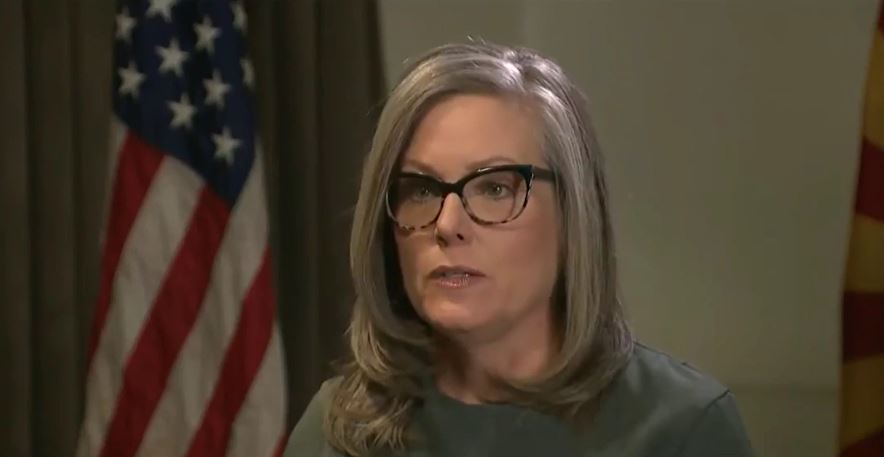
As Arizona Governor Katie Hobbs adopts a firmer rhetorical stance toward the People’s Republic of China, The Center Square states national security experts are closely monitoring whether she will sign a package of bipartisan bills designed to protect the state’s critical infrastructure, land, universities, procurement processes, and consumers from foreign adversary influence.
In previous years, Governor Hobbs vetoed several China-related measures, citing concerns over economic growth, investment portfolios, and impacts on the healthcare system. However, she now has the opportunity to act on up to seven new bills addressing these national security priorities.
In the past three years (2024-2026), Hobbs vetoed measures including:
- HB 2504 and HB 2584: Genetic sequencing restrictions involving foreign adversary technology
- SB 1340: Prohibiting state investments in foreign adversaries
- HB 2542: Banning state contracts with companies domiciled in China for goods or services
- SB 1109: Restrictions on foreign adversary land purchases near military bases and critical infrastructure
Her veto messages previously emphasized potential economic harm and described one bill as “weak and spineless.” This year, despite vetoing another genetic sequencing bill over healthcare system concerns, her office has signaled a tougher approach toward China.
The current package includes targeted protections:
- Arizona Critical Infrastructure Protection Act (HB 2134): Prohibits Chinese companies from providing software for critical infrastructure and bars contracts granting them access. It requires annual certifications, establishes a prohibited equipment list (including Wi-Fi routers, modems, school bus cameras, smart meters, solar inverters, and IoT modules), and creates a score communications channel for emergencies. Exceptions exist for cases with no reasonable alternatives and pre-approval.
- Land Protection Bill (SB 1683): Bars foreign adversary nations and agents from purchasing, leasing, or acquiring substantial interests (+15%) in Arizona real property. It prohibits installing surveillance or communications equipment and includes strong enforcement mechanisms, including divestiture, forfeiture, and reporting to federal authorities. Limited exceptions apply for inheritance or debt collection with prompt divestiture.
- Higher Education Protections (SB 1327): Requires the Arizona Board of Regents to review and approve gifts, contracts, or partnerships with foreign adversary nations. Universities must adopt comprehensive research security policies and annually report significant foreign funding.
- Procurement Safeguards (SB 2170): Prevents companies domiciled in and controlled by the Chinese government, military, or ruling party from bidding on state electronic and information technology contracts. Requires certification letters, with severe penalties for false statements.
- Lobbyist Registration (SB 1100): Mandates foreign adversary principals to register lobbyists, disclose activities, and pay fees. Creates a public database and penalties for nondisclosures.
- Consumer Fraud Enforcement (SB 1308): Establishes a Foreign Adversary Fraud Office in the Attorney General’s office to pursue violations involving foreign adversary technology. Creates dedicated funds for enforcement and technology replacement in critical infrastructure.
Josh Hodges, former senior director at the National Security Council under President Trump, current member of the U.S.-China Economic and Security Review Commission, and national security advisor to House Speaker Mike Johnson, described these bills as “massively impactful.”
Hodges told The Center Square, “It is important these bills are passed collectively to ‘really address the full scope’ of the Chinese threat.” He noted that Hobbs has vetoed almost every piece of legislation related to China for “specious reason” often based on claims that bills were too vague or broad, despite federal agencies identifying ongoing subnational Chinese Communist Party efforts to embed operations in key U.S. assets.
He expressed hope that Hobbs’ recent shift in rhetoric will translate into action: “Arizonans will find out quickly whether their interests are being chosen over politics.” According to Hodges, vetoing these measures without strong justification could indicate undue influence or undisclosed lobbying.
These bills represent a significant opportunity for Arizona to align with growing nationwide efforts to protect critical assets from foreign adversary risks while maintaining necessary flexibility for public safety and economic needs.
Ethan Faverino is a reporter for AZ Free News. You can send him news tips using this link.