Parents pulled their kindergarteners from Scottsdale Unified School District (SUSD) classrooms after district leadership refused to put an end to one staff member’s discussions of gender ideology. The alleged perpetrator was Mia Perry, a before and after school care assistant who told students that she was nonbinary, an LGBTQ+ term indicating that the individual believes they’re genderless.
It appears that Perry shared more details of gender ideology: SUSD parents reported their kindergarteners came home with concern that they wouldn’t always remain the gender they were, and that they could choose their gender.
One SUSD parent and Arizona Senate candidate, Jan Dubauskas, explained to “The Conservative Circus” that Perry informed the kindergarteners of her nonbinary identity unprompted. At the time of the interview, Dubauskas said she hadn’t received word from SUSD about her complaint filed a week prior.
“This person is alone with small children and unsupervised, and SUSD has known about this for at least eight days,” observed Dubauskas.
Several days after filing the complaint, Dubauskas and several other parents running for office issued an open letter to SUSD.
#BREAKING Today, we signed an Open Letter to @ScottsdaleUSD demanding woke gender indoctrination of Kindergartener students cease immediately.
This is personal. My 6 year old daughter is being indoctrinated. Together, we are fighting to protect our children! pic.twitter.com/BfBbBhUnQW
— Jan Dubauskas for State Senate (@DubauskasJan) May 5, 2022
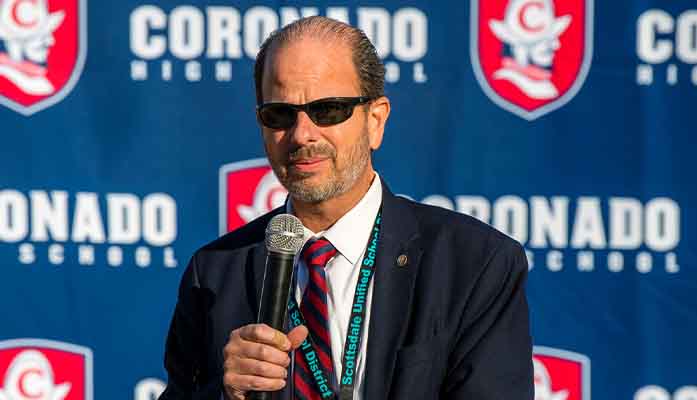
In response to the parents’ complaints, SUSD Superintendent Scott Menzel defended Perry. During the SUSD Governing Board meeting on Tuesday, Menzel accused parents of Civil Rights violations. Menzel took issue with the fact that Dubauskas issued a press release alongside other political candidates discussing details of the complaint against Perry, claiming that the parents were using the issue for political gain. Menzel said that the parents’ decision to issue an open letter before SUSD concluded its investigation supported his assessment of the situation.
“To target an individual publicly for their personal identity — in this case the individual against whom this complaint was filed does not identify as either male or female — is overt discrimination and inconsistent with state and federal law as well as school district policy,” said Menzel.
Menzel reminded SUSD parents and community members that the district had a commitment to its core values of empathy and inclusion.
“This district will not take adverse employment action against any individual as a result of their identity, no matter how offensive that may be to some,” said Menzel. “Hate and targeted attacks toward individuals on our staff are inconsistent and incompatible with [our] core values. It is my hope that our Scottsdale community will respond with kindness, love, and compassion toward all, as we look to finish this school year on a positive note.”
On Tuesday, SUSD issued a response to the parents’ complaint. SUSD Early Learning and Community Education Director Christine Bonow asserted that Perry hadn’t acted inappropriately when she informed kindergarteners of her gender identity. Additionally, Bonow rebutted the claims that the children didn’t ask Perry about her gender.
“I have found the staff person to be credible and consistent in relating the details of the comments that were made. The staff member did not initiate any conversation regarding gender identity, nor did they engage in any instruction that would be considered sex education. When asked a direct question by a child, the staff member answered briefly, in an age-appropriate manner and honestly,” wrote Bonow. “Simply being aware of a staff member’s gender identity is not inappropriate. Staff members are protected from discrimination based upon gender identity by board policy AC, Scottsdale city ordinance, and state and federal laws.”
Bonow then asserted that action against Perry would be discriminatory.
Corinne Murdock is a reporter for AZ Free News. Follow her latest on Twitter, or email tips to corinne@azfreenews.com.
On Monday, the Arizona Supreme Court dismissed claims of insurrection against State Representative Mark Finchem (R-Oro Valley) and Congressmen Paul Gosar (R-AZ-04) and Andy Biggs (R-AZ-05), ruling them valid candidates for the upcoming election.
A progressive nonprofit, Free Speech for People, alleged that the three legislators weren’t qualified because they committed insurrection through their actions and speech on January 6, a purported violation of the U.S. Constitution’s “Disqualification Clause”: Section 3 of the Fourteenth Amendment.
In response to the ruling, Gosar asserted that free speech prevailed against the Democrats.
Breaking: The AZ Supreme Court just ruled that me, @RepAndyBiggsAZ and @RealMarkFinchem will remain on the ballot. The Democrats lose again and now have to try to beat us at the ballot box. ✔️Free Speech Wins ✔️No “Insurrection” no Disqualification Clause pic.twitter.com/Ct3RvtekSu
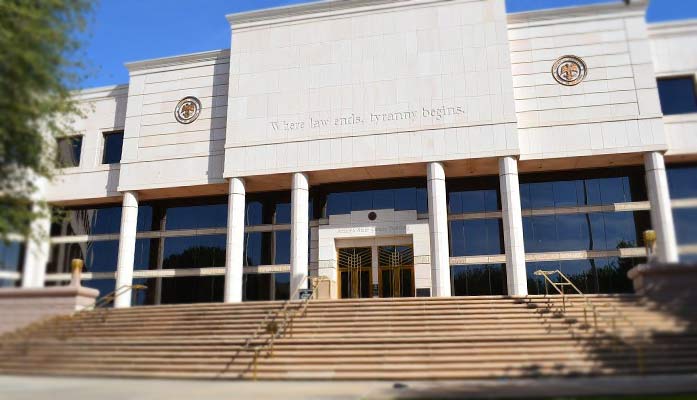
The court agreed with the Maricopa County Superior Court’s ruling from last month. Judge Christopher Coury didn’t entertain whether or not the three lawmakers engaged in insurrection. Rather, the courts agreed that the plaintiffs lacked the ability to enforce it. The Arizona Supreme Court agreed with the superior court’s assessment that the U.S. House of Representatives has the sole authority to determine a candidate’s fitness to serve in Congress.
“1) Congress has not created a civil practice right of action to enforce the Disqualification Clause, and the criminal statute prohibiting rebellion or insurrection, 18 U.S.C. § 2382, does not authorize the challenge by a private citizen; 2) A.R.S. § 16-351 does not provide a private right of action to argue a candidate is proscribed by law from holding office; 3) it is unnecessary to decide if the Amnesty Act of 1872 is applicable because no private right of action exists under the United States Constitution or Arizona law; 4) the Constitution reserves the determination of the qualifications of members of Congress exclusively to the U.S. House of Representatives; 5) the doctrine of laches is not applicable at this time; 6) Plaintiffs do not satisfy the legal standards for injunctive relief; and 7) there is no need for an advisory trial. Plaintiffs timely appealed.”
The nonprofit that challenged the qualifications of Biggs, Gosar, and Finchem failed in two similar lawsuits against Congressman Madison Cawthorne (R-NC-11) and Congresswoman Marjorie Taylor Greene (R-GA-14).
In addition to disqualification of the three legislators’ candidacy, Democrats have called for an investigation into their January 6 involvement.
Our country needs to know what role elected officials played in the Jan. 6 planned insurrection — what they knew, when they knew it. Letter signed by all #AZLeg Democrats asking FBI and @TheJusticeDept to investigate involvement of Rep. Mark Finchem, Congressmen Biggs and Gosar. pic.twitter.com/kUhAQAWkqq
The leader of the activist movement challenging the results of the 2020 election, Ali Alexander of “Stop the Steal,” named Gosar, Biggs, and Finchem as three individuals who helped him organize the January 6 protest.
One of the latest actions taken on these claims came last week when the U.S. House’s January 6 Committee requested that Biggs speak with them.
The Select Committee has requested cooperation from three additional members of the House of Representatives: • Rep. Andy Biggs • Rep. Mo Brooks • Rep. Ronny Jackson pic.twitter.com/ioB1rGxAG5
— January 6th Committee (@January6thCmte) May 2, 2022
Biggs refused to cooperate. He compared the committee’s intentions and tactics to those behind the Salem Witch Trials, with former President Donald Trump supporters being the target.
I will not be participating in the illegitimate and Democrat-sympathizing House Jan. 6 committee panel.
The committee has been a sham since its origins. Its entire purpose is to destroy President Trump and his supporters, intimidate members of Congress, and
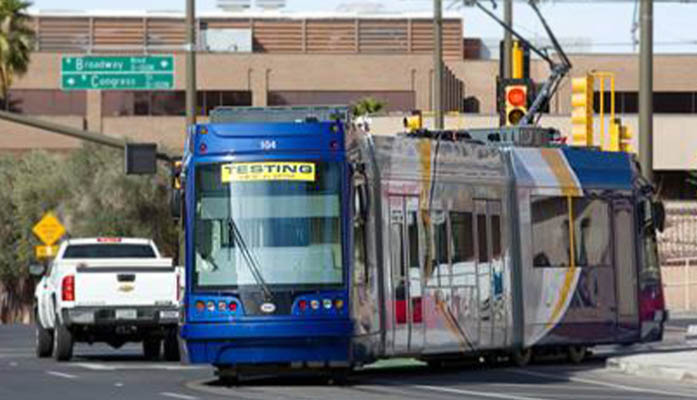
Valley Metro Transit will formally begin streetcar service in Tempe later this month as part of a $190 million public transportation project which began construction in 2018 and has been funded by federal grants, regional funding, and local public-private partnerships.
Operation of the streetcar, which is smaller than the light rail vehicles typically seen in the metro area, will be paid by the City of Tempe. The three-mile route is slated to service the ASU- Tempe campus, downtown Tempe, Gammage Auditorium, Sun Devil Stadium, and Tempe Beach Park starting May 20.
But while Tempe is expanding its public transit options, questions are being raised in other parts of the Phoenix metropolitan area where some bus routes frequently attract less than a handful of riders, day after day. Valley Metro’s own reports confirm significantly low ridership on some route, drawing attention to the cost and associated problems in providing regional public transit.
Transit officials in the Valley attribute some of the ridership changes seen in late 2021 and early 2022 to the effects of service reductions and route changes due to COVID-19. For the year ending June 30, 2019 there were more than 49 million pre-pandemic Valley Metro bus riders, which dropped to 39.7 million the next fiscal year which included the first six months of COVID-19 cases.
However, the unreliability of public transit and mask mandates forced many residents to find other options and they have been slow to return. For the Fiscal Year ending June 30, 2021 there were less than 21 millions Valley Metro bus riders, according to public records. Valley Metro light-rail ridership also dropped around 50 percent from FY 2020 to FY 2021.
While a lack of ridership is a growing concern in the Phoenix metro area, it is the change in rider demographics that is currently creating problems for Tucson’s Sun Tran bus service, according to the union representing the drivers.
Teamsters Local Union 104 reports there were only 14 physical assaults on its drivers in 2018. That jumped to 47 in 2021, while there have already been 17 as the end of April, putting Sun Tran on track for more than 50 attacks this year.
But those numbers, union officials say, do not include verbal threats and abuse directed toward drivers, who are also called coach operators. And then there is the escalation in the frequency and cost of property damage to the buses, as well as public health issues.
The union insists the problem is directly tied to the City’s decision to waive all bus fees during the pandemic in an effort to aid workers and students who relied on public transit. The waiver, paid for by $43 million in federal pandemic funding, is set to end this summer, and union officials say it cannot come soon enough.
Teamsters 104 contends Tucson’s city buses have become “a mobile refuge from the elements frequented by drug users, the mentally ill and violent offenders” due in part to the fee waiver. The usual fare-paying rider is no longer using Sun Tran to get to work, school, or medical appointments, having been replaced by non-paying passengers who instead “ride for hours on end, sleep on the buses, abuse drugs, relieve themselves and assault drivers,” the union says.
Another consequence of the free fair-induced change in ridership, the union says, is that those for whom the public transit was designed are now choosing alternative methods of transportation to avoid risks to their health and safety, especially elderly riders and those who have children. The situation, Teamsters 104 claims, has resulted in a workplace environment that has deteriorated for Sun Tran drivers while “lawlessness abounds and violence in commonplace.”
Meanwhile, the City of Sierra Vista discontinued three intracity fixed routes of its Vista Transit on Monday. In their place, city officials approved a new limited bus route with stops at the county’s major hospital as well as at state and county offices located with the city.
The change, which was noted as temporary but with no end date, means there will no longer be fixed route bus service available to and from Fort Huachuca. And while the city’s announcement puts the blame on “staffing shortages,” local residents as well as city officials have commented about the dearth of riders in post-pandemic months.
Vista Transit was one of the first in the state to change over to smaller, less expensive buses several years ago. And with budget season in full force, it is likely city bus service will look much different when the suspension is lifted, according to officials.
At the same time Sierra Vista is making serious cuts to its public transit options, the Town of Gilbert is considering whether to spend nearly $290,000 to study bringing commuter rail service to its town. The proposal has received pushback from local taxpayers as well organizations like the Arizona Free Enterprise Club concerning efforts by some town officials to keep the matter a secret.
This past month, Phoenix preschoolers fundraised for the largest national organization granting wishes to children with life-threatening illnesses, Make-A-Wish. Eight of the nine of the preschools in The Learning Experience (TLE) centers challenged each preschooler to raise $40 for Make-A-Wish’s 40th anniversary, which was in 2020.
So far, TLE has raised over $1.24 million for Make-A-Wish. The eight TLE preschools in Arizona have raised over $28,600. The cost of every child’s wish varies, but the average national cost in 2018 was over $11,000.
TLE Ocotillo in Chandler raised over $5,500, over 100 percent of their goal; TLE Eastmark in Mesa raised over $1,200, or 21 percent of their goal; TLE Gilbert-Higley in Gilbert raised over $1,800, or 37 percent of their goal; TLE Gilbert-Morrison Ranch in Gilbert raised over $10,100, or 101 percent of their goal; TLE Dobson Ranch in Mesa raised over $2,300, or 58 percent of their goal; TLE Palm Valley in Goodyear raised over $2,500 or 53 percent of their goal; TLE Phoenix raised over $4,000 or 81 percent of their goal; TLE Surprise raised over $800, or 34 percent of their goal.
Make-A-Wish was founded and is headquartered in Phoenix. Currently, they grant a wish about every 34 minutes. According to the average national cost of a wish, that means an eight-hour working day amounts to an average of around $176,000 in wishes.
The most-requested wishes include: getting a puppy, seeing snow for the first time, meeting a favorite celebrity, being a cowgirl, or getting a backyard tree house. About 77 percent of wishes involve travel, with Disney involved in about half of all wishes.
According to their latest data, Make-A-Wish has granted over 520,000 wishes worldwide. One of the organization’s most elaborate wishes granted was for five-year-old leukemia patient Miles Scott in 2013, who wished to become “Batkid,” Batman’s sidekick. The entire city of San Francisco worked with Make-A-Wish to make the little boy’s wish into a reality: a day-long adventure of Scott chasing down the villain, the Riddler, and rescuing a damsel in distress.
Scott has been cancer-free since then. A documentary, “Batkid Begins,” was released in 2015.
One of President Joe Biden’s signature initiatives is not going smoothly, with one of the government’s largest users of construction materials taking steps to forgo the May 14 deadline to ensure the manufacturing of all construction materials used in federally assisted infrastructure projects occurs in the United States.
In January 2021, Biden issued Executive Order 14005 to announce his Made in America initiative. It directed all federal agencies to maximize the use of goods, products, and materials produced in the U.S. when providing financial assistance awards and in procurements.
There have been longstanding federal rules for when iron and steel is American made, but implementing the Build America, Buy America Act enacted in November as part of the Infrastructure Investment and Jobs Act is not something the U.S. Department of Transportation can have in place by May 14 deadline.
Federal agencies had to wait for the Office of Management and Budget to determine the manufacturing process criteria for other construction materials. Which did not happen until two weeks ago when OMD announced its “preliminary and non-binding guidance.”
And that poses “a significant problem,” according to Polly Trottenberg, DOT’s deputy secretary.
DOT is responsible for funding thousands of road, bridge, rail, and transit infrastructure projects across the country through the Federal Aviation Administration, Federal Highway Administration, Federal Railroad Administration, Federal Transit Administration, and the National Highway Traffic Safety Administration. Under the new law, DOT will now also be responsible for ensuring those federally funded projects comply with Buy America.
But figuring out criteria for compliance based on non-binding guidance released only two weeks ago is not workable. Which is why Trottenberg is moving toward obtaining a 180 day temporary, transitional waiver of the deadline under a public interest declaration.
“The Department recognizes both the importance of ensuring Buy America compliant construction materials and the need to implement the requirement in a way that is not overly burdensome,” Trottenberg recently wrote.
According to Trottenberg, DOT officials have received concerns from stakeholders about the new Buy America manufacturing requirements as it relates to construction materials other than iron and steel. A waiver would avoid delays to much needed projects.
“Until we have more complete information on how construction materials are manufactured, and whether the manufacturing process complies with the OMB guidance, the Department is unable to ensure that transportation infrastructure projects continue to be obligated in compliance with these new requirements,” Trottenberg wrote.
The impact of new Buy America’s construction materials standards “could be significant,” said Trottenberg, who noted the National Bridge Inventory shows more than 62,500 bridges in America made with wood or timber elements, of which nearly 17,000 bridges have a main span consisting of wood or timber elements.
Another 19,562 bridges contain polymer-based products elements while 2,281 bridges contain non-ferrous metal elements, none of which have currently defined manufacturing processes to ensure compliance with Buy America standards.
DOT officials would use the waiver period to seek information state, local, industry, and other partners and stakeholders on challenges and solutions in connection with the Buy America construction materials mandate. It would also allow DOT to gather data on the sourcing of a full range of materials and products used in federally funded transportation projects while giving officials time to strategize for building up domestic capacity of construction materials.
Further, DOT hopes OMB will have issued its final standards by then.
“By the end of the waiver period, DOT expects state, industry, and other partners to establish an effective review process, as already in place for products such as iron and steel, as appropriate for construction materials, consistent with the [Bipartisan Infrastructure Law] and interpreting guidance and standards,” according to Trottenberg.
Comments and feedback on the proposed temporary waiver can be made here. All submissions received, including any personal information therein, will be posted to the agency’s website without change or alteration.
The Democrats’ top lawyer and central actor in Russia collusion hoax, Marc Elias, deleted all tweets published prior to April 4. As AZ Free News reported, Elias is assisting several activist groups in their lawsuits against Arizona for enacting a law requiring proof of citizenship in order to vote. According to court filings, only one case has seen action beyond the initial complaint: the court allowed Attorney General Mark Brnovich to intervene in the case filed by Living United for Change in Arizona (LUCHA).
Elias hasn’t offered an explanation for the sudden purge; he joined Twitter in March 2009. In recent months, federal investigators have closed in on those behind the Russia collusion hoax, or Russiagate.
At the end of March, the Federal Election Commission fined the Democratic National Committee (DNC) and Hillary Clinton’s 2016 campaign $113,000 for misrepresenting payments for opposition research used to create Russiagate. Elias was Clinton’s general counsel and his law firm at the time, Perkins Coie, billed for “legal expenses” that were used to hire an opposition research firm, Fusion GPS, to do their work on former President Donald Trump.
Fusion GPS obtained the debunked “Steele dossier” linking Trump to Russia from former British spy Christopher Steel, who created the dossier using false information from a Russian analyst living in Virginia, Igor Danchenko, who in turn received some ideas from former Clinton aide Charles Donlan Jr.
Buzzfeed first published the fake dossier in January 2017, ten days before Trump’s inauguration. The lies cast a shadow on all four years of Trump’s presidency.
Although Elias wasn’t President Joe Biden’s general counsel for his campaign — he served as Vice President Kamala Harris’ general counsel during her short bid for president — the Biden campaign and the DNC enlisted his help to counter 65 lawsuits challenging the 2020 election results.
Last August, Elias left his partnership at Perkins Coie to launch his own law firm: the Elias Law Group. He took 10 partners with him.
A month later, a federal grand jury indicted Perkins Coie partner Michael Sussman for making false statements to the FBI concerning alleged communications between Trump and Russia. In a 48-page motion last month to admit additional evidence, the U.S. Department of Justice (DOJ) alleged that Sussman attempted to manipulate the FBI to advance the interests of his client, the Clinton campaign, by giving then-FBI general counsel James Baker information that Trump was colluding with Russia based on alleged internet server communications between the Trump Organization and Russia’s Alfa-Bank. Sussman’s indictment noted that he billed the Clinton campaign for time spent drafting the document given to Baker.
Then, the DOJ alleged that Sussman turned around and ordered Steele to create reports about the Alfa-Bank communications. After that, the DOJ alleged that Sussman and Fusion GPS employees presented their information to media.
Sussman wasn’t one of the 10 partners that Elias recruited for his law firm.
In January, Elias testified in Sussman’s case. In February, Sussman asked U.S. District Judge Christopher Cooper to dismiss the case; Cooper denied the request last month. The trial is scheduled for May 16. At the pretrial hearing, the U.S. Department of Justice (DOJ)
While Sussman was dealing with the fallout of Russiagate, his former employer and Elias moved onto other controversial clients.
According to Federal Election Commission (FEC) filings, Black Lives Matter PAC paid the Elias Law Group nearly $8,000 for legal services and Perkins Coie over $8,000 for compliance services from January through March. Black Lives Matter came under scrutiny over the last year for its use of millions in donations to purchase mansions.
As for the DOJ case against Sussman, Elias and other top Clinton officials are fighting to keep the work done by Fusion GPS under wraps, claiming that it qualified for the confidentiality required of legal work.
Corinne Murdock is a reporter for AZ Free News. Follow her latest on Twitter, or email tips to corinne@azfreenews.com.