by Matthew Holloway | Dec 6, 2025 | News
By Matthew Holloway |
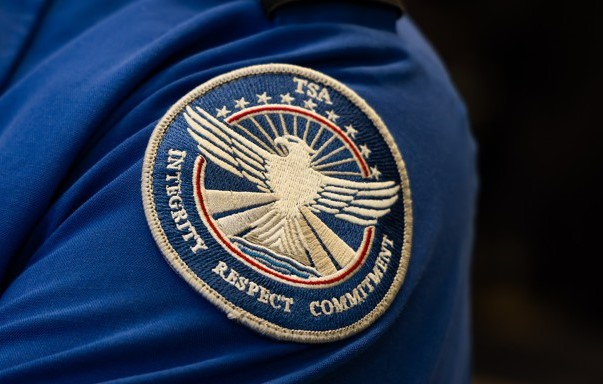
Starting February 2026, air travelers arriving at TSA checkpoints without acceptable ID, such as a REAL ID or a passport, will face a $45 fee and be required to complete additional online identity verification, the agency confirmed Monday.
As reported by Fox News, a proposed rule published in the Federal Register had called for a lower fee amount of just $18. However, Senior TSA Officials told the outlet that upon careful review, the agency determined that higher-than-anticipated technology and operating costs necessitated the higher final fee.
The TSA announced the move on Monday in a press release, reiterating that the REAL ID law was signed and took effect over 20 years ago, and is now being fully implemented and enforced at the direction of President Donald Trump and Homeland Security Secretary Kristi Noem, as of May 7, 2025.
Senior Official Performing the Duties of Deputy Administrator for TSA, Adam Stahl, explained, “Identity verification is essential to traveler safety, because it keeps terrorists, criminals, and illegal aliens out of the skies and other domestic transportation systems such as rail.”
According to the TSA, over 94 percent of U.S. passengers already use REAL IDs or another acceptable form of identification. However, passengers who do not provide an acceptable ID can expect increased wait times at Security Checkpoints. The agency listed over a dozen forms of acceptable identification in its release. A complete list of acceptable forms of ID can be found here.
Stahl noted, “The vast majority of travelers present acceptable identification like REAL IDs and passports, but we must ensure everyone who flies is who they say they are. Beginning February 1, travelers who do not present an acceptable form of ID at our security checkpoints and still want to fly can pay a $45 fee and undergo the TSA Confirm.ID process. This fee ensures the cost to cover verification of an insufficient ID will come from the traveler, not the taxpayer. The security of the traveling public is our top priority, so we urge all travelers to get a REAL ID or other acceptable form of ID as soon as possible to avoid delays and potentially miss flights.”
The TSA has called upon travelers who do not possess a REAL ID to pay the fee in advance online before arriving at an airport. However, for those who do not, information on how to pay the fee and complete the TSA Confirm.ID process will be available at locations at or near TSA Checkpoints. The agency stressed that passengers completing the process at the airport should expect delays.
Matthew Holloway is a senior reporter for AZ Free News. Follow him on X for his latest stories, or email tips to Matthew@azfreenews.com.
by Staff Reporter | Dec 5, 2025 | Education, News
By Staff Reporter |
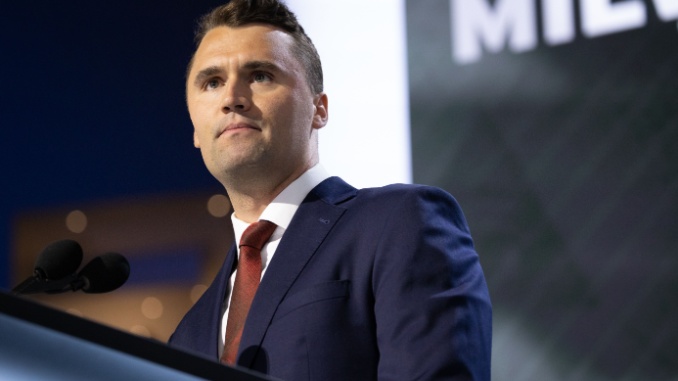
An art exhibit at Northern Arizona University (NAU) allegedly displayed a poster mocking Charlie Kirk’s assassination.
The poster depicts the Turning Point founder and former CEO in a black and white screenprint, surrounded by blood red. A Nazi symbol follows the directory of the fatal bullet that went through Kirk’s neck. Beneath, the artist included the phrase, “Cowabummer,” a slang term used to express sarcastic empathy.
The artist signed only their initials: “A.S.”
The original poster of the print, Libs of TikTok, didn’t indicate where the print was displayed on campus, or when, but that a follower had sent it.
There were several recent art exhibits at NAU.
From mid-September until Thanksgiving Day, the Clara M. Lovett Art Museum featured the exhibit “Prints. People. Power.” The exhibit featured prints from three artist collectives, only one of which remains active: Arizona Print Group.
Additionally, NAU’s Beasley Gallery is featuring Resonance: BFA Capstone Exhibition to showcase graduating BFA candidates from NAU’s School of Art + Design. The exhibition launched Nov. 21 and will last until Dec. 12.
Kirk was assassinated on Sept. 10 while speaking at Utah Valley University, nearly a month to the day before his 32nd birthday. The man charged with Kirk’s assassination, Tyler James Robinson, was politically aligned with progressives, especially on issues pertaining to LGBTQ+ culture and ideologies.
Robinson was in a homosexual relationship with another man, Lance Twiggs, who identified as a woman and was in the process of transitioning genders.
Robinson is scheduled for in-person oral arguments on Jan. 16 and 30. His legal team asked the judge to limit media coverage in the courtroom due to concerns for a right to fair trial; the judge did impose restrictions on filming and photography to prevent further public exposure to the image of Robinson wearing shackles.
Rep. Eli Crane said if the print were indeed featured in an NAU art gallery, then NAU was “another shameful example of what’s wrong with higher education in America.”
As with many other college campuses across the country, NAU students have been captured on film targeting TPUSA tables with vandalization, theft, and threats on violence.
One student vandalized a table and stole a sign. Another handed the table workers a note with a death threat depicting Kirk’s assassination.
“A good Nazi is a dead one,” said the note. “Free speech!”
As far as public reporting goes, NAU has yet to address these incidents.
As of last month, TPUSA reported receiving around 350,000 new student registrations and over 135,000 new chapter requests.
Efforts to establish chapters on campuses have been met with resistance at high schools and postsecondary institutions, in large part due to TPUSA’s Professor Watchlist. The list documents professors accused of discriminating against conservative students.
Only one NAU professor is on the TPUSA Professor Watchlist: Heather Martel, an associate professor of history and associate faculty in the women’s and gender studies program.
Martel made the watchlist after telling a student in her history class that he wasn’t allowed to read the Bible before class in 2017.
Kirk was last on NAU’s campus in October 2024 as part of his “You’re Being Brainwashed Tour.” This latest tour, which was his last, was titled “The Great American Comeback Tour.”
AZ Free News is your #1 source for Arizona news and politics. You can send us news tips using this link.
by Matthew Holloway | Dec 5, 2025 | News
By Matthew Holloway |
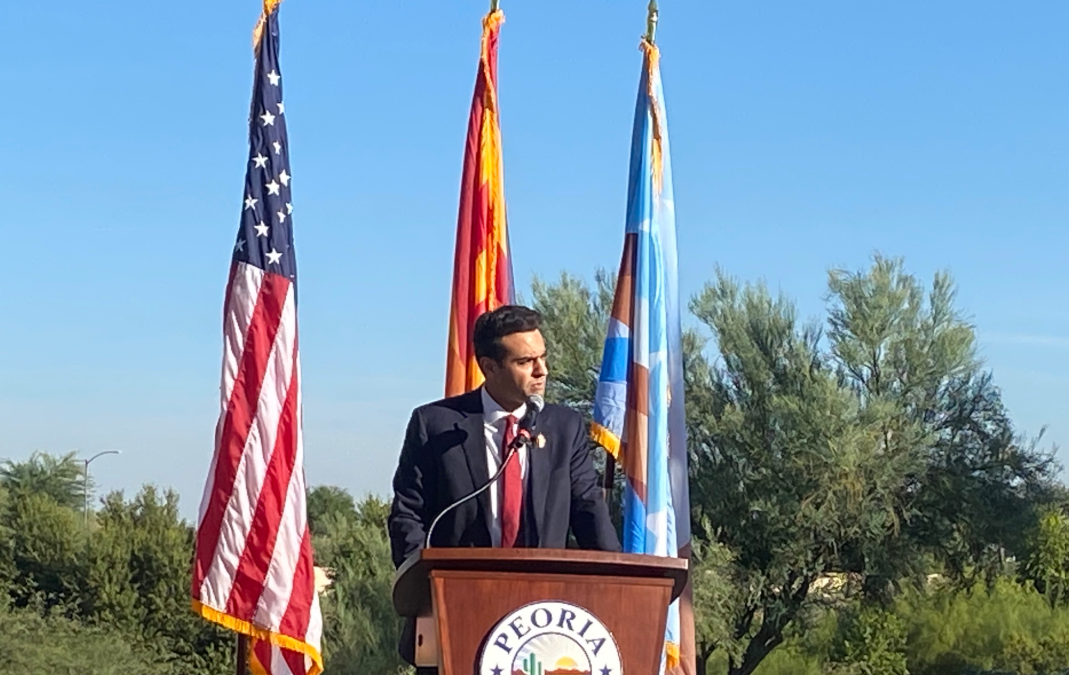
The murder and attempted murder of West Virginia National Guard Soldiers Sarah Beckstrom, 20, and Andrew Wolfe, 24, by Afghan national Rahmanullah Lakanwal, 29, in November is being investigated as a possible act of international terrorism. The attack on the soldiers seems to align with warnings the Biden administration was given in 2021 by then-prosecutor with the Maricopa County Attorney’s Office, Congressman Abe Hamadeh.
The latest reports from Washington, D.C., indicate that Beckstrom and Wolfe were shot in what law enforcement officials are calling a “targeted” attack near the Farragut West Metro station near the White House. U.S. Attorney for the District of Columbia Jeanine Pirro told a press conference that both Guard members had been sworn in to assist with the ongoing crime suppression efforts in the nation’s Capitol for less than 24 hours, according to Fox News. She described a “brazen and targeted attack,” and said the Guard members were “ambushed.”
“A lone gunman opened fire without provocation, ambush style,” Pirro told reporters. “Armed with a .357 Smith and Wesson revolver, one Guardsman is struck, goes down, and then the shooter leans over and strikes the Guardsmen again. Another Guardsman is struck several times.” Nearby Guard members rushed the assailant; one opened fire, and they quickly subdued the attacker.
Pirro told reporters, “This is what happens in this country when people are allowed in, who are not properly vetted.”
President Donald Trump informed the nation last Thursday evening that U.S. Army Specialist Sarah Beckstrom of Summersville, one of the West Virginia National Guard members ambushed in Washington, D.C., had passed away from her injuries, in post to X.
According to Reuters, the suspect first entered the U.S. in September 2021, as part of the Biden administration’s Afghan resettlement program: Operation Allies Welcome, the very program Hamadeh wrote about in a 2021 op-ed for the Arizona Republic. The suspect had worked with the CIA in Afghanistan as far back as at least 2011 and was granted asylum in April of this year. “In terms of vetting, nothing came up,” an unnamed senior U.S. official told Fox News. “He was clean on all checks.”
Hamadeh’s op-ed offered a troubling, almost prescient warning to the Biden administration after the disastrous U.S. withdrawal from Afghanistan. He cautioned that a string of incidents that year created “concern whether the Biden administration is doing enough to vet refugees arriving on American soil.” He noted, “We need to do more rigorous checks.”
The reports that Lakanwal passed “all checks” would seem to support Hamadeh and Pirro’s conclusion.
“By not properly vetting refugees, we do a disservice to the Afghans who served with us. No vetting is foolproof, and bad actors may still go undetected. However, a proper vetting process can greatly reduce the risk,” Hamadeh wrote. He added, “The State Department has identified Phoenix as a top destination for refugees. Arizonans are generous, and a vast majority of Arizonans agree that the United States should accept Afghan refugees who assisted us in the U.S.-led NATO mission.”
Hamadeh went on to describe newly implemented security vetting that included: “biometrics, biographical and social media data collection,” stating, “This process is rigorous and can take weeks and months to complete, and is similar to the process that Afghan refugees should be undergoing right now.”
He warned that the Biden administration instead insisted upon releasing the Afghan refugees “to their permanent states after only four weeks on U.S. military installations.” He commented, “Americans should be skeptical that tens of thousands of refugees here on humanitarian parole status could be thoroughly vetted in that short amount of time.”
Hamadeh concluded: “Arizona leaders should also demand answers from the federal government and require that the vetting process is shared between federal and state officials in order to ensure the safety of Arizonans.”
As of this report, West Virginia National Guard Member Wolfe remains hospitalized in serious condition. The suspect was also hospitalized due to his injuries and remains there under heavy guard.
Matthew Holloway is a senior reporter for AZ Free News. Follow him on X for his latest stories, or email tips to Matthew@azfreenews.com.
by Ethan Faverino | Dec 5, 2025 | News
By Ethan Faverino |
U.S. Representative Juan Ciscomani (R-AZ-06) has teamed up with Representative Susie Lee (D-NV-03) to introduce the bipartisan Large-Scale Water Recycling Reauthorization Act, legislation that would extend a vital federal grant program supporting large-scale water recycling projects across the Colorado River Basin and the Western United States.
The bill seeks to reauthorize the Large-Scale Water Recycling Projects Competitive Grants Program for an additional five years, building on the success of the program originally established through the Bipartisan Infrastructure Law.
“Water is the lifeblood of Arizona,” said Congressman Juan Ciscomani. “As we face worsening drought in Arizona, I am proud to co-lead this critical legislation, which will help Western communities, like Southern Arizona, bolster their conservation efforts through water recycling efforts.”
Arizona has solidified its position as a national leader in water recycling, reusing approximately 52% of its treated municipal wastewater—a rate that significantly outpaces most other states in the Colorado River Basin.
This achievement highlights the state’s proactive commitment to long-term water resilience amid persistent drought challenges. However, sustaining and expanding these efforts requires ongoing federal support.
The Large-Scale Water Recycling Reauthorization Act will strengthen Arizona’s innovative approach, reinforcing its role as a model for sustainable water management across the West.
Rep. Lee emphasized the urgency of the measure amid persistent drought conditions. “We need to save every drop of water we can to combat the ongoing, drought-driven water crisis in Nevada and throughout the West. Large-scale water recycling works. That’s exactly why we need to reauthorize the Large-Scale Water Recycling Program as soon as possible. This critical program was made possible by the Bipartisan Infrastructure Law that I helped get across the finish line. I look forward to seeing it reauthorized for another five years to continue delivering the water resources our communities need for our shared future.”
The program has proven to be essential for developing resilient water supplies that support population growth, economic expansion, and environmental protection.
“The Large-Scale Water Recycling Projects Competitive Grants Program helps communities, states, and whole regions build long-term, reliable water supplies to enable population growth, support economic expansion, and protect the environment and public health,” said Bruno Pigott, Executive Director of the WateReuse Association. “WateReuse applauds Representatives Lee and Ciscomani for their leadership in ensuring that this critical program continues into the future.”
John Entsminger, General Manager of the Southern Nevada Water Authority, highlighted the program’s impact on regional water security. “This federal funding remains critical to helping accelerate the development of recycled water systems on a scale that would not otherwise be possible,” Entsminger said. “This is a smart investment that improves water supply reliability for millions of Americans, while helping communities build resiliency and respond to drought conditions.”
Ethan Faverino is a reporter for AZ Free News. You can send him news tips using this link.
by Ethan Faverino | Dec 4, 2025 | Education, News
By Ethan Faverino |
Eight Arizona state lawmakers have joined Superintendent of Public Instruction Tom Horne in demanding immediate action to revise the Structured English Immersion (SEI) framework, warning that the current language, loaded with Diversity, Equity, and Inclusion (DEI) ideology, violates state law, undermines classroom neutrality, and jeopardizes $866 million in federal education funds.
In a November 25 letter to the State Board of Education, Representatives Michele Peña (LD-23), David Marshall (LD-7), Michael Carbone (LD-25, Majority Leader), James Taylor (LD-29), Leo Biasiucci (LD-30), Lisa Fink (LD-27), and Senators Hildy Angius (LD-30) and Tim Dunn (LD-25), threw their full support behind the Arizona Department of Education’s (ADE) proposed revision.
The legislators accused universities and institutions of exploiting “vague and permissive language” to inject “ideological, divisive, and race-based content” into mandatory SEI coursework—material that has no place in research-based English language instruction.
The lawmakers cited constituent complaints that SEI courses, intended solely for neutral English acquisition methods under A.R.S. § 15-756.01, have instead become vessels for racialized theories that divide classrooms, distract educators, and shift instructional time away from statutory requirements.
The letter also highlighted a direct threat to federal funding. President Trump’s recent Executive Order explicitly prohibits the use of federal dollars for DEI programming. The existing SEI Endorsement Course Framework is not compliant, and keeping it as-is exposes Arizona to unnecessary and avoidable risk, the legislators warned, urging the Board to authorize ADE to open the rulemaking process immediately.
Superintendent Horne echoed the urgency in a statement released December 2, praising the legislative coalition. “I am very thankful to the eight lawmakers who sent a letter calling on the Board to start the process to revise Arizona’s teaching standards and remove DEI language,” Horne said. “This is essential not just because DEI language improperly emphasizes race over individual merit, but it threatens $866 million in federal education funds under the President’s recent Executive Order.”
He added, “Removing DEI terms from state teaching standards is the right thing to do. We must rid race-based ideology from the classroom and ensure teachers spend their time teaching math, science, language, history, and the arts. The support of these legislators is especially helpful to convey the importance and urgency of this task, and I urge my fellow board members not to further delay this process.”
The lawmakers criticized the Board’s decision to table the issue at its October 27 meeting and form a study committee, calling the move a delay tactic designed to slow or obstruct needed reforms. They insisted that the question before the Board was never about voting on specific changes but simply whether to begin the public stakeholder process to restore instructional neutrality and legal compliance.
ADE has prepared to launch the month-long rulemaking process covering teacher standards at Arizona’s three public universities. The State Board of Education is scheduled to revisit the proposal at its December 8, 2025, meeting.
Ethan Faverino is a reporter for AZ Free News. You can send him news tips using this link.
by Jonathan Eberle | Dec 4, 2025 | Economy, News
By Jonathan Eberle |
Arizona State Senator Tim Dunn (LD-25) is pushing back against what he describes as misleading and poorly vetted reporting on agricultural practices in Yuma, after a recent Cronkite News article raised concerns about pesticide use and worker safety. The piece has drawn criticism from Dunn who argues it presented opinion as fact.
Dunn, who is a lifelong farmer, said the article mischaracterized common farming practices—particularly the suggestion that pesticides are applied “under the cover of darkness.” He said nighttime application is widely used because conditions are safer for both workers and the environment, with lower winds and reduced pollinator activity.
“Arizona farmers take enormous pride in the safety of their workers, their fields, and the food they produce,” Dunn said. “Seeing an article built almost entirely from an unvetted activist narrative presented as fact—and circulated statewide—is not just disappointing, it’s harmful to the families who feed this country.”
According to Dunn, the article failed to acknowledge that all pesticide products used in Arizona undergo rigorous federal review. The U.S. Environmental Protection Agency requires years of toxicology testing, environmental analysis, and worker-safety evaluations before products reach farms. Applicators must also be licensed and adhere to strict state and federal rules.
“These farmers operate under some of the toughest safety rules in the world,” Dunn said. “The article left that reality out entirely.” Dunn also challenged the story’s health claims, noting that large-scale research such as the federally funded Agricultural Health Study has not established the causal links cited by activist groups featured in the report.
“Yuma farmers feed millions of American families every winter,” he said. “The least the media can do is practice responsible journalism anchored in facts—not activist talking points dressed up as news. It’s time newsrooms, and the public institutions training future journalists, did better.”
Jonathan Eberle is a reporter for AZ Free News. You can send him news tips using this link.