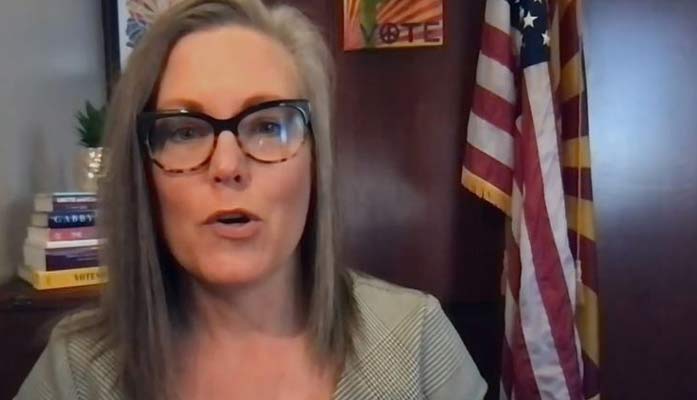
For the first time in history, it appears that Arizona PBS has cast a vote for governor — and not for the candidate they owed a platform to on Wednesday. As it stands, Democratic gubernatorial candidate Katie Hobbs got what she wanted while Republican opponent Kari Lake was left empty-handed.
Just for Hobbs, Arizona PBS ignored Arizona Clean Elections Commission’s (AZCCEC) decision and scheduled a one-on-one interview with Hobbs. The move by Arizona PBS forced a cancellation of Lake’s interview, which in itself was a consolation for voters that Lake secured with her unwavering willingness to debate. Lake had even advocated for Hobbs to have an open invitation to the debate; in this case, it seems no good deed goes unpunished.
In response to the last-minute cancellation, Lake held a press conference outside the Arizona PBS building. Lake’s remarks triggered protestors nearby, who attempted to drown out Lake by shouting.
“Unfortunately, PBS and ASU have done a backroom deal with that coward [Katie Hobbs] to give her airtime which she does not deserve,” said Lake.
Starting at 4:00 PM AZ time…
LIVE – PBS Betrays Kari Lake, Clean Elections Commission & Arizona Voters — BIG MISTAKE!https://t.co/H9PnwCAITD
Arizona PBS and its owner, Arizona State University (ASU),are taxpayer-funded. Lake asked voters to call the ASU School of Journalism, KAET-PBS, and ASU President Michael Crow to complain about the capitulation to Hobbs.
“This is not an arm of the Democratic National Committee, and unfortunately it appears that’s what it has become. Walter Cronkite would be rolling over in his grave right now at what’s happening here,” said Lake.
AZCCEC decided to postpone Lake’s interview because Arizona PBS scheduled an independent interview with Hobbs without their knowledge. AZCCEC shared in a public statement that they were surprised by Arizona PBS.
“This decision is disappointing, especially following the multiple attempts on behalf of all the partners involved in producing this year’s General Election debates, to organize a traditional gubernatorial debate between the two candidates,” stated AZCCEC.
Hobbs will be interviewed by Arizona PBS next Tuesday. Lake said that she would accept a similar invitation, but only if it was restructured to be a debate with Hobbs. Lake promised that she wouldn’t yell, wouldn’t interrupt, and would allow Hobbs to write the debate questions and bring an emotional support animal if necessary.
“If she doesn’t appear with me, they should kick her out and say she should not be on the airwaves at PBS,” said Lake. “Show up like a grown-up and debate.”
Corinne Murdock is a reporter for AZ Free News. Follow her latest on Twitter, or email tips to corinne@azfreenews.com.
Arizona Attorney General Mark Brnovich has been asked to look into whether some of the state’s top election officials violated state law this week by issuing a statement opposing Proposition 309, which is on the Nov. 8 statewide ballot.
Prop 309 is before the voters to decide whether to amend several of Arizona’s current election laws. For an example, a “yes” vote would require voters to write their birthdate and government-issued identification number on the concealed early ballot affidavit, and for those who want to vote in-person they would be required to present an official photo identification at their polling place.
The Arizona Association of County Recorders (AACR) issued a statement Tuesday advocating a “no” vote which would leave in place the state’s existing laws about early ballot affidavits and voter identification. Among the duties of a county recorder is to conduct early voting, including mailing out early ballots and verifying signatures when early ballots are returned by voters.
Maricopa County Recorder Stephen Richer is the president of AACR and is the one who distributed the anti-Prop 309 statement on Tuesday. Yet according to election law expert Timothy La Sota, it appears Richer has violated two Arizona laws in connection with the statement, which was also posted to a website controlled by Maricopa County.
“Contrary to what Mr. Richer appears to believe, the County Recorder’s website is a publicly funded website, and using it as a vehicle to promote Mr. Richer’s political agenda is not only inappropriate, it is illegal,” attorney La Sota wrote, pointing Brnovich to Arizona Revised Statute 11-410(A) and 16-192(A). “This website is not at Mr. Richer’s disposal to use as a campaign website for his favored political causes.”
That first statute states a county “shall not spend or use its resources, including the use or expenditure of monies, accounts, credit, facilities, vehicles, postage, telecommunications, computer hardware and software, web pages, personnel, equipment, materials, buildings or any other thing of value” for the purpose of swaying an election outcome.
The second statute prohibits the state and “any public agency, department, board, commission, committee, council or authority” from spending or using public resources to influence an election, including the use of “computer hardware and software, web pages and personnel and any other thing of value of the public entity.”
La Sota pointed out that data associated with the document indicates the AACR statement -which includes the names of all 15 county recorders- was created by one of Richer’s employees during office hours, another “no no,” he told the attorney general.
“As a countywide elected official charged with various election related duties, Mr. Richer should know this,” La Sota added. “And his actions in placing his thumb on the scale illegally in this context do not auger well for maintaining a professional perception in other realms.”
During an interview Thursday morning, Amy Yentes of the Arizona Free Enterprise Club discussed why Arizona law expressly prohibits the government from electioneering activities in an effort to sway a particular race or contest.
“This is a protection for taxpayers,” Yentes told KFYI’s James T. Harris. She also supports La Sota’s request to Brnovich for an investigation into how the AACR’s anti-Prop 309 statement came to be created by a Maricopa County employee and posted to the county’s website.
“What is more disturbing is that Stephen Richer is an election administrator,” Yentes told Harris. “It is quite concerning that he can’t even follow basic election law and yet we’re trusting him to administer our elections.”
But that is not the only problem stemming from Richer’s distribution of the anti-Prop 309 statement, which he said on Tuesday afternoon was approved by AACR members by “unanimous voice vote (no nays, all ays).” Richer also tweeted that “14 of the 15 counties were present” for the vote, with only Apache County absent.
According to Cochise County Recorder David Stevens, the inference voters will make from the AACR statement and Richer’s social media comments is that all 15 county recorders are against Prop 309. In fact, Richer retweeted someone else’s comment that the vote was unanimous against the proposition.
That, Stevens says, is not true. In fact, he is an adamant supporter of Prop 309 and has demanded Richer correct the AACR statement and clear any misperception.
“Stephen, I was out of the office yesterday and did not see this email. I STRONGLY OBJECT to anyone assigning an opinion to me without my expressed consent. Silence is NOT acceptance. I do support prop 309 and kindly request you remove my name from this list and issue a retraction immediately,” Stevens wrote.
As of press time, Stevens had no contact from Richer about the Prop 309 issue. He was, however, included on a mass email the Maricopa County Recorder sent to his fellow recorders Wednesday evening.
“Good luck Recorders!” the subject line reads, before Richer wished everyone “the absolute best this early voting season.”
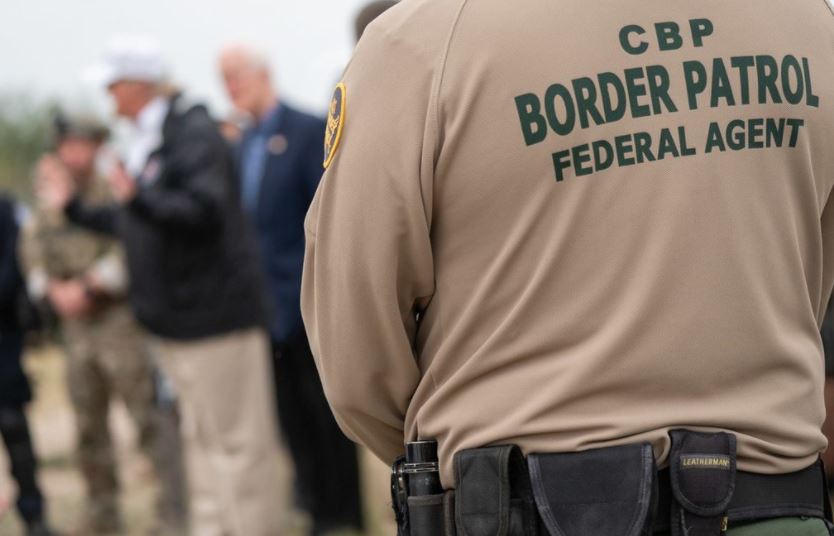
The National Border Patrol Council (NBPC) criticized Border Patrol (BP) Chief Raul Ortiz for presenting a limited set of immigration enforcement data over this past holiday weekend.
The NBPC suggested that Ortiz release the numbers of illegal immigrants who were caught and released, crossed undetected, and escaped. Ortiz only presented the total number of encounters, sex offenders and felons arrested, smuggling events intercepted, and drugs seized.
Now do the numbers of "encounters" that were merely held a few hours and released. Then do the escape numbers. You might want to also mention that huge numbers simply cross "undetected" every day as agents are tied up processing "asylum" claimants. Give the complete picture. https://t.co/qnAWrXpZvq
Ortiz issues those types of data sets regularly, and normally doesn’t include the data that NBPC suggested.
Last 48 Hours:
1,171 apprehensions 1 – Arrest for Felony Hit and Run 3 – MS-13 Gang Members Arrested 5 – Sex Offenders 175 lbs. Fentanyl 31 lbs. Meth. 100 lbs. Cocaine 3 – Life Saving Rescues $72,990 Bulk Cash Smuggling
Ortiz has been critical of the Biden administration’s border policies. In late July, Ortiz testified during a deposition of a lawsuit against the Department of Homeland Security (DHS) that illegal immigrants faced no consequences and were even confident that they would be allowed into the country even if caught.
Ortiz agreed that the current state of the border constitutes a crisis. Throughout the deposition, Ortiz ignored objections from the Biden administration’s counsel, instead choosing to answer questions posed to him by Florida Attorney General Ashley Moody.
In late August, NBPC highlighted Ortiz’s refusal to withhold the truth during his deposition. They compared the Biden administration to Barney Fife, a slang term for ineptitude and incompetence.
We've been saying it for nearly 2 years. The Barney Fife Administration is single-handedly causing the disaster on our border. They're importing millions of fraudulent "asylum" seekers. This mess will take decades to clean up, if it can ever be cleaned up.https://t.co/bzth4Pv4uB
Last month, President Joe Biden set the all-time record for illegal immigrant encounters in one presidency: over 2.1 million in one fiscal year, and over 3.6 million since he took office. Former President Trump had about 2.4 million encounters over the span of his four years. With the number of September encounters still pending as of press time, there’s a chance that Biden may match or exceed Trump’s four-year total in just one year.
If border encounters under Biden continue at the present average rate of over 183,300 a month, there will be over 8.6 million border encounters by the end of his term.
Corinne Murdock is a reporter for AZ Free News. Follow her latest on Twitter, or email tips to corinne@azfreenews.com.
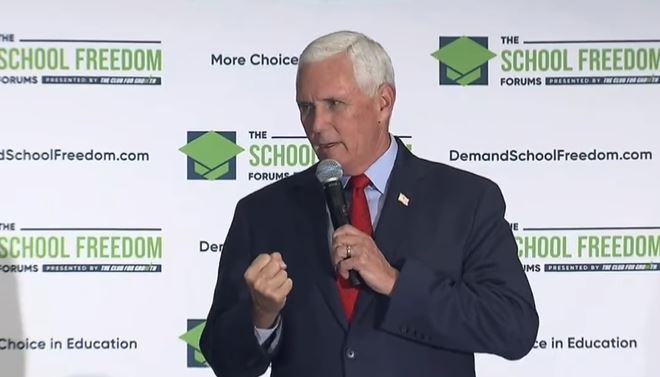
On Tuesday, former Vice President Mike Pence came to Phoenix to celebrate Arizona’s universal school choice.
Pence attended a forum hosted by the Club for Growth, a conservative nonprofit based out of Washington, D.C. The forum was the third in their “National Campaign for School Freedom” series. Pence praised Ducey for making universal school choice possible. He predicted that universal school choice would be the standard for all states.
“I don’t think you can overstate or over-commend the leadership of Governor Doug Ducey in creating universal school choice in America for the first time,” said Pence.
Looking Forward to Celebrating Governor @DougDucey and Arizona’s Historic Passage of Universal School Choice at Club for Growth’s School Freedom Forum in Phoenix Tomorrow! See You There!🇺🇸 https://t.co/PDCNNZfrg0
Ducey also spoke at the event, explaining that the experiences of parents and students throughout the pandemic accelerated the growth in support for school choice. Ducey stated that it took 8 years to achieve universal school choice. He thanked activists who pushed for school choice expansion, including the Black Mothers Forum and Love Your School founder Jenny Clark.
Ducey compared the refusal of school choice opponents’ refusal to empower families with educational freedom to the refusal of the anti-segregationists in the 1950s.
“50 years ago, politicians stood in the schoolhouse door, and wouldn’t let minorities in. Today, union-backed politicians stand in the schoolhouse door and won’t let minorities out,” said Ducey. “These children are trapped in failing schools.”
That explanation by Ducey was backed by data presented by Chris Wilson, CEO of an Oklahoma-based market research agency called WPA Intelligence. Wilson explained that a poll of over 4,000 voters from last July to last August determined that COVID-19 shutdowns changed attitudes on public schools and teachers’ unions.
"50 years ago, politicians stood in the schoolhouse door and wouldn’t let minorities in. Today, union-backed politicians stand in the schoolhouse door and won’t let minorities out." @DougDucey today during a @club4growth forum on the educational freedom of #SchoolChoice .
Wilson explained further that voters had a negative perspective of the phrase “school choice” on its own, but adopted a positive view once a definition of the phrase was provided. He explained that those activists and unions opposed to school choice successfully branded the word “choice” as a negative. Wilson suggested that politicians adjust their presentation and terminology concerning school choice, though cautioned that there was no single “silver bullet” for phrasing.
Wilson pointed out that terms like “school freedom,” “school choice scholarships,” and “education freedom” had positive feedback, whereas “parental choice” and “school choice” had negative feedback.
Wilson added that advancing school choice requires identifying the right opponents and avoiding rhetoric around the wrong ones.
Republican Senate candidate Blake Masters also came to the event. Masters discussed how he and his wife chose homeschooling for their children. Masters derided modern education for prioritizing equity-based curricula like the 1619 Project and Critical Race Theory (CRT).
“That feeling of being in charge of your child’s education, that is a feeling that I wish for every parent in this state and every parent in this country,” stated Masters. “When parents are left free to choose — surprise, surprise — parents will choose reading, and writing, and arithmetic, and history. Guess what they won’t choose? Critical race theory, are you kidding me?”
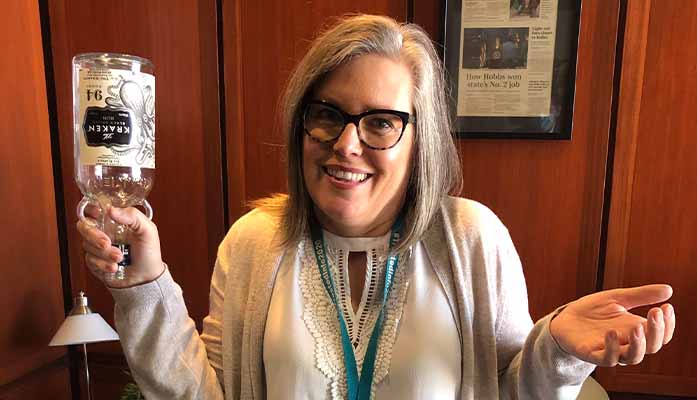
Race and class-based power structures appear to be a lifelong theme for Democratic gubernatorial candidate Katie Hobbs.
On Monday, the Daily Mail published an exclusive investigative report revealing that Hobbs helped organize a “Slave Day” at Seton Catholic Preparatory High School. The annual tradition was part of a spirit week characterized by slave-themed hazing between classes, including an auction where senior students were “sold.”
🚨@KatieHobbs organized a yearly high school tradition called “slave day.”
“The tradition entails freshman students performing tasks for senior class ‘masters’ that included performing ‘embarrassing acts of servitude.’”https://t.co/rKSYkbqLw2
The report comes just a month before the anniversary of the second court ruling determining that Hobbs committed racial and sexual discrimination against a former Senate employee, Talonya Adams, while the Senate minority leader. Next Monday will mark the third anniversary of the first ruling against Hobbs.
— Talonya Adams 🇺🇸 (personal acct) (@TalonyaAdams) August 20, 2022
Hobbs avoided issuing an apology to Adams. Rather, Hobbs gave the Arizona Mirror an exclusive interview to defend her firing of Adams. Hobbs claimed that, regardless of what the courts decided in both lawsuits, she fired Adams based on performance issues. Hobbs further stated that Adams was paid less because she was a Democrat.
Following the community outrage in response to that article and other public statements defending her firing of Adams, Hobbs changed her tune. Hobbs blamed “systemic racism” for her errors, saying that the inequities faced by Adams were invisible to her.
“My response to the jury verdict was short-sighted, unnecessarily defensive, and failed to meet the moment,” said Hobbs.
As part of her apology, Hobbs pledged to recruit, campaign, and hire women of color to leadership positions; create a Chief Equity Officer to enforce government diversity, such as through the Office of Equal Opportunity to improve human resource protocols; and create a position within each agency dedicated to people of color and marginalized communities.
I know that my initial response to the jury verdict fell short of taking real accountability for the pain I’ve caused — to Ms. Adams and many Arizonans. Arizonans deserve a leader who owns up to her mistakes. pic.twitter.com/7MaUkq3YNA
Hobbs ignored the report of her involvement in Slave Day activities; she never responded to Daily Mail inquiries about it. Hobbs didn’t respond to other outlets’ inquiries, either.
Instead, Hobbs focused her Monday messaging on her proposed policies, celebrating Indigenous Peoples Day in lieu of Christopher Columbus Day, the alleged Republicans who will cast their vote for her, celebrating World Mental Health Day, and reminding Arizonans that Tuesday is the last day to register to vote.
As a social worker who’s served some of Arizona’s most vulnerable communities, I understand the strength and perseverance it can take just to get from day to day. This #WorldMentalHealthDay, remember to take care of yourself and those around you ♥️
Republican opponent Kari Lake said she wasn’t surprised by Hobbs’ “Slave Day” activities, calling her opponent a “twice-convicted racist.” Lake said that Hobbs cost taxpayers $2.75 million, the amount awarded to Adams through the second verdict, but Adams only received around $300,000 according to a maximum set by federal law. The state paid Adams last September.
Twice-convicted racist @katiehobbs cost AZ taxpayers $2.75 million due to her racism—so it doesn’t surprise me that she organized “Slave Day” in high school.
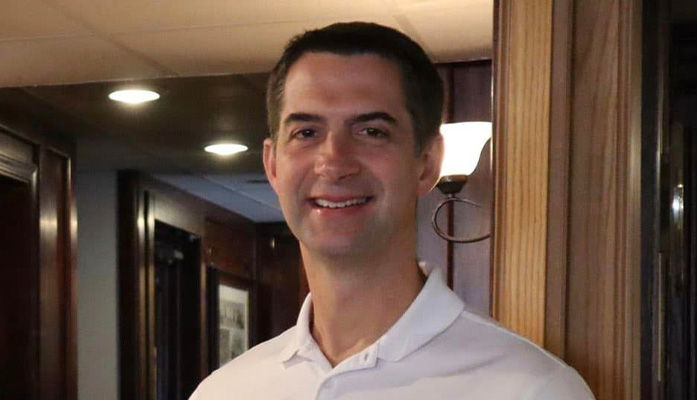
Senator Tom Cotton (R-AR) endorsed Republican incumbent Rachel Mitchell for Maricopa County Attorney, decrying her Democratic opponent Julie Gunnigle as a “Soros prosecutor.”
This is an important election.
Rachel Mitchell is running against a Soros prosecutor who wants to release violent criminals and defund the police.
The Monday endorsement came just two days before early voting begins and mail-in ballots are sent out.
The Maricopa County attorney race has attracted national attention, in part over the connection between Gunnigle and George Soros, the kingpin of Democratic dark money. Soros has a reputation for establishing progressive prosecutors into districts and counties across the country successfully.
Some of Gunnigle’s latest PAC donations included over $6,500 from Way to Lead Arizona. That PAC received at least $100,000 from Soros’ Democracy PAC last year, and more in funds from its national counterpart, the Way to Lead PAC, which received millions combined from Soros, his family, or the organizations he either funded or founded.
Gunnigle denies that she benefits from Soros funding.
One of the kingpins of Democratic dark money, George Soros, lingers still behind the scenes of Arizona’s elections. And one of his main objectives is to grow his network of progressive prosecutors… https://t.co/H2jmMNPgtg
Multiple times a week, an elected official or pundit will weigh in or offer an endorsement in the race.
A week ago, Gila Bend Mayor Chris Riggs expressed worry that Gunnigle would worsen crime rates in the county. He cited Gunnigle’s support for slashing police funding and not enforcing deportations.
National attention has also been drawn to this race since questions remain over the nature of Arizona’s abortion law. Last month, Mitchell clarified that she would uphold the law but wouldn’t prosecute women who obtain an abortion. Neither the total abortion ban or the 15-week restriction allow for the arrest of the mother — only those who perform the abortion. The total abortion ban makes one allowance: to save the mother’s life.
Gunnigle has stated that she doesn’t support restrictions on abortion. In March, long before the Supreme Court (SCOTUS) decision overturning Roe v. Wade, Gunnigle pledged to disregard Arizona abortion law.
Last month, the Pima County Superior Court lifted the 1973 injunction on Arizona’s total abortion ban corresponding with the Roe v. Wade decision. That court also rejected an injunction request from Planned Parenthood. However, the Arizona Court of Appeals issued an injunction on the total ban on Friday.
Judge Peter Eckerstrom cited the apparent disharmony between the total ban and the 15-week restriction. He noted that both sides, those for the abortion laws and against them, expressed a desire for clarity on the ruling law.
“Arizona courts have a responsibility to attempt to harmonize all of this state’s relevant statutes,” stated Eckerstrom. “The court further concludes the balance of hardships weigh strongly in favor of granting the stay, given the acute need of healthcare providers, prosecuting agencies, and the public for legal clarity as to the application of our criminal laws.”
Eckerstrom will engage in a scheduling conference with Planned Parenthood of Arizona and the attorney general’s office on Tuesday to advance the case.
Corinne Murdock is a reporter for AZ Free News. Follow her latest on Twitter, or email tips to corinne@azfreenews.com.