A Northern Arizona University (NAU) study declared that America needs to cooperate with China more for climate change.
The lead author of the study, Hubert Cheung, advocated for greater cooperation with the communist country. In addition to being adjunct faculty in NAU’s School of Earth and Sustainability, Cheung is part of the University of Tokyo in Japan as well as the University of Queensland in Australia. Cheung grew up in Hong Kong, China.
“We need to cooperate with China if we are to find effective solutions to climate change, for illegal wildlife trade, for sustainability transitions,” stated Cheung. “Understanding the Chinese leadership’s core strategic interests—and where political will already exists in Beijing to deliver on these strategic interests—will help conservation scientists and practitioners find opportunities and manage challenges.”
The paper’s abstract advocated for increasing China’s political power in order to advance sustainability and conservation. The paper went on to issue a defense of the Chinese government’s core interests, such as maintaining its current level of authority over its citizens and expanding its power onto the global stage.
“‘[A]n environmentally healthy and secure China can benefit the world, and this will only become more apparent over the course of the 21st century,’” stated the paper. “The scale and reach of China’s environmental footprint — and global geopolitical influence — is such that an exploration of its leadership’s political agenda and political will is valuable and timely for conservation.”
The other NAU researcher involved in the study, Duan Biggs, is also part of the same school as Cheung. Biggs indicated that sustainability efforts were the way to brokering a unified front between governments.
“The environment and conservation represent an opportunity for soft-diplomacy and for countries and societies to maintain dialogue and collaboration despite growing tension,” stated Biggs.
The only researcher hailing from a Chinese university was Tien Ming Lee. He’s a professor at the State Key Laboratory of Biological Control and Schools of Life Sciences and Ecology at Sun Yat-sen University in Guangzhou, China.
The other researchers hailed from Japan, Australia, Canada, the United Kingdom, and South Africa.
The World Economic Forum (WEF), the leading organization attempting to create a new world order of global governance, identifies China as a leader in combating climate change on an international level. The WEF Global Future Council is also attempting to increase trust in China as a world leader.
Last year, China’s President Xi Jinping opened up the WEF’s annual meeting in Switzerland by calling on stronger international cooperation in overcoming COVID-19, revitalizing the economy, and addressing climate change. Jinping encouraged more open relations between all nations, not less.
“We should remove barriers, not erect walls. We should open up, not close off. We should seek integration, not de-couple,” said Jinping.
The WEF invented the social credit score system — similar to the one used by the Chinese government currently. China keeps a database on its citizens to ensure compliance with government interests.
CHINA – Staff no longer required this register recognises your face & the food and then deducts the price from your bank account.
But only if your social credit score is acceptable, dissidents wouldn’t be served.
A Scottsdale superintendent said that the white race is problematic, and that meritocracy is a lie.
These comments, and more, came from Scottsdale Unified School District (SUSD) Superintendent Scott Menzel in a 2019 interview given while he was a superintendent in Michigan. His remarks remain in line with his current beliefs, based on local reporting on his performance in the district over the last two years.
“There’s a misperception that educational equity is really only for ethnically and racially diverse districts. But White people have racial identity as well, and in fact problematic racial identity that we typically avoid,” said Menzel.
Menzel advocated for dismantling the current educational system and replacing it with a system based on racial equity and calling out privilege.
“[White people] should feel really, really uncomfortable, because we perpetuate a system by ignoring the realities in front of us, and living in a mythological reality,” said Menzel. “In this country it’s about meritocracy. ‘Pull up yourself by your bootstraps, everybody has the same opportunity.’ And it’s a lie.”
Menzel said that the chaos of riots and public conflicts, such as the Charlottesville incident, affords “liberal progressive” actors such as himself “the opportunity to dismantle, disrupt, and recreate” society into a more socially just and equitable design. He noted that school funding shouldn’t be equal; rather, it should be equitable based on kids’ needs.
“[White supremacy is] in the very fabric of the way this country was established, and we’ve never righted the wrongs of the genocide of the indigenous population, and the enslavement of a population from Africa on which the wealth of this country was built,” said Menzel.
Arizona legislators decried the superintendent’s remarks as racist.
State Rep. Joseph Chaplik (R-LD03) said that Menzel should issue an apology and be terminated from his position immediately.
“The racist words and sentiments expressed by Scott Menzel have no place in education in Scottsdale or anywhere else,” said Chaplik.
The racist words and sentiments expressed by Scott Menzel have no place in education in Scottsdale or anywhere else.
I condemn his words, he owes parents and students an apology.
I also call on the SUSD governing board to immediately terminate him.https://t.co/7gA4Dp47Dn
Menzel became the SUSD superintendent in July 2020 amid the George Floyd riots. He was formerly a superintendent for various districts throughout Michigan: Washtenaw Intermediate School District, Livingston Educational Service Agency, and Whitmore Lake Public Schools. While at Washtenaw, Menzel was named Superintendent of the Year.
Just prior to becoming a superintendent, Menzel was the director of career development for a district in a county well known in conservative politics: Hillsdale County, home to Hillsdale College.
Menzel has long advocated for prioritizing equity and other social justice approaches to reforming education. While in Michigan, Menzel advanced efforts to institute social-emotional learning, race theories, and equity.
Menzel said in a 2015 equity panel that schools should have a “cradle to career education continuum,” resonant of the controversial “cradle-to-grave” approach former President Barack Obama proposed during his re-election campaign in 2012.
Before migrating to Arizona, Menzel was awarded with honors and positions of power defining educational standards.
In 2013, the White House honored Menzel as a YMCA Champion of Change, one of 12 nationwide to receive the honor. The following year, the Michigan Department of Education added Menzel to their Great Start Advisory Council, which defined policy issues on early childhood education.
SUSD has been mired in controversy since Menzel assumed leadership. Last year, the district posted the names of individuals online who submitted records requests, but redacted staff members’ names in response to those requests.
This policy concerning records requests occurred after media attention on SUSD’s past records requests. Last summer, SUSD provided a parent with blank patient intake forms for a Phoenix hormone and gender transition facility in response to a request concerning a high school librarian and the Gender & Sexualities Alliance (GSA) Club.
Menzel defended a staff member for discussing gender ideology with kindergarten and elementary students. Menzel accused upset parents of Civil Rights violations for speaking against the staff member’s actions. He also previously defended staff members who encouraged childhood exploration of gender and sexual identities through GSA clubs.
Corinne Murdock is a reporter for AZ Free News. Follow her latest on Twitter, or email tips to corinne@azfreenews.com.
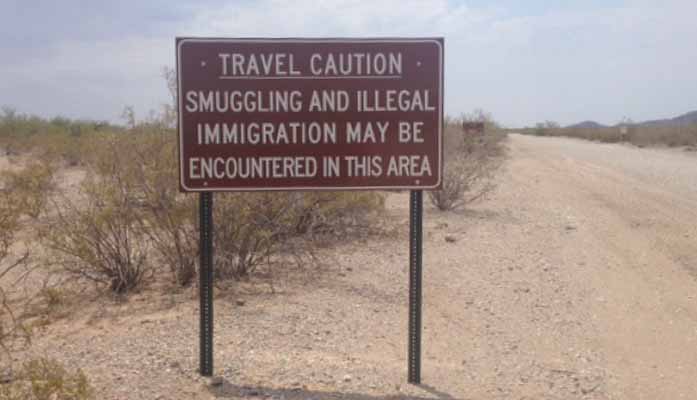
Terrorists appear to be making the most of the ongoing border crisis, according to the latest illegal immigrant encounter data from Customs and Border Patrol (CBP).
Terror watchlist arrests have increased over sixfold since President Joe Biden took office. CBP apprehensions increased from 15 in the 2021 fiscal year to 98 in the 2022 fiscal year. Since October, there have been 38 arrests of illegal immigrants on the terror watchlist. From 2017 to 2021, four years, CBP only arrested 26 from the terror watchlist.
CBP released operational statistics for December 2022, which can be viewed on our website.
CBP told Fox News that they estimate approximately 1.2 million “gotaways,” in addition to the over 4.6 million illegal immigrants that have been apprehended at the southern border.
Terror watchlist arrests at the southern border are surging under President Biden.
December’s total apprehensions nearly doubled last year’s record for that month; it also marked the highest single month of apprehensions on record.
Nearly 70 percent of the 2022 fiscal year illegal immigrants were single adults (nearly 64 percent in the 2021 fiscal year). Family units accounted for 23 percent of the 2022 fiscal year southwest border encounters.
At this rate, there may be over 9.2 million illegal immigrants by the end of Biden’s first term.
The illegal immigrants aren’t the only increase in border activity since Biden took office. Drug trafficking has also reached historic highs.
Between November 1 and December 31, 2022, @CBPAMO worked with federal and international partners to seize nearly 37,887lbs of cocaine & 1,518lbs of marijuana in international waters, denying criminal organizations an estimated $77.3M in proceeds.
The drug traffickers have gotten creative with their outsized shipments, disguising their cargo as commercial goods like rocks and cotton candy.
San Diego CBP officers working on January 11 seized $4M worth of cocaine concealed within a shipment manifested as decorative stone. The packages of cocaine were hidden within a plaster-like material designed to appear like stones.
Harder drugs are taking precedence over others, as reflected by CBP drug seizure statistics. This includes fentanyl, meth, and cocaine. Marijuana dropped off in seizures around 2021.
On Saturday, Laredo CBP officers examined a tractor-trailer manifesting a commercial shipment of cotton candy and discovered 3,373lbs of marijuana concealed inside with an estimated street value of $7.5M.
Vice President Kamala Harris visited Arizona last Thursday. Although Biden designated Harris as the “Border Czar,” Harris did not visit the border while in Arizona. Rather, the vice president came to the state to discuss “clean” energy.
This Arizona sheriff says it was "insulting" for "border czar" Kamala Harris to visit the state without stopping at the border:
"We can't get our vice president to even acknowledge [the border crisis] while she's in our state….it's insulting." pic.twitter.com/3lLDLB8Lgd
When asked why she and Biden weren’t taking more steps to secure the border, Harris said that Congress needed to act. Harris also indicated that it wasn’t important for her to visit the border during last Thursday’s trip, since she went in June 2021.
“The reality is, the people in Washington, D.C., the people who walk around the halls of Congress need to do something,” said Harris.
"Border czar" Kamala Harris concedes the only thing Americans can expect from the Biden admin on securing the border is blaming Congress. pic.twitter.com/D50ATzjSOT
The city of Phoenix plans to establish single-stall, 24/7 street restrooms for the homeless. The first will appear midway this year as part of a pilot launch at a new homeless shelter established in Bradley Ranch in South Phoenix.
Each restroom costs about $135,000 to $150,000 to start, with installation costs ranging up to $50,000. Another potential future site would be at University Park.
The city announced its initiative several weeks before the Maricopa County Superior Court rejected the city’s petition to dismiss a lawsuit claiming that they’d failed to manage the homeless crisis.
These toilets won’t look like porta-potties; rather, these restrooms will each be contained in a steel, oval building called a “Portland Loo.” These restrooms were contrived by a city of their namesake: Portland, Oregon. The hope was to prevent the homeless from relieving themselves on public streets.
These restrooms are partially open-air: they have grating at the top and bottom to discourage illegal activity, and the steel type is graffiti-proof. They also have blue lighting to prevent occupants from locating a vein to shoot up drugs.
However, the intent of the Portland Loo doesn’t appear to match up with its reality. In its hometown, residents view Portland Loos with contempt for their unsanitary quality. Non-promotional pictures taken by journalists and city dwellers reveal that these restrooms aren’t as graffiti-proof or resistant to drug use as marketed.
Early champions of the Portland Loo outside of Oregon have also run into unforeseen problems. San Diego, California had to remove one of these restrooms in 2016 due to resident complaints. Though the Portland Loos were easier to clean and usually thwarted illicit activity inside its walls, their presence attracted a whole host of undesirables for San Diego locals: criminals, drug users, and general transients.
Deputy City Managers Gina Montes and Inger Erickson, along with the Office of Homeless Solutions (OHS) and Parks and Recreation Department (PRD), submitted the proposed pilot program. They noted that a brick-and-mortar, two-stall public restroom would cost more: around $400,000 to $500,000.
OHS explained during a Community and Cultural Investment Subcommittee meeting earlier this month that it would weigh the pilot restroom’s success against cost of installation, cleaning and maintenance, temperature control in the summers, and utility hookups to determine if future Portland Loos will be installed throughout the city.
Vice Mayor Yassamin Ansari urged OHS to install another Portland Loo immediately at University Park. Ansari said that constituents notify her constantly of sanitary issues, such as drug use and backups, as well as availability issues at current public restrooms.
“I think we need to be innovative with these issues. That’s why the typical stuff isn’t working,” said Ansari. “I think as opposed to losing another year during the summer heat, let’s pilot one in a park where we do constantly have people reaching out about, ‘Why do we have limited bathroom access from 4 to 8, inside a recreation center? It’s very challenging actually to use the bathroom currently at University Park.”
Since day 1 in office, I’ve been pushing to bring more public restrooms and access to cold water across our city.
I believe it is a basic amenity that the 5th largest American city should provide.
Our research shows that the Portland Loo is a clean, safe & smart solution. https://t.co/zBlmzOra2Y
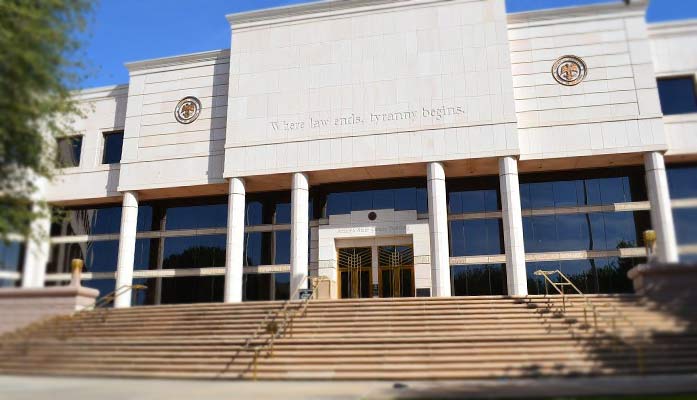
The Arizona Supreme Court issued a unanimous opinion Tuesday finding that the Town of Marana violated state law by assigning the entire cost of upgraded and expanded wastewater treatment facilities to future homeowners through development impact fees.
The fees were challenged by the Southern Arizona Home Builders Association (SAHBA) under Arizona Revised Statute 9-463.05 due to the fact that existing Marana residents also benefited from the improved facilities.
The opinion authored by Justice Clint Bolick reverses a Pima County Superior Court decision and sets aside an Arizona Court of Appeals decision, both of which sided with Marana.
According to Bolick’s opinion, town officials violated state law by requiring new residents to bear the entire cost of the expanded and improved services and facilities. Instead, the statute required a proper allocation of costs be conducted through a “discrete, evidence-based findings of fact” that took into consideration the benefit to existing residents.
The case now goes back to a Pima County judge for further proceedings, at which SAHBA will be free to argue that certain expenses should not be included in development fees at all, while Marana officials may argue that certain expenses pertain exclusively to new development.
This could lead to no change to the development fees or an order for recalculation of those fees.
Court records show that until 2012, Pima County provided sewer and water service to residents of the Town of Marana. That year, after five years of effort, the town obtained operational control over a wastewater reclamation facility (WRF) from Pima County, assuming the facility’s roughly $16.4 million in outstanding debt.
In 2013, Marana acquired legal title to the WRF, including the infrastructure, land, and exclusive rights to the facility’s effluent. Owning the effluent contributes to the 100-year assured water supply required for new development, as it can be used to recharge the aquifer.
Town officials then voted to issue 20-year bonds with an annual debt service of $1.8 million to finance the acquisition of the WRF. The Town also commissioned two infrastructure improvement plans, which assigned half of the acquisition costs to future water customers and the other half to future sewer customers.
Those costs would be paid in the form of development impact fees.
The WRF’s output was initially limited to 380,000 gallons per day (gpd) but the capacity was up to 500,000 gpd by 2017 when town officials approved a Capital Improvement Project encompassing “multi-phase expansion and upgrades” to the water and sewer systems.
Phase 1, which was the subject of SAHBA’s litigation, was undertaken to increase the WRF’s capacity to 1.5 million gpd to serve both existing residents and anticipated development. It also brought Marana into compliance with the Class B+ water quality standard required by its Aquifer Protection Permit.
New water and sewer impact fees were also adopted by Town officials in 2017, still assigning 100 percent of the debt service to future water and sewer customers via development impact fees.
As previously reported by AZ Free News, SAHBA initiated its lawsuit in 2018 seeking a declaratory judgment that the development fees violated ARS 9-463.05 by disproportionately imposing the WRF and Phase 1 expenses on future developers even though current residents were also benefitting from the improvements.
In response, the Town’s attorneys argued the development fees were valid because the expansion and improvements were undertaken to serve future development. A Pima County judge agreed and granted summary judgment in favor of the Town.
According to the judge, “the Town’s chief goal in acquiring the WRF was to obtain its effluent as a water resource in order to secure recharge credits towards water rights as a means for sustaining growth by having access to a 100-year designated water supply.”
The Arizona Court of Appeals affirmed the lower court decision, ruling it was irrelevant that any upgrades and modernization to the WRF would also benefit existing residents.
The Town’s attorneys then went on to oppose having the Arizona Supreme Court consider the case, calling such review “unwarranted.” But the justices announced in April 2022 it would hear the matter, noting the case presented unresolved issues of statewide importance.
Tuesday’s opinion notes the court of appeals “committed two principal errors” in upholding the lower court’s decision in favor of Marana. First was applying a presumption that the Town’s assessment of development fees was valid. Second, the appellate court took the position that the WRF project was “entirely” for purposes of new development, even though Marana officials conceded some costs would benefit existing residents.
“In sum, we conclude that the Town violated § 9-463.05 by making future development bear 100% of the cost of acquiring the WRF; by making future development bear nearly all the cost of upgrading, modernizing, and improving the facility; and by failing to determine what could or could not be included in development fees or to make any proportionate allocation of costs between existing and future development,” the opinion states.
Terri Jo Neff is a reporter for AZ Free News. Follow her latest on Twitter, or send her news tips here.
Former Arizona Senate President Karen Fann said Rep. Ruben Gallego’s (D-AZ-03) support for abortion was a crime.
Gallego lamented that Arizona could limit abortions on Monday, which marked 50 years since the Roe v. Wade Supreme Court (SCOTUS) decision legalizing abortion.
“Today, we should have been celebrating the 50th anniversary of Roe v. Wade. Instead, extremist officials ripped away the right to choose, leaving women in Arizona and too many other states without basic reproductive freedom,” wrote Gallego. “But make no mistake: this fight isn’t over.”
SCOTUS determined that the Roe v. Wade decision invented a constitutional right based on the “right to privacy”: a legal theory created by the late SCOTUS Justice Louis Brandeis in the 1890s. Brandeis’ invention informed the landmark decision Griswold v. Connecticut, the precursor to Roe v. Wade.
The state currently has a ban on abortions after 15 weeks’ gestation in place, enacted last year. The Arizona Court of Appeals ruled last month that the state may not prosecute doctors under the pre-statehood ban on abortion. However, the court didn’t repeal the law. Instead, the appeals court clarified that the later laws, including the 15-week ban enacted last year, were the standard to follow.
State abortion laws also limit abortion access in other ways. Telemedicine health care may not be used to obtain abortion pills. However, the state doesn’t have bans on funding travel and procedure costs for women obtaining abortions outside the state past the 15-week period.
The SCOTUS decision overturning Roe v. Wade was leaked early last May. SCOTUS announced last week in a 20-page report that they were unable to identify the source of the leak. Politico published the draft opinion; it appears they’re unwilling to reveal their source.
Gov. Katie Hobbs, at the time the Secretary of State, responded to the draft leak last year with an expletive railing against those she perceived to be ruling the state.
“F**k the patriarchy,” tweeted Hobbs.
The draft leak incited mass protests and riots at the Arizona Capitol and nationwide. An activist group with the University of Arizona (UArizona) and Planned Parenthood ties petitioned to make abortion a constitutional right in the state — an effort which ultimately failed.
In a Sunday statement, President Joe Biden called on Congress to codify the legalization of abortion. Biden characterized abortion as a “constitutional right.” The president also promised a Presidential Memorandum ensuring a right to abortive medications, which Vice President Kamala Harris announced during a visit to Florida. Ahead of the announcement, Harris declared that those opposed to abortion were “extremist,” and in violation of women’s constitutional and reproductive rights.
“We are looking at a situation where extremist so-called leaders in states around our country are depriving women of the right to have access to reproductive health care,” stated Harris.
On the commemoration of the 50th anniversary of Roe v. Wade, I’m in Tallahassee, Florida to discuss the fight for reproductive rights. Tune in. https://t.co/1cX4gFt96L