Phoenix residents are petitioning the Phoenix City Council to improve security on the city’s light rail, claiming the transportation remains far too dangerous.
The state of the light rail was once again the focus of the council in a Public Safety and Justice Subcommittee meeting last month.
Dangers of the light rail contributed to the defeat of the city’s plan to landlock the State Capitol.
Jessica Mefford-Miller, Valley Metro CEO, reviewed their light rail security. Mefford-Miller reported that their private security does face limitations: only 75 percent of their scheduled shifts were filled, or 80-85 security officers out of the 110 needed; they only have 87 percent fare compliance; and they can’t issue citations to those riders who refuse to provide ID unless police are present. Each shift only has nine law enforcement members: one sergeant, four officers, and four police assistants.
Mefford-Miller noted that they would be expanding their police presence on stations and trains in the future. However, challenges to Mefford-Miller’s presentation revealed that the actual presence of security was lower.
Councilman Jim Waring questioned how many security personnel a rider could expect to encounter on the light rail. Mefford-Miller said only “about a third” of trains have personnel on them at any given time.
Waring further disclosed that multiple constituents had complained of seeing “vomit everywhere” and “people [that] were acting crazy.”
“I got tired of hearing too many constituents call and say, ‘Wow, I rode that one time. Never doing that again.’ It’s too expensive and too ungodly inefficient to justify anything we’ve spent, but now that it exists, you know, at least we shouldn’t be chasing away our customers,” said Waring.
Waring said he was “curious” with Mefford-Miller’s reference to homeless riders that were, “presumably, not paying.” He said her messaging was “unsound.”
“Those aren’t actually customers. They’re chasing away people who might actually be customers,” said Waring. “You’re not a customer if you didn’t pay. Then you’re stealing services from the people who did pay, and I guess asking the rest of us to subsidize it. And, if you’re harassing people who did pay, and making them never use it again, leaving more cost to be picked up by taxpayers who never use it.”
Mefford-Miller rejected Waring’s claim that riders were at significant risk of witnessing an incident or sustaining a personal attack. She said that “most” of the assaults on passengers in the Phoenix area were between two individuals known to each other, not strangers.
However, Waring rebutted that even the fact that so many fights were breaking out at all was cause for concern.
“To say, ‘Well, they’re attacking each other, so you’ll be perfectly fine.’ Well, okay, I’m not sure I’m going to be using that mode of transportation again,” said Waring. “The idea that this is great for everybody, this is not the feedback I’m getting.”
Valley Metro sustained over 575,100 incidents from January to July of this year across Phoenix, Mesa, and Tempe. Those incidents consisted of nearly 24,600 removals, nearly 300 trespasses, over 100 assaults on passengers, over 30 assaults on security, and over 400 citations issued.
During that same time period, police reported over 3,500 criminal investigative reports, and over 1,100 transit unit arrests for drugs, criminal damage, and assaults.
Waring further shared that his and other councilmembers’ constituents have endured waves of criminals obtaining transport to their areas, where before the light rail they couldn’t.
Councilman Kevin Robinson responded that the 12 Arizona State University (ASU) students in his class reported enjoying the light rail and felt safe. Robinson said he would try riding the light rail himself to gain his own perspective on it.
Public comment was overwhelmingly negative.
Jeff Spellman with the Violence Impact Project Coalition said that light rail security has been a “disaster” for years, despite consistent constituent complaints.
Shannon McBride with North Mountain Village Planning Committee said that all but one from over 300 respondents to a survey of those living near the light rail described the light rail as very unsafe.
Darlene Vallo, with the 19th Avenue Community Safety Plan and Phoenix Block Watch Advisory Board, reported observing drug deals, individuals high on drugs, individuals drinking alcohol, fights taking place on the light rail, and individuals taking baths in the public water fountain daily along her neighborhood patrols near the light rail.
Despite Mefford-Miller claiming that Valley Metro upholds a “See Something, Say Something” program, Vallo reported that Valley Metro employees have dismissed her reports of criminal activity on light rail property.
Councilwoman Betty Guardado expressed concerns with how much it would cost to add more police to Valley Metro. Guardado also expressed concerns with the impact that fully staffing the transit with law enforcement would have on the current police shortage. The councilwoman indicated that Valley Metro should make do with their current resources.
“Is it worth it at the end of the day?” asked Guardado. “Is it going to be cost efficient?”
Corinne Murdock is a reporter for AZ Free News. Follow her latest on Twitter, or email tips to corinne@azfreenews.com.
In the ongoing standoff over 13 agency appointments, Gov. Katie Hobbs took issue with the Senate’s vetting process; yet, she was forced in recent months to withdraw one of her nominees over his alliance with antisemitic extremism.
Former Democratic State Sen. Martín Quezada failed to be confirmed as the Arizona Registrar of Contractors (AROC) director following discovery of his support for the Boycott, Divestment, Sanctions (BDS) Movement.
Quezada purged his X timeline of several anti-Israel posts. In a deleted May 2021 post, Quezada urged his followers to listen to a speech by Rep. Rashida Tlaib (D-MI-12) and to “free Palestine.” In her speech, Tlaib called for the U.S. to cease funding to Israel over the alleged apartheid of Palestinians. Traditionally, apartheid concerns state-sanctioned racial segregation and discrimination such as the denial of voting rights.
‘How many Palestinians have to die for their lives to matter?’ — Rep. Tlaib called out U.S. involvement in Israeli violence during this powerful floor speech pic.twitter.com/mOYdd0VW8F
Tlaib’s remarks came about a month after the Human Rights Watch (HRW) declared that Israeli policy in the West Bank amounted to apartheid, one of the first international organizations to do so. Tlaib, HRW, and other pro-Palestinian entities and actors have accused the Israeli government of apartheid for denying certain rights and privileges enjoyed by its citizens to Palestinians, as well as their engaging in a military conflict to maintain control over the disputed territory.
Two days after Quezada reposted Tlaib’s remarks, he appeared as a guest speaker for a Council on American-Islamic Relations of Arizona (CAIR-AZ) protest against the alleged Palestinian apartheid. CAIR-AZ has been identified as an entity of the Muslim Brotherhood and linked to activity with Hamas: the terrorist militant group behind this most recent attack on Israel.
As of this report, at least nine Americans were killed and an unknown number remain hostage. Authorities estimate that at least 150 individuals were taken hostage, if not more. Early estimates declared that 800 Israelis were killed, and over 2,500 were wounded in this most recent attack.
In his May 2021 speech for the CAIR-AZ protest, Quezada called the Israeli government a “Zionist state” enacting terrorism: invalid military occupation, human rights abuses, and ethnic cleansing. Quezada called for President Joe Biden to cease funding for the Israeli military.
“All of those billions of dollars, that is directing military aid that is going to occupation forces that are committing terrorism against the people of Palestine right now,” said Quezada. “This — what we are witnessing — is oppression and occupation in action right now. This is murder in action right now.”
Today, CAIR-AZ joined over 1000 Arizonans at the State Capitol to demand justice for the human rights violations and the #apartheid occurring in Palestine! We demand that our tax dollars do not go to fund the killing and the forced displacement of the Palestinian people. pic.twitter.com/ZiYe73nOOI
After the protest, Quezada wrote in a since-deleted post that he was a proud ally to the Free Palestine movement.
“I was proud to be present today as a friend and an ally to the Palestinian people,” said Quezada.
The next month, Quezada voted against legislation enhancing school curriculum on the Holocaust and antisemitism. In a speech on the Arizona Senate floor, Quezada derided the legislation as a lobbyist push to root out any criticisms of Israel.
“There is a strong and a well-funded lobbying effort that’s underway right now to take advantage of this crisis, to redefine antisemitism to include any criticism of the nation-state of Israel,” said Quezada.
Despite these past remarks and actions, Hobbs nominated Quezada for the AROC directorship in January.
By May, the Senate Committee on Director Nominations rejected Quezada’s nomination, dubbing him “an unqualified extremist with [a] racist past.” The committee uncovered Quezada’s antisemitic sentiments through its vetting process.
Although Hobbs apparently conceded to the committee’s findings by withdrawing Quezada’s nomination, only several months later the governor accused the Senate of poor vetting techniques. Hobbs cited canceled hearings and failures to bring committee-approved nominees to the floor for a vote. The governor accused the committee of “slow walk[ing]” acceptable nominees.
“[I]t is clear the Senate’s vetting process is not functioning as intended by law or tradition,” said Hobbs. “I have fulfilled my responsibility of nominating eminently qualified directors who meet the requirements of law.”
Hobbs withdrew her 13 nominees and reappointed them as executive deputy directors in an attempt to bypass the Senate confirmation. The move prompted a feud between Treasurer Kimberly Yee and Hobbs after the former declined to recognize several Hobbs appointees as valid members at the last Board of Investment meeting, followed by the latter accusing Yee’s concern with the law of being “extremist” behavior and “partisan obstructionism.”
Corinne Murdock is a reporter for AZ Free News. Follow her latest on Twitter, or email tips to corinne@azfreenews.com.
Arizona elected officials stood with Israel after the American ally suffered a shocking and horrific terrorist attack late last week.
After Israel was attacked by Hamas terrorists on Friday night (Arizona time), state politicians offered their thoughts, prayers, and messages of unwavering support for the Middle Eastern democracy.
Governor Katie Hobbs wrote, “I condemn the horrific terrorist attack on Israel by Hamas. Arizona stands with the people of Israel and supports their right to self defense. My heart breaks for the families of those who have been killed, injured or captured.”
I condemn the horrific terrorist attack on Israel by Hamas. Arizona stands with the people of Israel and supports their right to self defense. My heart breaks for the families of those who have been killed, injured or captured.
Attorney General Kris Mayes stated, “Deeply shocked and heartbroken by today’s terrible Hamas terrorist attacks in Israel. My heart goes out to the families mourning their lost loved ones. Arizona stands resolutely in support of Israel.”
Deeply shocked and heartbroken by today’s terrible Hamas terrorist attacks in Israel. My heart goes out to the families mourning their lost loved ones. Arizona stands resolutely in support of Israel. https://t.co/arvkaKKyqs
— AZ Attorney General Kris Mayes (@AZAGMayes) October 7, 2023
Secretary of State Adrian Fontes added, “This has been a tough day for the world. I unequivocally condemn today’s terrorist attacks in Israel and am thinking of the victims and their loved ones. Every nation should have the right to defend itself. Democracy must be protected wherever it is in jeopardy.”
This has been a tough day for the world. I unequivocally condemn today’s terrorist attacks in Israel and am thinking of the victims and their loved ones. Every nation should have the right to defend itself. Democracy must be protected wherever it is in jeopardy.
Treasurer Kimberly Yee also weighed in, saying, “I stand with Israel. The United States has enjoyed a longtime friendship and allied relationship with Israel, a shining light of democracy in the Middle East. As a former State Senate Majority Leader and now as Arizona Treasurer, I have fought against BDS efforts to boycott and harm Israel. Please join me in praying for protection over the people of Israel against these evil Hamas terrorist attacks. May God bless the United States and Israel.”
— Arizona Treasurer Kimberly Yee (@AZTreasurerYee) October 9, 2023
Many members of Arizona’s Legislature also shared their solidarity with Israel over the weekend.
Senate President Warren Petersen spoke for his Republican conference, stating, “Arizona Senate Republicans stand in support of Israel, one of our nation’s most important allies. We strongly condemn the horrific violence happening against innocent Israeli civilians and Americans. We send prayers for strength, courage and comfort as the Israeli people battle against pure evil.”
Arizona Senate Republicans condemn the horrific violence happening against civilians and Americans in Israel. – @votewarren ⬇️ pic.twitter.com/tyPJQsXgkb
Representative Alma Hernandez wrote, “While I don’t post during Shabbat I must break that today. Israel is at war and my heart is breaking for what is happening and unfolding there. Innocent Israelis murdered, walking on the streets, elderly being murdered while waiting at bus stops, women and children being kidnapped, raped and murdered on video. All while Palestinian terrorist are celebrating on the streets. I can’t believe this is happening today. My heart is shattered.”
While I don’t post during Shabbat I must break that today. Israel is at war and my heart is breaking for what is happening and unfolding there. Innocent Israelis murdered, walking on the streets, elderly being murdered while waiting at bus stops, women & children being kidnapped,…
— (((Rep.Alma Hernandez))) (@almaforarizona) October 7, 2023
Arizona Senate Pro Tempore, T.J. Shope, expressed his prayers for the American ally.
Representative Consuelo Hernandez said, “Praying for the people of Israel who were infiltrated by Hamas terrorist. So many more Israelis will be killed for the simple reason of being Jewish and existing. You are not alone. The world is watching.”
Praying for the people of Israel who were infiltrated by Hamas terrorist. So many more Israelis will be killed for the simple reason of being Jewish and existing. You are not alone. The world is watching. https://t.co/rv3zSF3twN
Representative Jacqueline Parker praised Israeli leadership and response to the attacks, saying, “At least there’s one righteous super power left in the world with competent leadership. I pray for Israel’s safety & swift victory.”
At least there’s one righteous super power left in the world with competent leadership. I pray for Israel’s safety & swift victory. 🙏🙏🙏 https://t.co/u5WYoiIzz8
Representative Seth Blattman added, “This is a horrifying surprise attack on the people of Israel. I stand with Israel as it defends itself against Hamas in this ongoing assault.”
This is a horrifying surprise attack on the people of Israel. I stand with Israel as it defends itself against Hamas in this ongoing assault.
Other municipal and county officials also issued their own statements in reaction to the events from the weekend.
Phoenix Mayor Kate Gallego posted, “I’m proud to stand with Israel and condemn Hamas’s attacks on innocent people in the strongest terms. Here in Phoenix, our police are stepping up patrols near synagogues – and our hearts are with our many friends throughout Israel.”
I’m proud to stand with Israel and condemn Hamas’s attacks on innocent people in the strongest terms.
Here in Phoenix, our police are stepping up patrols near synagogues—and our hearts are with our many friends throughout Israel.
Representative Alexander Kolodin recognized the increased security provided by Phoenix law enforcement, stating, “Grateful to the Phoenix Police for this extra degree of vigilance. We American Jews are tremendously luck to live in a country where officers of every faith are willing to risk their lives to protect our ability to worship freely.”
Grateful to the @PhoenixPolice for this extra degree of vigilance. We American Jews are tremendously lucky to live in a country where officers of every faith are willing to risk their lives to protect our ability to worship freely.https://t.co/vP13f1j04b
Maricopa County Attorney Rachel Mitchell also shared her prayers for Israel.
Praying for Israel.
— County Attorney Rachel Mitchell (@Rachel1Mitchell) October 7, 2023
Peoria Mayor Jason Beck told AZ Free News that “Israel is a home away from home for me and my family. It has a sacred history and is one of the few places in the region that respects the personal beliefs of their citizens. I’m both saddened and angry at what these acts of terrorism have done to the people of Israel. I am taking action by sending body armor to Israel for the protection of the brave soldiers who will defend their homeland and our Western values. The Biden administration should be ashamed of their recent actions that opened up funding to Iran. Iran is who has openly trained and funded Hamas and other affiliates that don’t recognize Israel’s right to exist. They seek to wipe Israel off the face of the earth. I stand with the men and women of Israel in this fight and pray that God will protect their homeland.”
Daniel Stefanski is a reporter for AZ Free News. You can send him news tips using this link.
Concerned Arizonans continue to take action to defend the future of women’s sports in their state.
Last month, the Arizona Women of Action filed an amicus brief at the U.S. Court of Appeals for the Ninth Circuit in Doe v. Horne. This case concerns a challenge to the Arizona’s Save Women’s Sports Act, which was passed by the state legislature in 2022 and signed into law by former Governor Doug Ducey.
Kim Miller, the Founder and Director of Arizona Women of Action, said, “On behalf of Arizona parents and their student-athlete daughters, Arizona Women of Action strongly supports the Save Women’s Sports Act to ensure the safety and level playing field of female athletics. The facts and statistics don’t lie – the differences between males and females are real, even before puberty, and AZWOA stands with Superintendent Tom Horne and the Arizona Legislators to protect women’s sports here in Arizona.”
In their brief, the Arizona Women of Action make three arguments for the west coast appeals court to consider. First, that “the Arizona Legislature’s findings were thorough and based on sound evidence.” Second, that “the Arizona Legislature enacted the Save Women’s Sports Act for a legitimate purpose and to address a real problem.” And finally, that “the District Court improperly ignored the harm to biological females when biological males participate in girls’ sports.”
Earlier this summer, District Court Judge Jennifer Zipps granted a preliminary injunction against SB 1165, the Save Women’s Sports Act, which blocked the law from going into effect. At that time, Arizona’s Republican Superintendent of Public Instruction, Tom Horne, the defendant in the case, promised to appeal the ruling, saying, “This will ultimately be decided by the United States Supreme Court, and they will rule in our favor. The Plaintiffs in this case claimed that this only involves pre-pubescent boys, but we presented peer-reviewed studies that show pre-pubescent boys have an advantage over girls in sports. The only expert presented by the Plaintiffs was a medical doctor who makes his money doing sex transition treatments on children and who has exactly zero peer-reviewed studies to support his opinion.”
Joining Horne as defendants in the case are Arizona Senate President Warren Petersen and House Speaker Ben Toma, who have actively filed motions throughout the proceedings at both the District and Appeals Court levels. In a recent motion to the Ninth Circuit, the Republican legislative leaders wrote, “Under the district court’s preliminary injunction order, ‘the [Save Women’s Sports] Act shall not prevent Plaintiffs from participating in girls’ sports’ and ‘Plaintiffs shall be allowed to play girls’ sports at their respective schools.’ Any success by Plaintiffs in try-outs and meets will displace biological girls from making a team, getting playing time, and succeeding in final results. Biological girls will be irreparably harmed if they are displaced by, forced to compete against, or risk injury from Plaintiffs.”
According to Arizona Women of Action, “the district court still has not ruled on (their) Motion to Intervene,” which was filed in June. The amicus brief before the Ninth Circuit lists three parent representatives – Anna Van Hoek, Lisa Fink, and Amber Zenczak. All three ladies have daughters who play sports, which, per the legal filing, means that they are “directly affected by the presence of biological males on girls’ sports teams.” Fink and her daughter shared their belief “that a biological male on their team would have an unfair advantage to be able to get a starting position on the team and achieve similar benefits and advantages. This would create an environment on the team of disunity and corrosive rivalry. Furthermore, if biological males were allowed to play on competing teams, those teams would have an unfair advantage. It would create a strong sense that the competition was not on a level playing field.”
The group’s bio outlines its purpose, which “is to revive the American dream of strong families, safe cities, and thriving kids, with a focus on citizen action in the areas of education, community, life, anti-trafficking and prayer.”
Daniel Stefanski is a reporter for AZ Free News. You can send him news tips using this link.
A state representative is expressing disgust with the rising gas prices in Arizona.
Last week, Arizona State Representative Teresa Martinez posted a picture of the price of gas at a pump, showing the cost to be $4.899 per gallon. The total cost for whomever was filling up a tank (almost 13 gallons) was just under $64.00.
Martinez posted, “This is not Build Back Better! It’s more like BAD, BUSTED AND BROKE!”
The Republican lawmaker isn’t alone with her observation or feelings about the increasing costs at the pump. Heritage Action shared that gas prices have skyrocketed 59% since President Joe Biden took office on January 20, 2021.
Since Biden took office: ⛽ Gas prices are up 59% 💰 Prices across the board are up 17.4% 💵 Paychecks have seen a 3.1% pay cut 💳 Americans are spending $709 more per month 🎓 Student borrowers are unprepared to restart loan payments
And the financial sticker shock hasn’t just hit conservative politicians or organizations – let alone everyday Americans. Jimmy Butler, a professional basketball superstar, filmed a short video, where he reacts to the final cost of filling up his vehicle. Butler exclaimed, “This is highway…robbery! This is crazy. I’m going electric.”
As of October 5, AAA reports that the national average for gas is $3.768, but the Arizona average is almost a dollar more expensive at $4.594. One year ago, the average price per gallon of regular gas in Arizona was $4.512, meaning that while costs have fluctuated throughout the year, consumers haven’t received many – if any – breaks when filling up their tanks. According to AAA, the highest recorded average price of regular gasoline in the Grand Canyon State was $5.388 on June 17, 2022.
Daniel Stefanski is a reporter for AZ Free News. You can send him news tips using this link.
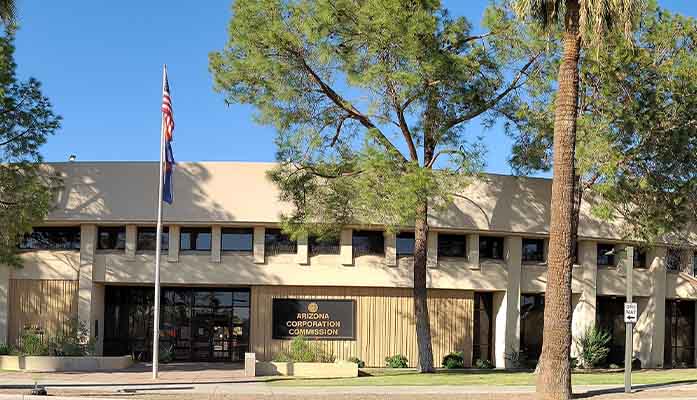
The Arizona Corporation Commission is adding a seasoned professional to its staffing ranks.
This week, the Arizona Corporation Commission (ACC) announced that it had appointed Ed Block to be the new Chief Information Officer. The release from the ACC introduced its new hire as someone “with over 25 years of experience in portfolio, program and project management,” bringing “a wealth of knowledge and a proven track record in delivering complex systems and software solutions.”
According to the ACC, Block “was the first to get a state agency on the cloud, with extensive experience in various sectors including Education, Learning Management Systems, Banking/Fraud-detection, and Cloud and Infrastructure management. As a certified Scrum Master, he has been at the forefront of utilizing Agile methodologies along with Hybrid and Waterfall approaches since 2004. His collaborative leadership style focuses on asking the right questions and gathering the right data to drive both strategic and tactical directions for progressive solutions.”
The ACC’s release shared information about what Block would be doing with his new job, starting with overseeing “the development and maintenance of software solutions, network systems availability and security, data storage and retention, IT hardware and software purchases, and the administration of the IT budget.”
In his previous role at the Arizona Department of Education, Block accomplished the following:
Saved over $500K through early completion and resource optimization
Migrated and modernized extensive data storage to Microsoft Azure cloud platform
Reduced monthly Azure costs by $40K
Implemented Microsoft Office 365 and Microsoft Teams for 685 staff
Improved system recovery times by 70%
Block’s bio includes being an avid DIY enthusiast and a proud grandfather, working on a pool pump house, and planning to restore his 1967 Alfa Romeo Duetto.
The ACC highlighted Block’s belief “in empowering people” as well as “a leadership approach that fosters innovation and team collaboration,” adding that his “multifaceted experience and commitment to innovation make him an invaluable addition to the Arizona Corporation Commission.”
Daniel Stefanski is a reporter for AZ Free News. You can send him news tips using this link.