In a “confidential” letter issued Sunday, debtors of fallen crypto giant FTX asked for refunds from Arizona politicians, political action committees, and other beneficiaries. Arizona politicians received at least $33,200; debtors estimate total FTX donations at $93 million, however FTX executives admitted using dark money routes to finance their favored political allies.
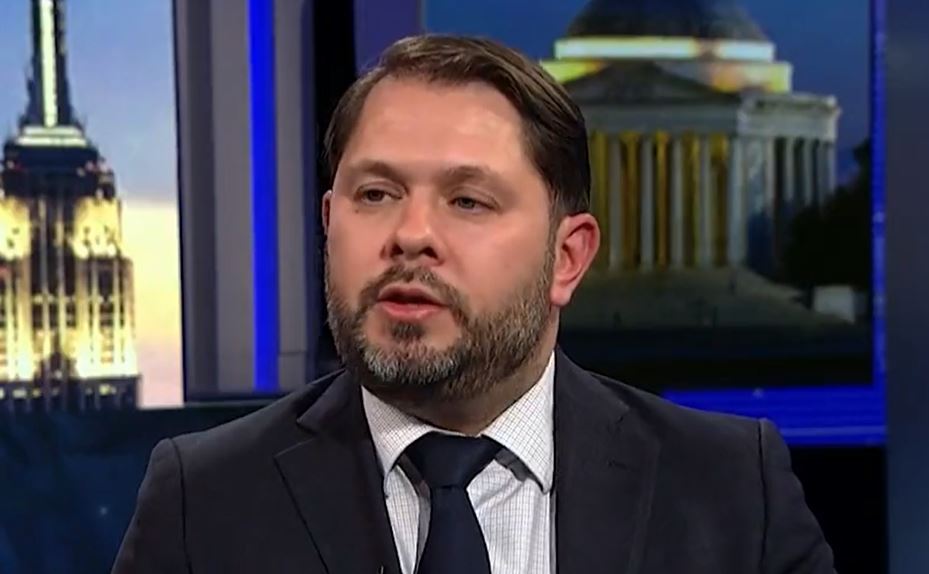
The Arizona Democratic Party (ADP); Reps. Ruben Gallego (D-AZ-03), Eli Crane (R-AZ-02), Debbie Lesko (R-AZ-08), David Schweikert (R-AZ-01); and Sen. Mark Kelly (D-AZ) received FTX funding.
Of the $24.7 million given to Republicans, FTX co-CEO Ryan Salame donated $2,900 to Lesko, $2,900 to Schweikert, and $2,900 Crane. Of the $8.4 million given to Democrats, FTX Director of Engineering Nishad Singh donated $2,900 to Kelly. Of his $38 million, FTX CEO Samuel Bankman-Fried donated $11,600 to Gallego and $10,000 to ADP.
As of press time, only Schweikert and Gallego have responded to the FTX scandal by divesting themselves of the funds. Schweikert donated the funds to various, unnamed charitable organizations, while Gallego gave the funds to Rep. Andrea Salinas (D-OR-06) who Bankman-Fried attempted to defeat in the primary election through millions to her opponents.
In a press release, FTX Debtors stated that they have the right to take legal action if these contributions aren’t refunded voluntarily. They noted that any payments or donations to third parties, even charities, could be subject to FTX’s recovery efforts.
Gallego called for an investigation into the FTX collapse, in response to Elon Musk pointing out that Bankman-Fried primarily donated to Democrats.
“Musk knows about crypto schemes. FYI we should investigate FTX collapse,” said Gallego.
For years, Schweikert has advocated for maintaining freedom and limiting government oversight of cryptocurrency and other blockchain technologies. He’s been a longtime member of the bipartisan Congressional Blockchain Caucus, and introduced multiple bills in past years to advance crypto development.
Schweikert hasn’t issued a public comment about his FTX funding either, though he’s listed as having donated the funds.
Earlier this week, bipartisan Blockchain Caucus co-chairs @RepTomEmmer @RepBillFoster@RepDarrenSoto and I, sent a letter to the House of Representatives concerning the Bipartisan Senate Infrastructure Bill being funded by our crypto currency industry. pic.twitter.com/duEHPzD5gu
Donations directly to campaigns weren’t the only ones influencing Arizona politics.
As AZ Free News reported last year, Bankman-Fried gave the most, $27 million, of his funding to a Phoenix-based political action committee (PAC), Protect Our Future PAC. The PAC treasurer, Dacey Montoya, is a key player in the Democratic dark money network. Montoya served as treasurer for Kelly and Gov. Katie Hobbs’ campaign committees, along with numerous other political committees and PACs across at least 16 other states. Montoya also described herself as a friend of Hobbs.
Kelly, along with Gov. Katie Hobbs, gave over $1 million to Montoya for her work.
Protect Our Future PAC shipped its millions outside of Arizona, specifically to 19 Democratic House candidates including Reps. Lucy McBath (D-GA-07), Maxwell Frost (D-FL-10), and Jasmine Crockett (D-TX-30).
Corinne Murdock is a reporter for AZ Free News. Follow her latest on Twitter, or email tips to corinne@azfreenews.com.
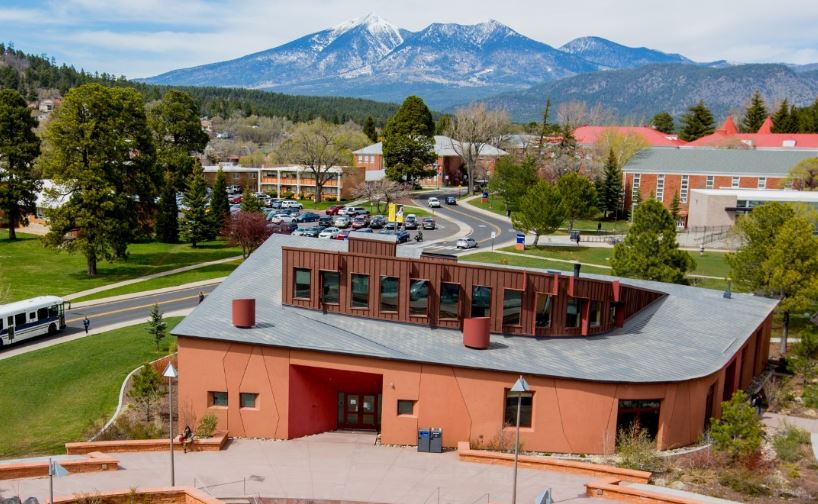
Northern Arizona University (NAU) pledged $10 million to prioritize Indigenous people in their curriculum, or “indigenize” it. The funds will build up the Seven Generations Signature Initiative (7SGI) for the next three years starting this spring.
$5 million of the funding comes from the Mellon Foundation, a New York-based grantmaking nonprofit; the other half came from the NAU Foundation (NAUF). NAU classifies Indigenous peoples as Native Americans/American Indians), Alaskan Natives, Native Hawaiians, Native Pacific Islanders, and other global Indigenous peoples.
The funding will back development of an Indigenous-focused open educational resources initiative; increase recruitment of faculty advancing Indigenous-focused scholarship; establishment of a new center for Indigenous “knowledge holders,” partners, artists, and tribal leaders; and expansion of a Indigenous-focused housing program that serves around 150 students, or .5 percent of the student population.
Through the work of Seven Generations Signature Initiative, NAU will contribute to the advancement of Indigenous knowledges and scholarship, strengthen partnerships & propel Indigenous student success. pic.twitter.com/P5P8NoNv14
According to NAU data, there were just over 900 students (3.2 percent) who identified solely as Indigenous. 841 students (2.9 percent) identified as Native American or Alaskan Native, while 68 students (0.2 percent) identified as Native Hawaiian or Native Pacific Islander.
With multiple races factored, over 1,900 students (6.7 percent) identified as Indigenous. Over 1,500 (5.3 percent) identified as Native American, Alaskan Native, Native Hawaiians, or Native Pacific Islander.
In a press release last month, NAU President José Luis Cruz Rivera expressed hope that the university would become the national leader in service to Indigenous people.
“The breadth of this $10 million Seven Generations Signature Initiative demonstrates how NAU has infused its commitment to Indigenous Peoples into all our work, from leading scholarship and meaningful engagement to student belonging and success,” said Rivera.
Lena Fowler, NAU Indigenous Advisory Board chair, said that this $10 million funding would ensure that the university was a “home-away-from-home” for Indigenous students.
Armando Bengochea Mellon Foundation senior program officer said that indigenizing the curriculum was “bold, inspiring, and necessary.”
NAU derived 7SGI after producing their roadmap for the next several years, “NAU 2025 – Elevating Excellence,” which focuses mainly on advancing diversity, equity, and inclusion (DEI). The roadmap made a specific commitment to expand the focus on Indigenous students, faculty, and staff.
Specifically, the roadmap promised to establish Indigenous-specific pre-college pathways and recruitment, culturally responsive programming and pedagogy, and campus environments to increase Indigenous enrollment and retention. It also promised to implement equitable, not equal, efforts to recruit, retain, and support Indigenous faculty and staff. Equity orchestrates exact equal outcomes, while equality affords equal resources or opportunities.
Under this roadmap so far, NAU also funded thousands for a project expanding “Indigenous Pathways to a PhD in STEM-H.” The university is currently processing further proposals under its $1 million second call for proposals. Awards will be announced in April.
NAU also expanded its initiative affording free tuition to Native Americans from any of Arizona’s 22 federally recognized tribes last November, regardless of household income. However, non-Native American applicants are only eligible for free tuition if they’re first-time undergraduate students with a family income of $65,000 a year or less.
The decision to prioritize Native American Arizonans over non-Native American Arizonans reflects NAU’s commitment to equity over equality.
"Now more than ever, NAU will be affordable and accessible and offer a robust and intentional community of support for Native American and Indigenous students who entrust their educational journey to the university." 📧 Full message from @naupresident: https://t.co/YRl9potMPE. pic.twitter.com/rBVO4w7PAe
The reaction to COVID-19 may be mostly a thing of the past, but Arizona lawmakers are not finished with their efforts to protect their constituents’ constitutional liberties for the future.
Sen. Janae Shamp introduced S.B. 1250, dealing with vaccine requirements and religious exemptions to those mandated medical shots. According to the fact sheet for the legislation (provided by the Arizona Senate Research staff), this bill would accomplish three things:
“Requires employers to allow employees that complete a religious exemption form to opt out of vaccination requirements for COVID-19, influenza A, influenza B, flu or any vaccine approved by the U.S. Food and Drug Administration for emergency use.”
“Prohibits employers from discriminating against an employee regarding employment, wages or benefits based on vaccination status and from inquiring into the veracity of an employee’s religious beliefs.”
“Allows a terminated employee of a health care institution that did not offer or denied a vaccination religious exemption to file a complaint with the Attorney General.”
“It’s sickening that many healthcare workers, like myself, lost our jobs because we refused to take the jab. The COVID-19 vaccine has not been on the market long enough to determine if there is a correlation between its ingredients and medical issues a number of patients are now experiencing after getting the shot,” stated Sen. Shamp in a release announcing her bill’s progress. “We already have a dire shortage of medical professionals within Arizona, and these mandates have only exacerbated the crisis.”
This piece of legislation should come as a surprise to no one, as Shamp ran on the platform of “medical freedom” during her 2022 campaign for the southwest valley seat. In her response to the Arizona Citizens Clean Elections Commission voter guide, Shamp wrote that she had “been in politics for many years, but the lockdowns, mandates, and shutting down of scientific debate during the Covid pandemic got me very involved in the fight for medical freedom and our rights.”
This legislation closely tracks an opinion request from former Sen. Kelly Townsend to former Attorney General Mark Brnovich, which was answered on August 20, 2021. Townsend asked three questions, including whether an employer could require a COVID-19 vaccine as a condition of employment. Brnovich, who had several lawsuits over federal COVID-19 vaccine mandates (including the first one that was filed in Brnovich v. Biden), found that “under federal and state law, employers who mandate vaccinations must provide reasonable accommodations to employees who cannot obtain the COVID-19 vaccine due to a disability or a sincerely-held religious belief.”
Brnovich’s opinion also outlined that “a sincerely-held religious belief about receiving a COVID-19 vaccine includes a moral or ethical belief against receiving a COVID-19 vaccine that has the strength of a traditional religious view.” On the 2022 campaign trail, current Attorney General Kris Mayes was asked about forced vaccine mandates by private businesses and responded, “Of course they can. It is a private business.”
Sen. Shamp’s bill has three co-sponsors: fellow Sen. Steve Kaiser, and Reps. Austin Smith and Steve Montenegro. S.B. 1250 is one of nineteen bills scheduled to be considered in the Senate Health and Human Services Committee on Tuesday, February 7. Sen. T.J. Shope is the chairman of the committee, and Senator Shamp is the vice-chairman. You can watch the meeting live here, or attend in person in Senate Hearing Room 1 at 2:00 PM.
Daniel Stefanski is a reporter for AZ Free News. You can send him news tips using this link.
The Maricopa County Recorder’s Office says third-party voter turnout organizations using government seals have sent voter registration forms to ineligible voters and, in at least one instance, a dog.
Aaron Flannery, a government affairs official for the Maricopa County Recorder’s Office, revealed this during the Senate Elections Committee meeting. Flannery spoke in favor of a bill proposing mandatory disclosures on election-related mailers from nongovernmental entities or persons. He noted that the county receives frequent complaints about third-party mailers containing voter registration forms and pre-paid postage to their office.
“We did receive the following emails: from a very smart resident who said, ‘I am not a U.S. citizen, why are you sending me this?’ We had one from an upset resident saying ‘My spouse has been dead for 11 years and I have provided the death certificate. What kind of operation are you running there?’ And another confused resident — and this one really gets me — saying, ‘Jada is a dog. She cannot vote,’” said Flannery.
The bill, SB 1066, would require the phrase “not from a government agency” displayed in boldfaced, legible type on the outside of the envelope and on the document inside. The inner disclosure must make up at least 10 percent of the size of the document, or less than an inch on a standard 8.5-inch flyer or mailer brochure.
According to Flannery, third-party groups sent nearly 109,700 letters containing voter registration forms during the last primary election. Of these, voters returned 3,284 to the recorder’s office. Of those, 2,681 contained updated voter information, 365 had been addressed to deceased voters, and 234 contained brand-new registrations.
Flannery noted that this has been an issue for over a decade. These third-party organizations get their mailing lists from mass-mined data. Flannery said that SB1066 would alleviate voter confusion and improve voter confidence in county elections.
“It is not a voter suppression bill, it is a voter confidence bill,” said Flannery. “We are against mass mailings that are easily mistaken for official election mail that can lead to confusion.”
Flannery explained that the county has its own voter registration notification system for eligible voters, called “Eligible But Not Registered.”
The bill sponsor, State Sen. John Kavanagh (R-LD03), said the bill would prevent organizations from appearing to represent government messaging and interests.
“This is just a matter of transparency,” said Kavanagh.
In addition to the Maricopa County Recorder’s Office, the Arizona Association of Counties issued support of the bill.
All three Democrats on the Senate Elections Committee voted against the bill: State Sens. Juan Mendez (D-LD08), Anna Hernandez (D-LD24), and Priya Sundareshan (D-LD18). They were backed in their opposition by the American Civil Liberties Union (ACLU) of Arizona, the Sierra Club Grand Canyon Chapter, and All Voting Is Local Arizona.
Mendez questioned whether the bill actually solved a problem or whether it simply created less paperwork for election officials. Mendez insisted that this bill would violate the First Amendment; he claimed that some of his constituents complained that this proposed law was compelling speech.
Kavanagh rebutted that other compelled disclosures, such as cigarette companies notifying smokers of the link between cancer and cigarettes on cartons, weren’t considered to be in violation of the First Amendment.
Kavanagh clarified that the bill wouldn’t necessitate preapproval of election mailers.
Corinne Murdock is a reporter for AZ Free News. Follow her latest on Twitter, or email tips to corinne@azfreenews.com.
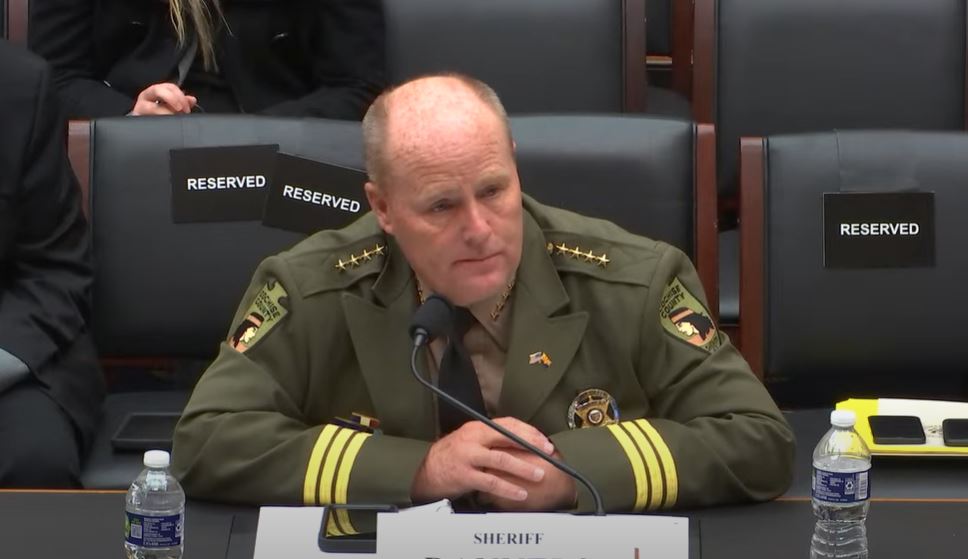
Cochise County Sheriff Mark Dannels was asked to address the U.S. House Committee on the Judiciary last week about the southwest border crisis, and he did not waste the opportunity, expressing frustration with how the Biden administration is avoiding the situation.
“Our southern border, against all public comfort statements out of Washington, D.C., is in the worst shape I have ever seen it,” Dannels testified. “When one looks at Public Safety, National Security, and Humanitarian, our southern border is the largest crime scene in the country.”
Dannels, who is the immediate past-president of the Arizona Sheriffs Association and chair of the National Sheriffs Association Border Security, told Chairman Rep. Jim Jordan and the committee he has personally experienced “the good, the bad, and the ugly” while working in border communities for nearly 40 years.
The sheriff acknowledged there “has always” been some border-related crimes such as illicit drugs, human smuggling, and weapons trafficking by Cartels. But prior to President Joe Biden taking office in January 2021, Cochise County was “one on the safest border counties” thanks to a cooperative effort that included enforcing the law, Dannels explained.
But Dannels told the Congressional committee he and other sheriffs have had “little to no success” in trying to partner with the White House to address the growing crisis caused by Biden’s open border policies the last two years.
As a result, the “intellectual avoidance” of border issues by Biden is being exploited by the Cartels to support their reign of “violence, fear, and greed,” Dannels said.
“Violence against innocent citizens, public officials, law enforcement, and rival drug / human trafficking groups in Mexico continues to escalate,” Dannels testified, adding it has left communities in Cochise County feeling “neglected and abandoned.”
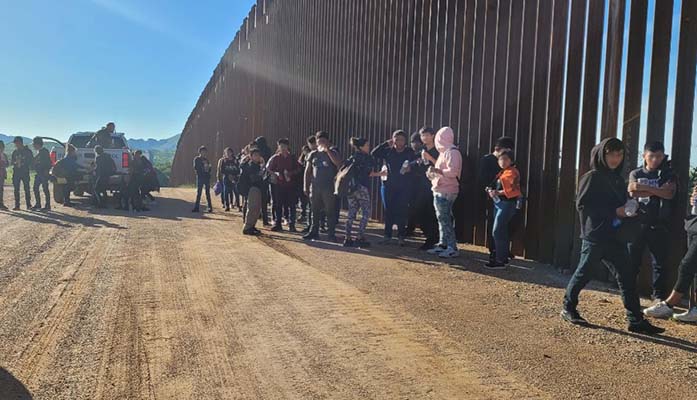
Cochise County typically does not experience the type of mass self-surrenders seen in Yuma and some border crossings in Texas. Instead, the county’s 80 miles of international border are preferred by what Dannels called “Fight & Flight” crossers, many of whom are convicted criminals who go to great lengths to avoid detection.
This has now resulted in an all-time high of border crimes in the county, Dannels testified. And it is not just property crimes the sheriff was referring to – he pointed to a significant uptick in aggravated assaults, injury traffic accidents, and homicides directly related to Cartels exploiting the border.
According to Dannels, Mexican drug trafficking organizations operating in Cochise County “are highly sophisticated and innovative in their transportation methods” and utilize “sophisticated and technical communications and counter surveillance equipment to counter law enforcements interdiction tactics and strategies.”
It raises the question, the sheriff noted, of who actually controls our borders.
“By allowing our border security mission and immigration laws to be discretionary, these Criminal Cartels continue to be the true winners,” Dannels testified, adding that the continuance of deaths and hardships as Congress and the Biden administration “intentionally avoids reality is gross negligence.”
Dannels provided the House Judiciary Committee with several suggestions for how the federal government could quickly secure the border and address the violence.
“One would hope the priority of securing our border doesn’t become just about a price tag and/or political posturing, but rather the legal and moral requirement to safeguard all of America, which so many heroic Americans have already paid the ultimate price for,” Dannels said.
Dannels reiterated his frustration later in the week during an interview with KFYI’s James T. Harris.
“We have a border that is out of control,” Dannels told Harris, adding that his pleas did not appear to resonate with many of those in power in the Beltway because “it’s not in their Washington, D.C. backyard.”
Rep. Andy Biggs (R-AZ-05) filed impeachment articles against Department of Homeland Security (DHS) Secretary Alejandro Mayorkas on Wednesday.
In a press release, Biggs accused Mayorkas of intentional dereliction of duty and committing crimes against the nation.
“Secretary Mayorkas is the chief architect of the migration and drug invasion at our southern border. His policies have incentivized more than 5 million illegal aliens to show up at our southern border—an all-time figure,” said Biggs. “Instead of enforcing the laws on the books and deporting or detaining these illegal aliens, the vast majority of them are released into the interior and never heard from again.”
Biggs also claimed that Mayorkas was facilitating drug trafficking by stalling border wall construction and pulling law enforcement away from the border.
“His conduct is willful and intentional. He is not enforcing the law and is violating his oath of office,” said Biggs.
Today I am filing impeachment articles against DHS Secretary Alejandro Mayorkas.
I have a congressional responsibility to impeach figures who are in dereliction of their duties and commit crimes.
If we don't impeach him, his attack on this nation will continue.
Biggs was joined by 28 legislators, including fellow Arizona Reps. Eli Crane (R-AZ-02), Paul Gosar (R-AZ-09), and Debbie Lesko (R-AZ-08).
Other legislators that cosponsored the resolution were: Reps. Jeff Duncan (R-SC-03), Mary Miller (R-IL-15), Ralph Norman (R-SC-05), Michael Cloud (R-TX-27), Marjorie Taylor Greene (R-GA-14), Lauren Boebert (R-CO-03), Andy Ogles (R-TN-05), Bill Posey (R-FL-08), Matt Gaetz (R-FL-01), Andrew Clyde (R-GA-09), Nancy Mace (R-SC-01), Claudia Tenney (R-NY-24), Brian Babin (R-TX-36), Matt Rosendale (R-MT-02), Troy Nehls (R-TX-22), Ryan Zinke (R-MT-01), Randy Weber (R-TX-14), Glenn Grothman (R-WI-06), Pat Fallon (R-TX-04), Greg Steube (R-FL-17), Ronny Jackson (R-TX-13), and Kevin Hern (R-OK-01).
This resolution is the latest in Biggs’ ongoing effort to impeach Mayorkas since 2021. In an op-ed last March, Biggs outlined how Mayorkas contravened federal law.
Awaiting illegal immigrants on the U.S. side of the border are bus stops, portable toilets, washing stations, relief workers, water and food, and more. Foreigners who break the law are rewarded under Mayorkas, Biggs argued.
However, Mayorkas worked hard to target and punish American citizens who refused executive dictates and guidance on COVID-19.
Under the Biden administration, border numbers are at an all-time high across the board. Over 4.6 million illegal immigrants were apprehended at the border as of December, with over 1.2 million “gotaways” estimated. At this rate, there may be over 9.2 million illegal immigrants by the end of Biden’s first term in 2024. The Biden administration’s current policy usually results in catch and release for most of these illegal immigrants.
Illegal immigrants aren’t the only ones taking advantage of the Biden administration’s border policy: terrorists have benefitted as well. There were seven times more terrorists apprehended at the southern border in fiscal year 2022, and more than double apprehended in this current fiscal year, than in all the years of Trump’s administration combined.
Drug trafficking is also at an all-time high. This has led to a surge in fentanyl overdoses and deaths in border states like Arizona.
Corinne Murdock is a reporter for AZ Free News. Follow her latest on Twitter, or email tips to corinne@azfreenews.com.