by Corinne Murdock | May 16, 2023 | Education, News
By Corinne Murdock |
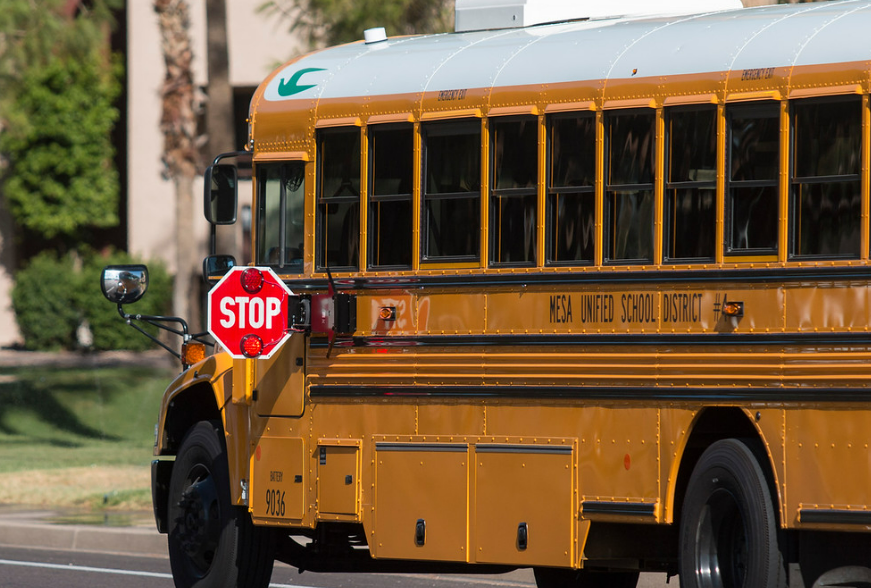
On Monday, the Biden administration announced that Mohave Valley Elementary School District received over $586,000 for mental health program funding. The funds will pay for up to 22 new positions.
This latest round of funding was part of over $95 million issued across 35 states. In total, the Department of Education (ED) has awarded $286 million to 264 grantees in 48 states for mental health programs.
The funding originated from the Bipartisan Safer Communities Act (BSCA) enacted last June as part of the Biden administration’s National Mental Health Strategy. The BSCA’s primary initial purpose was to reduce gun violence in schools and surrounding communities.
Last September, the Biden administration issued nearly $1 billion through BSCA for more mental health program funding. Arizona received an allocation of over $20.8 million.
The Biden administration also issued $122 billion in American Rescue Plan Act (ARPA) funding to hire more school psychologists, counselors, and mental health professionals in K-12 schools. ED reported that, compared to pre-pandemic staffing numbers, school social workers have increased by 48 percent, school counselors have increased by 10 percent, school nurses have increased 42 percent, and school psychologists have increased 10 percent.
The Biden administration earmarked these funds for “high-need” local education agencies (LEAs), such as those with high rates of poverty as well as high student-to-mental health professional ratio, high rates of chronic absenteeism, exclusionary discipline (e.g. suspension, expulsion, seclusion, or restraint), referrals to the juvenile justice system, bullying or harassment, community and school violence, or substance use. High-need could also include those who experienced a natural or man-made disaster, or a traumatic event.
Buried within the ED guidance on usage of these funds, the agency encouraged a total overhaul of traditional disciplinary practices.
“Rather than focusing on changing behavior through punishment or removal from the learning environment, school leaders should consider adopting practices that will help educators support students by identifying the root cause of the behavior and developing effective strategies to eliminate or mitigate it,” stated ED. “Building a school culture of curiosity and growth mindset that prioritizes solution-based thinking may encourage pro-social behavior.”
Some of the punishment alternatives included “art program, mindfulness, and body movement activities.” ED also suggested that non-violent behavior be met with conflict resolution training and programs rather than exclusionary discipline.
The Biden administration left it up to each state’s education authority to determine what constituted “high need.” However, the administration noted that the state may require LEAs to describe how they promote meaningful cultural and linguistic engagement. ED further noted that school-based violence prevention programs must be “culturally affirming” in addition to supporting positive relationships, resilience, self-control, empathy, and persistence.
“SEAs may also require LEAs to describe their process for meaningful culturally and linguistically centered student, parent, family, educator, staff, and community engagement and evidence of how that engagement informed their school safety and climate plans, related policies, and strategies,” stated ED.
The ED noted that the permitted use of funds wasn’t limited to improving students’ mental health. ED noted that permitted fund usage included educator and school staff surveys, convenings, and educator outreach efforts.
ED also encouraged funds to be used to prevent and address identity-based bullying. The Biden administration now recognizes sexual orientation and gender identity as protected classes under anti-discrimination law.
Corinne Murdock is a reporter for AZ Free News. Follow her latest on Twitter, or email tips to corinne@azfreenews.com.
by Daniel Stefanski | May 15, 2023 | News
By Daniel Stefanski |
Arizona taxpayers are going to get some extra cash for the holidays thanks to Republicans giving back from this fiscal year’s budget.
Included in the Fiscal Year 2023 Arizona Budget was the insertion of the Arizona Families Tax Rebate. According to a release from Arizona Freedom Caucus Chairman and Senator Jake Hoffman, “Arizona families can expect to receive one-time tax rebates of up to $750 for qualifying households. Those with dependents under the age of 17 will receive $250 per dependent, or those with dependents 17 and older will receive $100 per dependent, capped at three dependents. Households must have a tax liability of at least $1 in order to be eligible. This criterion is based off of 2021 state tax returns.”
Hoffman explained the motivation for the tax rebate, writing, “Gas, groceries, housing and energy prices have surged over the past three years since Democrats took control of the federal government. As a result, Arizona families are hurting while they attempt to pay for the most basic necessities each month, like putting food on the table, keeping a roof over their heads, paying medical bills, keeping the lights on and filling up their gas tanks. In the meantime, government is flush with cash and in the position to give back to our honest, hardworking taxpayers.”
“This is the first time in at least 30 years our state lawmakers have been able to step up to the plate to provide a tax rebate of this magnitude for our citizens,” said Hoffman. “I’m proud of the leadership of the Arizona Freedom Caucus, and for the support of our Republican colleagues, to dedicate $260 million to helping struggling Arizona families. Despite the current economic uncertainty, the Arizona Freedom Caucus, and conservative Republicans at-large, remain fully committed to keeping Arizona free, vibrant, and prosperous for Arizona families, and all Arizonans, for generations to come. We hope this extra money will make life a little less stressful for our Arizona families as they approach the Christmas holiday season later this year.”
This tax rebate appeared to be the focus of discontentment from some Democrats at the state legislature. Earlier in the week, Representative Oscar De Los Santos took to Twitter to share his thoughts about the recently negotiated budget, saying, “Important context missing from AZ budget debate: Years of massive GOP corporate tax giveaways have resulted in AZ not having the resources – this year & in the future – we need to fund our schools, ensure housing & healthcare for all, solve the water crisis, and more.”
De Los Santos’ charge led Republican Representative Justin Heap to respond: “By ‘corporate tax giveaways’ do you mean the ‘Family Tax Rebate’ that will give every Arizona family with children a check? Leave it to Democrats to characterize giving some of their tax money back to Arizona families as ‘tax giveaway.’ It’s not our money, it’s theirs.”
The pushback from Heap led another Democrat lawmaker, Representative Athena Salman, to add, “That’s false. Your rebate program leaves out families like mine who started and grew our families after 2022. Plus non-tax filers. Go read the bill, it’s short.”
Scot Mussi, the President of the Arizona Free Enterprise Club, told AZ Free News, “we were very pleased to see the budget not only be structurally balanced, but also return nearly $300 million back to taxpayers. That money belonged to hardworking families, and we are glad it’s getting returned to them.”
Daniel Stefanski is a reporter for AZ Free News. You can send him news tips using this link.
by Corinne Murdock | May 15, 2023 | News
By Corinne Murdock |
The city of Tucson is looking into potential funding options to cover the $11 million it would take to keep public transit free every year from here on out.
Prior to this year, the city used federal COVID-19 relief funds to keep public transit fare-free. When the city first announced free busing back in March 2020, the city claimed that the purpose was to avoid crowding at the farebox in addition to providing fiscal relief to riders.
Bus fares were scheduled to resume on January 1 of this year; however, the city managed to source funding for these past six months.
City officials have also sourced enough funding for the next six months. For this upcoming round of subsidies, $2 million came from new hotel and motel taxes, $790,000 came from Tucson Medical Center revenue, and $600,000 came from Visit Tucson revenue. That totals just under $3.4 million.
However, community members are saying the three-year experiment in free public transit has proven much more of a burden than a help. Many have complained that the free transit essentially aids criminal behavior and facilitates public nuisances.
Bus driver union leaders expressed concern about quality control with fully-subsidized bus fare, particularly pointing out the homeless that ride the bus nonstop during the summers to avoid the heat. Teamsters Union 104 Business Manager Kevin Hampton told 13 News that free busing threatened passenger and public safety.
“We don’t want our drivers to become the transit police,” said Hampton. “We’re more interested in finding long-term solutions to combat the reasons why people want to ride the bus all day.”
Passengers have complained to local outlets that the free busing allows “too many troublemakers” to board the buses.
Public safety activists like Josh Jacobsen with Tucson Crime Free Coalition allege that free busing has facilitated drug sales, trafficking, and even usage. Jacobsen also told KVOA that the buses also serve as convenient getaways for robbers and thieves.
“The free buses are contributing to a lot of the movement of narcotics, specifically fentanyl around our community,” said Jacobsen. “There are a lot of reports of individuals using drugs on the free buses. And the free buses also play a large role in the organized retail theft of businesses around our community.”
In December, AZ Free News reported that the council felt they would have to shift the cost burden to taxpayers to cover bus fare. At the time, Mayor Regina Romero suggested additional parking garage fees, Councilwoman Lane Santa Cruz proposed an additional property tax.
The city also secured a financial partner for bus subsidization: defense manufacturing giant Raytheon. The city council noted that they were attempting to convince the University of Arizona and Tucson Unified School District to also join as funding partners.
Cost estimates for taxpayers to subsidize busing permanently ranged around $1 million a month.
Corinne Murdock is a reporter for AZ Free News. Follow her latest on Twitter, or email tips to corinne@azfreenews.com.
by Corinne Murdock | May 14, 2023 | Education, News
By Corinne Murdock |
Mesa Public Schools (MPS) appeared hesitant in a recent governing board meeting to discuss the secretive gender transition plan, which had been in place for years. Most parents were unaware of the plan until recently, which included an opt-out provision allowing the school to keep the plan secret from parents.
Governing board member Rachel Walden attempted to discuss this gender transition plan during Tuesday’s meeting. However, the district lawyer said that discussion of the plan constituted legal advice and would require the board to go into an executive session, out of the public’s view. The form’s promise of secrecy conflicted with Arizona’s parental rights laws.
“There is no other process that involves plans, paperwork for children without parental consent. But this issue can’t even provide parental notification?” asked Walden.
Walden clarified that, following discovery of the parental notification opt-out provision of the gender transition plan, MPS modified the form to strike the provision.
MPS has reportedly had the controversial gender transition plan since 2015. The original form asked students if their parents were aware and/or supportive of their gender transition. If either are answered in the negative, the form asks the student whether they give consent for the school to disclose their “transgender or gender nonconforming status” to their parents.
Arizona law states that parents have “a right to access and review all records relating to the minor child.”
The current version of the MPS gender transition plan looks virtually the same as the prior version, with the exception that parents or guardians will be notified of the plan if the student requests changes to Synergy, the online student information portal.
The MPS plan appears to be based on model documents. Chicago Public Schools issued a gender transition plan document with similar formatting and the same title.
Controversy over the gender transition plan surged last summer, after the district implemented new guidelines for handling transgender students. MPS defended its actions, arguing that their guidelines aligned with federal guidelines.
The guidelines included an assertion that students had the right to be addressed by their preferred names and pronouns, regardless of whether they had their name legally changed. MPS further declared that students should be allowed to use facilities intended for the opposite sex, such as restrooms, locker rooms, shower facilities, and single-sex classes.
Students also aren’t required to provide proof that they underwent any kind of medical treatment for gender transition as a condition of this special treatment.
“A transgender student is not required to provide verification that the student is undergoing or has undergone medical treatment for the purpose of gender transition as a condition for changing a student’s name and/or gender markers in the District’s records,” read the guidelines.
MPS also asserted that students must be allowed to participate in physical education activities and sports in accordance with their gender identity, though they could not compete in teams designated for the opposite sex in accordance with Arizona law.
Corinne Murdock is a reporter for AZ Free News. Follow her latest on Twitter, or email tips to corinne@azfreenews.com.
by Corinne Murdock | May 14, 2023 | News
By Corinne Murdock |
The city of Phoenix rolled out a new, equity-focused internet subsidy program this week using federal funding.
The Federal Communications Commission (FCC) issued a $700,000 grant through the $14 billion Affordable Connectivity Program (ACP). The funds will provide discounted internet of up to $30 off per month for most households but up to $75 off per month for tribal land households. Eligible households must be at or below 200 percent of federal poverty guidelines.
Phoenix Mayor Kate Gallego announced that 80,000 households were enrolled in the program, with an estimated additional 100,000 who could qualify.
The federal program also qualifies certain households for a one-time discount of up to $100 for a laptop, desktop computer, or tablet if they contribute anywhere between $10 to $15 toward the purchase.
Those who qualify for other forms of federal welfare programs may also qualify for ACP.
The Biden administration launched the ACP through the $1.2 trillion Bipartisan Infrastructure Law in November 2021. The administration brokered a deal with 20 of the nation’s main internet providers to offer ACP-eligible households internet plans for no more than $30 per month.
Effectively, ACP-eligible households get free internet initially if they sign onto the 20 internet providers that worked with the Biden administration. The providers are Allo Communications, altaFiber (Hawaiian Telecom), Altice (Optimum), Astound, AT&T, Breezeline, Comcast, Comporium, Cox Communications, Frontier, IdeaTek, Jackson Energy Authority, Mediacom Cable, MLGC, Spectrum, Starry, Verizon, Vermont Telephone Company, Vexus Fiber, and Wow! Internet, Cable and TV.
FCC Commissioner Jessica Rosenworcel presented the ACP grant in Phoenix on Wednesday.
Rosenworcel served as commissioner under both the Obama and Trump administrations. In a 2018 profile, the Washingtonian noted that Rosenworcel had continued her equity-oriented efforts through the Trump administration.
With the apparent lobbying efforts by these main internet providers to make ACP funding permanent, it appears that Biden’s arrangement for free internet is a limited-time offer. Nearly 18 million households have signed up for ACP.
On Tuesday, Verizon Senior Vice President Kathy Grillo warned that ACP funding was projected to run out as early as the first quarter of next year. Grillo urged for a more permanent subsidy structure for internet access.
Most internet providers set their contracts to last for a mandatory minimum of two years. The ACP subsidies will only last as long as funding is afforded to it.
Corinne Murdock is a reporter for AZ Free News. Follow her latest on Twitter, or email tips to corinne@azfreenews.com.
by Daniel Stefanski | May 14, 2023 | News
By Daniel Stefanski |
In the middle of a hectic week at the Arizona Legislature, Democrat Governor Katie Hobbs signed a wildly popular bill to increase veterinary care for pets.
On Tuesday, Governor Hobbs signed SB 1053, sponsored by Senator T.J. Shope, which “allows a veterinarian to use an audio-video communication medium to establish a veterinarian-client patient relationship and prescribe drugs subject to certain terms and conditions.”
Last week, after the bill cleared the Legislature, Shope wrote, “By now, you’ve heard me talk a lot about SB 1053, a bill I’ve sponsored that would allow veterinarians to utilize telemedicine to care for our pets. After this bill passed out of the House by a nearly unanimous vote, 57-1, it passed out of the Senate on Final Read this week with supermajority support and has been transmitted to the Governor’s desk. I, along with the Arizona Humane Society and many other pet owners, hope Governor Hobbs will do what’s best for our animals and sign this bill into law.”
Senator Shope and Co. got their wish with Hobbs’ signature. The Goldwater Institute had also been a huge proponent of the bill and cheered on the new law. Goldwater’s Director of Government Affairs, Jenna Bentley, tweeted, “A great day for pets in Arizona as SB 1053 is signed into law! This bill expands access to veterinary telemedicine services. Something that cannot happen soon enough for many animal owners, especially in rural areas of our state.”
The Goldwater Institute also posted an article from Mark Cushing, who is the Founder & CEO of the Animal Policy Group. Cushing praised the bill and explained why this proposal was sorely needed in the Grand Canyon State, writing, “A chronic shortage of veterinarians has created veterinary deserts throughout the United States. Pet owners of all ages don’t hesitate to seek veterinary advice and care, but such care is often available only through digital tools. Veterinary trade associations resist these changes, ignoring the key principle that telemedicine requires an informed choice by the veterinarian and pet owner to proceed without an in-person examination of the pet.”
Cushing also used the passage of Shope’s bill to encourage other states to follow in Arizona’s footsteps: “During the COVID pandemic, 19 states allowed pet owners to utilize telemedicine to initiate veterinary care with no reports of harm to pets. The Canadian province of Ontario, where 15 million people live, has enjoyed veterinary telemedicine for five years and also reported no complaints of injuries to pets. The Arizona Legislature looked at the lessons from these jurisdictions, considered the experience of human medicine, and made the right choice. The door is now open for more states to follow Arizona’s lead.”
Daniel Stefanski is a reporter for AZ Free News. You can send him news tips using this link.