by Daniel Stefanski | Aug 23, 2023 | News
By Daniel Stefanski |
Arizona mothers, who are concerned about the future of their children, have a new website to visit.
Last week, Moms for America gave the green light to MomsforArizona.com, which “is designed to provide moms with the information and resources they need to defend their rights and stand up for their children’s well-being.” Moms for America was started in 2004 and is a “national, non-profit 501c3 educational corporation rooted on the principles of liberty and virtue our nation was founded on, and focused on promoting these principles, values, and virtues in the home and family, particularly through the women and mothers of America.”
According to a press release for the announcement, “the leadership team includes grassroots director Shiry Sapir, a small business owner; state outreach coordinator Shelli Bogg, a former educator; and state director Mayra Rodriguez, a former Planned Parenthood director and whistleblower.”
Kimberly Fletcher, the founder, president, and CEO of Moms for America said, “This new website will be an invaluable resource for moms in Arizona who want to fight back against the radical indoctrination of our children and work toward restoring sanity to our education system. The people targeting our kids depend on moms being isolated and ignorant, because they know they don’t stand a chance against moms who are united and informed.”
Shiry Sapir added, “My own experience with the failures of public education – especially the disastrous school closures of 2020 and 2021 – inspired me to take matters into my own hands and fight for my kids. Not all moms have the time or the resources to engage in this fight on their own, which is why I’m excited to work with Moms for America to mobilize an army of moms to take back our rights and give our children the quality education they deserve.”
On the Moms for America website, its leaders outline a three-part mission, which is to “Empower Moms, Promote Liberty, and Raise Patriots.” The group vows to “fulfill our mission by providing educational resources, programs, and events to support moms in nurturing a love of liberty in the home, advance freedom in their communities, and protect it with their vote.”
Daniel Stefanski is a reporter for AZ Free News. You can send him news tips using this link.
by Corinne Murdock | Aug 22, 2023 | News
By Corinne Murdock |
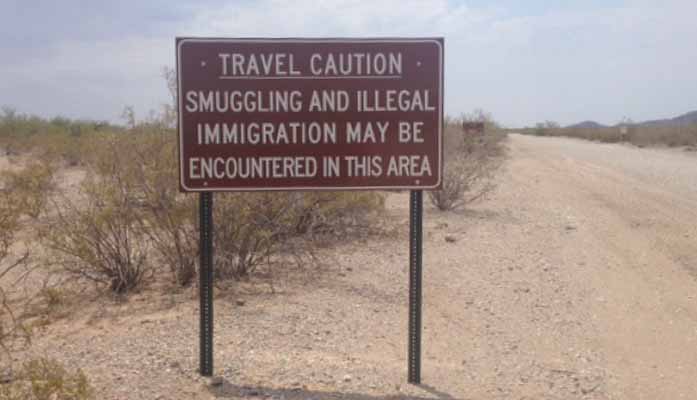
Border Patrol agents released an illegal immigrant in Arizona listed on the FBI’s terrorist watchlist.
Last April, Customs and Border Protection (CBP) released an illegal immigrant on the FBI’s terrorist watch list, according to an investigation by the conservative organization Judicial Watch. Due to investigative errors and reported pressure to release detainees quickly due to overcrowding in holding facilities, the illegal immigrant was freed and wasn’t arrested until over two weeks after initial apprehension.
Rep. Paul Gosar (R-AZ-09) issued a press release criticizing the state of the border under President Joe Biden’s administration. Gosar speculated that the Yuma terrorist case was likely just one out of many others unaddressed, alluding to the massive number of “gotaways”: those illegal immigrants not directly or indirectly observed crossing the border.
“Joe Biden has put our entire country and the safety of all Americans at risk because of his failed open-border policies,” said Gosar. “Rather than spending more than $200 billion fighting a proxy war in Ukraine, Joe Biden must begin protecting American citizens and safeguarding our borders at home.”
“If CBP’s ineffective practices for resolving inconclusive Terrorist Watchlist matches continue, the component risks releasing individuals into the United States who potentially threaten national security and public safety,” stated the report.
It took Immigrations Customs Enforcement (ICE) over two weeks to track down the terrorist.
Since Biden took office, there have been over 5.8 million illegal immigrant encounters.
In May, the Biden administration claimed their border encounters “remain low” due to their policies. While there were around 40,000 less encounters in May of this year versus the last, this year’s May total was nearly 24,000 more than the encounters in May 2021, over 181,000 more than May 2020, over 60,000 more than May 2019, over 152,000 more than May 2018, and over 188,000 more than May 2017.
June did mark a 55,600 decline from the last fiscal year and a 44,400 decline from 2021, but still much higher compared to pre-Biden years: over 111,500 more than 2020, for example. July also marked a decline but, again, only compared to the last two years: it represents a 142,500 increase from July in the 2020 fiscal year.
So far this fiscal year, ending in September, there have been 146 terrorist illegal immigrants apprehended crossing the border, compared to 98 last year, 15 in 2021, three in 2020, zero in 2019, six in 2018, and two in 2017.
Just last week, federal agents arrested an MS-13 gang member in Alabama.
Corinne Murdock is a reporter for AZ Free News. Follow her latest on Twitter, or email tips to corinne@azfreenews.com.
by Daniel Stefanski | Aug 22, 2023 | News
By Daniel Stefanski |
Glendale voters might soon have the future of a billion-dollar resort in their hands.
Worker Power Institute, a nonprofit and social welfare 501(c)(4) organization, announced that it had obtained the necessary signatures to refer the city’s and resort’s Government Property Lease Excise Tax (GPLET) arrangements to the ballot.
Over 5,500 signatures were collected, and both Glendale and Maricopa County notified parties that this referendum was eligible for the ballot. The 60-acre VAI Resort and Mattel Adventure Park is expected to be completed in 2024 and to add 1,800 jobs.
The Glendale City Council will now decide when its municipality’s voters will see this referendum on the ballot.
Before the news of the successful signature drive, Brendan Walsh, the Worker Power Institute’s Executive Director, said, “If there is one thing all developers hoping to build in Arizona should know, it’s that Arizona voters believe in fairness. And the unrestrained and unnecessary use of GPLETs is not playing fair. If developers want property tax breaks, then voters will want to see that they are getting real community benefits. I see the work we are doing as allowing voters the opportunity to have a say in how the cities they live in are built.”
GPLET agreements have been fairly common in the state – and increasingly controversial as more attention comes to these respective arrangements. Last year, the Arizona-based Goldwater Institute fought one of these episodes in the City of Phoenix with the Hubbard Street Group and plans for private real estate development.
As explained by Goldwater, “Utilizing the GPLET abatements provisions of Arizona law, the City has agreed to accept title to the Hubbard Project so that the property becomes ‘government property,’ and thus excluded from the tax rolls. Under this arrangement, the City then leases the property back to Hubbard, who controls and manages the property during the lease just as the developer would any other private business. Yet through use of the GPLET, Hubbard will pay no property taxes on the private development for eight years, while other Arizona taxpayers – in Phoenix and beyond – will be forced to shoulder the difference. At the end of the 8-year lease, the City conveys the property back to the developer. In other words, under this arrangement, private property is conveyed to the government while in reality being owned and operated by a private party for the sole purpose of evading property taxes that would otherwise be owed and to which other taxpayers are subject.”
The Goldwater Institute added, “This arrangement results in tax shifts from the private party receiving the subsidy to other taxpayers who do not. It also creates unfair competitive advantages for Hubbard, who can compete with similar businesses not only with its own resources but with those of Phoenix taxpayers.”
The differing GPLET agreements vary in size and length. While the Phoenix-Hubbard arrangement was for eight years and $7.9 million, the Glendale resort project is likely to be significantly larger. According to a report, “the previous agreement with the developer’s former owners had a valuation of $30 million in exchange for $240 million in tax revenue over the term of the incentives.” The term for Glendale would be 25 years.
The Worker Power Institute was previously credited with helping to take down the Arizona Coyotes’ move to Tempe and the proposed $2.1 billion entertainment district. In this rejected scenario, there appeared to be two GPLETs – one for eight years and one for 30 years, in order to make the hockey team’s move a reality.
Daniel Stefanski is a reporter for AZ Free News. You can send him news tips using this link.
by Corinne Murdock | Aug 21, 2023 | News
By Corinne Murdock |
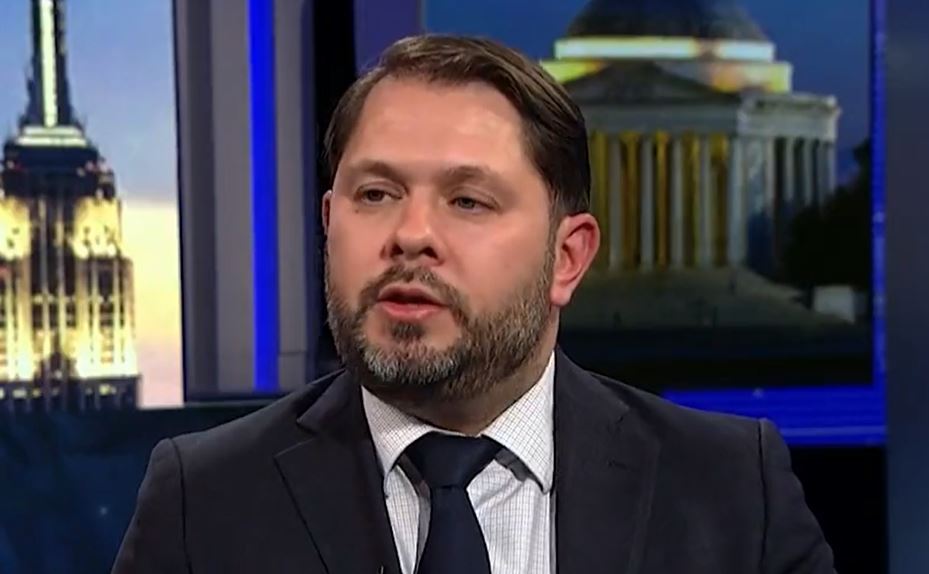
Rep. Ruben Gallego envisions Republicans as those who own guns and drive jacked up trucks with “cow nuts” hanging off their tailgates. (Cows don’t have testicles, or “nuts”; only bulls do. Hence the centuries-old proverbial folly, “milking the bull,” and the recurring viral memes about the “dairy” products derived from bulls.)
The congressman issued the remarks during a campaign event last Thursday, laughing as he described his view of those voters across the aisle. Gallego further asserted that gun ownership has become a “cultural thing,” implying that guns represent a separate and distinct defining trait from the natural American identity.
“Weapons now have become more of a cultural thing,” said Gallego. “It’s like, if you’re a Republican, you have to have a bunch of guns, some jacked up truck with some cow nuts hanging in the back. That’s your cultural identity now.”
The campaign event occurred at Chalice Christian Church in Gilbert, whose teachings contradict Biblical teachings on sins regarding gender identity and sexual behaviors. The Gilbert church is part of a network of progressive churches within the Christian Church (Disciples of Christ) denomination across the Valley.
The pastor of the church that hosted Gallego, Vernon Meyer, is an adjunct theology professor at the private Christian institution, Grand Canyon University, and married to a man. About 20 years ago, Meyer made headlines as a Catholic Church priest who was one of over 160 Arizona signatories to the “Phoenix Declaration” calling for the acceptance of LGBTQ+ lifestyles in the church.
In 2010, Meyer made headlines again after the Catholic Church excommunicated him for ordaining a woman, an act that also contradicts scripture.
Responses to Gallego’s remarks at the progressive church varied along political lines, with Democrats praising the congressman as “right” and Republicans questioning the “cow nuts” confusion and oversimplification of a party.
State Rep. Austin Smith (R-LD29), an Arizona Freedom Caucus member, quipped that he didn’t qualify as a full Republican because he doesn’t have cow nuts on his “jacked up” truck, though he has guns. Smith also remarked on Gallego’s misunderstanding of the differences between cows and bulls.
“I’m failing on my Republican credentials,” posted Smith. “Cows don’t have nuts… but I guess this is his worldview outside Phoenix, very narrow minded and ignorant. DC will do that to ya!”
Gallego would again draw attention for his controversial remarks this week. In a podcast interview, Gallego excoriated his congressional colleague, Sen. Tommy Tuberville, as a “sh*thead” for blocking top-level military promotions as a means of opposing paid time off for female military members seeking abortions.
Corinne Murdock is a reporter for AZ Free News. Follow her latest on Twitter, or email tips to corinne@azfreenews.com.
by Daniel Stefanski | Aug 21, 2023 | News
By Daniel Stefanksi |
The 2023 Arizona legislative session may be in the state’s rearview mirror, but one lawmaker is championing one of her bills that was signed into law earlier this summer.
Republican Representative Barbara Parker issued a press release last week, lauding the passage and signing of her bill, HB 2651, which “requires the Department of Child Safety to fulfill additional notification and reporting requirements relating to cases involving missing, abducted or runaway children.” The legislation was signed into law by Democrat Governor Katie Hobbs on June 19.
According to the release from Representative Parker, “ARS 8-810, the Child Safety statute, had no time frame requirement listed to report when a child in state custody went missing. In 2014, Congress passed the Preventing Sex Trafficking Act, which required states to develop policies and procedures for ‘expeditiously locating any child missing from foster care’ and ‘determining the child’s experiences while absent from care, including screening the child to determine if the child is a possible sex-trafficking victim.’ Tragically, audits from the federal Inspector General’s Office and the State Auditor General proved that Arizona’s Department of Child Safety, was not in compliance with either state or federal standards.”
“I did not expect to run this bill, but on January 21, 2023, just 12 days after I was sworn into office, two teen girls were found dead in a water-filled retention basin in my legislative district just blocks away from their group home,” said Representative Barbara Parker. “There was no media coverage of their disappearance until their bodies were found 15 days later. The community where they lived was never given the opportunity to look for them, and it was then that a constituent and foster care advocate, Anika Robinson, reached out to me regarding serious issues regarding the reporting standards of DCS.”
The bill first passed the House on March 1, 31-28 (with one member not voting). It was amended in the Senate and passed unanimously in that chamber on June 12, 30-0. The House concurred with the Senate’s changes, passing it on June 13, 56-2 (with two members not voting).
Representative Parker added, “The state should have done more for Sitlalli Avelar and Kamryn Meyers. The vulnerable teens’ disappearance could have been reported to the media in the first 24 hours. Both were on medication for behavioral needs and were at risk for sex trafficking or harm due to their acuity. The National Foster Youth Institute estimates that sixty percent of child sex- trafficking victims are often found to be in state-controlled foster care or child welfare systems. This new law will change this terrible statistic, requiring mandatory 24-hour reporting with detailed deliverables and protocols for each situation of missing, abducted, or runaway children, along with treatment, training, legislative audit oversight, and a detailed checklist explaining how all of this will be communicated to the proper authorities in a timely manner.”
The President of ASA Now and Jacob’s Mission Community Center, Anika Robinson, also weighed in on the success and significance of this legislation, saying, “This bill signing not only brings renewed hope to foster parents but also establishes a strong framework that acknowledges the significance of collaborative efforts between state agencies, foster parents, and the community in protecting and finding missing foster children. By prioritizing the prompt reporting of missing foster children in accordance with federal requirements, engaging the public through the media package, and having proper training for state personnel, Arizona sets an exemplary standard for other states to follow, reaffirming its commitment to the well-being and safety of foster children.”
Daniel Stefanski is a reporter for AZ Free News. You can send him news tips using this link.
by Corinne Murdock | Aug 20, 2023 | News
By Corinne Murdock |
Democrats used a nonprofit to engage in a partisan, multi-state campaign to flip states blue during the 2020 election, including Arizona, and plan to do so again in 2024.
Details of the effort — the Everybody Votes campaign by the Voter Registration Project (VRP) — were revealed in a new report by the Capital Research Center. According to a leaked secret draft plan, the campaign funded voter registration drives in eight swing states — Arizona, Colorado, Florida, Georgia, Ohio, North Carolina, Virginia, and Nevada — over five years beginning in 2016, seeking to register more non-white and other “underrepresented” (unmarried women, young) voters to bring registration parity to white voters.
John Podesta commissioned Everybody Votes while serving as Hillary Clinton’s 2016 campaign chairman. Podesta, a key player in Russiagate, formerly served as the Clinton White House Chief of Staff and counselor to President Obama; he co-founded and presided over Center for American Progress.
Everybody Votes succeeded in raising $190 million and registering 5.1 million people by 2022, which turned out around 1-2.7 million votes across the eight swing states for President Joe Biden in 2020. The Capital Research Center report estimated that the campaign generated over 198,600 votes in the 2020 election. Biden won in 2020 by over 10,400 votes.
“[T]he Everybody Votes campaign was blatantly partisan, developed by Democratic consultants and pushed by Hillary Clinton’s campaign manager,” stated the report.
Everybody Votes received its millions from progressive billionaires. Barbara Fried — mother of Sam Bankman-Fried, the corrupt cryptocurrency giant under investigation for fraud — co-wrote a 2020 memo for her super PAC led by fellow Stanford Law professors, Mind the Gap, advising donors to give 90 percent of their political cash to three nonprofits engaged in voter registration campaigns “most effective” for getting “additional Democratic votes,” naming Everybody Votes as one of them. Donors receive tax deductions for their contributions.
As AZ Free News reported last November, Bankman-Fried gave $27 million to a Phoenix-based PAC to turn out for Democratic candidates. The PAC’s treasurer, Dacey Montoya, is a key figure in many Democratic dark money network organizations, and received over $1 million from committees for Gov. Katie Hobbs and Sen. Mark Kelly.
Among the billionaires to donate to VRP were Warren Buffet ($5 million), George Soros ($10.4 million), Chuck Feeney ($2 million), the foundation of the deceased Wallace Coulter ($5 million), Barbara Picower ($4 million), Jeffrey Skoll ($1 million), and Pierre Omidyar ($500,000). Prominent dark money groups Proteus Fund, New Venture Fund, Hopewell Fund, Tides Foundation, ImpactAssets, and Fidelity Investments Charitable Gift Fund accounted for around $453 million in funds to VRP.
Arizona organizations tied into the dark money network benefited over $19.16 million from VRP: $7.46 million to Mi Familia Vota Education Fund, $1.73 million for Mi Familia Vota, $5.43 million to One Arizona, $1.82 million for Central Arizonans for a Sustainable Economy (CASE), $1.73 million for Arizona Center for Empowerment, $941,000 for Arizona Coalition for Change, and $51,900 for Rural Arizona Engagement.
Everybody Votes appears to have originated in early 2015 from a plan emailed to Podesta by the Wyss Foundation, a leftist nonprofit with a history of illegal election interference. That plan originated from Bill Roberts, board member of leftist dark money group League of Conservation Voters, within Corridor Partners, a Democratic consulting firm. In November 2015, Podesta received a copy of a similar, retitled plan originating from Robert Richman, CEO of the Democratic campaign strategy group Grassroots Solutions. VRP and Grassroots Solutions shared a D.C. address from 2016 to 2018 according to tax filings, with VRP continuing to pay consulting fees to Grassroots Solutions.
VRP picked up the Everybody Votes campaign. Formerly known as “Voting For America,” VRP was an outgrowth of Obama’s Project Vote. Project Vote was an affiliate of ACORN: the bankrupted activist network guilty of violating election laws repeatedly.
Despite having an outsized impact on the 2020 election, it wasn’t until last year that VRP publicized the Everybody Votes campaign.
VRP plans to use the Everybody Votes campaign plan again for 2024, with hiring targeted in Florida, Georgia, Michigan, Nevada, Pennsylvania, Texas, and Wisconsin in addition to Arizona.
The IRS prohibits 501(c)(3) nonprofits from engaging in partisan activity, especially that which influences election outcomes. AZ Free News documented in February how leftist nonprofits in Arizona manipulate the tax code to do just that.
Corinne Murdock is a reporter for AZ Free News. Follow her latest on Twitter, or email tips to corinne@azfreenews.com.