Arizona Republicans won a significant victory over the state’s Democrat attorney general in state court over a funding dispute for the recently approved budget.
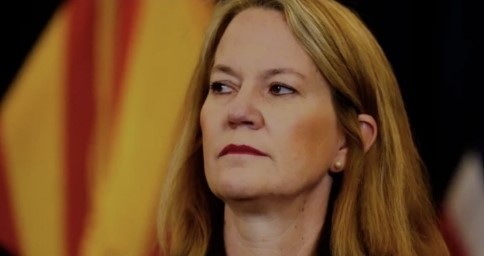
Earlier this week, a Maricopa County Superior Court Judge ruled in favor of Republicans’ arguments after Attorney General Kris Mayes sued over a funding mechanism set in motion by the new budget that was negotiated by the state legislature and Governor Katie Hobbs.
🚨BREAKING- For the third time in three weeks, the courts have rejected bogus and overtly political “legal” arguments peddled by Attorney General Mayes.
Senate: 3 Mayes: 0
Just moments ago, a Maricopa County Superior Court judge correctly rejected claims made by AG Mayes that… pic.twitter.com/93JgeCJ0YW
Attorney General Mayes had filed suit after officials transferred $115 million in opioid settlement dollars to close funding shortfalls in the state’s appropriations.
“This was a frivolous case brought by the Attorney General,” said Arizona Senate President Warren Petersen. “Facts matter. Laws matter. And our taxpayers are best served when our elected officials uphold the rule of law. Once again, I’m grateful we have checks and balances in place to ensure this principle is followed.”
House Speaker Ben Toma said, “I’m pleased with the judge’s decision to dissolve the temporary restraining order, which AG Mayes wrongly sought. Now the funds will be lawfully spent by the Department of Corrections, as intended in the budget and to help individuals impacted by opioids.”
Previously, Petersen and Toma submitted a brief to the court, where they wrote, “Plaintiff Kris Mayes has no constitutional or statutory authority to unilaterally deploy attorneys to disrupt Arizona’s constitutionally mandated budgetary and legislative process – pursuant to which the Legislature and Governor develop public policy and institute a fiscal scheme to ensure those policies are carried out. Yet here, the Attorney General improperly seeks to use the judiciary as a tool to effectuate her unilateral dissatisfaction with the public policy decision made by the Legislature and Governor in the most recent general appropriations act, HB 2897 and the carrying out of other statutorily authorized duties.”
The Republicans explained that the opioid funds under dispute “are only to be transferred from one governmental account to another,” and that “the bill expressly limits the appropriated funds to Approved Purposes.”
The ruling from Judge Hannah overturned a temporary victory for Mayes last week, when a court commissioner had granted her office a temporary restraining order over the actions from the legislature and governor. In reacting to the previous decision, Mayes said, “The decision by the Governor and the Legislature to sweep opioid settlement funds to backfill budget deficits is illegal, and today I asked the court for an injunction to stop the transfer of these funds. In their rush to end the session, GOP leaders and the Governor ignored other viable options to balance the budget, such as utilizing the rainy-day fund, which has now reached approximately $1.4 billion. This is outrageous.”
Mayes added, “Every Arizonan should ask why the opioid funds were not protected and used to support our communities and prevent opioid use as intended. This decision violates the settlement agreements, and I am determined to stop it. That’s why I made the difficult decision to sue over this issue. This is too important, with too many lives at risk, to get wrong.”
This is the second year in a row that Mayes has been on the losing end of the state’s budget process. Last year, the second-year attorney general sent a letter to Governor Hobbs and the Arizona Legislature, expressing her alarm for the “Legislature sweeping the authority of the Attorney General to direct funds received through consent judgments against several pharmaceutical companies for their roles in the opioid crisis.”
She warned, “Sweeping this authority from the Attorney General would be a breach of the consent judgments, and as Attorney General I will not stand by and allow this to happen. I fully intend to consult with the Legislature as the judgments dictate. Any proposal that contradicts this provision by having the Legislature instead direct how the state funds will be used is not acceptable, and I am prepared to go to court to ensure that the State is able to obtain and properly direct those funds for opioid treatment, prevention and education if warranted.”
Republican State Representative David Livingston sent Mayes a letter in response to her 2023 threat, pointing out that the Legislature does, in fact, have a say in how the funds are used. He wrote, “Attorney General Mayes should learn the facts first, and accurately convey those facts in committee hearings, before making demands and threats to sue the Legislature and the Governor over the budget.”
Attorney General Mayes should learn the facts first, and accurately convey those facts in committee hearings, before making demands and threats to sue the Legislature and the Governor over the budget. @AZHouseGOPpic.twitter.com/SFnElYhUtv
Both the governor and Republicans in the Arizona Legislature have additional history with Mayes than at the point of last year’s episode, that may lend more toxicity to actions by all the parties involved in this political battle. Earlier this spring, Mayes secured indictments of two Republican State Senators over certain efforts undertaken in the aftermath of the 2020 General Election. Also, Mayes has been extremely vocal in attempting to lead an investigation of the Governor’s Office over allegations of impropriety and / or unlawful behavior from one of her state agencies.
Daniel Stefanski is a reporter for AZ Free News. You can send him news tips using this link.
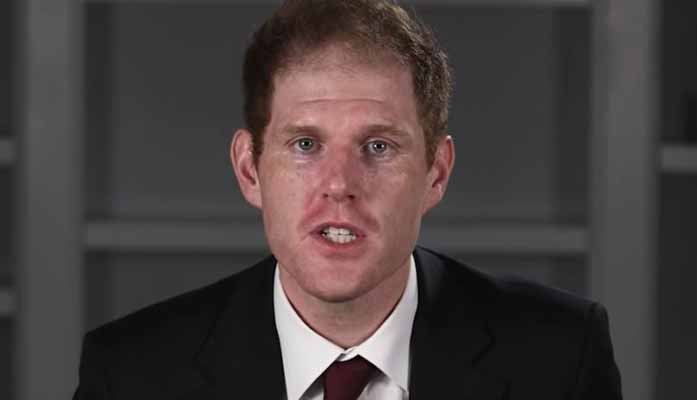
Maricopa County Recorder Stephen Richer plans on voting to reelect President Joe Biden this November, despite identifying publicly as a Republican and having voted for former President Donald Trump in 2020.
Richer clarified his voting intentions during an interview with AZ Family after the Arizona Citizens Clean Elections Commission (ACCEC) debate earlier this month.
“I voted for President Trump in 2020. And who am I planning on voting for [in November]? President Biden,” said Richer.
The current Maricopa County Recorder is a Republican who admitted yesterday that he is going to vote for Joe Biden in the 2024 Presidential Election 🚫
It is time to replace the current Recorder in the upcoming Republican Primary in July!
— Az State Rep. Justin Heap (@azjustinheap) June 25, 2024
Despite pledging to vote for Biden, Richer has remained critical of the president. On Friday, the recorder reposted a remark from Elon Musk mocking the Democratic Party for its declaration that Biden won the first presidential debate on Thursday. He also reposted an article from The Bulwark advocating for Biden to drop out of the race.
Richer’s voting choices haven’t been the only source of contention for his constituents and Arizonans in recent weeks.
Richer endured criticisms in relation to the recent arrest of an elections worker, 27-year-old Walter Ringfield Jr., who stole keys and a fob to the Maricopa County Elections Building last week and has also been placed under investigation for stolen items out of the Senate earlier this month. Ringfield was tasked with assisting in logic and accuracy testing, cleanup of tabulation machines, and various paperwork within the ballot tabulation center.
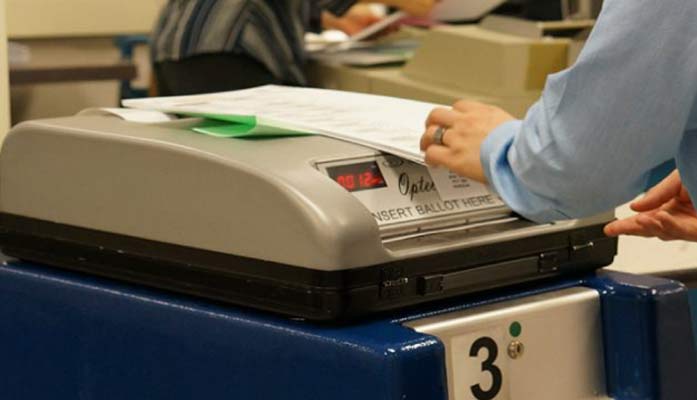
The stolen items were a magnetic security key which assists in activating ballot tabulation machines and a key unlocking the pins atop the tabulation machines.
The stolen election items cost the county over $20,000 in damages, according to the Maricopa County Sheriff’s Office in a press conference earlier this week.
While Richer’s opponent, State Representative Justin Heap, accused Richer of overlooking Ringfield’s criminal past to hire him, Richer says he did no wrong.
“He didn’t have a felony on his record. You know a charge is different from a conviction,” said Richer. “He was caught. Immediately. Credit to the Board. System worked. He’s in custody. No harm was done.”
1) This just shows, again, you don't know the office, @azjustinheap. The guy was working in TABULATION (not under the Recorder's Office). Do your homework.
2) He didn't have a felony on his record. You know a charge is different from a conviction. You're a criminal defense… https://t.co/HmJTHErGgZ
— Stephen Richer—MaricopaCountyRecorder (prsnl acct) (@stephen_richer) June 28, 2024
Ringfield was arrested last year in relation to a theft of over $1,000 from a Fry’s grocery store. The county’s background check didn’t flag that arrest because Ringfield entered a diversion program, which had him on felony release.
Richer initially denied that Ringfield was the same individual who filed a statement of interest last year to run in this year’s Senate race as a Democrat.
Yep. Not the same guy. Although surely you wouldn't say being convicted a crime is disqualifying for a candidate, right?
— Stephen Richer—MaricopaCountyRecorder (prsnl acct) (@stephen_richer) June 25, 2024
Richer later admitted he was wrong, apologizing to GOP Senate candidate Kari Lake’s top advisor, Caroline Wren, as well as radio personality Garret Lewis and lawyer Tom Ryan.
No. I do not. In my haste, I got this one wrong and I apologize for that. Thank you, @CarolineWren , for your patience. And also, my apologies to @GarretLewis, @tomryanlaw, and anyone else lead astray.
The man arrested appears to be the same who filed a statement to run as…
— Stephen Richer—MaricopaCountyRecorder (prsnl acct) (@stephen_richer) June 26, 2024
Maricopa County reported that Ringfield began working in elections on June 3. The county sheriff’s office commended the elections staff for recognizing the missing items in a timely manner.
A year-long study by the Arizona State University Center for American Institutions examining the Department of Defense (DOD) has identified and soundly condemned what the authors refer to as the “Vast DEI Bureaucracy” that has pervaded the everyday operations of the Pentagon and the varied service academies of the U.S. Uniformed Services. Damningly, the report found that the DOD has spent millions in taxpayer dollars creating a culture of “race and sex-based scapegoating and stereotyping.” The study in and of itself is a brutal excoriation of the military under the Biden Administration and “calls for an immediate end to the Pentagon’s multimillion-dollar DEI bureaucracy.”
The study, “The National Commission on Civic Education in the Military,” was compiled by Commissioners Lt. Col. (ret.) Matthew Lohmeier, Karrin Taylor Robson, and John Cauthen, along with a team of ASU researchers who over the past year evaluated, “the history, evolution, and implementation of diversity and equity programs across all branches of the military and military academies.” The final report is titled, “Civic Education in the Military: Are Servicemembers More Prepared for Micro-Aggression or Macro-Aggression?”
Professor Donald Critchlow, Director of the Center for American Institutions, explained the findings in a release provided to AZ Free News, “Our research reviewed DEI policy in the military starting in the nineteen seventies to the modern day and concluded there are far more effective ways to promote unity and respect among military ranks than by spending millions annually to divide servicemembers by their gender or race.”
Critchlow added, “Just as private companies have abandoned the toxic advice of DEI consultants and programs, military leaders should end social engineering based on critical race theory and restore approaches that promote character and merit.”
The report opens with an Executive Introduction in which Critchlow definitively states, “Given its importance, the U.S. Armed Forces should not be a laboratory for social experimentation, especially one based on Critical Race Theory, a contentious and abstract social theory. Yet, as this Commission Report on Civic Education in the Military shows in great detail, Critical Race Theory is promoted within Diversity, Equity, and Inclusion (DEI) training throughout the military from the Pentagon through the ranks and in our service academies.”
NEWS: Diversity, Equity, Inclusion Are Necessities in U.S. Military. https://t.co/7WEWrveNcc
A sampling of the most egregious findings includes:
“DEI themes dominate the training and education that members of the armed forces receive about their country. As ‘white supremacy’ and racism have become a central focus of DEI trainings, white supremacist racism is assumed to be the core problem of the nation and of the military.”
“DEI training focuses on rooting out ‘white supremacy’ even though there is little or no evidence that there is a problem of white supremacy in the military. The massive hunt during the stand-down in 2020 located roughly 100 out of a force of 2.1 million.”
“Spending on DEI programming is increasing. The DOD’s allocation for DEI projects jumped from $68 million in fiscal year 2022 to $86.5 million in fiscal year 2023. The Pentagon is requesting $114.7 million for fiscal year 2024.”
West Point Military Academy offers a minor in “Diversity and Inclusion Studies,” with courses such as “Social Inequality,” “The Politics of Race, Gender, and Sexuality,” and “Power and Difference.” In the course description, the report reveals the courses as “an introduction to the theoretical concepts of post-modernism. This will include a focus on Feminist Theory, Critical Race Theory, and Queer Theory.”
U.S. Navy training asserts that servicemembers who reject implicit racial bias are “potential problems” saying, “Participants who refuse to acknowledge how bias has affected their lives or the lives of others may invalidate the experience of those with marginalized identities in the room and cause them harm,” and instructs sailors to “Prioritize a continuing conversation, rather than attempting to shut the conversation down. One suggestion is to acknowledge the bias-denier’s comments and ask for other perspectives from the rest of the group.” A procedure which could be compared to a classic Maoist “struggle session.”
The Army released directives Wednesday prohibiting soldiers from defined extremist activities and guiding commanders on how to handle cases. https://t.co/5JKIPQchKU
As reported by Task and Purpose, an Army directive has been aimed at rooting out “extremism” which includes “requirements set in the 2021 NDAA for service IGs to work with the Deputy Inspector General for Diversity and Inclusion and Extremism in the Military ‘to establish policies, processes, tracking mechanisms and reporting requirements for allegations of supremacist, extremist, and criminal gang activity in the Army,’” citing a statement from Sean Mackintosh of the Army Inspector General Agency.
As Lohmeier, a former Space Force commander who was removed from duty in 2021 after drawing public scrutiny to DEI training, summarized, “It’s no surprise that young people are turning away from military service in record numbers. As this comprehensive report illuminates, DEI indoctrination has become a core component of military training that begins for officers even at the service academies.” He continued, “How can we be prepared to confront our adversaries if our warfighters aren’t laser focused on the mission but instead are divided and distracted by ideology?”
The report makes several recommendations on how the DOD can remediate the situation and begin to undo the damage. It calls upon the Pentagon to:
“Immediately end the DEI bureaucracy or pursue alternative avenues to affect positive change despite existing policies.”
“Return to the military’s outstanding tradition of merit-based selections and promotions and nondiscriminatory equal opportunity.”
“Make the syllabi for all humanities and social sciences courses taught at our military service academies publicly available.”
“Provide educational training materials to enhance personnel understanding of American philosophy, politics, government, and the Constitution.”
Additional scrutiny of Walter Ringfield Jr., currently under arrest for the theft of an electronic security fob used to access vote tabulation machines from the Maricopa County Tabulation and Election Center, has revealed a troubling pattern of implication in criminal actions surrounding Arizona elections.
Caroline Wren, a fundraiser and Senior Advisor to GOP U.S. Senate Candidate Kari Lake, has revealed that Ringfield was named in a 2022 lawsuit between the Arizona Free Enterprise Club (AFEC) and Arizonans for Free and Fair Elections. The lawsuit challenged the registrations of several of its circulators. Ringfield was identified among those circulators with “multiple infractions against them,” in Exhibit A of the lawsuit by the AFEC.
Hi 👋 @azfec, thanks for highlighting this story. Need your help with something.
In 2022 you filed a lawsuit against Arizonans for Free and Fair Elections challenging the circulator registrations. Per exhibit A in your lawsuit, one of those circulators with multiple infractions… https://t.co/07GHGgaUy8pic.twitter.com/u7Tm0XnyfP
In a post to X, Wren asked three questions regarding Ringfield’s mention in the lawsuit:
Who paid Walter to gather signatures for the Arizonans for Free and Fair Elections campaign?
Has Walter been a signature gatherer for any other campaigns or ballot initiatives in Arizona?
What were the nature of the objections against the signatures Walter turned in in exhibit A of your lawsuit?
Arizona Free Enterprise Club President Scot Mussi offered some answers to AZ Free News, explaining that, “In 2022 Ringfield Jr. worked for Sutton and Smart to collect for Free and Fair.”
Mussi added, “This cycle he worked for a time on the Abortion Initative (through Fieldworks) and is currently registered to collect for the RCV/Jungle Primary initiative (Make Elections Fair) through Advanced Micro Targeting.”
Finally, he revealed AFEC’s objections against Ringfield, “As for the objections we made against Ringfield Jr., they dealt with the fact that he failed to properly register with the Secretary of State as a paid circulator.”
In the complaint filed in 2022 by Mussi, the AFEC alleges, “Signatures collected by certain circulators of the Initiative Petition who were required to have been, but were not, properly registered with the Secretary of State are void as a matter of law. Specifically, these individuals either:
a. Failed to register with the Secretary of State prior to collecting signatures in support of the Initiative Petition, and hence did not strictly comply with A.R.S. § 19-118(A);
b. Failed to provide a signed and notarized affidavit averring to the accuracy of the specific information included in their registration for measure I-16-2022, and hence did not strictly comply with A.R.S. § 19-118(B)(5);
c. Failed to provide on their registration submissions to the Secretary of State a full and complete permanent and (if applicable) temporary residential address—to include the relevant apartment or unit number, if the circulator resided in a multiunit complex—and hence did not strictly comply with A.R.S. § 19-118(B)(1);
d. Misrepresented on their registration submissions to the Secretary of State one or more required items of contact information, and hence did not strictly comply with A.R.S. § 19-118(B)(1); or
e. Failed to provide on their registration submissions to the Secretary of State the statutorily required address for service of process, and hence did not strictly comply with A.R.S. § 19-118(B)(4).”
A search of LinkedIn by Wren also confirmed that one “Walter Ringfield Jr” shows a history of volunteering in 2022 with Our Voice Our Vote, which Wren described as “a far-left wing advocacy group funded by Open Society Foundation,” although this is not reflected by his registrations with the Secretary of State.
In an extensive post to X, Wren outlined that Ringfield also has a previous criminal history and was arrested and charged with one count of theft and criminal damage in 2023 having allegedly stolen $1,800 from a former employer citing VoteBeat and noted that he was entered into a diversion program and was not convicted as a result. It was likely due to this diversion that he was able to pass a background check from Maricopa County.
In case you’re new here or just confused as to what the heck is going on in Maricopa County, here is a quick recap:
On Monday, June 24 the Maricopa County Sheriff’s office @mcsoaz released a statement saying there had been a theft by an election worker at the Maricopa County…
Reporting from the Arizona Daily Independent also noted that Ringfield filed a statement of interest in 2023 to run for U.S. Senate as a Democrat and was also implicated in a June 19 theft from the Arizona Senate Building.
Correction: A previous version of this story incorrectly stated that Caroline Wren is an attorney. The story has been corrected.
Authorities from the Maricopa County Tabulation and Election Center (MCTEC) are now re-conducting logic and accuracy testing on county election equipment following the theft of an electronic key fob from the Ballot Tabulation Center last Thursday. The suspect, a now-former employee, Walter Ringfield, 27, was terminated from his role Friday and has since been placed under arrest after surveillance footage revealed him pocketing a red lanyard holding the security device. A police report obtained by the Arizona Sun Times stated that “Walter said the job was temporary and he was trying to make it permanent, so he wanted to clean up,” without further explanation.
Ringfield has been charged with counts of both misdemeanor theft and felony criminal damage and is currently being held by Maricopa County. He was denied bail due to a prior criminal history which the Times noted involved allegedly trespassing and stealing from the Arizona Senate Building.
UPDATE: DPS is investigating a theft of some personal items from a Senate employee. The crime occurred at the Senate on June 15th. The suspect appears to be the same individual recently arrested for stealing from Maricopa County. In response to requests from the public, we are… pic.twitter.com/RrNZQ4Q7f4
A county spokesman explained via email to The Center Square, “On Friday morning, when completing a daily inventory, Maricopa County elections workers identified that an item was taken from the Ballot Tabulation Center on Thursday evening, and staff took immediate action to investigate the matter and contacted the Maricopa County Sheriff’s Office.”
They added, “The stolen item has been recovered but to ensure the integrity of Maricopa County Elections, election workers are reprogramming and re-conducting logic and accuracy testing of all equipment.”
At a joint press conference Tuesday, Maricopa County Supervisor Bill Gates and Maricopa County Sheriff Russ Skinner explained that the device is used on election day to access tabulators. Gates told reporters, “So this black security key right here, this is utilized under normal circumstances. This is just used on Election Day. This is for the Election Day tabulators. So the folks who are involved in that going out to the 223 vote centers that we have across Maricopa County on July 30, on primary day. This will be out there. What we do at the beginning of each day, we do an inventory check and make sure that we have all of these black security keys.”
He added, “We did that on Friday morning. We found that one was missing. So immediately, our team and elections, they spoke to all of the people who were working in the ballot tabulation center on Thursday, the day before, and they also reviewed the security camera footage. So we have security cameras, we also have the live stream cameras. They evaluated that, and they determined that the suspect that we’ve been talking about had taken the black security key and put it in his pocket and then removed it from the ballot tabulation center.”
“When people who we have entrusted to work on elections violate that trust, we’re going to act upon it. We’re going to act strongly, we’re going to get to the bottom of it and we’re going to make sure [that] if there’s someone else who decides to do something like this, we’ll be on the phone with the sheriff again,” Gates said.
“We’re not messing around here. This is too important and we know that the residents of Maricopa County and the voters of Maricopa County are trusting in us to make sure that this is a safe and secure election.” The Arizona Secretary of State’s office said in a statement published by the New York Post that actions taken by Maricopa County following the incident should “reassure the public” about the “security measures in place.”
“Our systems are not only designed to detect anomalies but are also supported by dedicated professionals committed to upholding the democratic process. While this event is unwelcome, it speaks the effectiveness of the security protocols built into Arizona’s election systems.”
“The swift actions of the Maricopa County elections staff, including the re-conducting of logic and accuracy tests, builds in extra layers of protection of all affected equipment. This quick response will prevent any potential impact on the upcoming elections. The Secretary of State’s office will collaborate with law enforcement to address and investigate this incident to ensure accountability and swift justice,” the statement concluded.
Maricopa County told the press in a statement that the leadership of both parties were notified Friday of the new Logic and Accuracy testing along with information about the theft and the County’s actions. Republican National Committee (RNC) Chairman Michael Whatley said in a statement published by the Times, “The RNC and AZGOP dispatched attorneys and observers on the ground as part of our election integrity program to gather information and promote transparency as the situation developed. The RNC and AZGOP have a long history of engaging in Maricopa County election issues both in the field and in the courtroom, and yesterday’s events are an example of our election integrity program’s capacity to provide real-time legal response when issues arise at tabulation centers. This incident raises serious questions about election security in Arizona that must be answered – we will be constructively engaged with Maricopa County officials to ensure that the remedies to this security breach sufficiently address our concerns.”
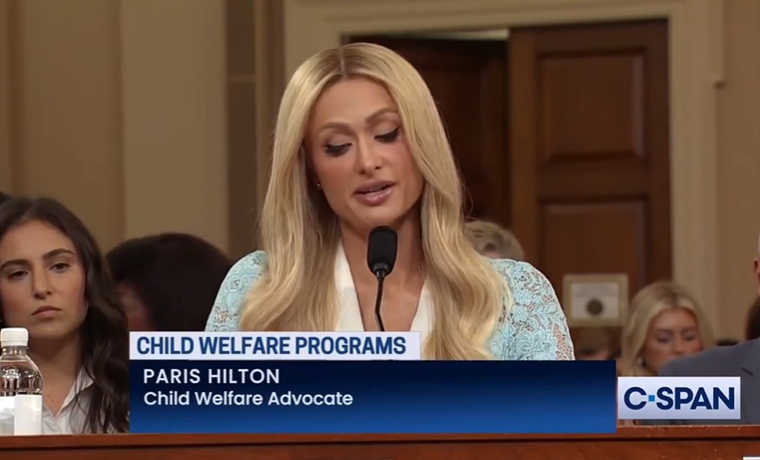
Republican Rep. David Schweikert criticized adoption agencies for predatory practices during a hearing this week featuring celebrity Paris Hilton, founder and CEO of 11:11 Media.
Schweikert came to the conclusion through his experience adopting his two-year-old son, the brother of the little girl they’d adopted before him. According to Schweikert’s remarks during Wednesday’s Ways and Means Committee hearing, adoption agencies impose prohibitively expensive adoption fees — even if the mother had just given birth and they had no role in the pregnancy or birth up to that moment, as was in his case.
“Two years ago this week, all of a sudden I’m getting text messages from my office, saying there’s a social worker who needs me to call her. Okay. I immediately assume I have a family member who needs bail money. I call the social worker and the first words out of her mouth were, ‘Are you going to come pick it up?’ Pick up what? Apparently the birth mother of the little girl we had adopted six years earlier had walked into the hospital, no prenatal care, substance abuse, and had a little boy. The little boy was very small, and going through withdrawals. […] One of the greatest things that’s ever happened in our lives. But before we were able to walk out of that hospital with him, turns out an adoption agency worker had gotten the birth mother to sign a piece of paper. Now remember, the birth mother had said, ‘Hey, the Schweikerts had adopted my little girl. This is the brother, wouldn’t that be nice if they could be together?’ We were told we had to sign a piece of paper for $40,000 before we were allowed to walk out the door with the baby because the baby belonged to adoption services. How does a middle class family adopt with these types of costs?”
Schweikert reflected on his experience to compare with Hilton’s testimony, which detailed her allegations of inhumane treatment at a congregate-care facility. The congressman concluded that the child welfare system suffers from financial greed.
“Mrs. Hilton actually said something that was brilliant. It’s about the money,” said Schweikert.
Yesterday, @ParisHilton bravely shared her traumatizing experience at a congregate-care facility with the Ways & Means Committee.
Having such a prominent voice express the flaws within the child welfare system is invaluable. pic.twitter.com/6RQkqlRteE
Hilton recounted how she was taken to a youth residential treatment facility at 16 years old. She testified that, under “troubled teen” programs promising “healing, growth, and support,” she had actually faced two years of physical, emotional, and sexual abuse.
Hilton testified she was force-fed medications, sexually abused by staff, violently restrained, dragged down hallways, stripped naked, forced in solitary confinement frequently, and deprived of views of the outside world.
“My parents were completely deceived, lied to, and manipulated by this for-profit industry about the inhumane treatment I was experiencing,” said Hilton. “Can you only imagine the experience for youth who are placed by the state and don’t have people regularly checking in on them?”
As reason for her testimony, Hilton advocated for the reauthorization of Title IV-B, a Social Security Act provision that created two child welfare programs with federal funding under two parts. Part 1 enacted Child Welfare Services while Part 2 enacted Promoting Safe and Stable Families.
Hilton also advocated for the Stop Institutional Child Abuse Act and again declared support for the Senate Finance Committee’s “Warehouses of Neglect” report.
This latest hearing of the Ways and Means Committee was the latest in a long string of hearings on the subject, more than any in the last eight congressional systems combined per the committee. The committee has been conducting a thorough review of Title IV-B over the past year.
Committee Chairman Jason Smith, a Missouri Republican, outlined a number of pervasive issues with the child welfare system: inadequate kinship care support, high social worker turnover, excessive bureaucratic red tape, slow hearings and lack of lawyer access for families, remaining barriers for Native American tribal families, high rates of mental health issues in older foster youth, and discrimination rather than support for impoverished families.
Watch Wednesday’s full hearing below:
AZ Free News is your #1 source for Arizona news and politics. You can send us news tips using this link.