by Staff Reporter | Jul 4, 2024 | News
By Staff Reporter |
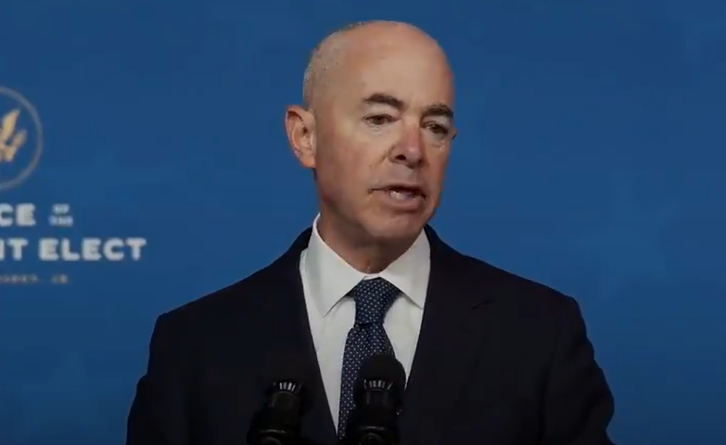
Department of Homeland Security (DHS) Secretary Alejandro Mayorkas claimed during a recent visit to Tucson that the Biden administration has reduced illegal immigration.
Levels of border encounters have dropped since this time last year, but remain much higher than those that occurred during the 2022 fiscal year and exponentially higher than those of past administrations.
Mayorkas held a press conference last week at the Davis-Monthan Air Force Base. In his remarks, Mayorkas claimed that southwest border encounters dropped 40 percent since President Joe Biden took executive action.
“We are imposing stricter consequences for those who cross the border without authorization,” said Mayorkas. “These actions are changing the calculus for those considering crossing our border.”
Mayorkas also claimed that the blame lies with Congress, not Biden, for the prolongation of the border crisis.
The secretary said that Congress needed to provide more funding to hire agents, officers, support personnel; buy, install, and maintain technology; and equip border agents to remove illegal immigrants.
Just several days after addressing Tucsonans, Mayorkas granted an 18-month temporary amnesty to over 300,000 illegal Haitian immigrants. Mayorkas and the Biden administration stated that the migrants don’t pose a threat to national interest.
Yet earlier this year, a Haitian man was arrested for murder and criminal possession of a weapon. That Haitian national, Kenol Baptiste, came into the country using the controversial Customs and Border Patrol (CBP) One app. The CBP One app has come under scrutiny for its perceived facilitation of illegal migration; it began allowing appointment scheduling last January, offering otherwise illegal immigrants the option to schedule an appearance at a port of entry to be released into the country rather than go through smugglers.
Since last January and through May, the app has brought in over 636,600 individuals according to the CBP.
The House impeached Mayorkas earlier this year over his handling of the border crisis, but the Senate later opted to dismiss the impeachment.
While the numbers presented by Mayorkas appeared high, total illegal border crossings remain at historical highs.
According to CBP data last updated in May, southwest border encounters totaled nearly 1.7 million this fiscal year (from October to present), a decline of 46,00 from this time last year and an increase of 152,000 from this time in the 2022 fiscal year.
Since Biden took office, there have been over 8.1 million illegal immigrant encounters. That number serves as an estimate of total illegal immigrant entries, as it doesn’t include “gotaways,” or those who evaded detection upon entry.
The Federation for American Immigration Reform (FAIR) pointed out that the Biden administration continues to allow over 70,000 illegal immigrants into the country through the CBP One app and the Cubans, Haitians, Nicaraguans, and Venezuelans (CHNV) parole program, the latter which FAIR disputed was unlawful.
Violent crimes involving illegal immigrants have been on the rise under this administration. The most high-profile cases have frequently involved illegal immigrants who were either inadmissible for admission or were eligible for deportation.
Earlier this week, two employees in a Texas Chick-fil-A restaurant were shot and killed by an El Salvador illegal immigrant, 37-year-old Oved Bernardo Mendoza Argueta.
A number of murders by illegal immigrants also occurred earlier this month.
In Texas, two Venezuelan illegal immigrants — Johan Jose Martinez-Rangel, 22, and Franklin Jose Pena Ramos, 26 — murdered a 12-year-old girl in Houston, Jocelyn Nungaray. In New York, 21-year-old Ecuadorian illegal immigrant Jhon Moises Chacaguasay-Ilbis murdered a 21-year-old woman on her birthday.
Last month, police arrested 23-year-old El Salvador illegal immigrant Victor Martinez-Hernandez for raping and killing 37-year-old Rachel Morrin, a Maryland mother of five, while she was on a run last August. Martinez-Hernandez allegedly fled his home country last February due to accusations of murdering another woman there.
Earlier this year, an illegal immigrant who had been scheduled to be removed in 2020, 25-year-old Mexican citizen Brandon Ortiz-Vite, was arrested for the murder of Ruby Garcia, a 25-year-old woman in Michigan.
There was also the murder of 22-year-old college student Laken Riley in Georgia by 26-year-old Venezuelan illegal immigrant Jose Ibarra. Ibarra was permitted entry despite documented ties to Teen de Aragua (TdA), a Venezuelan gang operating in New York and Georgia, the two states he would live in before murdering Riley.
Even with the rising concerns of public safety and resources illegal immigrants impose, the Biden administration has made more public resources available to them.
In November, DACA recipients (also called “Dreamers”) will qualify for Affordable Care Act health care. American taxpayers will be on the hook for nearly 600,000 DACA recipients, nearly 21,000 of which reside in Arizona.
AZ Free News is your #1 source for Arizona news and politics. You can send us news tips using this link.
by Matthew Holloway | Jul 3, 2024 | Economy, News
By Matthew Holloway |
A report released by the American Farm Bureau Federation has revealed that for the third year in a row, the national average consumer cost for putting on a typical Fourth of July cookout has increased. This year the average given for a conservative celebration feeding 10 is approximately $71.22. The increase of about 5% from 2023 would seem minor if it were not merely the latest increment of the 30% jump from 2019 prices enjoyed during the Trump administration.
The report contradicts a White House release from June 20 that claimed, “grocery inflation is, in fact, way down.” In a survey conducted by the Farm Bureau, volunteers across the country registered a record high result since the survey began in 2013. The volunteers priced out the constituent components of cheeseburgers, chicken breasts, pork chops, homemade potato salad, strawberries, and ice cream, with other common accompaniments.
AFBF Chief Economist Roger Cryan laid it out in a statement,
“Higher prices at the grocery store reflect a number of challenges facing America’s families. Lower availability of some cookout staples and inflation are hitting people in their wallets. Farmers are also feeling the effects of high prices. They’re price takers, not price makers. Their share of the retail food dollar is just 15%, but they still pay elevated fuel, fertilizer and other supply prices.”
The Bureau reported the price increases broken down by individual purchases:
- 2 pounds of ground beef, $12.77 (+11%)
- 2 pounds of chicken breasts, $7.83 (-4%)
- 3 pounds of pork chops, $15.49 (+8%)
- 1 pound of cheese, $3.57 (+1%)
- 1 package of hamburger buns, $2.41 (+7%)
- 2 ½ pounds of homemade potato salad, $3.32 (-4%)
- 32 ounces of pork and beans, $2.49 (+2%)
- 16 ounces of potato chips, $4.90 (+8%)
- 13-ounce package of chocolate chip cookies, $3.99 (+2%)
- ½ gallon of ice cream, $5.65 (+7%)
- 2 pints of strawberries, $4.61 (+1%)
- 2 ½ quarts of lemonade, $4.19 (+12%)
While a record high, the report detailed that costs have not exceeded the all-time high in 2022 crediting the adaptability of the American farmer. AFBF wrote, “Our volunteer shoppers had their most expensive Fourth of July grocery bill in the history of the survey this year. However, when adjusted for the high inflation rates plaguing the United States in recent years, the real value of their Independence Day party has not surpassed the previous record set in 2022. Though faced with disease outbreaks, inventory shortages and operating challenges, farmers and ranchers have adapted to increased demand across the world for U.S. products, providing safe, affordable food for your Independence Day celebration and every other day, showcasing the resilience of the American food system.”
In an interview with Yahoo Finance’s Jennifer Schonberger, U.S. Treasury Secretary Janet Yellen made the Biden administration’s case as to why food prices have not noticeably declined despite alleged improvements in the economy. She essentially blamed increased labor costs and grocery store profit margins claiming, “I think largely reflects cost increases including labor cost increases that um firms, um grocery firms have experienced, although there may be some increases in margins.”
On June 20, the Biden White House put out a report based on the most recent Consumer Price Index data alleging that not only “some grocery prices have fallen,” but that “wage growth has been strong, grocery purchasing power is up.”
A survey from Intuit Credit Karma reported by CNBC on June 17 seemed to align with the Farm Bureau’s assessment with 80% of Americans polled stating a noticeable increase in the cost of groceries with many having to skip necessities like rent or mortgage bills to afford food. They wrote, “That includes 28% who sacrificed other needs like rent or bills to pay for groceries, and 27% who occasionally skipped meals. Additionally, 18% have either applied for or considered applying for food stamps, while 15% rely on or have considered turning to food banks.”
Startlingly though, 53% of those asked told pollsters that they “earn too much to qualify” for food stamps or any other government assistance and despite their earnings are still struggling to make ends meet.
In a statement, AFBF President Zippy Duvall said, “As we celebrate this nation’s independence, we also celebrate America’s food independence. And while all families in America are paying more for food than before, we still have one of the most affordable food supplies in the world. In the United States, we are blessed with the tools to grow the food, fiber and renewable fuel to meet the needs of every family across the country.”
Duvall stressed the importance of Congress passing legislation to better support agriculture to ensure the nation remains dominant in the field. “The success of America’s farmers is due in part to partnerships in research, conservation and farm safety net programs that are made possible through a strong farm bill. It’s crucial that as we celebrate the holiday we also urge members of Congress to return to Washington and pass a new, modernized five-year farm bill. We cannot afford more delays and short-term extensions. Farmers, and every family in America, are relying on them to get the job done to ensure America continues to lead the world in agriculture.”
Matthew Holloway is a senior reporter for AZ Free News. Follow him on X for his latest stories, or email tips to Matthew@azfreenews.com.
by Daniel Stefanski | Jul 3, 2024 | News
By Daniel Stefanski |
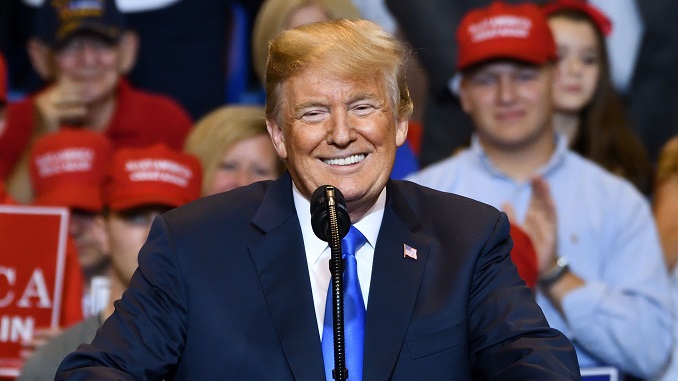
Another poll shows former President Donald J. Trump with a growing lead in Arizona for the 2024 General Election rematch with President Joseph R. Biden.
Last week, a P2 Insights poll revealed that Trump led Biden by eleven percent (47-36) in a June 2024 survey. The poll was conducted between June 11-20 with likely voters in the all-important swing state.
The firm conducted a similar poll in May, which had Trump leading Biden by only three percent (41-38).
According to the numbers produced by this report, Trump is winning 87% of his 2020 Arizona voters, while only losing one percent of voters who cast their ballots for him in the most recent presidential contest. Meanwhile, Biden is only winning 81% of his 2020 Arizona voters, while losing six percent of his former ballot box supporters to his Republican opponent.
The memo from P2 Insights Partner, Ryan Tyson, states that “around 60% of swing state voters across all states agree that Joe Biden is too old to be an effective president and that he can’t handle four more years in the White House.” Tyson added that “Trump’s greatest advantage in this race remains that he is more trusted to handle the economy than Biden, [and that] positive perception of Trump’s economy outperforms his baseline image by roughly 10 percentage points in every swing state.” In June, Trump leads Biden by 22% (59-37) among Arizona voters who agreed that “the economy was better under Trump than Biden” compared to ten percent in May (52-42).
This new poll on the current state of the 2024 presidential race in Arizona came just before the first debate between Trump and Biden last Thursday night. In his conclusion for his latest polling memo, Tyson opined that “Joe Biden is in desperate need of a moment in Thursday night’s debate to turn his campaign around.” With Biden’s debate performance receiving harsh marks from nearly all sides following the event, it may be safe to surmise that the Democrat president may have lost even more ground in a swing state like Arizona per the analysis from Tyson’s survey.
In the Real Clear Polling average, Trump leads Biden by 5.8% in the Grand Canyon State. At this point in the 2020 campaign, Biden led Trump in Arizona by a 5% average, and Clinton led Trump by an average of .5% in 2016. In 2020, Biden went on to narrowly edge Trump by .3% in Arizona, and Trump defeated Clinton by 3.5% in the state for the 2016 contest.
Arizona’s eleven electoral college votes will be critical to securing the presidency. Both Republicans and Democrats realize the importance of this state and those votes and are deploying a massive number of resources for this race and many others that will determine the political future for the southwestern state.
Daniel Stefanski is a reporter for AZ Free News. You can send him news tips using this link.
by Matthew Holloway | Jul 2, 2024 | News
By Matthew Holloway |
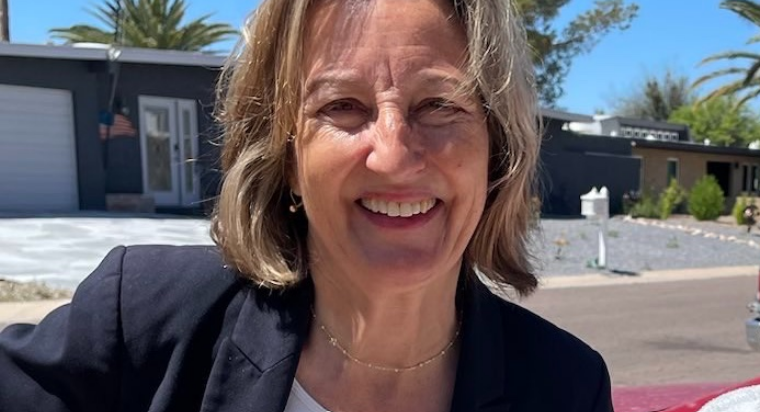
In the political fallout that has followed President Joe Biden’s abysmal showing at CNN’s first 2024 Presidential debate, the National Republican Congressional Committee has called upon Kirsten Engel, the Democrat challenger to Congressman Juan Ciscomani (R-AZ06), to answer for Biden’s perceived “senility.”
At a recent Biden campaign rally, Engel was recorded saying, “I’m be so happy to be part of the Biden-Harris coordinated team,” and leading the supporters in attendance along with Congressman Ruben Gallego (D-AZ4) in chants of “Four more years!”
In a press release Friday, NRCC Spokesman Ben Petersen said, “Extreme liberal Kirsten Engel stands with brain-addled Biden, not Southern Arizonans. Engel chooses her lock-step loyalty to Biden over the truth, leaving our border open, inflation raging and our nation in peril.”
The last messaging from Engel’s X account urges supporters to support a pro-abortion ballot initiative, and makes no mention of the octogenarian incumbent currently occupying the top of a highly vulnerable Democrat ticket.
The emphasis on the pro-abortion campaign is also curious for Engel. On June 17, the New York Post reported that abortion is “not a factor” in the District 6 race, noting that an internal Public Opinion Strategies poll obtained by the Post put Ciscomani, a Mexican-American at a comfortable 11 point lead with 50% over Engel, who sits at non-threatening 39%.
Daniel Scarpinato, Ciscomani for Congress’ general consultant, told the outlet, “Juan’s message of the American Dream is resonating among all Arizonans, Republican, Democrat and independent.”
“We are encouraged by these incredibly strong numbers early in the race, but we also know national Democrats will stop at nothing to prop up Engel and her extreme positions on immigration and the economy.”
Following the debacle surrounding Arizona’s 19th century abortion ban, which was settled in the Supreme Court in April, Sabato’s Crystal Ball ranked District 6 as a “toss-up,” however the latest polls seem to belie that.
Democratic Congressional Campaign Committee spokeswoman Lauryn Fanguen suggested at the time that “Juan Ciscomani has an extremely unpopular anti-abortion record and has been actively working against the best interest of Arizonans in Congress.” She added, “When voters hear about his votes to take away their reproductive rights and willingness to play partisan politics with the border, they will reject him and his far-right agenda.”
The Post observed that abortion was not at the top of voters concerns based on the internal poll with inflation taking top rank at 25% and immigration and border security taking second billing at 19%. Just 9% gave abortion as the top issue.
Matthew Holloway is a senior reporter for AZ Free News. Follow him on X for his latest stories, or email tips to Matthew@azfreenews.com.
by Matthew Holloway | Jul 2, 2024 | News
By Matthew Holloway |
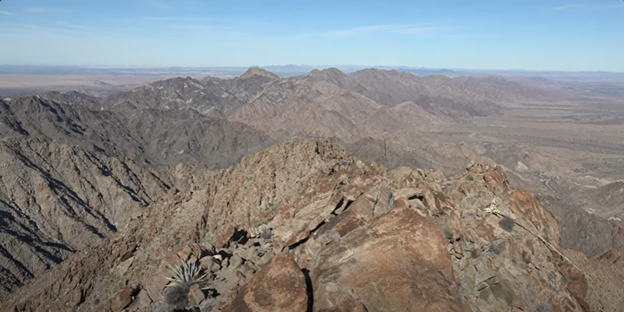
The compromised southern border of Arizona claimed another three lives on Wednesday according to the latest report from Customs and Border Patrol. Three illegal immigrants identified as Mexican nationals were found dead with surviving members of their group when an emergency rescue beacon was triggered near Sheep Peak, a bare desert mountain rising from the scorching Sonoran Desert floor on The Barry M. Goldwater Air Force Range northwest of Ajo.
The surviving illegal immigrants informed ICE that four of their cohort were left behind, one was rescued, three perished in the heat.
According to the Border Patrol press release, “After agents were advised by surviving migrants of four others who had been left behind, and exhaustive air and ground search involving Ajo Station agents and air assets from the Yuma Air Branch was initiated. A second activation of the same Rescue Beacon led agents to a member of the missing migrants, they had been searching for.
The aircrew was able to locate the body of a Mexican male. Shortly after noon, agents located the bodies of the second and third migrant.”
The release noted that the Mexican consulate was notified and the bodies were taken to the Pima County Medical Examiner’s Office for autopsy.
Fox59 reported that the deceased were two men, aged 44 and 18, and a 17-year-old girl. On Wednesday the high temperature in nearby Ajo, AZ was 102 degrees. In the remote areas of the desert west of Ajo, temperatures could well reach above 110 degrees and even up to 120 according to NOAA forecasting.
Tucson Sector Deputy Chief Patrol Agent Justin De La Torre said in a statement, “CBP’s message for anyone who is thinking of soliciting the services of smuggling organizations to enter the United States illegally along the Southern border is simple: don’t do it. As is evidenced by this case, when migrants cross the border illegally, they put their lives in peril. The terrain along the border is extreme, the relentless summer heat is severe, and remote areas where smugglers bring migrants is unforgiving. Far too many people who made the decision to place their lives into the hands of the criminal organizations have died of dehydration, and heat stroke.”
As reported by the Associated Press, Pima County authorities have already recorded eight heat-related deaths this year in the border county encompassing the Tucson Metro area and vast stretches of rural and desert land.
Data from CBP.gov shows that since 2018 the number of Rescue incidents in the Tucson Sector jumped from 574 in 2018 to 2,300 in 2022, an increase of just over 400%, the vast majority of which are heat-related. Data from 2023-24 is yet to be published.
Matthew Holloway is a senior reporter for AZ Free News. Follow him on X for his latest stories, or email tips to Matthew@azfreenews.com.
by Matthew Holloway | Jul 2, 2024 | News
By Matthew Holloway |
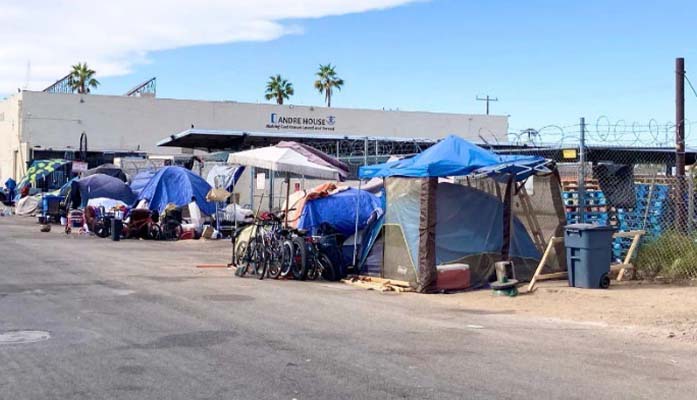
The United States Supreme Court ruling in Johnson v. City of Grants Pass, has settled the question of a city’s ability to arrest and fine people for sleeping and encamping in public spaces.
In the 6-3 ruling, the high court found that enforcing laws against camping on streets, sidewalks, and public lands does not constitute “cruel and unusual punishment,” and therefore survives a challenge based on the Eighth Amendment. Communities beleaguered with an entrenched homeless population living illegally on city streets, in vacant lots, and even parks will now be able to clear them and get the homeless, and frequently mentally ill and/or addicted off the streets and hopefully to the resources they need. As noted by AZFamily, the small city of Grant’s Pass, Oregon, was vindicated by the Supreme Court in its assertion that forbidding homeless encampment is not unconstitutional.
Along with Grant’s Pass, the City of Phoenix was also cleared for a new city law to take effect in two months making it illegal to camp within 500 feet of a school, childcare center, or city-owned park as previously reported by AZ Free News. According to The Center Square, Arizona Senate President Warren Petersen is quite pleased with the SCOTUS ruling. He told reporters, “This ruling is a victory in our state’s efforts to tackle the humanitarian crisis destroying lives and livelihoods within our communities on a daily basis.”
“Our children shouldn’t be forced to walk to school on streets littered with needles, feces, and trash. The individuals camping out should be discouraged from this practice through enforceable laws and be provided with the mental health or substance abuse services they need to overcome this terrible situation.”
Phoenix’s Democrat Mayor Kate Gallego said in written statement Friday, “Phoenix has continued to make meaningful progress on this issue while simultaneously navigating a web of conflicting legal opinions.” She added, “Today’s Supreme Court ruling provides the necessary clarity we need to help even more people find safe, stable shelter,” as AZFamily reported.
Independent City Councilman Kevin Robinson observed, “We want to have the flexibility (to issue citations). I think it needs to be there if it’s a critical type of situation. But the expectation is we lead with services first. We look for ways to help people.” Democrat Councilwoman Kesha Hodge Washington added, “The decision provides municipalities with an accountability tool, if and when appropriate.”
Her fellow Democrat Councilman Carlos Galindo-Elvira explained that Phoenix needs to achieve a balanced approach between law enforcement and the dignity of the homeless. “It cannot be open season on the unhoused. That’s not acceptable to me,” he said. “I worry about that everywhere in the United States.”
Although he noted, “Citations have to be an option to ensure equity and to maintain space and access to it.”
Republican Councilwoman Ann O’Brien, who led the encampment ban in the council, told the Arizona Republic that the ruling has affirmed the new ordinance but stressed that Phoenix will continue offering services to the homeless, although for those who refuse assistance, she supports enforcement.
“We want to get them back on their feet. … If we can lead with services, that’s my preference. When they say, ‘No,’ then if that means they need to be ticketed, then I would welcome them to go through the community court process,” O’Brien said.
“What’s important to remember is this isn’t just about the homeless community. It’s about all the citizens of Phoenix and quality of life issues for everyone,” she added.
The City of Phoenix issued a statement published by ABC15 saying in part, “The City of Phoenix has worked strategically over the last several years to balance court orders from two different lawsuits, community needs, and available resources to address homelessness in our community. The City will continue to lead with services and will not criminalize homelessness, while we evaluate our programs based on the court’s ruling today. The City is confident in the processes created by the Office of Homeless Solutions and supporting departments to address encampments in a dignified and compassionate manner, connecting our most vulnerable residents with services while preserving the quality of life in our neighborhoods for all residents.”
Writing for the majority of the court, Justice Neil Gorsuch reached for the work of Alexis de Tocqueville to conclude his ruling:
“Homelessness is complex. Its causes are many. So may be the public policy responses required to address it. At bottom, the question this case presents is whether the Eighth Amendment grants federal judges primary responsibility for assessing those causes and devising those responses. It does not. Almost 200 years ago, a visitor to this country remarked upon the ‘extreme skill with which the inhabitants of the United States succeed in proposing a common object to the exertions of a great many men, and in getting them voluntarily to pursue it.’ 2 A. de Tocqueville, Democracy in America 129 (H. Reeve transl. 1961).
If the multitude of amicus briefs before us proves one thing, it is that the American people are still at it. Through their voluntary associations and charities, their elected representatives and appointed officials, their police officers and mental health professionals, they display that same energy and skill today in their efforts to address the complexities of the homelessness challenge facing the most vulnerable among us.
Yes, people will disagree over which policy responses are best; they may experiment with one set of approaches only to find later another set works better; they may find certain responses more appropriate for some communities than others. But in our democracy, that is their right. Nor can a handful of federal judges begin to ‘match’ the collective wisdom the American people possess in deciding ‘how best to handle’ a pressing social question like homelessness. Robinson, 370 U. S., at 689 (White, J., dissenting).
The Constitution’s Eighth Amendment serves many important functions, but it does not authorize federal judges to wrest those rights and responsibilities from the American people and in their place dictate this Nation’s homelessness policy. The judgment below is reversed, and the case is remanded for further proceedings consistent with this opinion.”
Matthew Holloway is a senior reporter for AZ Free News. Follow him on X for his latest stories, or email tips to Matthew@azfreenews.com.