Dr. Owen Anderson, a professor at Arizona State University’s Center for the Study of Religion and Conflict, offered an analysis of the philosophy of early communist thinker Friedrich Engels in a video posted to his Substack on July 8. He described it as “a sustained attack on the Christian family.” What resulted from this academic critique of Engels, which directly quotes his widely acknowledged public work, were a series of attacks on the professor and defenses of the communist thinker from what Anderson dubbed “anonymous (usually brand new) accounts,” and “trolls.” One of these commenters, under the screenname “RD,” replied to Dr. Anderson’s initial post claiming, in part, that Engels, “discusses in the same section of the book, that arrangement describes Greek and Roman pagan marriages as well as later Christian ones. Since these predate and do not depend on Christian ideas, he’s not attacking Christianity per se.”
The commenter continued, “As for ‘radical leftists at state universities’ — the vast majority of university professors are in monogamous relationships roughly of the kind Engels describes, with the important caveat that in our time there are far greater legal protections for wives (a fantastic improvement since Engels’ writing). It’s not at all clear that they ‘hate’ this form of the family or ‘teach’ this hatred regularly. In other words, as usual, either you don’t know what you’re talking about or you have disingenuously ripped a statement out of context in order to increase your own sense of victimhood.”
Anderson responded to the commenter that he doesn’t engage with “anonymous trolls” and added rather congenially, “If you’d like to be honest about who you are I’d be happy to discuss these points. You’re mistaken about the purpose of Engels and what it means to hate.”
In response, “RD” accused the professor of being “litigious” and “thin skinned” with ASU and his colleagues citing as evidence “your very public statements on this blog, where you constantly whine about mundane matters to agents of the state.”
He added, “Only a fool would risk having you file a frivolous lawsuit over a blog post. It is enough for me that your readers would double-check your ‘work’ against the evidence of Engels’ own text, where they would very quickly see that you don’t know what you’re talking about.”
He claimed to disagree with Engels and accused Dr. Anderson of “not reading these texts honestly and accurately, the duty of any intellectual.”
In a subsequent paid post, Dr. Anderson stated in part,
“One of the surprising not surprising things I’ve experienced since calling out bias against Christians at state universities is that those who want to attack me hide behind anonymous (usually brand new) accounts. I know the internet is full of such trolls. That isn’t what surprises me. What surprises me is that these cowards claim to be either professors or know how to defend professors. They want your tax money to teach your children, but they won’t be honest about what they believe.”
He added, “If they can’t be honest about who they are then I don’t engage with them. They need to own their arguments. If they want to engage in the public square and they believe their cause is just and true, then they should be eager to attach their name to it. But they won’t. This one went on to tell me I’m thin skinned! Imagine insulting any other religion and then telling that person they are thin skinned if they call you out.” He then bid the commenter “Bye, bye.”
Anderson’s determined commenter still wasn’t finished though and launched into a criticism of the professor for his work at ASU combating academic cancel culture referring to the pervasive anti-Christian bias the professor has striven against as “free of speech,” and accusing him of “a very public campaign with Arizona legislators trying to get your colleagues fired.” He further alleged that Anderson, “constantly snitch-tag(s) politicians and media influencers on twitter, including actors like Charlie Kirk whose purpose is to intimidate and harass college professors.“
The pseudonymous “RD” concluded, “You suggested that ASU should discipline your colleague for a social media post that you claim mocks (your understanding of) Christianity, and you think politicians should concern themselves with the (non-required) recommended reading list of a program at your institution. In short, you have no respect either for free speech or for academic freedom, and so you shouldn’t be surprised when no one wants to talk to you. That’s all from me.”
In what appears to be the final exchange between the two, Dr. Anderson incisively cut to the core of the commenter’s argument and eviscerated it noting: “This post is a present. Thank you. You’ve admitted that academics don’t have to keep their own standards about sensitivity and not insulting other religions (in the name of free speech and academic freedom). I’m looking forward to seeing you apply this. No wonder you want to stay anonymous.”
“Dr. A,” to use his sobriquet from his Substack, concluded by highlighting the aforementioned exchange with a few key notes:
1. “RD didn’t respect my boundary. I said I won’t engage with anonymous trolls. RD didn’t dispute that title, but insisted I must listen to more insults. That is called stalking. It is a behavior ASU prohibits.
2. RD calls me a snitch. Is this the third grade playground? What RD doesn’t like is that I’m a whistleblower and that those he is defending are guilty of the very thing they preach against. They preach sensitivity but want to ban Christians and conservatives from campus. RD calls this freedom. He calls me defending the right for Christians and conservatives to speak on campus ‘snitching.’ The truth is I am a whistleblower and have protected rights under federal and state law as well as the ASU faculty manual. RD knows that coming at a whistleblower will result in trouble and so wants to be anonymous.
3. RD insults me for ‘snitching’ on a colleague who insulted Christians on social media. Imagine if this was any other group than Christians. RD would help fill out the disciplinary form and hand it in to ASU.
4. What hasn’t happened. I have had a handful of ASU professors come at me to insult me since I began speaking publicly about abusive behavior towards Christians. I haven’t heard them say, ‘we should examine our behavior.’ They very clearly teach that it is wrong to insult a person’s religion. However, they want to get away with doing so toward Christians. They want freedom of speech protected for their radical leftist beliefs, but they deny that same thing to conservatives.”
The professor signed off the post with a promise that he would continue to call out his critics on their hypocrisy adding, “If that means they call me names then I’m looking forward to it.” And left his readers with a quote from Socrates writing, “When one of his disciples asked Socrates, ‘aren’t you worried what people will think of you?’ he replied, ‘I only care what thoughtful people who take time to investigate the situation will think.’”
When reached for comment by AZ Free News, Dr. Anderson confirmed that the commenter “RD” has made no further effort to contact him, and they have not revealed their identity. You can subscribe to Dr. Anderson’s Substack here, to read about his ongoing work to expose academia’s hostility toward Christianity.
Research uncovered by AZ Free News’ investigative team has followed a trail of money that leads from major Arizona labor unions to a Democrat-funding SuperPAC and then via several smaller PACs to a supposedly ‘Conservative’ PAC. The money finally arrives at a political consultant employed by State Rep. David Cook to be used against his 2024 opponent Arizona Sen. Wendy Rogers.
It started in February with a $400,000 donation, from Arizona Pipe Trades 469 to Residents for Accountability a SuperPAC, which has dumped over $1.36 billion into the Democrat funding machine ‘ActBlue’ in 2024, which donated $261,617.02 precisely to ‘Revitalize Arizona,’ a well-known Democratic Political Action Committee (PAC). And in the end, led to a $261,617.02 payment from Arizona First to McShane, LLC: high-end political consultants who represent Rep. David Cook, earmarked to be used in opposition to Wendy Rogers For AZ Senate per election filings.
The money metaphorically went into the laundry blue and came out red on the other side.
The story unfolding today bears more than a little similarity to another funding scheme uncovered by AZ Free News in 2022 involving the Democratic Revitalize Arizona and Rep. David Cook after he sided against his party on a key bill to prohibit cities and counties from requiring prevailing wages or union labor as a condition of receiving a bid or contract. Cook’s vote was decisive. The bill failed by a single vote in a victory for the unions and a defeat for local governments and small contractors.
“Revitalize Arizona, a Tempe-based PAC, is chaired by Israel Torres, a partner in the Torres Consulting and Law Group, which chairs the same address as the PAC. The PAC funneled $48,000 to the group in 2020, totaling over $122,100 over the past decade. It also paid Torres Multicultural Communications, previously known as Torres Marquez Communications, over $681,200 over the past decade, with the majority paid out to the firm in 2019: nearly $646,000.
All of their funds come from another PAC run by Torres: Residents for Accountability. That PAC receives its funds largely from unions. Among its funders from the past two years are the Arizona Pipe Trades 469 PAC, affiliated with a union, and Chicanos Por La Causa (CPLC) Action Fund PAC, affiliated with a social justice nonprofit. Over the past decade, a number of other union-affiliated PACs have funded Residents for Accountability.
The PAC has a history of investing in Democratic polling companies such as the D.C.-based Lake Research Partners, whose past clientele have included President Joe Biden, former President Bill Clinton, House Speaker Nancy Pelosi, Janet Napolitano, Sheila Jackson Lee, AFL-CIO, and the United Food and Commercial Workers (UFCW) Arizona.
They’ve also invested in Democratic polling company SKD Knickerbocker, from which Anita Dunn hailed — Biden’s senior advisor and former President Barack Obama’s communications director.”
A key difference in the 2024 scenario is the route the money took, and it’s final purpose and destination. From Revitalize Arizona, the exact same amount, $261,617.02, was moved to Arizona Voters, yet another PAC, this time managed by the American Campaign Finance Foundation. From Arizona Voters, the very same $261,617.02 went to Arizona First, which OpenSecrets.com identifies as a Conservative SuperPAC. And from there, the money in the precise amount of $261,617.02 finally arrives at McShane, LLC on June 25, 2024, five months after it left the union’s hands, in five easy steps.
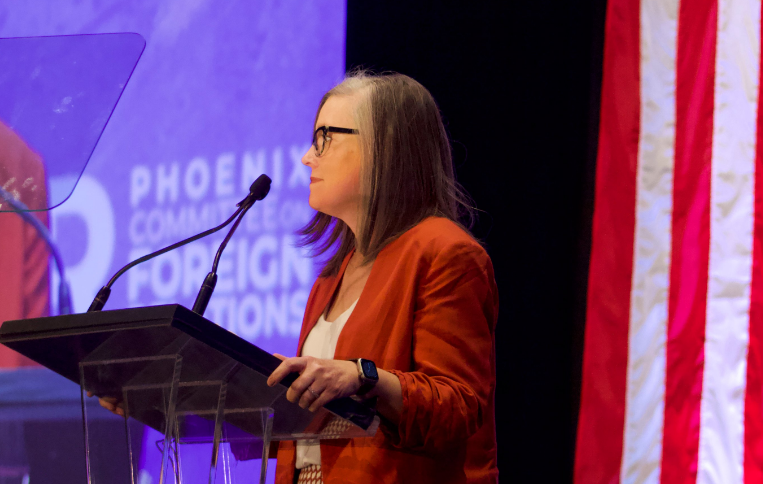
Governor Katie Hobbs said people need to pump the brakes on inflammatory rhetoric aimed at political opponents, but brushed off questions about whether she was guilty of using similar rhetoric.
Hobbs made the remarks in brief during her press conference Monday announcing an apprenticeship program partnership with Intel. The governor offered her opinion on what constitutes appropriate and safe political rhetoric as a response to the attempted assassination of former President Donald Trump over the weekend.
“Political violence has no place in this country, and voicing our political opinions peacefully is absolutely paramount to preserve the sanctity of our democracy,” said Hobbs. “We have to come together and we have to stop inflaming this kind of rhetoric, using this kind of rhetoric.”
Hobbs added that political discourse has become unhealthy and a hindrance to a healthy society.
“Too often our communities are being torn apart by politics,” said Hobbs. “We need to come together and remember that we are neighbors, friends, and American citizens all united by a love for our country.”
However, when pressed by reporters to address her past usage of inflammatory political rhetoric, Hobbs refused to justify her remarks. The governor dismissed concerns about her own actions as a different type of “politics” than what she was addressing.
“I’m not going to get into that,” said Hobbs. “I’m not thinking about politics right now.”
Political violence is unacceptable, and has no place in this country.
I am glad that former President Trump is safe, and hope that others at the rally were not seriously injured. I hope the perpetrator of this heinous act will be swiftly brought to justice.
— Governor Katie Hobbs (@GovernorHobbs) July 13, 2024
Hobbs has spent years framing Republicans as dangerous extremists, namely in reference to her gubernatorial opponent (now Senate candidate) Kari Lake and Trump.
“The extremist Republican majority had the chance to do the right thing for their constituents, and they failed. While extremists in the legislature refuse to protect our rights, I will do everything in my power to protect reproductive freedoms for Arizona women.”
“Hate speech and religious discrimination have absolutely no place in our state. Kari Lake and her extremist allies’ rhetoric is harmful, and to give them statewide platforms to spread it would be seriously dangerous for Arizona.”
“Kari Lake is too dangerous for Arizona.”
“Kari Lake has gone radical and is far too dangerous for Arizona.”
“Kari Lake’s campaign spends more time spreading conspiracy theories and inciting fear than providing real solutions to Arizona’s very real challenges. Her dangerous rhetoric and ideas pose a serious threat to our state and country.”
Several days before the 2022 election, Hobbs urged Republican voters in an opinion piece for Fox News to back her because Lake and other modern Republicans were “extremist, radical stone throwers” that represented an insanity and chaos that would override the Constitution and upend democracy.
Even before becoming governor, Hobbs engaged in inflammatory rhetoric against the former president. During the first year of Trump’s presidency, Hobbs accused Trump of pandering to Nazis.
“[Donald Trump] has made it abundantly clear he’s more interested in pandering to his neo-nazi base than being [President] for all Americans,” wrote Hobbs.
.@realDonaldTrump has made it abundantly clear he's more interested in pandering to his neo-nazi base than being @POTUS for all Americans.
During Trump’s initial presidential campaign, Hobbs accused Trump of “promot[ing] rape culture” and “bragg[ing] about sexually assaulting women.” Hobbs also claimed that Trump posed a serious, existential threat to our country.
AZ Free News is your #1 source for Arizona news and politics. You can send us news tips using this link.
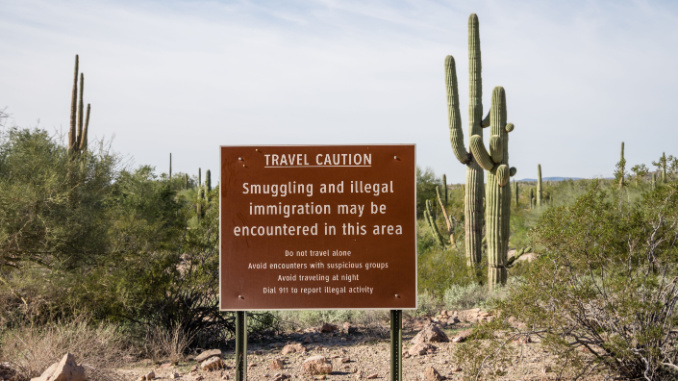
Arizona Senate Republicans won a legal challenge to keep their border security ballot measure on track for voters to decide its fate in the November General Election.
🚨 FOR IMMEDIATE RELEASE: 'Secure the Border Act' Withstands Frivolous Constitutional Challenge, Will Appear on November Ballot
Last week, a Maricopa County Superior Court judge issued an order on an effort to stop HCR 2060 from being considered by state voters this fall, “denying applications for preliminary applications for preliminary injunction and declaratory judgment relief” in Living United for Change in Arizona v. Fontes.
In his order, Judge Scott Minder wrote, “Arizona’s constitution requires HCR 2060 to ‘embrace but one subject and matters properly connected therewith.’ HCR 2060 is intended to refer ‘responses to harms relating to an unsecured border’ to the people of Arizona for the November 2024 ballot. In this challenge, Arizona law requires Plaintiffs to overcome the strong presumption that the act is constitutional. Because a natural connection exists, i.e., all provisions are ‘responses to harms relating to an unsecured border,’ Plaintiffs have not met their burden to show a violation. Absent other challenges, the policies of HCR 2060 should be left to the voters.”
BREAKING: A victory for the citizens of Arizona! Late today, a superior court judge blocked a frivolous lawsuit filed by radical left activists in an effort to deprive Arizona voters of the opportunity to take border security matters into their own hands this November with HCR… pic.twitter.com/n3ORsEicEN
Judge Minder ruled “in favor of the defendants on all counts because the parties agreed to combine the trial on the merits with the argument for the preliminary injunction applications.”
Arizona Senate President Warren Petersen issued the following statement after the superior court judge ruled: “It’s unthinkable Democrats and our Governor would stand with Biden and radical left activists, instead of the hardworking Arizona families who are begging for their elected leaders to secure our border and promote safety within our communities. As expected, the court ruled in favor of sanity instead of chaos, and we’re grateful we are able to provide this opportunity to voters to have the final say on.”
“My colleagues and I worked tirelessly this session to create impactful legislation to help secure our border because the people of Arizona are desperately asking for it,” said Senator Janae Shamp. “The attempts from Arizona Democrats and radical left activists to deprive voters of the opportunity to decide on this matter is truly appalling. From the spreading of misinformation to the filing of frivolous lawsuits, they will stop at nothing to keep our border wide open and perpetuate Biden’s border crisis. The federal government has neglected the safety of our citizens, and the time has come to empower Arizonans to fight back against the tyranny. I wholeheartedly believe the Secure the Border Act will save countless lives, save billions in taxpayer dollars, and strengthen our national security.”
“While the Biden Administration continues to turn their backs on our law enforcement, we will not,” said Senator David Gowan. “These men and women are putting their lives on the line to protect our communities from the deadly crimes associated with the border crisis, and they deserve the tools and support they need to do their job. Our law enforcement reached a breaking point a long time ago. It’s now up to everyday Arizonans to stop the lawlessness.”
Last month, former President Donald J. Trump was asked about this ballot measure. He replied, “I endorse anything that is going to make it more difficult for people to come into our country illegally.”
"I endorse anything that is going to make it more difficult for people to come into our country illegally."
We asked President Trump during an exclusive interview whether or not he would support HCR 2060, a measure that will now be on the November ballot and would allow local… pic.twitter.com/wDUj8PPJcx
The efforts from Arizona legislators to send this referral to state voters came months after Governor Katie Hobbs vetoed SB 1231, the Arizona Border Invasion Act, which would have “ma[de] it unlawful for a person who is an alien (unlawful immigrant) to enter Arizona from a foreign nation at any location other than a lawful port of entry and outline[d] penalties for violations of illegally entering Arizona and provide[d] immunity from civil liability and indemnification for state and local government officials, employees and contractors who enforce this prohibition” – according to the purpose from the state Senate.
Senator Janae Shamp, the sponsor of SB 1231, had vowed in the aftermath of the governor’s veto that members of her party would continue to push forward solutions to combat the border crisis. Republicans in both the Arizona House of Representatives and Senate came together to pass HCR 2060 earlier this spring, sending the border-related policies to the November General Election ballot.
Daniel Stefanski is a reporter for AZ Free News. You can send him news tips using this link.
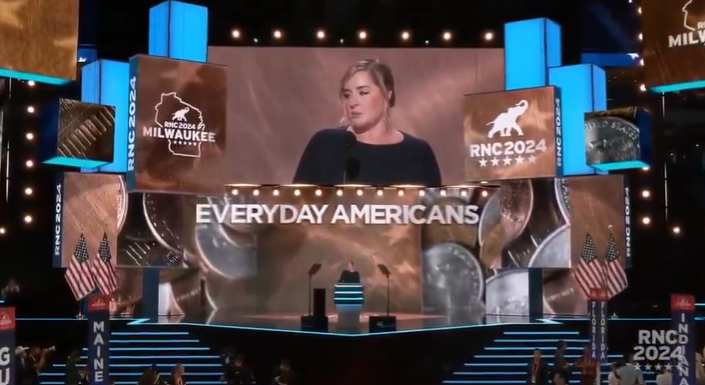
In what might be considered one of the most remarkable presidential conventions in modern American history, the Trump campaign is leaning on the stories of everyday Arizonans to make the case for former President Donald J. Trump’s return to the White House.
According to the 2024 Republican National Convention’s Committee on Arrangements, three Arizonans were selected to speak in the leadup to former President Donald J. Trump’s historic coronation as the next Republican nominee for President of the United States of America. These three are considered “everyday Americans,” who “have faced immense hardship and are worse off under the Biden-Harris administration.” This convention means to “provide a platform and voice for the workers, veterans, and families left behind in Joe Biden’s America.”
The first Arizonan featured in the list released late last week was Jim Chilton. Chilton’s bio in the program is as follows: “Jim is a fifth-generation rancher from Arivaca, Arizona. His family has been in the cattle business for nearly 140 years. His ranch extends to the US-Mexico border and is located in a top corridor of drug smuggling and human trafficking. Jim’s concerns and issues with the border are shared by other ranchers in the Tucson Sector, regardless of whether their ranches also touch the border.”
The second Arizonans featured in the list was David Lara. Lara’s bio in the program is as follows: “David is the owner of Desert Water, a water purification business serving Yuma County, Arizona. As a community leader and activist, David takes the future of Arizona seriously; David serves on the Yuma Union High School District #70 school board, among other volunteer roles. David is a firsthand witness to the negative impacts of illegal immigration overrunning and overburdening his community.”
The final Arizonan featured in the list was Sara Workman. Workman’s bio in the program is as follows: “Sara is a single mother who moved from California to Arizona to provide a better life for her son. Although she still struggles to make ends meet in Joe Biden’s economy despite working a second job at the expense of precious time with her son, Sara maintains her faith in God and God’s plan for her and her family. Sara is a passionate supporter of President Trump and his vision to ensure a better future for her son.”
Donald J. Trump for President 2024 Senior Advisors Susie Wiles & Chris LaCivita said, “From the beginning of President Donald J. Trump’s campaign to Make America Great Again, we’ve received an outpouring of support from everyday Americans who are ready to turn the page on the last four years of failure, disaster, and embarrassment at home and abroad. The 2024 Republican National Convention will showcase President Trump’s vision to turn our country around and launch our America First movement to victory come November.”
Republican National Committee Chairman Michael Whatley and Co-Chairman Lara Trump added, “The 2024 Republican National Convention will undoubtedly continue to build the energy and momentum necessary to drive President Donald J. Trump to victory this fall. It’s no coincidence the Convention will lay out President Trump’s vision to restore America in Wisconsin – ground-zero on the road back to the White House.”
Arizona’s eleven Electoral College votes are closely contested and are vital for securing the presidency. Trump previously won Arizona on his way to the 2016 win over Democrat nominee Hillary Clinton. He narrowly finished behind Joe Biden in the Grand Canyon State in the 2020 contest.
The daily theme for Monday at the convention was “Make America Wealthy Once Again.” For Tuesday, “Make America Safe Once Again.” For Wednesday, “Make America Strong Once Again.” And for Thursday, “Make America Great Once Again.”
Daniel Stefanski is a reporter for AZ Free News. You can send him news tips using this link.
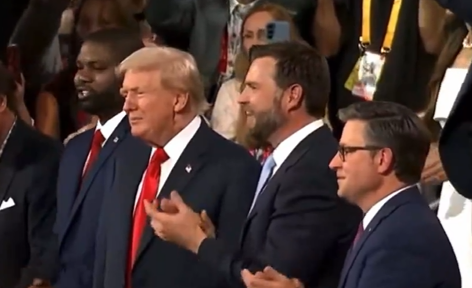
On Monday, former President Donald Trump announced via Truth Social that Senator J.D. Vance of Ohio, at 39 years of age, will be his running mate. Vance would become the youngest Vice President in over a century if he is sworn in as the 50th person to hold the second-highest office in the United States.
(For anyone keeping score Vice President John C. Breckenridge was sworn in at age 36 under President James Buchanan in 1821.)
In President Trump’s announcement, he explained that he made the contentious decision, “After lengthy deliberation and thought, and considering the tremendous talents of many others.” Indeed fellow Senators Marco Rubio (R-FL), Tim Scott (R-SC), and former North Dakota Governor Doug Burgam, and even former presidential candidate Vivek Ramaswamy were in consideration.
But Trump continued, “I have decided that the person best suited to assume the position of Vice President of the United States is Senator J.D. Vance of the Great State of Ohio. J.D. honorably served our Country in the Marine Corps, graduated from Ohio State University in two years, Summa Cum Laude, and is a Yale Law School Graduate, where he was Editor of The Yale Law Journal, and President of the Yale Law Veterans Association. J.D.’s book, ‘Hillbilly Elegy,’ became a Major Best Seller and Movie, as it championed the hardworking men and women of our Country.” As Trump alluded, to it was Vance’s nationwide bestselling memoir later adapted for film, “Hillbilly Elegy,” that propelled him to national prominence.
He added, “J.D. has had a very successful business career in Technology and Finance, and now, during the Campaign, will be strongly focused on the people he fought so brilliantly for, the American Workers and Farmers in Pennsylvania, Michigan, Wisconsin, Ohio, Minnesota, and far beyond.”
The move came as a surprise to many recalling Vance’s vocal opposition to Trump in 2016, although his gradual pivot from a harsh critic to a stalwart ally has been extremely well documented. In an interview with Fox News in June, Vance told Brett Baier, “Look, I was wrong about Donald Trump. I didn’t think he was going to be a good president. He was a great president, and it’s one of the reasons why I’m working so hard to make sure he gets a second term.”
During a Trump Townhall in Phoenix last month, as reported by the New York Post, Vance seemed to deflect questions on his potential selection. He told reporters, “First of all, I’m thankful it’s not my decision because I think that Trump has a lot of different things that he’s weighing, and he’s the guy who’s gonna make the decision. My view is the most important thing is you need somebody who’s gonna help govern.”
Laughing with reporters in footage captured by AZ Free News, he was asked if he had any information on Trump’s choice, and he joked, “Yeah, sure. But I’m not going to tell you guys!“ He then quipped, “Any other questions about this event or about Arizona because I think I’m exhausted by the VP conversation and I’ve been here five minutes.”
Despite his initial disagreement with Trump’s policies in 2016, Vance has, for the last three years, been seen as one of the President’s most ardent defenders and allies in the Senate, spearheading efforts to prevent a renewed mask mandate on airlines, as well as efforts to block politically driven appointments to the Biden DOJ in light of the ongoing utilization of that department’s assets to pursue the political prosecution of Trump.