by Matthew Holloway | Jul 25, 2024 | News
By Matthew Holloway |
On Tuesday, Maricopa County Elections officials held a press conference on the expectations voters can have over the next weeks as primary votes are cast and tabulated in the July 30th election. The performance of the Arizona election system will likely presage the General Election experience we can expect in November. Amidst the CrowdStrike outage and the attempted assassination of President Donald Trump looming over the proceedings the officials took questions from several outlets and briefed the press on projected turnout.
Maricopa County District 3 Supervisor Bill Gates began by addressing the increasingly tense atmosphere to the gathered reporters saying, “Unfortunately we’re talking about and thinking about political violence and our country right now in a way that we haven’t in a long time.”
He continued citing security concerns on election day, “We know that’s on people’s minds and that’s why we are committed to providing a safe and secure experience both for our elections workers as well as those people who go to vote .”
Gates added, “It’s very important that everybody understands that me and my colleagues on the board are committed to safe, secure and transparent elections.”
Responding to questions about the impact of CrowdStrike’s Friday outage on the election system, Fields Moseley, the Maricopa County Communications Director, told 12News, “We feel like we had a fairly low impact. Still, almost 400 people voted on Friday. We opened at 9 a.m. with four vote centers open and had a rolling opening all day long as those were fixed and 40 were opened before the end of the day. None of the tabulators were affected by this. They’re on an air-gap system. They’re not connected to the internet.”
The Republican National Committee and Republican Party of Arizona sent a joint letter to the Maricopa County Elections Director expressing their concerns following the disruption.
“The most recent occurrence is extremely worrisome due to the online nature of the issue and the implications if this were to happen on Election Day,” the state and national GOP said in part.
AZGOP Chair Gina Swoboda said in a statement accompanying the letter:
“Following the discovery that the global CrowdStrike outage had affected elections systems in Maricopa and Pima counties in Arizona, the RNC, AZGOP, and Trump Campaign’s election integrity department have sent a letter to every county in the state. We are demanding information on any other systems affected, if vulnerabilities were exploited, and full evidence demonstrating that there were no breaches to determine the extent of the issue. Most importantly, we must have complete assurance that this will not happen again and that the elections systems are not susceptible to these threats during our country’s most important election. These breaches highlight alarming fragilities in the voting system, and we need confirmation that there was no nefarious activity. How was this allowed to happen in a critical battleground state during the primary election?
Voters must have full confidence their ballots are protected. We will uncover the evidence and pursue every avenue needed to ensure the system is secure.”
Moseley replied, “We’re aware of the letter from the RNC. We will respond to the RNC at the appropriate time.” He continued, “We already publicly explained what happened to our ballot on demand system on Friday during the day. We opened at 9:00 a.m. with four vote centers open and had a rolling opening all day long as those were fixed and 40 were open before the end of the day. None of the tabulators were affected by this. They’re on an air gap system. They’re not connected to the internet.”
Addressing concerns for the General Election, Jennifer Liewer, the Maricopa County Deputy Elections Director for Communications told the conference, “We will have over 240 vote centers open, so if a vote center does go down, people are able to choose from a different vote center, but we will have increased resources, increased technology personnel.” She added, “We are prepared should something occur on Election Day to be able to be responsive without knowing that what exactly might happen and obviously you can um do the best you can to plan for things. And I think our staff being flexible responsive.”
She continued, “Our IT staff were up in the middle of the night on site at MCTEC helping get computers rebooted. It was really all hands on deck and Maricopa County voters can know that we are dedicated and even if that means getting up in the middle of the night and coming into work, we’ll do whatever it takes to make sure that everybody who wants to cast a vote has the ability to do so.”
Moseley, describing the impact of the CrowdStrike outage, noted, “Friday was a pretty unique event,” even quipping: “I mean let’s ask Delta Airlines.” Responding to a question on converting to a different system he told reporters, that he couldn’t say for sure if the county is “re-evaluating,” its use of CrowdStrike for cyber security or Microsoft’s products, which he referred to as “ubiquitous.”
The officials noted that the county is anticipating 623,000 ballots to be cast in total by mail, dropbox, or in-person for the primary election with approximately 94,000 of those being in-person on election day. Approximate projections for total turnout are from 718,000-894,000 or about 30% of the electorate.
Assistant County Manager Zach Schira stressed the staffing levels and heavy investment the county has made in elections stating, “Good people ran lawful elections in Maricopa County in 2020 and 2022 and are doing so in 2024. Our full-time election staff, supplemented by thousands of members of this community, are trained to ensure we are following the law.” He added, “Over the past year, the Board of Supervisors has invested heavily in elections: more than $15 million in new money towards resources and equipment that directly impact the efficiency and security of our operations. Bottom line: we are well resourced, well planned, well trained for next Tuesday’s Primary and the entire 2024 cycle.”
Matthew Holloway is a senior reporter for AZ Free News. Follow him on X for his latest stories, or email tips to Matthew@azfreenews.com.
by Staff Reporter | Jul 25, 2024 | Economy, News
By Staff Reporter |
A radical Democrat legislator is seeking a return to a middle-of the-road Arizona district in the upcoming November General Election.
State Representative Keith Seaman is running for reelection in Arizona Legislative District 16. Seaman assumed office in January 2023 after narrowly finishing second in the district in the November 2022 General Election results, beating Republican challenger Rob Hudelson by 644 votes. Seaman now represents the district in the State House of Representative alongside his seatmate, Representative Teresa Martinez, a Republican.
Though the district is more moderate, Seaman has been anything but, as attested by his first term in the state house. On his campaign website, Seaman lists endorsements from left-leaning organizations, such as Arizona Education Association, Save Our Schools Arizona, National Organization for Women Arizona, and Sierra Club Grand Canyon Chapter.
Seaman’s votes in the Arizona Legislature show a pattern of being soft on crime. He voted against HB 2435, which would have “require[d] a person who is convicted of a third or subsequent organized retail theft offense to be sentenced as a category two repetitive offender” (2024). He also voted against SB 1583, which would have mandated that “a level one sex offender who commits specified sexual offenses is required to register on the internet sex offender website if the offender was sentenced for a dangerous crime against children” (2023). Additionally, he voted against SCR 1021, a ballot referral, which would “statutorily require an adult who is convicted of a class 2 felony for any child sex trafficking offense to be sentenced to natural life imprisonment” – should voters approve it in the upcoming November General Election.
The Democrat legislator also made controversial votes related to the border crisis facing his state. He opposed HB 2621, which would have deemed that the trafficking of fentanyl across Arizona’s border is a public health crisis. He also spurned SCR 1042, which “proclaim[ed] the Legislature’s support for the people and government of the state of Texas in its efforts to secure [the U.S.] southern border.”
He also took a stance against policies that would lead to economic prosperity in Arizona. Seaman voted no on SB 1260, which would have “reduced the state’s small business income tax rate to 2.5%” (2023). And he opposed SB 1370, the lemonade stand bill, which would have exempted a minor or a person who has not graduated from high school from the requirement to obtain a TPT license and pay TPT (use tax and local excise taxes) if the person’s business gross proceeds of sales or gross income is less than $10,000 per calendar year.
Seaman has also proven to be an ardent opponent of Arizona’s historic school choice program. Last year, he joined several of his colleagues in the legislature’s Teacher Caucus to castigate the ESA program. He posted, “As a retired educator, I support our public schools and will fight to ensure that they receive the funding they need. Arizona taxpayer dollars should not be used to fund private institutions while public schools struggle with budget cuts and a lack of resources for students.”
On the education front, Seaman voted against HB 2629, which would have “establish[ed] November 7 of each year as Victims of Communism Day and require[d] the State Board of Education to create a list of recommended resources for mandatory instruction on the topic in certain public school courses.” He also registered a vote against HB 2779, which would have “specifie[d] that the State Board of Education, must require, in course of study and competency requirements, that students be taught about the Holocaust and other genocides for at least three school periods, or the equivalent, on at least two separate occasions during any of the 7th-12th grades.”
It wasn’t just what Seaman opposed that made him too radical for the district; it was also what he promoted that flew in the face of a likely majority of his constituents. Seamon cosponsored HB 2610, which would have created a state-owned bank (2023). He cosponsored HB 2068, which would have repealed designating school sports by biological sex (2023). And he cosponsored HB 2653, which would have established that “restaurants and other food service establishments in this state may only serve water and disposable straws to customers on request” (2023).
Arizona Legislative District 16 is one of the most competitive in the state with a 3.6% vote spread between Republicans and Democrats in the last nine statewide elections, according to the Arizona Independent Redistricting Commission. However, in those nine statewide elections, Republicans have emerged victorious in all nine.
Representative Seaman’s daughter, Stacey, is attempting to join him in the legislature next year. She is running for state senate and will go head-to-head against incumbent T.J. Shope for the right to represent Arizona Legislative District 16 constituents for the next two years.
Seaman is again the only Democrat running in the Legislative District 16 primary, as his party again attempts to gain an advantage in the General Election with this single-shot approach. He will face two Republicans who will emerge from a crowded primary later this month. Those Republicans are Martinez, Hudelson, Chris Lopez, and Gabriela Saucedo Mercer.
AZ Free News is your #1 source for Arizona news and politics. You can send us news tips using this link.
by Staff Reporter | Jul 25, 2024 | News
By Staff Reporter |
A major Democrat super political action committee, the PAC for America’s Future, is investing heavily in Arizona this election year. PAC for America’s Future is not only the largest PAC in Arizona; it is a top donor to the Democratic Party.
PAC For America’s Future has focused on Arizona, one of the more contentious of the six key swing states for the election, alongside Wisconsin, Pennsylvania, Michigan, Georgia, and Nevada. According to the Arizona secretary of state’s campaign finance portal, the PAC is the second-largest in the state with over $9.5 million in income and $4.2 million in expenditures, after Arizona for Abortion Access ($12.3 million income, $9.6 million expense). However, PAC for America’s Future has the highest cash balance in the state: over $8.3 million.
These funds are from out-of-state interests, not Arizonans. AZ Free News reviewed all finance reports and found that total funds from Arizonans amounted to slightly less than $13,500 across 122 donations (some of whom were recurring donors). That’s .0014 percent of total donations since last year.
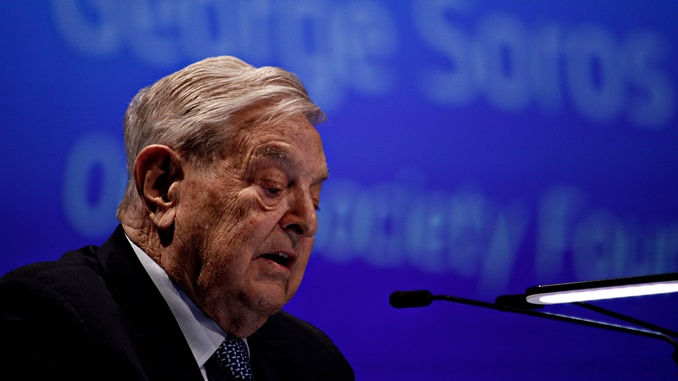
Most of the other funds come from sizable contributions by wealthy out-of-state Democrats. Jonathan Soros, heir to father George Soros’ $25 billion empire, has given $2 million to PAC for America’s Future this year and remains their single-highest donor.
Other top donors from last year to this year include:
- $500,000 from Lynn Schusterman, an Oklahoma billionaire and wife of the late oil and gas founder Charles Schusterman
- $1 million from Wendy and Barry Munger, Californians and children of former Berkshire Hathaway vice chair and late Charles Munger
- $400,000 from Indiana philanthropist Deborah Simon, daughter of billionaire shopping mall magnate Melvin Simon
- $400,000 from Steven Laufer, economist with the Federal Reserve Board
- $300,000 from Debra Ann Efroymson, a New Mexico descendant of the wealthy Efroymson dynasty
- $250,000 from New York property management tycoon Gideon Friedman
- $245,000 from billionaire California philanthropist John Pritzker, son of Hyatt Corporation founder Jay Pritzker
- $200,000 from David Karp, former CEO of major social media platform Tumblr
- $100,000 from a Paul Karp (Paul Haahr), a Google software engineer out of California
- $100,000 from Linda Schlein, the wife to venture capitalist Ted Schlein out of California
- $170,000 from multiple members of the billionaire Pigott family out of Seattle, Washington
- $75,000 from Juan Sebastian Scripps, an angel investor out of Kentucky
- $75,000 from Andrew Beck, a New York-based philanthropist
- $50,000 from Steven Spielberg, the acclaimed Hollywood director
- $50,000 from Kate Capshaw, a Hollywood actress
- $50,000 from Jacqueline Asplundh, the Asplundh Tree Expert Company scion out of Florida
- $50,000 from Brian Rosenthal, the engineering director for Facebook residing in New York
- $50,000 from Lorin Silverman, the New York descendant of business tycoon Marty Silverman
PAC for America’s Future’s affiliates have also brought in millions for the cause. These affiliates serve as holding entities for transferring funds to the PAC.
PAC for America’s Future formerly went by the “Future Now Fund” up until 2021. It’s a repository for funds from major Democratic dark money donors like George Soros and funder to one of the state’s leading dark money nonprofits, Progress Arizona, the outfit led in part by Governor Katie Hobbs’ former press secretary Josselyn Berry. (She rejoined after resigning from the governor’s office due to her posted gun violence threat to “transphobes” last year within hours of the Nashville elementary school shooting.)
Given its most recent name, it should come as no surprise that PAC for America’s Future is listed as “related” on tax returns to two similarly named 501c4 nonprofit entities: Future Now Action and Future Forward USA Action. The two nonprofits also operate a super PAC, Future Forward PAC, which has received nearly $19 million so far this year from Future Forward USA Action ($12 million in 2022).
This network of millions is a critical resource for the Democratic Party during election years.
Jennifer O’Malley Dillon, White House deputy chief of staff and Biden’s 2020 campaign manager, told The New York Times that the Future Forward ecosystem was “critical” in the 2020 presidential election, and would be again this year.
The Biden team directed his 2020 campaign finance director and White House deputy assistant Katie Petrelius to join the Future Forward team.
The Soros family’s Open Societies Foundation gave $15 million to Future Forward USA Action in 2022 and $5.5 million in 2021. The Arabella Advisors dark money network has also given millions to PAC for America’s Future and the two related “Future” nonprofit entities.
Although few of this mega PAC’s funds come from Arizonans, the Arizona Democratic Party, its candidates, and close-knit organizations have benefitted. In this most recent quarterly campaign finance report, as well as the last, the Arizona Democratic Party received nearly $300,000.
In the last campaign finance report, PAC for America’s Future reported spending over $140,000 on Arizona’s Democratic candidates, with all candidates receiving $10,800 boosts each. AZ List PAC also received $27,000.
For the State House, these donations went to candidates Deborah Howard, Stephanie Simacek, Oscar De Los Santos, Brandy Reese, Nicholas Gonzales, Matias Rosales, Mariana Sandoval, Karen Gresham, and Kevin Volk. For the State Senate, these donations went to Christine Marsh, Analise Ortiz, John McLean, and Stacy Seaman.
PAC for America’s Future is technically a “hybrid” committee — or “Carey” committee — meaning it’s capable of making independent expenditures as well as direct contributions to candidates.
A donor’s first $5,000 goes to a contribution account per PAC for America’s Future’s donor site. All funds beyond that $5,000 cap go into a non-federal account. That latter account is for PAC for America’s Future’s 527 committee, a tax-exempt type of committee that allows for unlimited donations to support or defeat political candidates but requires disclosure of all donors and expenses.
PAC for America’s Future’s 527 Committee then funnels the donations in excess of $5,000 — estimated to amount to tens of millions — to PAC for America’s Future’s joint initiative with Future Now Action, “The States Project” (TSP).
TSP took credit for moves undertaken to flip the Arizona legislature blue, dating back to their initial claim of victory in 2018 with four seats flipped for Democrats in the state House; then two new seats in the House and one new seat in the Senate in 2020; and then defense of won seats in 2022.
“Flipping both chambers in Arizona is possible in 2024. In the Senate 1,500 voters changing their minds would have shifted the balance of power in 2022. And in the House, we see a clear path to governing power, as less than 1,000 voters shifting would have ended rightwing control. Investing in the districts where we see the opportunities to shift power now gives us the strongest shot at achieving our goals in the state.” – TSP
Based on the influx of funds through their various PAC for America’s future tributaries, it appears that wealthy out-of-state interests have a vested interest in ensuring Arizona goes from a swing state to a firmly blue stronghold.
AZ Free News is your #1 source for Arizona news and politics. You can send us news tips using this link.
by Matthew Holloway | Jul 24, 2024 | Education, News
By Matthew Holloway |
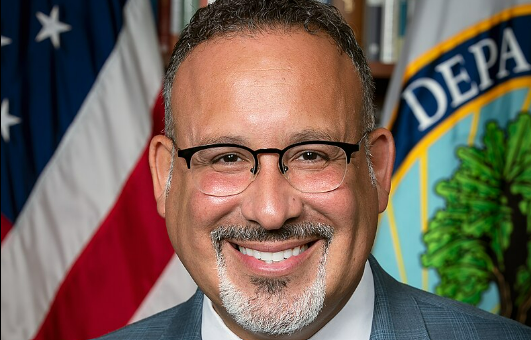
On Thursday, the Foundation for Accountability and Civic Trust (FACT), a non-partisan ethics watchdog group filed a complaint with the U.S. Office of Special Counsel under The Hatch Act of 1939 against Secretary of Education Miguel Cardona. FACT has alleged that Cardona violated the Act by sending out a political email to federal student loan borrowers in his official capacity. The HATCH Act of 1939 limits certain political activities of federal employees to protect federal employees from political coercion in the workplace.
According to a press release from FACT, an email sent in July 2024 to an estimated 43 million “citizens who are federal student loan borrowers,” originated from an official government email address, was written on an official Department of Education letterhead, and was signed by Cardona with his official title. The foundation noted, “This type of political advocacy from the government targeting citizens who interact with an agency is exactly the type of politicization the Hatch Act is designed to prevent.”
Kendra Arnold, Executive Director of FACT, said in a statement, “Secretary Cardona appears to have been caught making an overtly political pitch to student loan borrowers in an election year. The uniqueness and magnitude also need to be noted, as this case goes far beyond a standard Hatch Act violation of making a political remark while appearing in an official capacity.
What looks to have happened here is an extremely partisan message was widely distributed using data the federal government had compiled on citizens who have student loans—a universe that could be 43 million people. We urge the Office of Special Counsel to immediately act and investigate whether Secretary Cardona violated the Hatch Act and, if so, the true scope of it.”
In the text of the email from Cardona, revealed by FACT, several statements from Cardona are explicitly political in nature, addressing Republicans as adversaries to the department. For example:
- “Republican elected officials who are siding with special interests and trying to block Americans from accessing all the benefits of the most affordable student loan repayment plan in history . . .”
- “President Biden and I are determined to lower costs for student loan borrowers, to make repaying student debt affordable and realistic, and to build on our separate efforts that have already provided relief to 4.75 million Americans – no matter how many times Republican elected officials try to stop us.”
- “While we disagree with the Republican elected officials’ efforts here to side with special interests and block borrowers from getting breathing room on their student loans . . .”
The complaint submitted by FACT lays out the HATCH Act case against Cardona clearly and in simple terms: “(1) the email was a blatant political communication and (2) it was sent in Cardona’s official capacity using taxpayer funded resources.” In campaign or marketing terms, the email list owned and maintained by the Department of Education is a resource that is potentially worth billions of dollars and is off-limits for anything but official government use. As Arnold noted, “the email sent by Cardona was a blatant political communication. When read in its entirety it is clear the only purpose for sending the letter was a political one and its content was primarily political. The email made political arguments and numerous times specifically identified the political party by name that Cardona opposes in a disparaging manner to generate opposition to the political candidates and party.”
As reported by The Daily Mail, the modern interpretation of the HATCH Act prohibits the sending or forwarding of partisan political emails while an official is on duty or in the workplace or even engaging in political activity like attending a meeting while in uniform or driving a government vehicle.
Arnold writing on behalf of FACT concluded, “While this is an obvious case simply based upon the facts above, it goes far beyond the standard violation of just making a political remark while appearing in an official capacity. While he certainly did make a political remark in his official capacity, he also proactively used data the government had on student loan borrowers for political purposes. Quite clearly this is a severe breach of the citizens’ trust and is inexcusable.
The government endorsement of a political position and use of taxpayer funded resources to do so is the exact political behavior that is forbidden by the Hatch Act.”
Matthew Holloway is a senior reporter for AZ Free News. Follow him on X for his latest stories, or email tips to Matthew@azfreenews.com.
by Staff Reporter | Jul 24, 2024 | Education, News
By Staff Reporter |
State Superintendent of Public Instruction Tom Horne is advising Arizona’s school districts and charter schools to consult legal counsel regarding implementation of the controversial Title IX changes.
The changes to Title IX center on the redefining of the term “sex” to include “gender identity.” In effect, schools would be required to permit access to gendered programs, activities, or spaces on the basis of gender identity rather than biological sex, such as sports teams, locker rooms, and bathrooms. The U.S. Department of Education (ED) released the final Title IX rules outlining this change in April.
In ED’s justification for expanding the concept of “sex” to include “gender identity,” the agency declared that basing exclusion on biological sex amounted to sex discrimination.
“For more than 50 years, Title IX has promised an equal opportunity to learn and thrive in our nation’s schools free from sex discrimination,” said U.S. Secretary of Education Miguel Cardona. “These final regulations build on the legacy of Title IX by clarifying that all our nation’s students can access schools that are safe, welcoming, and respect their rights.”
These new rules take effect on Aug. 1.
In a press release on Monday, Horne announced that he’d advised legal counsel to educational institutions through letters disseminated to all districts and charters. Horne emphasized that, though all schools had the choice to implement the updated Title IX regulations, there were pending legal challenges that may result in students suffering damages.
“This is your choice, but you may wish to delay implementing the new regulations until the legal situation is clarified. If the regulations are implemented and then later overruled by the courts, students may suffer damages in the meantime,” said Horne. “This is not legal advice. The Arizona Attorney General may disagree […] We are a local control state, and it will be up to districts and charters to determine how to proceed in this situation. You need to consult with your lawyer. I am only providing information I think might be useful.”
Indeed, a federal court in Louisiana ruled against the new regulations last month. The judge determined that the new federal rules amounted to federal overreach, calling ED’s rulemaking “arbitrary and capricious,” and signaling concern for the rules’ threat to protected constitutional speech.
Some districts have already opposed the changes.
Dysart Unified School District’s governing board voted to reject the new Title IX rules earlier this month. The district declared that ED’s changes to Title IX were contradictory to the existing, plain language of the rules.
Horne noted in Monday’s press release that the new Title IX rules could “significantly injure public education” by prompting parents to flee the system.
“In the past I’ve been asked by districts, as a policy matter, about their consideration of rules, permitting biological boys who have male genitalia being allowed in girls’ bathrooms, locker rooms, and showers,” said Horne. “My response was that there should be unisex bathrooms available, and if there was no room for them, the faculty bathroom should be used for that purpose. That would preserve the dignity of biological boys who identify as girls. But if they were allowed in girls’ facilities, I thought parents might well remove the girls from the school and send them to another district, Charter School, or private school. So, this rule could significantly injure public education.”
26 states have put forth legal challenges to the Title IX changes, with some awarded injunctions: Alabama, Alaska, Arkansas, Florida, Georgia, Idaho, Indiana, Iowa, Kansas, Kentucky, Louisiana, Mississippi, Missouri, Montana, Nebraska, North Dakota, Ohio, Oklahoma, South Carolina, South Dakota, Tennessee, Texas, Utah, Virginia, West Virginia, and Wyoming.
AZ Free News is your #1 source for Arizona news and politics. You can send us news tips using this link.
by Staff Reporter | Jul 24, 2024 | News
By Staff Reporter |
Come November, Arizona voters may decide whether to establish abortion at any stage of pregnancy as a fundamental right in the state constitution.
The assigned ballot number, Proposition 139, declares that voting in favor of the initiative would create a fundamental right to abortion, thereby limiting the state’s ability to interfere with all abortions — mainly those pregnancies predating the generally accepted standard for viability, around 24 weeks.
However, that doesn’t mean that abortions won’t be covered by the state constitution after viability. The proposition declares that abortions will be permissible after viability should any involved health care professional determine them “necessary” to protect the mother’s life or health.
The proposition would also preemptively ban lawmakers from imposing any criminal sanctions or other punishments on anyone who assists another in obtaining an abortion.
“A ‘yes’ vote shall have the effect of creating a fundamental right to abortion under Arizona’s constitution. The State will not be able to interfere with this fundamental right before fetal viability, unless it has a compelling reason and does so in the least restrictive way possible. Fetal viability means the point in the pregnancy when, in the good-faith judgment of a treating health care professional, the fetus has a significant likelihood of survival outside the uterus. Throughout the pregnancy, both before and after fetal viability, the State will not be able to interfere with the good-faith judgment of a treating health care professional that an abortion is necessary to protect the life or health of the pregnant individual. The State will not be able to penalize any person for aiding or assisting a pregnant individual in exercising the right to an abortion.”
The secretary of state’s office is still reviewing signatures for the initiative.
Earlier this month, the PAC behind the initiative, Arizona For Abortion Access, sued the Arizona Legislative Council for using the term “unborn human being” rather than “unborn fetus” in their official analysis of the proposition distributed to voters in a publicity pamphlet.
An attorney for the PAC told lawmakers during their hearing on the subject that “unborn human being” was a partisan phrase, rather than their preferred term of “fetus.”
Arizona For Abortion Access, the political action committee behind the ballot initiative, has pulled in nearly $23.2 million for their cause.
The PAC’s biggest donors are mainly out-of-state entities: over $13.4 million altogether from The Fairness Project, Planned Parenthood Action Fund, Sixteen Thirty Fund, Advocacy Action Fund, the ACLU Foundation, Open Society Action Fund, Think Big America, The Green Advocacy, Movement Voter PAC and Project, Our Children Our Future, Clean and Prosperous America, and Moms Fed Up.
Several in-state entities rich with out-of-state cash flow put about $5.8 million toward the initiative: Arizonans Fed Up With Failing Health, ACLU of Arizona, Reproductive Freedom for All Arizona, Healthcare Rising Arizona, and the UFCW Local 99 PAC.
A number of wealthy, out-of-state billionaires have donated funds:
- Phoebe Gates, daughter of Bill Gates and Stanford University student, $750,000;
- Liz Simons, daughter of hedge fund billionaire James Simons, $250,000;
- Gaye Pigott, a Washington descendant of one of America’s richest families, the Pigott family, $75,000;
- Eric Laufer, a New York engineer, $65,000;
- Giovanna Randall, president and head designer of New York luxury bridal company Honor NYC $65,000;
- Barbara Simons, a retiree of San Francisco, California $51,000;
- Barton Faber, former Canto executive, a California-based software company (reported as living in Hawaii, but formerly from Arizona), $50,000;
- Ning Mosberger-Tang, a Colorado photographer, gave $50,000;
- Steven Spielberg, famed Hollywood director, and his Hollywood actress wife, Kate Capshaw, gave $100,000;
- Sheli Rosenberg, a retired Illinois executive of Equity Group Investments, gave $50,000;
- Gregory Serrurier, retired California cofounder of Redwood Grove Capital, $50,000;
- Eric Uhrhane, a Californian software engineer and angel investor, gave $50,000;
- Laura H. Lauder, a California philanthropist, gave $25,000;
- Georgia Taylor Michelson, Californian and wife to Zimmer Biomet board member Michael Michelson, gave $25,000;
- Marcia Grand, a California donor, gave $25,000;
- Sal Al-Rashid, a New York investor, gave $25,000;
- Elizabeth Brown, a California farmer, gave $25,000;
- Robin Donohoe, a Georgia venture capitalist, gave $25,000
Several wealthy in-state donors also gave. Among them were Juanita Fitzer Francis, who gave $200,000 — a former nurse with University of Arizona College of Medicine and Phoenix Children’s Hospital, and board member of the Arizona State University Foundation and University of Illinois Foundation. Francis also presides over the Francis Family Foundation.
There was also David and Louise Reese, who gave about $200,000 together. They operate the David E. Reese Family Foundation, a private grantmaking foundation in Paradise Valley. David formerly ran banking institutions across Arizona, Ohio, and New York.
And then there’s Sedona’s Donalyn Mikles, who gave $100,000. Mikles has been a top donor for the Democratic Party and Gov. Katie Hobbs in recent years. Mikles has served as a director of the Kling Family Foundation, a private philanthropic California nonprofit.
Donald Levin, a DRL Enterprises executive in Phoenix, gave $50,000. Paul Lipton, a Tucson hydroponics supply company founder, gave $25,000. Likewise, Robert Bertrand, a Paradise Valley retired executive of Concord Servicing, gave $25,000.
They’ve spent nearly $13.5 million so far, around $11 million on signature gathering. The second-largest expenditure was on advertising, generally, amounting to over $500,000, and polling came at a cost of over $100,000.
Staff salaries for other organizations also topped the list: staffing for Healthcare Rising, Reproductive Freedom for All Arizona, The Fairness Project, and the ACLU altogether amounted to over $400,000.
Their cash balance sits at just over $9.7 million.
AZ Free News is your #1 source for Arizona news and politics. You can send us news tips using this link.