by Corinne Murdock | Sep 8, 2022 | Education, News
By Corinne Murdock |
One of Arizona’s top charter school chains, Legacy Traditional Schools (LTS), began allowing boys into girls’ bathrooms this semester under its new “Title IX Gender Identity Policy” — and didn’t notify parents.
AZ Free News spoke to some of the families impacted: several said they’ve pulled their children out of safety concerns, while others are seeking accommodations. Despite the ongoing controversy over their updated policy to accommodate gender identity, LTS canceled its August 25 board meeting. They claimed that there was “no new business requiring board attention.”
Vertex Education, the education management company behind LTS, discussed and shared their updated Title IX policy with AZ Free News. It appears from what Vertex Education spokesman Sean Amir shared that LTS made the policy change to align with anticipated changes to Title IX under the Biden administration. Amir added that LTS didn’t include their new Title IX Gender Identity Policy in their parent handbook because it was part of their internal documents.
“As a public charter school, Legacy must abide by all state and federal laws. Likewise, it does not discriminate against any student. Our notice of non-discrimination in the Parent/Student Handbook (page 38) is available on our website, and provides the federal statement as mandated by law,” wrote Amir. “The school’s internal documents describe how to carry out what Title IX sets forth, and are made available upon request.”
Vertex Education didn’t answer our questions about the lack of notification to parents about the policy update, nor did they answer as to whether community backlash prompted LTS to cancel its last board meeting.
The company also didn’t answer whether their leadership discussed the high school sexual assault that made international headlines last fall and moved deep-blue Virginia to vote for a Republican governor for the first time in nearly a decade. In that case, a high school boy wearing a skirt sexually assaulted a freshman girl in the girls’ bathroom.
One LTS mother, Jennifer Leslie, shared with AZ Free News that they learned about LTS’ gender identity policy the week of August 2, when school started. Another parent’s child reportedly came home saying that a middle-school boy attended school dressed up as a girl and wearing a wig, and that he was uncomfortable with what he saw.
“They normally blast out so many emails about changes. Not once was this mentioned,” said Leslie. “It’s just disheartening. I don’t have a better way to explain it. I just wish there was more transparency. They could’ve handled this so much better.”
According to Leslie, LTS claimed that the gender identity policy has been in place since 2015. The Google Doc version of the policy we reviewed, supplied by Vertex Education, was created July 28. The company’s spokesman also didn’t mention the age of the policy. Leslie also shared that many LTS staff were unaware of the policy’s existence.
In addition to allowing students to use restrooms and locker rooms designated for the opposite sex, the LTS gender identity policy directs parents to coordinate a gender transition plan with their school principal and administrators.
As part of this plan, students may adhere to the opposite sex’s dress code, staff must use the student’s preferred names and pronouns, students may participate in sports designated for the opposite sex (unless prohibited by the Canyon Athletic Association), and staff may communicate a student’s gender transition to other students. However, LTS won’t voluntarily disclose to families whether any of their children’s peers are transitioning genders.
Leslie noted that she pulled her two children from LTS due to the policy and the administration’s subsequent unwillingness to accommodate them. Leslie described the ordeal as overwhelming.
“They were not very receptive at all. We first asked for our girls to use a single user restroom. We asked if they could use a health restroom. They said no, that is for children with special needs or kids who have a 504 plan,” shared Leslie. “The only option was, the girls had to use the bathroom with the other individual who is transitioning into a girl and allow him into that same bathroom. All kids deserve safety. The concern is boys being in the girls’ bathroom.”
Leslie said that her children miss their friends, having attended LTS since kindergarten, but that the change was for the best. While her eldest was admitted into another school, the youngest is on a waitlist and attending an online program.
“It’s disheartening and disappointing,” said Leslie. “It’s not even the teachers [who are to blame], it’s not even the administration. It’s the managing company of Legacy Traditional Schools, which is Vertex Education.”
Another mother, Diana Fitzgerald, shared that she also learned about the policy change from another parent and not LTS. Fitzgerald’s child attends a different campus from where the incident occurred.
Fitzgerald said the new policy alarmed her, prompting her to request an accommodation for a single-stall restroom. Since parents may never be informed about the presence of a transgender student on campus, Fitzgerald secured a precaution for her daughter. She said the whole ordeal was a disheartening travesty.
“I’m concerned about the gender identity issue. It does create a head-on collision with parental rights. I’m grateful I was made aware of this,” said Fitzgerald. “That’s all any parent wants is transparency so they can feel safe that their children are in a healthy learning environment.”
Another longtime LTS mother, Jacqueline Parker, said that she also pulled her three children from their schools over the policy. She said that the concerns posed by her and others over the new policy were largely dismissed by LTS, which she said was “extremely frustrating” and caused her to believe that her family was nothing more than a dollar sign for funding.
Though it’s been over a month, Parker informed AZ Free News that LTS still hadn’t supplied a copy of the gender identity policy to her.
“Multiple parents have emailed the district office to get clarification on how each campus is to handle this situation. The verdict is that our children would be the ones singled out, by us as parents filling out a form to allow them to use a grown-up bathroom,” said Parker.
Parker shared that LTS sent out multiple emails for a variety of other topics, such as COVID-19 mitigation plans and a new math curriculum, but chose not to disclose its gender identity policy.
“The safety of our children has been put in jeopardy and there was not one email or communication of any sort to inform parents of such a big change. The lack of transparency about this policy is unacceptable,” said Parker. “Not only were we concerned about the safety of our children but also truly disheartened that Legacy, whom we held to such high standards of morals and values, would conform to such an unconservative policy.”
Since its inception in 1972, Title IX protections prohibited discrimination on the basis of sex. In July, the Department of Education (DOE) notified Americans that it would extend Title IX protections to ban discriminations on the basis of sexual orientation and gender identity.
The deadline for public comment on the potential new Title IX protections is next Monday, September 12. As of press time, there were over 152,900 comments on the proposed changes, with just over 48,000 available for review.
Corinne Murdock is a reporter for AZ Free News. Follow her latest on Twitter, or email tips to corinne@azfreenews.com.
by Corinne Murdock | Sep 7, 2022 | Education, News
By Corinne Murdock |
While gathering signatures for a ballot initiative overturning Arizona’s universal school choice, Save Our Schools Arizona (SOSAZ) activists informed passersby erroneously that the state doesn’t review school choice expenditures until participants leave the program. These claims were exposed by one of those passersby, Stewardship Pro founder Grant Botma, who later posted an audio recording of the activists’ remarks online.
The signature gatherers also claimed that the Empowerment Scholarship Account (ESA) Program gives participants a “debit card” with $20,000. Under the universal expansion, children likely receive about $6,500 each: less than a third of the amount SOSAZ was claiming.
“They give you a debit card with $20,000 for you to use. They do have you do, like, an expense report, but they don’t really review it until you leave the program,” stated the SOSAZ woman.
The Arizona Department of Education (ADE) requires program members to submit expense reports on a quarterly basis in order to maintain eligibility. If ADE wasn’t reviewing these expenditure reports until the program member leaves, that would be due to Superintendent Kathy Hoffman’s oversight.
Hoffman is a vocal opponent of the ESA Program and supporter of the SOSAZ ballot initiative. Hoffman, who is up for reelection this November, echoed SOSAZ’s claim in a July tweet that the ESA Program she oversees has “zero accountability.”
Although Hoffman and SOSAZ call Arizona’s school choice funds “vouchers,” they are actually education scholarship accounts. Vouchers are education funds for use at private schools only. The ESA Program universal funds may be applied to a variety of education-related things on top of private schooling, such as: tutoring, supplemental curriculum, online learning programs or courses, standardized testing fees, and community college.
In other clips, SOSAZ signature gatherers expanded on their claim that the state exerted no oversight of the school choice funds. They also issued the outdated claim that the ESA Program issues Bank of America prepaid debit cards. The ESA Program transitioned to ClassWallet in 2019.
“No transparency,” said a woman. “They give you a card from Bank of America[.]”
One of the signature gatherers then asserted that the main reason to defund the universal school choice program was to ensure that private schools don’t benefit from funds formerly slated for public education.
“Basically it will keep a billion dollars in public education and away from the private schools,” stated one of the women.
The $1 billion estimate wasn’t an official estimate discussed by the state legislature. Rather, it came from SOSAZ.
In advancing the narrative that the ESA Program recipients lack oversight, the activists claimed that they could run a Prenda home microschool out of their house with multiple dangers present, like an unfenced pool and a child molester. Prenda is a tuition-free K-8 microschool program, comparable to outsourced homeschooling or the old one-room schoolhouses.
“Not hypothetical. True. Prenda home microschools: they do not do any investigations on the facilities, the people involved,” said a woman. “It’s in my living room. I’ve got a pool that isn’t fenced, and I’ve got a creepy uncle that’s a child molester.”
The women also claimed that private school families who applied for ESA Program funds didn’t actually need the funds. Approximately 75 percent of the first 6,500 universal ESA Program applicants had no prior enrollment in public schools.
“It’s just putting the money into their pockets when they don’t super need it,” said one of the women.
School choice proponents criticized the SOSAZ claims as lies, and asked for an official investigation into the legality of their speech. One Scottsdale father, Kevin Gemeroy, tweeted his concerns.
“When you lie about money to induce payments, that’s fraud. When you lie about money in exchange for signatures, what crime is that, exactly?” wrote Gemeroy.
Corinne Murdock is a reporter for AZ Free News. Follow her latest on Twitter, or email tips to corinne@azfreenews.com.
by Corinne Murdock | Sep 6, 2022 | Education, News
By Corinne Murdock |
Arizona families have filed nearly 6,500 applications to join the state’s universal school choice program since enrollment launched two weeks ago. The Arizona Department of Education (ADE) estimated that about 75 percent of the Empowerment Scholarship Account (ESA) Program applicants, about 4,870, had no prior record of public school enrollment.
Universal ESAs award students up to $7,000 in funding. ADE disclosed that the figure usually falls around $6,500 for grades 1-12 and $4,000 for kindergarteners.
ESA Program universalization takes effect on September 24.
In an effort to reverse the ESA Program universalization, public school activists with Save Our Schools Arizona (SOSAZ) launched a referendum for a 2024 ballot initiative, “Stop Voucher Expansion.”
In response to the 6,500 applications, SOSAZ claimed that the state was handing over $47.4 million in taxpayer dollars to private schools “with no transparency or oversight.” Their calculation included the several hundred students who applied to the original ESA Program for students with special needs, not the universalized version.
SOSAZ said that they would have the 118,823 signatures required to qualify for the November 2024 ballot by September 23.
“Should [universal school choice] go into effect, these numbers will certainly balloon as special interests promote vouchers for for-profit schemes,” wrote SOSAZ.
ADE Superintendent Kathy Hoffman signed onto the SOSAZ ballot initiative. Hoffman, who is up for reelection this November, echoed SOSAZ’s claim that the ESA Program she oversees has “zero accountability.”
Although the ballot initiative and Hoffman describe the ESA Program funds as “vouchers,” they are actually education scholarship accounts. Vouchers are education funds for use at private schools only. The ESA Program universal funds may be applied to a variety of education-related things on top of private schooling, such as: tutoring, supplemental curriculum, online learning programs or courses, standardized testing fees, and community college.
Pro-school choice activists have launched a counter-initiative to the AZSOS campaign, “AZ Decline to Sign.”
Arizona Governor Doug Ducey expressed total support for universalization of the ESA Program.
In an email to school choice advocate Corey DeAngelis, ADE shared that it would post the total number of universal ESA Program applications every week on social media.
Corinne Murdock is a reporter for AZ Free News. Follow her latest on Twitter, or email tips to corinne@azfreenews.com.
by Terri Jo Neff | Sep 4, 2022 | Education, News
By Terri Jo Neff |
The Arizona Attorney General’s Office has been called on to take immediate action to prevent public school districts from using taxpayer funds in an effort to reduce how many of the state’s K-12 students are eligible for up to $7,000 for educational expenses.
The Goldwater Institute worked earlier this year to expand eligibility for Arizona’s Empowerment Scholarship Account (ESA) program from roughly 11,000 K-12 students to all of the estimated 1.1 million students. Gov. Doug Ducey signed the legislation in July and it takes effect later this month.
However, Democrats and special interest groups, including union organizations, have pledged to stop universal ESAs from becoming a reality. And Arizona’s public school districts appear poised to violate state law to do so, according to Scott Day Freeman, a Senior Attorney for the Goldwater Institute’s Scharf-Norton Center for Constitutional Litigation.
“Arizonans would rightly be appalled to learn that school districts will be using taxpayer resources to have district employees participate in an event clearly geared toward a political objective: undoing Arizona’s innovative, new universal school-choice program,” Freeman wrote on Aug. 31 to Michael S. Catlett, the Chief Counsel of Special Litigation for Attorney General Mark Brnovich.
In the letter, Freeman outlines the Goldwater Institute’s concern that many of the state’s school districts are poised to use taxpayer dollars to send representatives to a politically motivated meeting later this week at which attendees will be encouraged to help overturn Arizona’s new ESA opportunity.
“Arizona Revised Statute Section 15-511 prohibits school districts from spending or using district school resources to influence the outcomes of elections, including the support or opposition of ballot measures,” Freeman wrote. “But school districts are doing precisely that, and the Attorney General is statutorily empowered to stop it.”
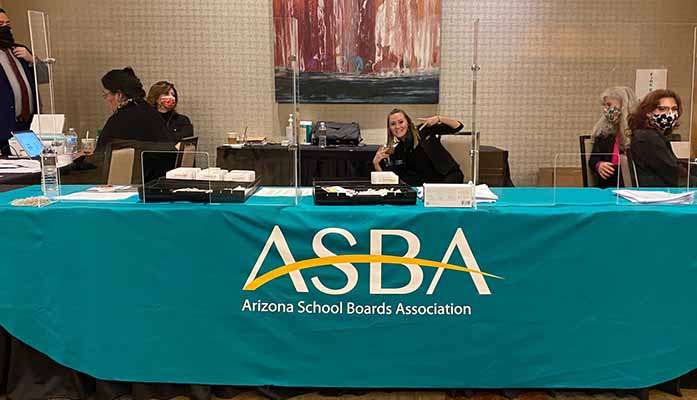
Freeman notes numerous public school district employees plan to attend a “Law Conference” presented by the Arizona School Boards Association at the J.W. Marriott Camelback Inn in Paradise Valley on Sept. 7 through 9 that will include programming by Friends of the ASBA, a 501(c)(4) organization opposed to school choice.
Friends of the ASBA, Freeman wrote Catlett, “will be working at the conference to gather signatures on a petition to overturn the universal school choice reform via ballot referendum.” He added that the ASBA “has brought its political advocacy to a fine point in its upcoming Law Conference.”
The Goldwater Institute is asking the Arizona Attorney General’s Office (AGO) to immediately investigate and “take all appropriate legal action to enforce Arizona’s law prohibiting school districts from using public recourses to support a ballot measure seeking to invalidate Arizona’s universal ESA program,” Freeman wrote.
The authority of the AGO to act is provided in ARS 15-511 “but only if your office acts promptly,” he added.
In a follow-up public statement, Freeman said the Goldwater Institute is dedicated to exposing the plans of entrenched interests in education to use hard-earned taxpayer dollars to deprive parents of the educational freedom provided by ESAs.
“All Arizona families should be free to make educational choices for their children without having the government work against them by rigidly defending a status quo that protects bureaucrats and government unions,” he stated.
by Corinne Murdock | Aug 30, 2022 | Education, News
By Corinne Murdock |
Arizona State University (ASU) won’t disclose the full scope of its hiring decisions resulting in four women leading STEM-related schools and a department within the last 18 months.
ASU acknowledged a hiring pattern earlier this month when it published a feature article contextualizing the exclusively female appointments as “leading the charge for more diversity in STEM.” The hires were Tijana Rajh, made director of the School of Molecular Sciences; Donatella Danielli, made director of the School of Mathematical and Statistical Sciences; Patricia Rankin, made chair of the Department of Physics; and Nancy Manley, made director of the School of Life Sciences.
The article doesn’t mention the professional accomplishments of these women. Instead, the article focused on how the women felt undermined in STEM through a glass ceiling, an “old boys club,” bias, and the sexism of male colleagues doubting their abilities. The article did mention the women’s equity-related accomplishments such as organizing panels on women in math leadership and stocking female sanitary products in the bathrooms.
ASU expressed a goal of balancing the proportions of women and men leading and studying STEM-related subjects. However, ASU stated that gender didn’t play a role in their hires of Rajh, Danielli, Rankin, and Manley.
“ASU is out to change those numbers – and, as evidenced by the hirings of Rajh, Danielli, Rankin and Manley — in a meaningful way,” read the article.
When AZ Free News reached out to ASU, spokesman Jay Thorne said that the university doesn’t comment on individuals who weren’t hired.
“The four women noted in the story were hired, some of them quite some time ago, in an open competitive process, each from highly credible institutions. Not much else to say that wasn’t in the story,” said Thorne. “If there is another particular angle you are interested in, let me know. Otherwise, the story speaks for itself and the university has no comment about other candidates for these positions.”
When we requested further background on why the four women were chosen at the exclusion of other, possibly male candidates, noting that the entirety of the article focused on the women shattering glass ceilings and overcoming sexism without mentioning any of their accomplishments, this was the only response we received:
“Yep. Understood. Fair enough. Thank you,” wrote Thorne.
Although Thorne wrote that ASU doesn’t comment on those who weren’t hired, College of Liberal Arts and Sciences dean Patrick Kenney felt it necessary in the article to disclose that men were rejected.
ASU also revealed in the feature article that both tenure and non-tenure track female faculty increased in other STEM areas, namely the School of Molecular Sciences.
Corinne Murdock is a reporter for AZ Free News. Follow her latest on Twitter, or email tips to corinne@azfreenews.com.
by Corinne Murdock | Aug 28, 2022 | Education, News
By Corinne Murdock |
Records obtained from the University of Arizona (UArizona) revealed that its bias reporting system inspired political correctness witch hunts among students.
UArizona provided the records to a College Fix reporter after initially denying their request for all 2021 reports submitted to the Bias Education & Support Team (BEST). The Goldwater Institute, a Phoenix-based public policy research and litigation organization, sent a letter on behalf of the reporter to UArizona insisting that the university must comply with public records law.
According to the records, a group of students reported one female peer for drawing a darker-toned person picking cotton when she was given the word “cotton” to depict for an Pictionary-like online game. The group complained that they felt “deeply ashamed” of her insensitivity, and wanted the school to help her understand why her actions were hurtful and how she could grow in the future.
“While she claimed that she did not specifically denote the race of the person, the witnesses claimed that she chose a dark brown color for their skin tone,” read the complaint. “[She] claims she was only trying to make a historical reference and did not have discriminatory intent [but] several members of the zoom call told her the drawing was inappropriate.”
“Cotton” is one of the well-known “Five Cs” of Arizona’s economy, in addition to cattle, citrus, climate, and copper.
In another bias complaint, one student reported a professor for using “outdated and offensive” terms: “transsexual,” “transgendered,” and “mentally retarded” during class discussions.
“[P]rofessors should be required and expected to use the modern and correct terminology when discussing these issues, especially when there may be students in the class who have intellectual disabilities or who have friends and family who have intellectual disabilities,” wrote the student.
Another report was filed against a professor for asking a student if she had a green card after the student mentioned that her family lived in Mexico. Another report was filed against a professor who was perceived as supportive of police, failed to exhibit grief over the deaths of George Floyd and Breonna Taylor, and discussed their deaths in the context of shared meanings between cultures.
“The classroom is not an appropriate place to discuss these matters,” the complaint read. “Supporting the police openly in class during such a sensitive time in this country, as well as during Black History Month, was completely unprofessional.”
Another complaint was submitted against a student for expressing that he didn’t want to reside in the same dorm hallway as “trannies,” slang for transgender individuals.
[SEE POST HERE]
Goldwater Institute Vice President of Litigation Jon Riches told AZ Free News that they were pleased that UArizona decided to comply with the law, but troubled that a reporter had to obtain a lawyer in the first place.
“These were public records. It was troubling that they originally denied the request, particularly since they fulfilled a similar records request two years earlier,” said Riches. “Public records custodians will sometimes deny a request despite knowing that they should produce it, hoping the requestor will just go away. It shouldn’t require a lawyer to get involved. The information is public. We’re glad they did the right thing.”
The resistance of UArizona and government entities to records requests prompted the Goldwater Institute to launch an initiative to increase public records compliance: “Open My Government.”
As AZ Free News reported, the UArizona public records coordinator that denied the College Fix records request into BEST, Kim Fassl, has a professional connection with one of the six women leading BEST, or the “Core Team.”
Prior to handling public records requests, Fassl was UArizona’s associate director of residential education for student behavioral education. BEST Core Team leader Nina Pereira was Fassl’s superior at the time, serving as the director of residential education that oversees behavioral education.
BEST says it offers educational and dialogue opportunities, but doesn’t conduct investigations, issue disciplinary sanctions, or require any participation. However, BEST does pass on perceived student or faculty violations of UArizona’s nondiscrimination and anti-harassment policy to higher administrative offices, such as the Dean of Students Office, the Office of Institutional Equity, and Human Resources.
[SEE POST HERE]
Corinne Murdock is a reporter for AZ Free News. Follow her latest on Twitter, or email tips to corinne@azfreenews.com.