The Scottsdale-based national homebuilder, Taylor Morrison, is accused of attempting to silence a home inspector over his viral videos exposing what he says are poor and even dangerous workmanship.
The inspector, Cyril (Cy) Porter, has accrued nearly 1.2 million followers collectively across Instagram, TikTok, Facebook, and YouTube for his informational videos. Porter operates independently through his company, CyFy Home Inspections. A number of the homes he finds fault with were approved by city or county inspectors.
A Taylor Morrison representative, “Jennifer,” filed a complaint with the State Board of Technical Registration (SBTR) against Porter in April according to public records. Taylor Morrison sought disciplinary action against Porter, as well as a requirement that he delete past videos and cease posting his exposés in the future.
During its hearing on Tuesday, SBTR voted against taking disciplinary action against Porter, however they also voted against dismissing the claim. SBTR issued a nondisciplinary letter of concern against Porter.
Taylor Morrison accused Porter of three violations: fraud, deceit, misrepresentation, or concealment of material facts in advertising, or soliciting; use of derogatory sexualized terms for female professionals; and endorsing products for profit.
“Taylor Morrison would like Cyril Porter, on behalf of himself and his companies, to stop posting any videos to social media about Taylor Morrison. This request includes using, showing, typing, or tagging them by name, logo, signage, and/or image for any purpose, intended to or reasonably expected to identify the builder, including but not limited to, using their tag lines or wearing t-shirts in social media postings with a version of their name. This conduct is unrelated to actual home inspecting and is actually advertising that violates BTR standards. Taylor Morrison also requests that past videos be removed. In addition, Taylor Morrison would like Registrant disciplined for his harassing, falsified, and bullying advertising/social media posting that does not serve his clients or the public, his taking payment in product endorsements, and his use of repeated sexually suggestive references to female professionals in his videos. Finally, Taylor Morrison would like it made clear that retaliation for bringing this complaint will not be tolerated by the BTR.”
Porter’s work, showcased by his viral videos, has resulted in his being booked out through most of 2026.
A number of commenters have asked Porter if he had any builders that he recommended. Porter said no, that “all [builders are] the same,” referring to poor and even dangerous workmanship.
In a statement provided to 12 News earlier this summer, Taylor Morrison called Porter’s social media posts “sensationalist” and unprofessional.
“While we have no issue with the home inspections Cy Porter conducts, we do believe his advertising through sensationalist social media postings violates the professional conduct standards set forth by the Board of Technical Registration, which licenses and regulates home inspectors, and we trust the board to review and make an assessment,” said the company.
Even in million-dollar new homes, Porter documents often finding and struggling to have builders resolve: improperly installed, inadequate, or damaged A/C units, ducts, stucco, counters, trusses, electrical, cabinets, doors, showers, tubs, toilets, sinks, roofing, flooring, furnaces, water heaters, walls, plumbing, rain caps, and windows; and trash and debris inside the build or left around the property.
Many of the issues Porter finds are more than just cosmetic issues: they pose major health and safety hazards. At times, builders have attempted to prevent Porter from accessing certain areas of the home for inspection, namely roofs and attics.
In addition to Taylor Morrison, Porter has documented the poor practices and/or workmanship of Alamar, Brightland Homes (Gehand), D.R. Horton, Express Homes, Fulton Homes, Homes by Towne, KB Home, Landsea Homes, Lennar, Meritage Homes, Richmond American Homes, Shea Homes, and Starlight Homes.
AZ Free News is your #1 source for Arizona news and politics. You can send us news tips using this link.
Democrats are trying to win a Republican-leaning legislative seat in the southern Arizona area with a candidate who has been endorsed by several progressive organizations.
Kevin Volk is running for the Arizona House of Representatives in Arizona Legislative District 17. Volk was the only Democrat running in the primary for the chamber as his party attempts a ‘single-shot’ strategy to win enough votes for a first or second-place finish in November’s General Election. He obtained 26,330 votes in the July 30 Primary Election.
While my primary was uncontested, it is humbling to have received over 26,000 votes, and to become the Democratic nominee to represent Legislative District 17 in the Arizona State House.
On his campaign website, Volk lists several endorsements from left-leaning organizations for his bid to ascend to the state House, including the National Organization for Women Arizona Political Action Committee, the Arizona Education Association, the Sister District Project, Moms Demand Action, Human Rights Campaign PAC, Climate Cabinet, and the Sierra Club.
Should Volk manage to win a seat in the Arizona House, his endorsement from the Arizona Education Association (AEA) shows that he would likely join with this organization and his fellow Democrat colleagues to undermine – and even dismantle – the state’s historic opportunities for school choice and educational freedom. The AEA has been a staunch opponent of the Arizona Empowerment Scholarship Accounts (ESA) program, which has unlocked a chance for tens of thousands of students around the state to receive the education that best unleashes their learning abilities.
On June 18, the AEA posted, “Happy to be endorsing John McLean and Kevin Volk in LD 17. This is a vital district to win to achieve a pro-education majority in the state legislature, and we’re so glad to have two strong advocates for public education and for Arizona working families in the race!
Happy to be endorsing @JohnMcLean4AZ@KevinVolkAZ in LD17. This is a vital district to win to achieve a pro-education majority in the state legislature, and we're so glad to have two strong advocates for public education and for Arizona working families in the race! pic.twitter.com/jzNe826ayd
The Pima County Democratic Party cheered on the endorsement of Volk from the AEA in a post on X, writing, “This is simple. Kevin Volk and John McLean are champions for the public schools in Marana, SaddleBrooke, Picture Rocks, Tanque Verde, Rita Ranch, East Side, Tucson, and Oro Valley. Good public schools benefit all of us, and all of our community.”
— Pima County Democratic Party (@PimaDems) June 18, 2024
While not on his website, on May 7, Volk also acknowledged an endorsement of his campaign from Save Our Schools Arizona, another organization committed to the end of ESAs and other mediums of school choice in the state. He wrote, “Thank you, Save Our Schools Arizona for your endorsement! As a former public school teacher, I believe that all children in Arizona – more than 90% of whom attend public schools – deserve an excellent education, and that means making sure that our schools are fully funded and fully staffed.”
Thank you @arizona_sos for your endorsement! As a former public school teacher, I believe that all children in Arizona – more than 90% of whom attend public schools – deserve an excellent education, and that means making sure that our schools are fully funded and fully staffed. https://t.co/7jQfAY9eSF
Earlier this year, in April, Volk announced that he had obtained the endorsement of Sister District Project, which has targeted Arizona to help Democrats win competitive races around the state. The organization states that it “prioritize[s] endorsing where we can build momentum at the bottom of the ticket to decrease roll-off in naturally higher turnout environments with strategic higher-ticket Democratic opportunities.”
I am proud to have received the endorsement of @Sister_District, a national organization that is dedicated to helping state legislative candidates in the most critical battleground districts in the country. #LD17
To receive an endorsement from Sister District Project, Volk, like all other candidates who have been endorsed by the organization, had to agree to a six-prong policy plank, including more gun control policies and protection against climate change.
Volk’s support from Sister District Project and its devotion to the radical beliefs around the issue of climate change closely mirrors an endorsement of the LD 17 Democrat candidate from another climate-oriented organization, Climate Cabinet. This organization thanks a number of other likeminded partners – one of which is the Sierra Club Grand Canyon Chapter.
Voters might find it hard to decipher what Volk believes (or does not believe) thanks to his nonexistent record, but as with the endorsements he has received and announced, there are concerning signs that he would be an unwavering vote for the Democrat Party in the Arizona Legislature. In an opinion piece for the Tucson Daily Star on March 6, Volk wrote against an election integrity proposal from Republican Representative Rachel Jones, stating that her legislation would mean that “politicians in our state could potentially choose the winner of the presidential election – regardless of your vote.” He added, “Bypassing Arizonans’ votes for president does not secure elections, it silences voters. I believe that Arizonans, not politicians, should help decide who the next president is.”
However, Volk’s sentiments appear to be hypocritical when it comes to recent actions from his own party at the top of the ticket, where President Joe Biden stepped aside from the votes of millions of Democrats around the country, including Arizonans, after an overwhelming crescendo of voices from his party’s elite forced his hand. What Volk raged against in the southern Arizona publication became reality, not with a Republican policy, but actually with his party’s presumed and eventual nominee who was elected by the votes of political delegates in Chicago, Illinois – not the votes of Arizonans and other men and women from states around the United States.
According to the Arizona Independent Redistricting Commission, Legislative District 17 has an 8.34% vote spread between Republicans and Democrats in the last nine state elections. In those nine elections, Republicans have won all nine contests.
Volk will face off in the November General Election against Republicans Cory McGarr and Jones, who are both incumbent State Representatives. McGarr and Jones emerged over Anna Orth in the July Primary Election.
AZ Free News is your #1 source for Arizona news and politics. You can send us news tips using this link.
The town of Gilbert has named a new Chief Digital Officer to oversee the Office of Digital Government (ODG), mired in controversy earlier this year over its speech-monitoring practices.
According to public records shared with AZ Free News, the town selected Kandice Kwan to take over for Dana Berchman, who resigned in February in relation to ODG’s monitoring and occasional punishment of employees’ online speech.
Under Berchman, ODG would contact various departmental leadership about employees’ online speech if it ran counter to progressive ideals (namely support for Black Lives Matter or LGBTQ ideology) or was critical of their department. Internal messaging from Berchman alluded that she maintained a dossier of town employees’ social media activity.
As reported, Berchman would post publicly and often her support of Democratic candidates and progressive issues such as abortion, gun control, and same-sex marriage.
In response to the reporting on ODG’s practice, the town issued a statement (likely from ODG) defending the speech monitoring and restrictions.
“The town has been clear that we will not tolerate divisive, offensive, or culturally insensitive posts from employees purporting to represent the town,” said the public statement. “There is not further need to address the false claims from anyone, including disgruntled former employees.”
For nearly a decade, Kwan has worked for R&R Partners, an advertising, marketing, and public affairs firm. Among their clients are Avnet, Anheuser-Busch, Boeing, Ford, Facebook, Honeywell, Los Vegas Convention and Visitors Association, and Signature Aviation. Prior to that, Kwan worked as the digital marketing director for the Valley’s popular Fox Restaurant Concepts.
Based on her limited online footprint, it appears that Kwan’s political ideologies, like her predecessor, are left-leaning.
In the wake of the racial upheaval prompted by George Floyd’s death in 2020 and both physical and social attacks on Asians early on in the pandemic, Kwan implied in a 2021 article that white individuals needed to become better allies to minorities, such as acknowledging and becoming educated on biases.
“We’re asking to stand together to #stopasianhate. We’re asking you to stand #insolidarity with the AAPI community, the Black community and all other marginalized communities,” said Kwan.
Kwan supported prolonged shutdowns of businesses during the COVID-19 pandemic, according to her social media activity.
“[Governor Doug Ducey] is part of the reason of [sic] why we are having the ‘second wave’ due to opening businesses too early,” commented Kwan on a June 2020 news article. “Now, businesses are having to close proactively due to the spike in cases. Shame on you Governor Doug Ducey.”
Kwan will take over ODG on September 16, according to a letter from the town sent earlier this month.
Per that letter, Kwan’s starting salary will be $170,000, a decrease from Berchman’s $200,800. Under Berchman, ODG staff salaries amounted to over $1.15 million a year.
After resigning from ODG, Berchman launched her own marketing firm, Oh, hi! Communications. Berchman’s firm received endorsements from Arizona League of City and Towns deputy director Rene Guillen and former Gilbert Mayor Jenn Daniels.
AZ Free News is your #1 source for Arizona news and politics. You can send us news tips using this link.
One of the lawmakers responsible for the state’s historic income and small business tax reduction law is key to maintaining Republican control of the Arizona Senate.
State Senator J.D. Mesnard is running for re-election to Arizona Legislative District 13, which covers Chandler, Gilbert, and Sun Lakes in the East Valley of the Phoenix-metro area. Mesnard first entered the state legislature in January 2011 in the Arizona House of Representatives, and he served eight years in that chamber, including two years as the Speaker of the House. In November 2018, after being termed out of the House, Mesnard won his election to the state Senate.
Over his time in the Arizona Legislature, Mesnard has proven himself to be one of the top fiscal responsibility hawks in either chamber. On his campaign website, he addresses his thoughts on this issue, writing, “I support keeping taxes as low as possible, and we can’t have low taxes with reckless government spending. The fact is, the more government spends, the more we pay for it in higher taxes and/or saddle future generations with unsustainable debt. That doesn’t mean that all government spending is bad. For instance, funding public safety, a quality education system, and infrastructure are all necessary public goods. But I also believe that state government should follow the same financial guidelines that any responsible individual or family would follow: spend only what’s necessary, don’t rack up debt, invest in your learning, save for the future, and when times get tough, find responsible ways to trim.”
In 2021, Mesnard was responsible for a historic tax reform proposal that made its way through the Arizona Legislature and into law – SB 1828. This legislation ushered in a flat tax on individual incomes of Arizonans.
Mesnard was also the author of SB 1783, which lowered taxes on small businesses. The bill passed the state legislature and was signed by then-Republican Governor Doug Ducey.
After signing the bill into law in July 2021, Ducey recognized Mesnard for his efforts, when he said, “This tax cut will keep Arizona competitive for small businesses already operating here and new businesses flocking here every day. After a year as tough as the last, we should not be raising taxes on our small businesses — we should be cutting their taxes. That’s exactly what Senate Bill 1783 does. Arizona has now passed the largest tax cut in state history and will have the lowest flat tax in the country. My thanks go out to Senator J.D. Mesnard and Representative Ben Toma for their leadership on this issue.”
Mesnard added, “Small businesses are the backbone of our economy and integral to the future success of our state. Small businesses should be able to grow and reinvest in themselves without being forced to pay astronomical taxes. Rather, government should get out of the way so that they can thrive. That’s why I’m so grateful for the support of Governor Ducey and my colleagues in the Legislature.”
Two staunch free-market advocates Tim Phillips (President of Americans for Prosperity) and Grover Norquist (President of Americans for Tax Reform) wrote a piece in Newsweek, praising the accomplished feat of the Arizona Legislature, spearheaded by Mesnard, and Ducey. They stated, “Arizona, on the other hand, provides a good example: lower the tax rates to let people keep more of what they earn and invest in what they care about most. Limit government spending to grow no faster than the incomes of the citizens who pay the taxes. Create a magnet for job-creating investment and hardworking Americans who simply wish to be left alone to work hard, take care of their families and support their communities.”
Phillips and Norquist put the finishing flourish on their thoughts by saying, “The Arizona reform is a positive model and one that should be followed by other states and the federal government.”
When the Arizona Supreme Court gave the green light for these tax reforms to go into effect in a highly anticipated ruling, Arizona Free Enterprise President Scot Mussi said, “Today’s decision from the Arizona Supreme Court is a big win for taxpayers in our state. The legislature passed historic tax cuts last year that benefit all Arizona taxpayers. It’s time for Invest in Arizona and out-of-state special interest groups to accept this reality and stop making a farce of the referendum process.”
Mesnard touted the progress of his historic legislation in a campaign newsletter in January 2023, saying, “The historic tax reform that I championed in 2021 is now in effect for income earned this year – a full year ahead of schedule thanks to strong government revenues. Valued at more than $2 billion, this reform reduced individual tax rates to 2.5%, resulting in a tax cut for every single Arizona family and Arizona having the lowest flat tax in the nation.”
The east valley lawmaker added, “Depending on your tax decisions, if you choose to lower your withholding rates this year, you will be able to keep more of your own hard-earned dollars with each paycheck that hits your checking account. That will help take some of the edge off sticker shock at the grocery store.”
According to the Arizona Independent Redistricting Commission, Legislative District 13 is one of the most competitive in the state, with a 1.6% vote spread between Republicans and Democrats in the past nine statewide elections. In those contests, Republicans have won five times, compared to four for Democrats.
Mesnard will be facing off against Democrat nominee, Sharon Winters, in the November General Election. On his website, Mesnard asks voters to give him another term in the state senate, writing, “Now we face historic economic challenges that require someone with the right experience and a track record of success to navigate. That’s why I need your vote. Let me continue using my diverse background, which includes husband (to a registered nurse), father, professor and small business owner, with master’s degrees in business and public administration, to keep delivering results for you.”
AZ Free News is your #1 source for Arizona news and politics. You can send us news tips using this link.
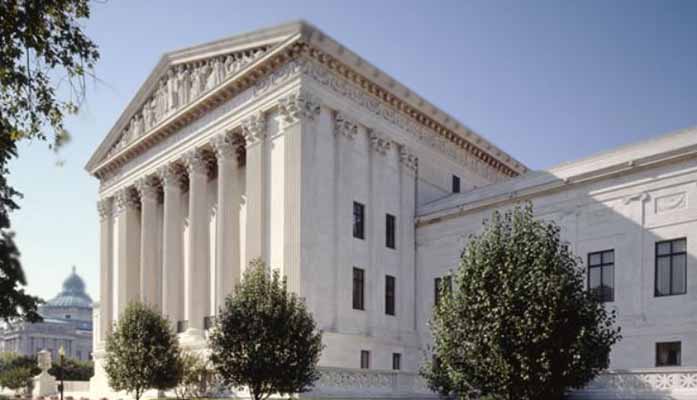
The U.S. Supreme Court ruled in favor of Arizona’s requirement for proof of citizenship when registering to vote, in part.
In a response issued Thursday to an emergency stay application from Arizona House and Senate GOP leadership, the Supreme Court narrowly overruled the Ninth Circuit Court of Appeals order against Arizona’s law requiring proof of citizenship for state voter registration forms.
Federal law doesn’t require proof of citizenship in order to vote in federal elections. The Supreme Court ruled in 2013 that the National Voting Rights Act (NVRA) prohibits Arizona from requiring proof of citizenship from voters registering with the federal voter registration form.
The order granted the application for stay in part and denied it in part, allowing the state to temporarily enforce its law denying voter registrations lacking proof of citizenship, even for federal elections, pending a court ruling.
“The district court’s May 2, 2024 judgment is stayed only to the extent it enjoins enforcement of Ariz. Rev. Stat. Ann. § 16-121.01(C) (2023) pending disposition of the appeals in the United States Court of Appeals for the Ninth Circuit and disposition of a petition for a writ of certiorari, if any such writ is timely sought. Should certiorari be denied, this stay shall terminate automatically. In the event certiorari is granted, the stay shall terminate upon the sending down of the judgment of this Court. The application is denied as to Ariz. Rev. Stat. Ann. §§ 16-121.01(E) and 16-127(A).”
Justices Clarence Thomas, Samuel Alito, and Neil Gorsuch said they would grant the application in full, while Justices Sonia Sotomayor, Elena Kagan, Amy Coney Barrett, and Ketanji Brown Jackson said they would deny it in full.
Earlier this month, and less than two weeks after an initial ruling, the Ninth Circuit reversed another panel within the court allowing the law to go into effect.
The Ninth Circuit said that the requirement of proof of citizenship would “upset the status quo” by altering voter registration rules too close to this year’s elections, an “injustice” for both voters and election officials.
The court also said that the proof of citizenship requirement improperly conflicted with the Elections Procedures Manual.
“All Arizonans must now navigate an arcane web of shifting and confusing rules that will without a doubt dissuade some who are otherwise eligible and willing from exercising the fundamental right to vote,” said the court.
Per the Secretary of State’s latest estimates, there are over 40,000 federal-only voters in the state.
In a partial statement, Arizona Senate Republicans said the partial order was a major victory. The caucus said they would issue an official statement at a later date.
“The order reverses the liberally-biased Ninth Circuit Court of Appeals ruling from August 1, which momentarily blocked our laws intended to safeguard against those living in our country illegally from influencing the outcome of our elections,” said the Arizona Senate Republicans. “Only US citizens should have the privilege of casting a ballot!”
AZ Free News is your #1 source for Arizona news and politics. You can send us news tips using this link.