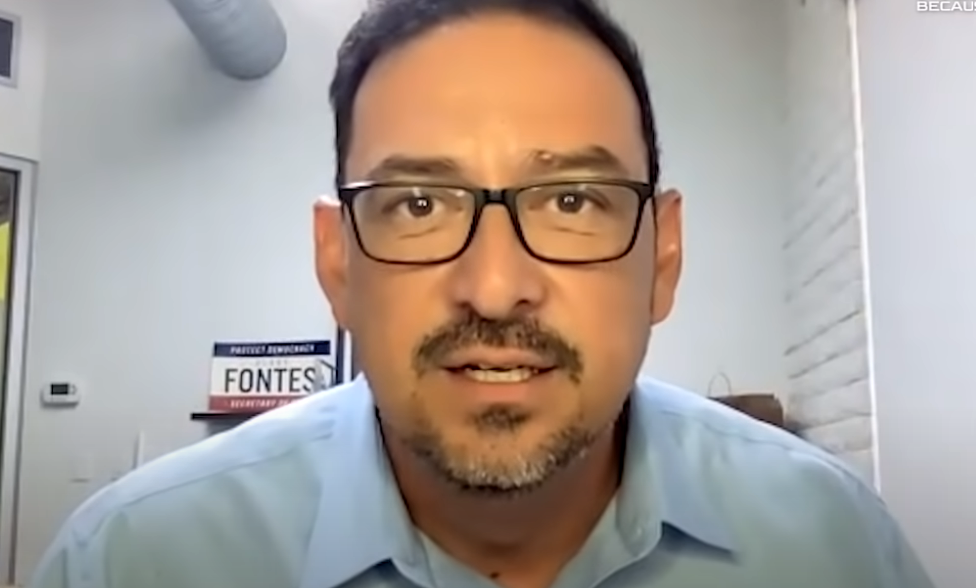
Secretary of State Adrian Fontes argued in a new brief for an ongoing court case that duplicate signatures shouldn’t be cause for Proposition 140 to be removed from the ballot. Challengers to the proposition say they found around 40,000 duplicate signatures.
Prop 140, the Make Elections Fair Act, proposes open primaries (called “jungle” primaries by opponents) which remove the partisan segregation defining Arizona elections, as well as the implementation of ranked-choice voting.
Fontes is one of the listed “team members” for Save Democracy, the nonprofit entity supporting the political action committee pushing the measure, Make Elections Fair Arizona.
Save Democracy’s president, Sarah Smallhouse, also serves as treasurer of the Make Elections Fair Committee. Fontes also conducted a webinar sponsored by Save Democracy in which he advocated for open primaries.
In the brief issued on Friday for the case Smith v. Fontes, Fontes argued that the proposition should be considered valid since the ballots had already gone to print with the contested proposition included. Otherwise, the secretary argued, the court would be denying Arizonans their right to “free and equal” elections.
“Once the ballots have gone to print, it is in the hands of Arizona’s voters,” said Fontes. “The person contesting an issue (or candidate) can make a case to the voters, but the Courts cannot usurp the voters’ decision once it goes to them.”
Fontes proposed that those challengers to the validity of Prop 140’s gathered signatures should seek recourse through future elections.
“After investing their time educating themselves about this ballot measure, it would be wrong for the Arizona electorate later to be told their vote will not be counted,” said Fontes. “Given the far-reaching implications of this Court potentially enjoining the canvass, the Secretary requests this Court to reconsider its previous ruling and affirm the principle that once the ballots have gone to print, any challenge must end.”
The Arizona Free Enterprise Club (AFEC) sued to stop the Make Elections Fair Act after reportedly discovering over half of the proposition’s gathered signatures were gathered in violation of state law.
🚨 Second lawsuit filed!!
If the unconstitutionality of the the radical Make Elections Fair Initiative wasn’t bad enough, it turns out after a thorough review of their petitions, that over half of their signatures have been collected in violation of state law! https://t.co/mUMNXsOub7pic.twitter.com/ztrwbIIFaw
— Arizona Free Enterprise Club (@azfec) July 27, 2024
The Arizona Supreme Court sided with AFEC’s challenge last month, ruling that the lawsuit should continue in order to determine whether the tens of thousands of challenged signatures were valid (around 40,000), even though ballots began to be printed on the same day it handed down its decision.
The state supreme court ordered that an injunction be issued preventing the counting of any votes on the proposition should it be discovered that the proposition lack the required number of signatures.
AFEC reported discovering that, of the 40,000 duplicates, around 250 individuals had signed their name five or more times. One individual reportedly signed 15 times.
AFEC has argued that the mass amount of duplicate signatures indicated that Fontes shouldn’t have approved the proposition for inclusion on the ballot in the first place.
With 40,000 duplicate signatures, it's clear that #Prop140 should’ve never been on the ballot in the first place because the people of Arizona don’t want to follow in California’s footsteps with jungle primaries or ranked choice voting.https://t.co/RXH6xGdcMG
Two Republicans from southern Arizona are key for their party’s continued control of the state legislature.
State Representatives Cory McGarr and Rachel Jones are running for re-election to Arizona Legislative District 17. Both Republicans entered office in January 2023, having won their elections in the November 2022 General Election. The two incumbents were challenged in the 2024 Republican primary by Anna Orth, who failed to finish in the top two positions of the contest. McGarr received 24,583 votes; Jones obtained 19,005 votes, and Orth had 16,073 votes.
McGarr serves as the Vice-Chairman of the House Regulatory Affairs Committee and as a member of both the Military Affairs & Public Safety Committee and the Natural Resources, Energy & Water Committee. Jones serves as the Vice-Chairman of the House Military Affairs & Public Safety Committee and of the Education, Government, and Municipal Oversight & Elections Committees.
On his website, McGarr appeals to potential voters to return him to the state House, writing, “I promised to be a conservative fighter for Arizona families and not special interests. In Phoenix, that’s what I’ve done and I’m running again to continue my promise to never back down when needed the most. My bottom line is this… We need representatives in the State House who will stand for our values. Someone who has and still will support Arizona families. A real fighter who will defend our children and never back down.”
He asserts his belief that “government’s number one purpose is to protect the rights and freedoms of the individual,” highlighting that he is 100% pro-family, religious liberty, and pro-life.
On her campaign website, Jones writes, “As your state Rep I have always fought for our God Given Rights: Back the Blue, Gun Rights, Election Integrity, [and] Medical Freedom. I’m fighting to RESTORE ARIZONA VALUES. And the first step in that fight starts in the home. By strengthening Arizona families, we can RESTORE OUR VALUES and build a stronger Arizona.”
In her bio, Jones, reveals that she “spent her career as a business executive at the 3rd largest UPS facility in the country. Her time in business formed a strong, calculated, and passionate leader, who now hopes to continue utilizing her experience to identify problems, execute solutions, and deliver results in the State House in Phoenix. Having children refined Rachel’s beliefs on the importance of the family in communities.”
Jones adds that she “decided to put her business life aside, and focus on her family, and the families of all Arizonans. This led her to become a teacher, fostering the next generation of Americans. But her business background could not be hidden, so she eventually became the Director of the preschool.”
Reflecting back on her first term in office, Jones said, “During session I fought for states’ rights regarding law enforcement (no DOJ overstep) and vaccine mandates. I believe in funding state and local law enforcement, so that they’re able to help our Border Patrol Agents secure the border. I also believe in protecting children in the foster care system, especially since my three adopted children were adopted out of foster care. I believe in lower taxes and regulation. I also believe that the school counselors and social workers should not be indoctrinating our children in public schools.”
Both McGarr and Jones are strong border hawks, supporting legislation and policies that would help strengthen Arizona’s border with Mexico and empower law enforcement to better protect the innocent men, women, and children in their communities. Earlier this year, both lawmakers voted for HB 2748, which would have “establishe[d] penalties and enforcement against illegal border crossings.”
After the vote, Jones released a statement on her “X” account, saying, “Arizonans will come out in droves to vote for elected officials who are listening to them on the #1 issue of concern, THE BORDER CRISIS. To my colleagues on the left, the people don’t believe your gaslighting and rhetoric anymore. Americans want to feel safe in their own country.”
Arizonans will come out in droves to vote for elected officials who are listening to them on the #1 issue of concern, THE BORDER CRISIS. To my colleagues on the left, the people don’t believe your gaslighting and rhetoric anymore. Americans want to feel safe in their own country. https://t.co/3gQiXdIz3Y
The two southern Arizona Republicans were also instrumental in turning the tables against President Biden, when his left-wing allies attempted to remove former President Donald J. Trump from the ballot in the State of Colorado. After the Colorado State Supreme Court decided to remove Trump from the state’s ballot in 2024, McGarr announced an effort in conjunction with other states “to remove [Biden] from the ballot.”
Biden is leading an insurrection on the border. Time to remove him from the ballot. pic.twitter.com/DS4ATDkAe5
A joint statement from the national coalition of legislators, including McGarr, stated, “Democrats’ insane justification to remove Trump can just as easily be applied to Joe Biden for his ‘insurrection’ at the southern border and his alleged corrupt family business dealings with China. Colorado radicals just changed the game and we are not going to sit quietly while they destroy our Republic.”
Jones cheered on the announcement from her colleague.
More recently, McGarr and Jones supported a legislative effort to refer a border security measure to the ballot in this November’s General Election – HCR 2060, voting for the bill when it was considered by their chamber. The proposal, if passed by voters in the fall, would empower local law enforcement to better secure their communities from the increasing calamities from the border crisis. A recent poll from Noble Predictive Insights showed that sixty-three percent of Arizona respondents support the measure, giving it a pretty good chance to pass in the fall.
According to the Arizona Independent Redistricting Commission, Legislative District 17 has an 8.34% vote spread between Republicans and Democrats in the last nine state elections. In those nine elections, Republicans have won all nine contests.
McGarr and Jones will face off in the November General Election against Democrat Kevin Volk.
AZ Free News is your #1 source for Arizona news and politics. You can send us news tips using this link.
It appears there won’t be a debate for the Phoenix mayoral race.
Matt Evans, the Republican challenger to incumbent Democratic Mayor Kate Gallego, announced on Tuesday that neither Gallego or her campaign had ever responded about scheduling a debate.
The revelation whipped the Maricopa GOP base into a frenzy. The Maricopa County Republican Committee (MCRC) pointed out that Gallego had frequently engaged in debates for her successful 2018 run.
“[Gallego] participated in Debates to get where she is now. This time around, now that someone else is on the ballot, is she—representing 1 person—going to discriminate against the approx 770k registered to vote & 1.7M constituents of #PHX?” asked MCRC.
1/2 DEBATES FOR ME, BUT NOT THEE?@KateWGallego participated in Debates to get where she is now. This time around, now that someone else is on the ballot, is she—representing 1 person—going to discriminate against the approx 770k registered to vote & 1.7M constituents of #PHX? https://t.co/5o2MCJJaVypic.twitter.com/R1ETvcwNvE
— Maricopa County Republican Committee | MCRC (@MaricopaGOP) September 5, 2024
The party compared Gallego’s distancing from debates to a similar avoidance by Kamala Harris and, before her, Joe Biden. The comparison also expanded to both Harris’s and Gallego’s websites lacking any platforms or specific policy positions.
Gallego’s Republican challenger, Evans, includes several policy positions on his website, namely concerning homelessness. Evans, a Phoenix native and Arizona State University graduate, is an IT professional and married father of three.
Evans made an unsuccessful bid for the District 2 seat on the Phoenix City Council in 2022; he came in third out of the three candidates, gaining 17 percent of the vote compared to opponent Heli Nielson (30 percent) and the victor Jim Waring (53 percent).
According to the city of Phoenix’s latest reporting period, Gallego’s reelection campaign has raised over $1.3 million. Her highest donors this campaign in this year all gave $6,650 individually: EMILY’s List; International Association of Sheet Metal, Air, Rail, and Transportation Workers PAC; International Brotherhood of Electrical Workers PAC; Kathryn Lincoln; Jessica Raymond; Mark Breen; Walter Cichon; Sundae Breen; William Levine; James Pederson; Roberta Pederson; James Gordon; Norma Kafer; Georgia Michaelson; Mike Michelson; Jerry Simms; Jonn Graham; Jamie Hormel; and Susan Guzman.
Others also gave the same high amount — $6,650 — last year for her campaign: Simer Mayo; Ernie Adair; Gary Holloway; Jerry Reindsdorf; Mark Becker; Bob Ramsey; Jacob Zonn; Jaime Scanlin; Jenny Norton; Heidi Jannenga; Andrew Cohn; Jonathan Keyser; Mel Martin; Roberta Koleas; Patricia Christofolo; Jason Morris; Cheryl Najafi; Kurt Mangum; Michael Pollack; and Rosellen Papp.
City campaign finance records reflect that Evans has raised over $3,400. It is also noted that he has a negative balance of nearly $1,000 due to excess disbursements.
Evans’s top donor, Cassius Carter, has given $1,000.
AZ Free News is your #1 source for Arizona news and politics. You can send us news tips using this link.
A liberal Democrat is attempting to maintain her representation of a middle-of-the-road Phoenix-area legislative district for another term in office.
State Senator Eva Burch of Arizona Legislative District 9 is seeking to make a return to the chamber for the next term of office, running for reelection in the upcoming November General Election.
The incumbent Democrat proudly displays several endorsements from left-leaning organizations on her campaign website, including Planned Parenthood Advocates of Arizona, Save Our Schools Arizona, Moms Demand Action, Climate Cabinet PAC, Emily’s List, Human Rights Campaign in Arizona, Arizona List, End Citizens United, and Sierra Club.
Burch is staunchly in the camp of her open-borders colleagues in the legislature – as her voting record indicates. Last year (2023), Burch voted no on HCM 2007, which expressed the legislative desire that Congress enact the State Immigration Enforcement Act, which would allow states or political subdivisions of states, to enact, implement, and enforce criminal penalties that are prohibited in the criminal provisions of immigration laws.
This past legislative session (2024), Burch voted against SB 1231, which would have made it unlawful for a person who is an alien (unlawful immigrant) to enter Arizona from a foreign nation at any location other than a lawful port of entry. She also opposed SCR 1042, which proclaimed the Legislature’s support for the people and governor of the state of Texas in its efforts to secure our nation’s southern border. Additionally, she voted no on HB 2157, which would have prohibited a court from using a defendant’s deportation as the sole reason for early termination of probation or intensive probation.
More recently, Burch refused to support a legislative effort to refer a border security measure to the ballot in this November’s General Election – HCR 2060, voting against the bill when it was considered by her chamber. The proposal, if passed by voters in the fall, would empower local law enforcement to better secure their communities from the increasing calamities from the border crisis. A recent poll from Noble Predictive Insights showed that over fifty percent of Democrat respondents support the measure.
The Democrat lawmaker has also established a clear voting record for opposing bills that seek to lower taxes and reduce burdensome red tape for Arizona businesses. In 2023, she voted no on SCR 1018, which was a resolution restricting counties, cities, towns, municipal corporations, and political subdivisions from imposing a tax, rule, or law based on vehicle miles traveled. Burch also voted against SB 1156 that year, which would have increased the amount of the individual income tax subtraction for unreimbursed adoption expenses.
In the 2024 legislative session, Burch returned to her anti-small government ways, voting against SB 1056, which would have prohibited city councils or county board of supervisors from increasing an assessment, tax or fee without a two-thirds vote. Also, she voted no on SB 1153, which would have prohibited a proposed rule from becoming effective if the proposed rule is estimated to increase regulatory costs by more than $500,000 within five years.
Burch is also a soft-on-crime legislator. Over the past two years, she has opposed several bills that would strengthen Arizona statutes against crime and increase penalties for lawbreakers and those who seek to perpetrate harm on innocent men, women, and children. In 2024, she voted no on SB 1414, which would require a person who is convicted of a third or subsequent organized retail theft offense to be sentenced as a category two repetitive offender. She also voted against HB 2591, which would have prohibited a public power entity or public service corporation from entering into a contract with a person or company that uses forced labor or oppressive child labor.
Last legislative session, Burch voted no on SB 1583, which would have mandated that a level one sex offender who commits specified sexual offenses is required to register on the internet sex offender website if the offender was sentenced for a dangerous crime against children. Additionally, she opposed SB 1323, which would have made an employee or independent contractor of a public school who refers students to or uses any sexually explicit material in violation of existing statute criminally liable for a class 5 felony.
Arizona Legislative District 9 is one of the most competitive in the state, with a 2.6% vote spread between Democrats and Republicans over the past nine statewide elections, according to the Arizona Independent Redistricting Commission. Out of those nine contests, Democrats have won five compared to four for the Republicans.
Burch ran unopposed in the July 30 primary election. She is facing off against the winner of the Republican primary, Robert Scantlebury. In the 2022 General Election, Burch defeated Scantlebury by more than 3,000 votes to assume her seat.
AZ Free News is your #1 source for Arizona news and politics. You can send us news tips using this link.
UPDATE: The Arizona GOP and Maricopa County Attorney Rachel Mitchell issued a joint announcement on Friday clarifying that the bipartisan observation program used in this year’s primary will be in place for the general election. State Representative Alexander Kolodin walked back the statements reported criticizing Mitchell’s office.
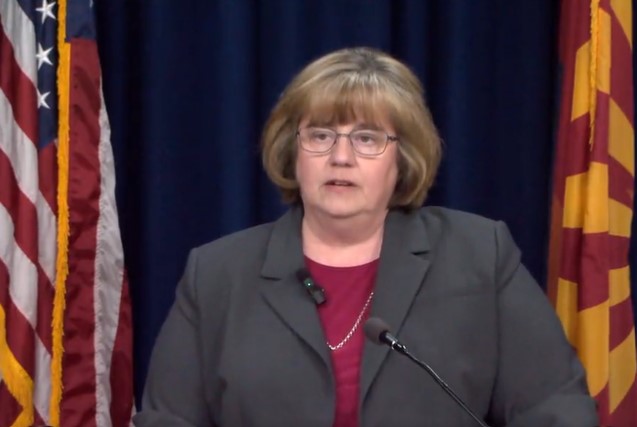
Maricopa County Attorney Rachel Mitchell has found herself embroiled in the hot-button issue of election integrity.
The attorney’s office declined to back a reform deal led by Republican State Representative Alexander Kolodin between Runbeck — the private election services company for Maricopa and other counties — and the Maricopa County Board of Supervisors.
The deal, as part of the Memorandum of Understanding (MOU) secured earlier this year between the state legislature and Runbeck, would have implemented a bipartisan observation program and enhanced security, legislative audits of Runbeck software, published an election workflow document publicly, and provided access to historical 2022 election data.
#AZLeg & Runbeck negotiated this MOU in good faith for Open & Transparent Elections.
An expanded Observer program, implemented in the 2024 Primary, increased Voter Confidence.
— Maricopa County Republican Committee | MCRC (@MaricopaGOP) September 6, 2024
Sources told the Arizona Daily Independent that Kolodin had asked Mitchell to “talk sense” to the supervisors. When the deal fell through, Kolodin criticized Mitchell’s office publicly.
Kolodin told “The Afternoon Addiction” radio host Garret Lewis on Thursday that, according to Runbeck, Maricopa County Attorney’s Office Thomas (Tom) Liddy pulled the county out of the MOU, and implied that the board hadn’t voted on the decision.
“Technically, the board of supervisors has to vote,” said Kolodin. If there’s one thing I understand very well is that when it comes to elections Tom Liddy tells the Maricopa County Board of Supervisors what to do.”
Then, Kolodin advised voters to abstain from voting for Mitchell and implied she was a Democrat rather than a Republican.
“If we’re going to have Democrats running that office we might as well have the ones with the ‘D’ next to their name,” said Kolodin.
Kolodin also claimed that the board declined to approve the MOU because voters had declined to reelect them, the ones who worked well with Liddy.
“This is a big way for Tom Liddy to tell everybody eff you for taking all of his allies and control over the county away,” said Kolodin.
Mitchell disputed Kolodin’s remarks. She said that the board had declined to change the terms of its contract with Runbeck to align with the MOU back in March, and that her office didn’t have the authority to decline contractual changes the way Kolodin effectively claimed it did.
Mitchell said MCAO’s authority only amounted to providing legal advice to the supervisors.
“Here are the facts: The Maricopa County Board of Supervisors has a contract with Runbeck to print ballots and provide other services. Rep. Kolodin attempted to negotiate a separate contract with Runbeck that would change the terms of the contracts for both the Board of Supervisors and Runbeck. On March 11, 2024, the Board of Supervisors chose not to accept those changes after considering them. Rep. Kolodin has misrepresented the situation by claiming that it was the Maricopa County Attorney’s Office (MCAO) that rejected this change in terms. Quite the contrary: The Maricopa County Attorney’s Office has NO authority to accept or reject the terms. MCAO only can advise the Board of Supervisors as to what the law allows the Board to do. Rep. Kolodin’s misinformation campaign is false, irresponsible, and incendiary.”
.@realAlexKolodin is spreading falsehoods about the Maricopa County Attorney’s Office (MCAO). He is doing so even though I personally called him today to set the record straight.
Despite being told the truth, Rep Kolodin has decided to persist in spreading false information.…
— Maricopa County Attorney Rachel Mitchell (@Rachel1Mitchell) September 6, 2024
Mitchell’s statement didn’t sway some local party leaders. Maricopa County Republican Committee (MCRC) blamed Mitchell in a press release for the deal’s failure.
“The Maricopa County Board of Supervisors (MCBOS), acting under the advice of Maricopa County Attorney Rachel Mitchell’s Office, just pulled the plug on [the] Election Integrity measures which Runbeck had previously agreed [to] in a Memorandum of Understanding,” stated MCRC.
AZ Free News is your #1 source for Arizona news and politics. You can send us news tips using this link.