by Matthew Holloway | Jun 4, 2025 | News
By Matthew Holloway |
Chief Patrol Agent (CPA) of the U.S. Border Patrol Tucson Sector Sean McGoffin shared powerful video Monday of its 20th annual Valor in the Desert ceremony in which the Border Patrol honors the fallen heroes who sacrificed their lives to defend America’s borders.
The ceremony featured an honor guard complete with a riderless horse, symbolically placed dress-duty campaign hats, and the solemn tolling of the bell for each of the officers lost in the line of duty. It also included remarks by McGoffin.
According to the CBP.gov In Memoriam page, seven officers, Jeffrey T. Kanas, Jacob A. Raines, Jose Martin Rodriguez-Lua Jr., Jesus Anaya, John Dale Leatham, Laurencio Gonzalez Jr., Christopher Luna, and Freddy Ortiz, were killed in the line of duty in 2024.
Year to date, one officer, David C. Maland, lost his life on January 20, 2025, when he was shot and killed by Teresa “Milo” Consuelo Youngblut, an alleged radical leftist transgender vegan cult-member during a traffic stop on Interstate 91, near Newport, Vermont, according to Law Enforcement Today. At the corresponding Valor Memorial in Washington, D.C. on May 19th CBP Acting Commissioner Pete Flores told the gathered Border Patrol staff and families, “Each year we gather here to honor our fallen CBP agents, officers and professional staff. This observance holds deep meaning for CBP, its employees, and the families and friends of the fallen, serving as a solemn reminder of the brave men and women who gave their lives in service to our nation.”
Secretary of Homeland Security Kristi Noem offered a similar sentiment saying, “Today we honored not just the fallen heroes who gave their lives in the line of duty, but the families and friends who carry their memory forward. I encourage all who knew one of these fallen officers, agents, and individuals to continue to talk about the ones you’ve lost and share these stories and memories with their friends and family members. These men are examples of the same bravery and selflessness that have defined the American people for centuries, and their commitment to defending our nation will never be forgotten.”
“To our CBP families: We grieve with you and we honor you,” Flores told the families. “You will always remain a part of the CBP family.”
Noem added, “To the friends and family of the fallen here: we recognize your sacrifice, and we are eternally grateful. Let this ceremony, and the laying of this wreath, serve not as the end of our work of remembering them. Let it be just the beginning.”
Matthew Holloway is a senior reporter for AZ Free News. Follow him on X for his latest stories, or email tips to Matthew@azfreenews.com.
by Matthew Holloway | Jun 2, 2025 | Economy, News
By Matthew Holloway |
The State of Arizona led the United States in monthly job growth for the month of April according to a report released by the Common Sense Institute of Arizona (CSIAZ) following a three-month period of negative annual growth.
As reported by the CSIAZ, Arizona saw an increase of 14,200 non-farm jobs in the month of April for an increase of 0.44% or a year-over-year increase of 0.76%, ranking the state first in the nation for monthly job growth. Overall, the total job-growth in the U.S. was 0.11%, with eleven states losing jobs. However, despite the job growth, the CSIAZ reported that inflation-adjusted wages have decreased by 4.2% since 2020, and total employment remains over 212,000 jobs under the pre-pandemic trend.
In a posting to X, CSIAZ noted that in the last 12 months, the state gained 24,600 jobs for a 0.76% increase.
According to the report, the job gains haven’t been consistent across various industries, with clear winners and losers:
“The state’s fastest growing sector over the past twelve months was Education and Health Services, adding 22,600 jobs (+4.2%). Its slowest growing sector was Professional and Business Services, which lost -4,400 jobs (0.9%). The Education and Health Services sector has steadily grown since 2020 (losing only 48,000 jobs during the pandemic) and is now at its all-time highest level of employment. Professional and Business Services on the other hand peaked in January 2024 but has been declining since.”
Drilling into discrepancies in wages and time worked, Arizona workers experienced a decrease in non-seasonally adjusted wages of -$0.13 during the month of April, placing Arizona far behind the rest of the country’s steady, though anemic, wage growth rate of +$0.06 over the same month. But year-over-year Arizona is continuing to outperform the U.S. average with wage growth of $1.49, up 4.5% annually.
This wage growth, however, has failed to keep up with CPI Inflation as noted earlier, making Arizonans feel a pinch at the register, and as CSIAZ explained, real wages were only up “4.2% year-over-year and after CPI inflation, compared to the April nominal increase of 4.4%.”
Matthew Holloway is a senior reporter for AZ Free News. Follow him on X for his latest stories, or email tips to Matthew@azfreenews.com.
by Matthew Holloway | Jun 2, 2025 | Economy, News
By Matthew Holloway |
The Phillips 66 Los Angeles Oil Refinery, in operation for 102 years, is set to shut down in October and will leave California with a dwindling network of just eight refineries remaining. The closure places the already fragile supply lines of gasoline and diesel fuel for California, Arizona, and Nevada in question.
All three states utilize California’s Low Carbon Fuel standard for fuel known as California Reformulated Gasoline (CaRFG), which is 90% petroleum-based gasoline and 10% ethanol, ostensibly designed to reduce air pollution and decrease emissions of smog-forming toxins. The closure is expected to have a wide impact across the region on prices for gasoline, diesel, and even aviation fuels.
The Phillips 66 refinery accounts for approximately 8.57% of California’s overall refinery capacity. The closure, announced last year, drew bipartisan pleas from Arizona and Nevada’s governors to California’s Governor Gavin Newsom who asked him not to authorize new legislation that allows California to demand more fuel be held in-state for California’s needs, regardless of outside demand.
Arizona’s Democrat Governor Katie Hobbs and Nevada’ Republican Governor Joe Lombardo said in a joint statement, “It is evident that increased regulatory burdens on refiners and forced supply shortages will result in higher costs for consumers in all of our states. With both of our states reliant on California pipelines for significant amounts of our fuel, these looming cost increases and supply shortages are of tremendous concern to Arizona and Nevada.”
According to OANN, a spokesman for Newsom told the outlet that the California law will “prevent price spikes that cost Californians upwards of $2 billion last year, giving the state more tools to require that petroleum refiners backfill supplies and plan ahead of maintenance.” Although he reassured Californians at the time that “the state has the tools to make sure they backfill supplies and plan ahead for maintenance,” he made no such reassurance to Arizona or Nevada.
California Republican Assemblywoman Kate Sanchez warned in a post to X, “Expect CA gas prices to skyrocket and more refineries to shut down as Sacramento Democrats double down on their agenda to exterminate affordability and make a middle-class life impossible to achieve for millions.”
Newsom accused Hobbs and Lombardo of repeating Big Oil talking points, saying their concerns reflected “the oil industry’s talking points rather than the facts.” He claimed that the California Energy Commission will be able to dampen price spikes and supply shortages with a spokesman calling their letter a “stunt” to appease “Big Oil Donors.”
Newsom signed the bill over the objections of both neighboring governors.
Matthew Holloway is a senior reporter for AZ Free News. Follow him on X for his latest stories, or email tips to Matthew@azfreenews.com.
by Matthew Holloway | Jun 1, 2025 | News
By Matthew Holloway |
Mark Meadows, former White House Chief of Staff, has filed a motion for the Maricopa County Superior Court to dismiss charges against him related to the prosecution of Arizona’s Republican alternate electors. Meadows argues that the charges made by Democratic Attorney General Kris Mayes are “politically motivated.”
“Today we filed in the Arizona court a motion to dismiss Kris Mayes’s politically motivated charges against Mr. Meadows, which are clearly forbidden by the Constitution’s Supremacy Clause,” said Meadows’ attorney George J. Terwilliger III. “The West Wing of the White House is the beating heart of the Executive Branch, and the Supremacy Clause bars states from attempting to police federal officials, like Mr. Meadows, who worked there. For too long, Mr. Meadows has been wrongfully included in this case and the Attorney General ought to admit the error of her ways and voluntarily dismiss this case now.”
As reported by KJZZ, another of Meadow’s attorneys, Ann Chapman, explained, “States lack jurisdiction to prosecute federal officials for conduct taken within the scope of their federal offices and duties because the Supremacy Clause bars such claims.”
Chapman emphasized that given Meadows lacked any role in President Trump’s campaign, everything he did was in his capacity as White House Chief of Staff. She told the outlet that “Meadows held no role in the president’s reelection campaign,” and that he was “responsible in his capacity as chief of staff for coordinating the president’s time and attention with the campaign.”
In April 2024, Mayes indicted 18 defendants, including Arizona’s 11 alternate electors who prepared a contingent certification for President Donald Trump after the 2020 election, naming Trump an “unindicted co-conspirator.” Earlier this month. the Maricopa County Superior Court ruled that Attorney General Kris Mayes must redo her entire case.
Richie Taylor, a spokesman for the Arizona Attorney General, stated, “We vehemently disagree with the court, and we will file a special action to appeal the ruling.”
Mel McDonald, a former metro Phoenix county judge and U.S. Attorney for Arizona, explained to the Associated Press that courts remand cases to grand juries when prosecutors present misleading or incomplete evidence or fail to properly instruct jurors on the law.
“They get granted at times,” he said, but noted, “It’s not often.”
On May 19, 2025, Maricopa County Superior Court Judge Sam J. Myers dealt a significant setback to prosecutors by ordering the case against seven Trump campaign advisors and the 11 alternate electors back to a grand jury. Myers ruled that Mayes’ team failed to provide the text of the 1887 Electoral Count Act, central to the defense’s argument.
Defense attorney Stephen Binhak told the Washington Post, “We are extremely pleased with the court’s ruling, and we think the judge got it exactly right.”
Matthew Holloway is a senior reporter for AZ Free News. Follow him on X for his latest stories, or email tips to Matthew@azfreenews.com.
by Matthew Holloway | May 31, 2025 | News
By Matthew Holloway |
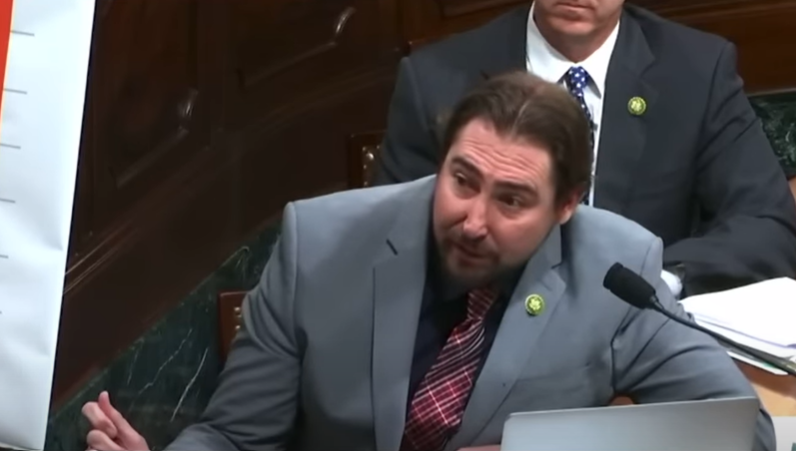
The National Endowment for Democracy (NED), created in 1983 as a “resource for information related to democracy worldwide,” has found itself in the crosshairs of Arizona Congressman Eli Crane (R-AZ02). Crane has introduced the Defund the National Endowment for Democracy Act of 2025, a measure designed to strip the private institution of all taxpayer funding on the basis that it “evolved into a key contributor to global censorship campaigns, domestic propaganda, and regime change politics.”
In a statement released Thursday, Crane told supporters, “I’m proud to introduce this sensible measure to ensure that American resources are no longer used to support this organization’s anti-American objectives. Hardworking citizens should not be forced to foot the bill for anything that undermines freedom of speech and liberty.”
He continued, “The National Endowment for Democracy has strayed far from its original mission. We owe it to the American people to protect their interests and put an end to this disgusting waste of their money.”
In an in depth investigation published in August 2024, Tim Meisburger wrote for The Heritage Foundation that although the NED is required to be bipartisan, “[it] is led and staffed almost entirely by Democrats, and its board members and ‘experts’ have sought to delegitimize the Republican party.”
The report laid out in detail that through a series of grants, the NED “has supported development of the international ‘disinformation industrial complex’—including one grantee that sought to censor and suppress conservative speech in the United States in advance of the 2020 and 2022 elections.” It also added that starting in 2019 during the hotly contested 2020 Presidential Election, the endowment’s budget nearly doubled, exploding from $180 million annually to $300 million.
The report further observed the integration of the NED within the bureaucratic ecosystem of the Department of State, which during the first Trump administration maintained a character largely hostile to the president. Meisburger wrote, “Legislation requires the NED to ‘consult with the Department of State on any overseas program funded by the Endowment prior to the commencement of the activities of that program.’”
Statements from prominent board members Anne Applebaum and Rachel Kleinfeld cited in the report from Heritage are particularly alarming, with Applebaum saying of Republicans that “they aren’t even a legitimate political party.” While Kleinfeld wrote, “The embrace of violence and intimidation as a political tactic by a faction of the GOP will cause violence of all types to rise—against all Americans.” She added, “I am a Democrat, and I believe that that is very important right now: because the Republican party is in thrall to this anti-democratic force.”
Of the ostensibly Republican members of the board, which is statutorily split along partisan lines, only a single member donated to President Trump’s campaign “while others made significant contributions to Never Trump political action committees and candidates,” suggesting a strong sentiment against Trump-supporters.
Posting to X on Thursday Crane wrote, “We must end this disgusting waste of taxpayer resources.”
Matthew Holloway is a senior reporter for AZ Free News. Follow him on X for his latest stories, or email tips to Matthew@azfreenews.com.