by Matthew Holloway | May 16, 2026 | News
By Matthew Holloway |
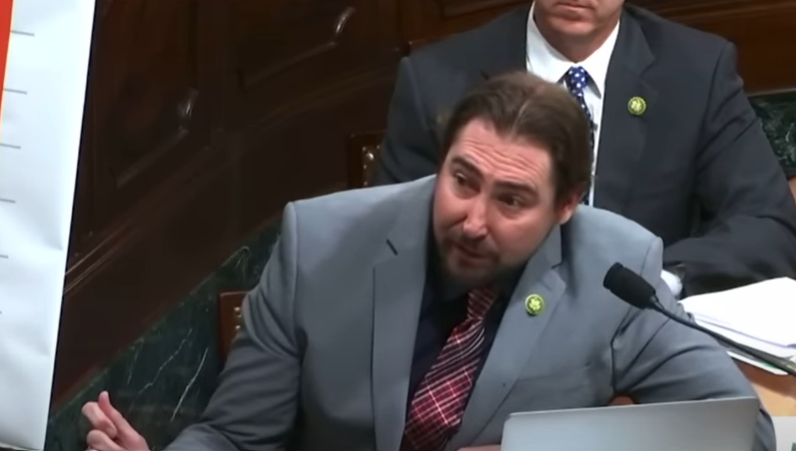
Congressman Eli Crane (R-AZ02) welcomed a Federal Emergency Management Agency (FEMA) announcement Tuesday that multiple Arizona health care providers, tribal entities, and state agencies are receiving federal funding through grants released by the agency.
The grants were awarded to the Arizona Department of Emergency & Military Affairs, the Arizona Department of Health Services, Dignity Community Care, Dignity Health, the Havasupai Tribe, HonorHealth, and Valleywise Health.
More than $5.5 million of the funding is designated for the Havasupai Tribe to repair damage caused by flash flooding in 2024. The project includes replacing four damaged bridges with structures designed to withstand major flood events, including 100-year flood events. The funding will also support fencing and erosion-control systems intended to protect ancestral burial grounds and culturally significant tribal sites.
In a statement released by his office, Crane said, “On behalf of rural Arizonans, I’m grateful to President Trump, Secretary Mullin, Associate Administrator Phillips, and agency personnel for delivering this reimbursement. This funding will strengthen health care across our state, as well as provide meaningful assistance for the Havasupai Tribe.”
“I also appreciate the work of Chairman Garbarino and Arizona’s congressional delegation,” he added, specifically highlighting the efforts of Rep. Andy Biggs (R-AZ05), whom he said, “demonstrated considerable leadership behind the scenes to resolve these long overdue needs.”
“We will continue to partner with the Trump administration to deliver wins for all Arizonans,” Crane said.
The Havasupai Tribe, located within Arizona’s Second Congressional District, was among the entities identified in the release. Crane’s district includes a significant number of tribal communities throughout northern and eastern Arizona.
The announcement follows a series of recent federal and congressional discussions surrounding rural infrastructure, tribal services, and health care access in Arizona communities. Last week, Crane participated in a Federal Partners Forum in Prescott focused on rural Arizona infrastructure and coordination between federal, state, and local agencies.
Matthew Holloway is a senior reporter for AZ Free News. Follow him on X for his latest stories, or email tips to Matthew@azfreenews.com.
by Matthew Holloway | May 16, 2026 | News
By Matthew Holloway |
Fire crews have reached 90% containment on the Jones Fire burning near Wickenburg after the blaze forced evacuations, destroyed recreational vehicles, and temporarily shut down portions of U.S. 60 earlier this week.
According to the Arizona Department of Forestry and Fire Management, the fire remained at approximately 84 acres Thursday morning as crews continued patrol operations, hazard tree mitigation, and containment line reinforcement near the Hassayampa River bottom southeast of Wickenburg. By Thursday evening, InciWeb listed the fire at 90% containment.
The fire began Sunday and rapidly spread through brush, grass, salt cedar, and cottonwood vegetation near U.S. 60 and South Kerkes Street. Officials issued evacuation orders for portions of the area, including residents near Arrowhead RV Park and sections of South Kerkes Street. Additional neighborhoods were placed under “Ready” and “Set” evacuation alerts as crews worked to contain the fire.
The Arizona Department of Forestry and Fire Management reported Monday evening that firefighters had halted the fire’s forward progress at approximately 89.5 acres, although interior hotspots and heavy vegetation continued to pose challenges for crews. Officials stated that between eight and ten RVs were destroyed by the fire, displacing multiple residents; however, no injuries were reported.
Temporary closures along U.S. 60 near milepost 111 disrupted travel in and out of Wickenburg during the height of firefighting operations. Maricopa County emergency officials also reported that Arizona Public Service shut off power east of U.S. 60 as a safety precaution while crews battled the blaze.
Most roadway closures were lifted Tuesday evening as containment improved and calmer wind conditions aided suppression efforts. However, portions of South Kerkes Street and areas surrounding Arrowhead RV Park remained closed while firefighters continued mop-up operations and monitored flare-ups within the burn area.
Investigators believe the fire was human-caused and originated in the riverbed area near Wickenburg. The Arizona Department of Forestry and Fire Management stated the dense salt cedar vegetation in the river bottom contributed to intense fire behavior and heavy smoke conditions, as seen in the Hazen fire that erupted along the Gila River bed on May 2 and is currently 93% contained.
Approximately 150 firefighting personnel were assigned to the incident, including wildland crews from across Arizona. Officials said crews focused on strengthening containment lines, extinguishing hotspots, and removing hazardous trees damaged by the fire.
The Jones Fire also prompted emergency shelter operations in the community. The American Red Cross opened a temporary evacuation shelter at Wickenburg High School for displaced residents affected by evacuation orders and damage to the RV park.
The Jones Fire comes as Arizona continues facing multiple wildfire incidents tied to dry vegetation and dangerous fire conditions across the state. The Hazen Fire, located near Buckeye, burned more than 1,100 acres in heavy river-bottom vegetation near State Route 85, prompting road closures, power outages, and firefighting responses involving more than 160 personnel.
Matthew Holloway is a senior reporter for AZ Free News. Follow him on X for his latest stories, or email tips to Matthew@azfreenews.com.
by Matthew Holloway | May 15, 2026 | Economy, News
By Matthew Holloway |
The Consumer Price Index rose to 3.81 percent year-over-year in April, marking the highest annual inflation rate in nearly three years, according to the latest Monthly Inflation Update released Tuesday by Republicans on the Joint Economic Committee (JEC).
According to the report, headline Consumer Price Index for All Urban Consumers (CPI-U) increased from 3.26 percent in March to 3.81 percent in April. Core CPI, which excludes food and energy prices, rose to 2.75 percent year-over-year in April, up from 2.60 percent in March.
April’s increase marked the highest annual headline inflation rate reported since mid-2023, reversing several months of comparatively slower price growth.
The JEC reported that energy prices experienced the sharpest annual increase among major categories, with energy inflation reaching 17.87 percent year-over-year in April, representing a 21.61 percentage point increase compared to April 2025.
Food prices also increased year-over-year. According to the report, food inflation reached 3.18 percent in April, 0.42 percentage points higher than the same period last year.
Regionally, inflation rose across all major areas of the country between March and April. The Northeast recorded the highest inflation rate at 4.4 percent, followed by the Midwest at 4.1 percent and the South at 3.6 percent. The West recorded the lowest regional inflation rate at 3.5 percent.
While the West recorded the nation’s lowest regional inflation rate, the 3.5 percent increase still remained above the Federal Reserve’s long-term two percent inflation target. Declining real wages indicate that inflation continued to outpace earnings growth for many workers during the month, reducing purchasing power despite nominal wage increases.
The JEC’s Monthly Inflation Update compiles and analyzes federal inflation data released by the U.S. Bureau of Labor Statistics. The report also found that inflation-adjusted earnings declined during the month.
According to the JEC, real average weekly earnings for all employees decreased by 0.19 percent from March to April. Real average hourly earnings declined by 0.53 percent year-over-year, representing a 0.44 percentage point decrease compared to April 2025.
Matthew Holloway is a senior reporter for AZ Free News. Follow him on X for his latest stories, or email tips to Matthew@azfreenews.com.
by Matthew Holloway | May 14, 2026 | News
By Matthew Holloway |
Pinal County Attorney Brad Miller announced Monday that prosecutors have filed a Notice of Intent to seek the death penalty against inmate Ricky Wassenaar in connection with the killings of three fellow inmates.
According to a statement released by the Pinal County Attorney’s Office, Wassenaar is charged with three counts of First Degree Murder and one count of Aggravated Assault in the deaths of Donald Lashley, Thomas Harnage, and Saul Alvarez.
“The decision follows a thorough review of the facts, evidence, and applicable laws and was made in consultation and input from experienced prosecutors in the office,” Miller said in the release.
“I believe the death penalty is the appropriate sentence given the defendant’s extensive history of violence,” Miller added.
The Pinal County Attorney’s Office alleges the case meets statutory aggravating factors required under Arizona law to pursue capital punishment.
According to reporting from 12News, the charges stem from a prison attack in 2025 at the Arizona State Prison Complex-Tucson’s Cimarron Unit.
“Child molesters,” Wassenaar told the Arizona Mirror in a phone interview from prison. “I wanted to kill them all.” He also claimed to have killed a fourth prisoner, Joseph Desisto, in 2024. However, an autopsy determined Desisto died from natural causes.
In a May 2025 interview with AZ Family, Wassenaar said he considered the murders a “favor” for society, saying, “They were child molesters. Alvarez had raped, had kidnapped. First, he came to this country illegally. Then he kidnapped and raped and murdered a 15-year-old little girl. I did society a favor by killing that f****t. The other two, Harnage and Lashley, were both sexual child predators that molested several victims. So, I did society a favor.”
Wassenaar is one of Arizona’s most widely known prison inmates due to his role in the 2004 hostage standoff at the Lewis prison complex in Buckeye. During that incident, as reported by NBC News, Wassenaar and another inmate held two correctional officers hostage for approximately 15 days before surrendering. The Arizona Daily Independent reported that Wassenaar was already serving multiple life sentences prior to the current case.
According to the Arizona Department of Corrections, Rehabilitation and Reentry, Wassenaar’s criminal history includes convictions for armed robbery, kidnapping, sexual assault, and aggravated assault connected to crimes committed before his incarceration.
The case remains an active prosecution, and prosecutors stated that no additional details would be released at this time.
Under Arizona law, a criminal charge is an accusation, and defendants are presumed innocent unless proven guilty in court.
Matthew Holloway is a senior reporter for AZ Free News. Follow him on X for his latest stories, or email tips to Matthew@azfreenews.com.
by Matthew Holloway | May 14, 2026 | Economy, News
By Matthew Holloway |
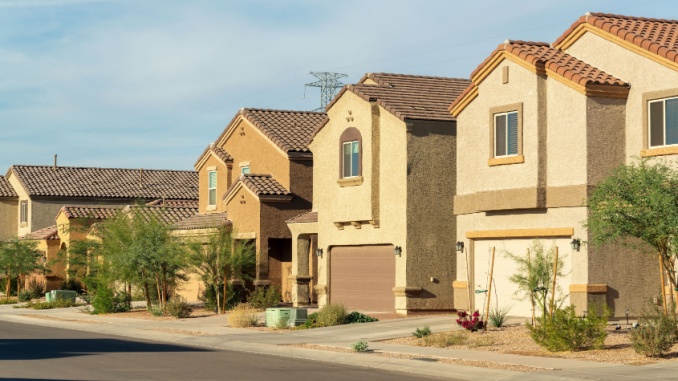
Arizona’s housing market continues to face significant affordability challenges despite slowing home prices and rising inventory levels, according to an update released this week by the Common Sense Institute (CSI) Arizona.
The report estimates Arizona faced an immediate housing shortfall of 55,992 units in 2025, while the state’s cumulative long-term housing deficit has reached approximately 110,837 units. According to CSI, current residential permitting trends suggest it could take more than a century to eliminate the existing housing gap.
CSI reported Arizona issued 50,983 residential permits in 2025, representing a 14 percent decline from 2024 and the slowest pace of permitting activity since 2019. The organization concluded that slowing construction activity continues to constrain the state’s housing supply, despite weakening demand in some markets.
“Arizona’s housing market is no longer experiencing the rapid price growth seen during the pandemic-era boom, but affordability challenges remain deeply embedded in the market,” said Glenn Farley, Director of Policy and Research at Common Sense Institute Arizona. “The state continues to face significant supply constraints, and while softer demand has created some short-term relief for buyers, long-term progress will ultimately depend on a sustained increase in housing production and permitting activity.”
According to the report, Arizona’s housing market has become more favorable for buyers in the short term as inventory levels rise and price growth slows. However, CSI stated the shift reflects softer buyer demand rather than substantial improvements in housing availability.
Average home prices in Arizona declined approximately 2.9 percent in 2025, though CSI noted prices remain roughly 11.1 percent above pre-pandemic trends. The report estimated the average home price statewide at approximately $420,900.
Mortgage affordability also remains under pressure. CSI estimated that a household would need an annual income of approximately $87,000 to afford the average-priced home in Arizona under conventional underwriting standards.
The organization found Arizona households now require roughly 58 hours of work per month at the average wage to service a standard mortgage payment, compared to approximately 38 hours per month in 2019. CSI estimated only 42 percent of Arizona households can currently afford the monthly mortgage payment on an average-priced home without exceeding standard debt-to-income guidelines. In 2019, approximately 66 percent of households met that threshold.
CSI also reported that Arizona home prices have declined approximately 3.4 percent statewide since June 2024, representing the third-fastest rate of decline nationally during that period.
It assigned Arizona a preliminary “C-” Housing Report Card grade for 2025, down from a “C+” at the end of 2024. The report follows CSI’s earlier affordability rankings that identified Arizona among the least affordable states in the country based on housing costs relative to household income.
Farley and CSI Arizona Senior Economist & Research Analyst Zachary Milne, who co-authored the report, concluded, “Arizona’s market is healthier than it was but remains paralyzed by inefficiencies. Prices have stopped rising but also haven’t come down much off their all-time highs. Combined with high interest rates, entering the housing market remains a daunting task for any prospective new buyer. Home permitting is slowing, migration and household formation are down, and the state is losing its luster as an affordable place to move to and create a life.”
Matthew Holloway is a senior reporter for AZ Free News. Follow him on X for his latest stories, or email tips to Matthew@azfreenews.com.