by Matthew Holloway | Jan 5, 2025 | News
By Matthew Holloway |
On February 27, 1968, President Lyndon Baines Johnson was said to have listened to a devastating report by anchorman Walter Cronkite who assessed the Vietnam War as “to end in a stalemate.” According to Westpoint’s Modern War Institute, David Halberstam wrote in his 1979 book, “The Powers That Be,” that Johnson told press secretary, George Christian, “that if he had lost Walter Cronkite he had lost Mr. Average Citizen.”
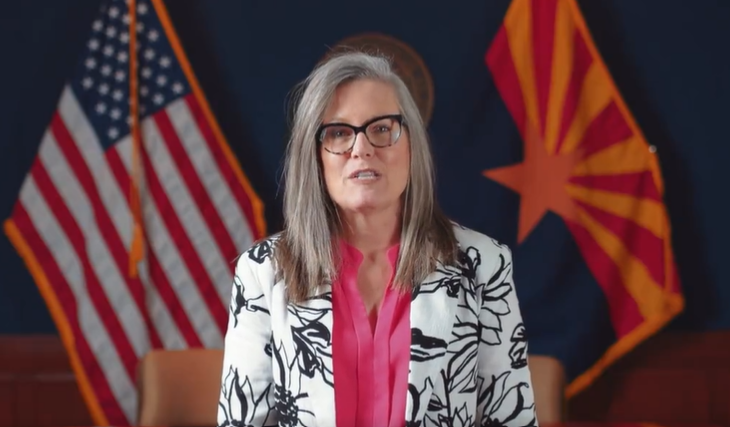
Similarly, Arizona Democrat Governor Katie Hobbs appears to have lost Arizona Republic columnist Laurie Roberts. In the columnist’s “10 awards for the best of the worst in Arizona politics in 2024,” Hobbs was named “Biggest Loser.”
In the article where she in turn condemns Arizona’s Republican 2020 alternate electors, former New York City Mayor Rudy Giuliani, State Senator Justine Wadsack, State Representative Austin Smith, and former AZGOP Chair Jeff DeWitt, Roberts called out Hobbs’ catastrophic failure to flip the Arizona Legislature and wrench control of the government from the GOP.
As Roberts noted, “Instead, she lost two seats in the House and one in the Senate, and now faces the most conservative Legislature of our time … maybe even any time.”
The AZCentral columnist went on to observe that the increased majority in both houses of the legislature will likely spell trouble for the embattled Democrat, who finds herself at the lowest point of her favorability, 36%. But it doesn’t end there. As Citizens For Free Enterprise Press Secretary Dan Coulson noted in a late November post to X, Hobbs is also a “Target of 2 separate criminal investigations,” with an undoubted primary challenge on the horizon.
Roberts went on to prognosticate that the Trump administration would seek to characterize Hobbs as “out-of-touch with everyday Arizonans.” However, it seems likely that Trump will be more concerned with expanding the House GOP majority in Arizona, seeking to exploit any weaknesses in the Arizona House Democrats Caucus. One could imagine a concerted effort to oust Rep. Greg Stanton (D-AZ-04) who enters his third term in the House in January by a slim 7.2 point margin.
The gubernatorial challenge is bound to be far more of a concern for the Republican National Committee and the Republican Governors Association—though the President is likely to weigh in as he’s wont to do.
For now, Roberts’ assessment of Hobbs as 2024’s “Biggest Loser” appears to be apt, and the ghost of Walter Cronkite may have claimed another Democrat.
Matthew Holloway is a senior reporter for AZ Free News. Follow him on X for his latest stories, or email tips to Matthew@azfreenews.com.
by Matthew Holloway | Jan 4, 2025 | Economy, News
By Matthew Holloway |
Arizona renters and landlords alike will get to breathe a sigh of relief this month when the Transaction Privilege Tax (TPT), applied by cities to rental payments every single month, is eliminated. While the cities that will no longer enjoy this source of tax revenue and lobbying groups like the League of Arizona Cities and Towns cry foul, local Republicans who pushed for the reform and the renters who pay it are celebrating.
Seventy-five cities across the state charge TPT on rentals ranging from 1.5% to 4%. Depending on rental rates, this could mean monthly savings of about $20-$50 per month based on estimates.
In a statement posted to X in November, Arizona Senate President Warren Petersen touted the tax elimination writing, “Its happening. Renters are about to get relief from the rental tax repeal passed by the Republican led legislature. The rental tax repeal was an important part of our majority plan to deliver inflation relief. To get the governors signature we had to delay the effective date to Jan 1 2025. Many people said the Dems would take the majority and put the tax back in place. Fortunately for renters we held the Senate and the House. Here is an email from a property manager letting the tenants know their rent will be going down.”
Jake Beeson of Beehive Property Management told AZFamily, “It’s going to mean quite a bit for some tenants. We work with the Community Housing Partnership as one of our clients, which has low-income housing, and those rents are between $900 and 1,000 a month. So for a low-income family to have a 2% discount every month doesn’t sound like a lot, but if you’re paying $900 in rent every month, that’s $18. $18 is a whole month of discounted lunches at your kid’s school.”
The outlet noted that the rates in the valley can range from 2% in Mesa to 2.3% in Phoenix or 3% in Cave Creek. Some cities charge as much as 4%.
But not everyone sees the rental tax relief as a positive. Lee Grafstrom, a tax policy expert with the League of Arizona Cities and Towns told Fox10, “You’re not cutting any of the services that citizens are requesting and requiring, so, we still have to do all the same amount of work. We just have this much less money to do it.”
He stressed that cities could find themselves in budget shortfalls, expecting a combined loss of $230 million in tax revenue annually.
“We have to find a way to either cut services or make up that shortfall,” Grafstrom told Fox10. “This is a minor piece of a solution to a much larger problem, in terms of housing affordability.”
The League said in a statement, “Cities and towns across the state are facing a loss of over $230 million in their budgets, which support essential services like police, fire, parks, and more. Without state funding to make up for these losses, local governments will be forced to make tough decisions to balance their budgets, such as cutting jobs and services or raising local taxes—both unpopular choices. Local leaders are working to address these challenges before the repeal takes effect in January.”
The additional savings could see renters parlay the funds into more goods and services to offset inflation, which still tolls heavily on Arizona residents.
Matthew Holloway is a senior reporter for AZ Free News. Follow him on X for his latest stories, or email tips to Matthew@azfreenews.com.
by Matthew Holloway | Jan 4, 2025 | News
By Matthew Holloway |
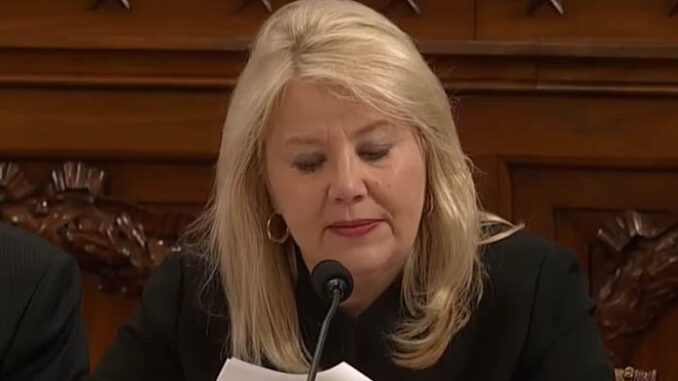
Arizona Congresswoman Debbie Lesko’s eight-year tenure in the House of Representatives recently came to close. As she prepares to take office as a Maricopa County Supervisor, she shared a series of congressional speeches from her colleagues in the House congratulating her on her retirement and recounting her legislative accomplishments.
In an op-ed published by AZ Free News, Lesko looked back on her time in Congress noting her time various committees including Judiciary, Homeland Security, Rules, and Science, Space, and Technology. She also reflected on her time serving on the powerful Energy and Commerce Committee along with the Homeland Security Subcommittee and the controversial Select Subcommittee on COVID-19.
Lesko wrote, “I strive to conduct myself honorably and in accordance with the desires of my district, and I will continue as long as I am in office. I will carry with me the memories of my service in the People’s House as long as I live. I appreciate all who have helped me to this point, and I will always be proud to be the U.S. Congresswoman from Arizona’s 8th Congressional District. May God continue to bless our great nation.”
From Christmas Eve through the weekend several members of Congress took the podium to address Lesko’s retirement including Rep. Virginia Cox (R-NC), who highlighted her as “one of the kindest and most forgiving people I’ve ever met in my life.” She added that Lesko forgave her, becoming emotional as she wished the Congresswoman well.
Congresswoman Michelle Fischbach (R-MN) quipped that she initially met Lesko in a nail salon, eliciting laughs from her fellow Congress members. She noted that she never saw the Arizona Congresswoman “in a bad mood.” Fischbach alluded to Lesko’s upcoming service on the Maricopa County Board of Supervisors saying, “I think that the people of Arizona and your county are going to be so incredibly well served, and you will do a wonderful job for them.”
Praise also came from members of the Arizona Congressional delegation with Rep. Juan Ciscomani telling the House that Lesko “is a conservative,” but is “just not angry about it.”
Congressman Andy Biggs told the gathered members that he first heard of Lesko when she served on a school board. He credited her with courage during her work on pension reform in the Arizona legislature. Biggs also joked at the reduction in staff that Lesko now faces, saying she’ll have just “one and a half staffers,” in her new role before being overcome with emotion.
Rep. David Schweikert echoed the sentiment of Ciscomani when he exclaimed, “Look, one of the magic things about Debbie Lesko is that she has proven, you can be conservative and not be angry about it! You can actually be joyful and kind and sweet and just a decent human being!” He stressed Lesko’s calm demeanor in contrast to his anger at times and remarked on her avoiding traveling with a laptop for a “stack of paper” on regular flights to and from Washington, D.C. He quipped, “They do make these things called laptops…”
Noting that Maricopa County is the fourth most populated county in the nation, Schweikert recalled his time as County Treasurer and added that he missed “those day when you could actually do things.”
Matthew Holloway is a senior reporter for AZ Free News. Follow him on X for his latest stories, or email tips to Matthew@azfreenews.com.
by Matthew Holloway | Jan 3, 2025 | News
By Matthew Holloway |
Scottsdale residents have raised 26,000 signatures in a petition for the Taxpayers Against Awful Apartment Zoning Exemptions (TAAAZE). They are demanding a public referendum on the zoning approval of a proposed apartment development near the headquarters of Axon at Hayden Road and the Loop 101.
The proposal only required 15,000 signatures to put the plan for approximately 1,900 multifamily units on the ballot, as reported by the Arizona Daily Independent. Former Scottsdale city councilman Bob Littlefield hand carried the petition signatures to city council while festively dressed up as Santa Claus. Reportedly, the costume was for a prior event. Littlefield is chairman of Protect Our Scottsdale, a phrase adopted by TAAAZE.
Littlefield told the outlet that Axon had deployed “blockers” whom he accused of harassing petitioners and pushing out mass-text campaigns maligning TAAAZE as a “radical agenda.”
In a post to X, he offered a rebuke writing, “Radical agenda? Really? When did trying to stop the biggest apartment proposal in Scottsdale history, when we have thousands of water-guzzling, traffic-clogging and view-destroying apartments already approved, become a ‘radical agenda?’ Fortunately, Axon’s blocking efforts have failed to slow down our signature gathering efforts. I believe this is because Scottsdale residents, who I have found to be the most politically savvy citizens in Arizona, already know three things:
1. The Axon apartment proposal is a bad deal for Scottsdale residents.
2. This bad deal was forced on Scottsdale residents by a lame duck Council majority, most of whom had been soundly defeated in the last election.
3. The Axon apartment proposal is exactly what voters resoundingly said in the last four elections they do not want.”
Vice Mayor Barry Graham and Councilwoman Kathy Littlefield voted against the measure, but were overruled with Graham chastising the outgoing members for exerting their last moments of control against the voters will.
“The irony isn’t lost: approving the most apartments in Scottsdale’s history while imposing a plan to punish you with higher taxes & fees to reduce your trash output by 90% and ration your water and utilities,” said Graham. AZ Free News reported in mid-November that the Scottsdale City Council was largely ousted in the 2024 Election, resulting in a largely lame-duck session that filled its final weeks on “slamming through” controversial agenda items including the apartment complex, avarious appointments to citizens’ commissions, and the city’s sustainability plan.
Incoming councilman Adam Kwasman reassured voters in a post to X, “We will do all we can to reverse the damage done.”
If the petition is approved, it would appear on the 2026 ballot for a city-wide referendum.
Axon CEO Rick Smith reportedly warned in earlier interviews that should Axon face opposition to the development plan, then the law-enforcement equipment manufacturer would seek to relocated its headquarters out of Arizona to Atlanta or Seattle.
Matthew Holloway is a senior reporter for AZ Free News. Follow him on X for his latest stories, or email tips to Matthew@azfreenews.com.
by Matthew Holloway | Jan 3, 2025 | News
By Matthew Holloway |
President Jimmy Carter passed away on December 29, 2024, at the age of 100. His death followed nearly two years in hospice care and the death of his wife, First Lady Rosalynn Carter, at age 96 in November 2023. In response to Carter’s passing, Arizona political leaders of both the Democratic and Republican parties offered rare and non-partisan expressions of sympathy and mourning.
The Arizona Republican Party succinctly posted, “Rest in Peace President Carter,” a simple direct message to address the passing of a political opponent.
The Arizona Democratic Party meanwhile offered a lengthier post writing, “The Arizona Democratic Party mourns the passing of Jimmy Carter, a man of profound humility, compassion, and dedication to humanity. President Carter moved our nation forward, from brokering peace in the Middle East to championing women’s rights.”
Arizona Senate Democrats courted controversy in their post writing, “Rest in Power,” as opposed to the traditional “Rest in Peace.”
One commenter replied, “Rest in power? Don’t disrespect a legendary man by saying something he wouldn’t have said. Recognize him for who he was.” Another chastised the AZ Senate Dems writing, “What dei hire wrote this? Rest in power? Lame.”
Embattled Democrat Governor Katie Hobbs offered the following: “President Jimmy Carter lived an exemplary life of service, fighting for peace and prosperity across the globe. On behalf of the State of Arizona, we send our love to the Carter Family and the millions worldwide whose lives are better because of President Carter’s legacy.”
Arizona’s Democrat Attorney General Kris Mayes wrote a lengthier post, sharing the story from The Washington Post: “America has lost a true servant leader. President Jimmy Carter’s century-long life was defined by his integrity, compassion, and an unwavering commitment to serving his country and his fellow man.”
She continued, “From his military service to his leadership in the White House — and his tireless work with Habitat for Humanity and global humanitarian efforts — he showed us what it truly means to live for others. Rest in peace, President Carter.”
Democrat Senator Mark Kelly highlighted Carter’s philanthropy after his presidency, in addition to his human rights work writing, “Always humble, President Carter showed us that public service isn’t limited to elected office. He leaves a legacy not just as a president, but as a great American who wore the uniform, built homes for his neighbors, and worked for human rights across the globe.”
Senator-elect Ruben Gallego, like his fellow Democrat Kelly, offered a short post of condolences writing, “A life dedicated to peace, justice, and compassion. Rest in peace, President Jimmy Carter. Sydney and I send our heartfelt condolences to the Carter family.”
Democrat Congressman Greg Stanton released a statement addressing Carter’s service as a naval officer, the Governor of Georgia, and his presidency. He wrote, “Above all, he was an honorable man with unimpeachable character. Guided by his deep Christian faith, he built homes for the needy and taught Sunday School well into his 90s. He set a fine example for each of us for what it means to love thy neighbor.”
On the Republican side of Congress, Congressman Andy Biggs called upon supporters to join in prayer “for the friends and family of President Jimmy Carter.” He wrote in full, “Please join me in praying for the friends and family of President Jimmy Carter. President Carter passed away this afternoon at the age of 100. I pray that peace surrounds all who knew and loved him. May he rest in peace.”
Congressman-elect Abe Hamadeh also highlighted Carter’s humanitarian work writing, “Yesterday, we lost a great humanitarian. President Jimmy Carter was a proud Navy veteran and compassionate humanitarian. He dedicated his life to serving his country and community. His legacy of kindness will never be forgotten. Rest in peace, President Carter.”
Rep. Juan Ciscomani kept his comment brief and simply stated, “May he rest in peace.”
Carter’s upcoming state funeral is slated for January 9th and could potentially run for ten days until the 19th, just one day prior to the inauguration of President-elect Donald Trump. Amidst calls from the radical left for Trump to be barred from the proceedings, Arizona’s political figures largely kept remarks on the death of Carter civil and solemn in an example the rest of the nation could hopefully follow.
Matthew Holloway is a senior reporter for AZ Free News. Follow him on X for his latest stories, or email tips to Matthew@azfreenews.com.