by Ethan Faverino | Oct 15, 2025 | News
By Ethan Faverino |
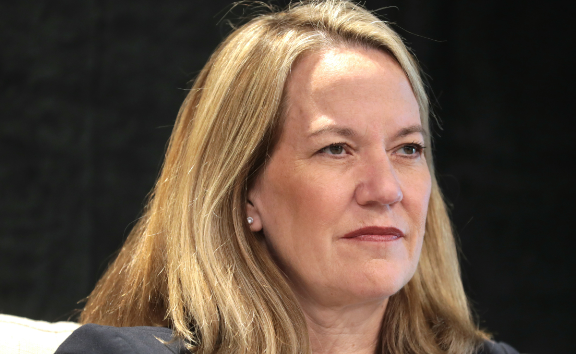
Michael Calles, a fourth-generation Arizonan, U.S. Navy and U.S. Army Veteran, and retired Phoenix Police Officer with 25 years of experience, has officially announced his candidacy for Glendale City Council in the Barrel District.
Running against incumbent Councilmember Bart Turner, Calles aims to restore transparency, accountability, and ethical governance to City Hall while addressing the growing concerns of Barrel District residents.
Calles, a political newcomer, brings a lifetime of public service to his campaign with a platform centered on strengthening public safety, investing in families and youth, revitalizing neighborhoods, and advocating for lower taxes, lower utilities, and robust economic investment in the Barrel District.
His announcement comes at a pivotal moment, as Barrel District citizens express frustration with what they describe as Councilmember Turner’s lack of responsiveness and transparency.
In a press release announcing the launch of his campaign, Calles wrote, “Glendale residents deserve safe neighborhoods, fiscal responsibility, and a City Council that works for them, not one that wastes taxpayer dollars. I’m running to restore trust, strengthen public safety, and deliver real results for families in the Barrel District.”
The Calles campaign is gaining momentum as residents rally for change in the Barrel District. His commitment to transparent governance and fiscal responsibility appears to resonate with voters seeking a City Council that reflects their values and priorities.
“I’m tired of seeing Glendale residents ignored while political insiders look out for themselves,” said Calles. “I believe city leaders should listen, respond, and lead with integrity — values I have lived every day through decades of service in law enforcement, the military, and as a mentor to local youth. Now, I am ready to bring that same honesty, discipline, and responsiveness to City Hall.”
Ethan Faverino is a reporter for AZ Free News. You can send him news tips using this link.
by Ethan Faverino | Oct 14, 2025 | News
By Ethan Faverino |
Arizona Senate President Warren Petersen has publicly criticized Attorney General Kris Mayes and Arizona Democratic leadership for their silence regarding inflammatory statements made by Jay Jones, the Democratic nominee for Virginia Attorney General.
Jones recently came under fire for text messages in which he fantasized about the murder of the Republican Speaker of the Virginia House of Delegates and expressed a desire for the Speaker’s children to die. “If those guys die before me, I will go to their funerals to piss on their graves,” said Jones in a text message to Carrie Coyner, a member of the Virginia House of Delegates. “Three people, two bullets… Gilbert gets two bullets to the head.”
Instead of taking responsibility for his remarks, Jones has deflected blame on Virginia Attorney General Jason Miyares for the release of the messages.
In an era marked by escalating political violence, including recent high-profile incidents that have shaken the nation, Petersen emphasized the critical need for elected officials to unequivocally condemn such rhetoric.
Petersen condemned Jones’ comments and subsequent refusal to accept accountability, calling them unfit for a candidate seeking a leadership role.
“Our nation has been suffering from an unprecedented amount of political violence,” said Petersen. “Now more than ever, we need leaders to condemn such evil behavior. Mayes’ and Arizona Democrats’ silence is disturbing and unbecoming of their respective offices.”
Ethan Faverino is a reporter for AZ Free News. You can send him news tips using this link.
by Ethan Faverino | Oct 13, 2025 | Economy, News
By Ethan Faverino |
In a landmark victory for small businesses, Congress has made the 20% Small Business Tax Deduction, also known as Section 199A, a permanent qualified business deduction, ensuring long-term tax certainty for Main Street.
This critical provision allows small businesses to deduct up to 20% of their income, empowering mom-and-pop shops to grow, invest in their workforce, and play their part in giving back to the community.
The decision, signed into law by President Trump, averts a massive tax hike that would have impacted over 33 million small business owners nationwide at the end of 2025.
Making the Small Business Tax Deduction permanent changes the game for Main Street. The tax certainty provided by Congress ensures small businesses can thrive, hire more workers, and compete with larger corporations.
Since its introduction in 2017, the deduction has leveled the playing field for nine out of ten small businesses that file as pass-through entities. Recent NFIB surveys show growing confidence, with small business optimism reaching a five-month high.
The new tax law also includes pro-small business provisions, such as permanent extensions of the 2017 marginal tax rates, preventing up to a 4% tax hike for small businesses and employees.
Enhanced expense and depreciation rules under Section 179 and 168(k) enable business owners to confidently invest in growth, such as making large purchases. Additionally, increased reporting thresholds for IRS forms 1099-K, 1099-NEC, and 1099-MISC reduce paperwork burdens for businesses using platforms like Venmo or PayPal or engaging independent contractors.
The permanent estate tax exemption further supports owners looking to pass their businesses to the next generation or keep them locally owned.
National Federation of Independent Business (NFIB) State Director Chad Heinrich said, “An NFIB-commissioned study by EY found that the Small Business Tax Deduction will increase Arizona’s economic activity by more than $1.4 billion annually, resulting in the creation of 26,000 jobs each year. That means more, good-paying jobs for hardworking Arizonans.”
Ethan Faverino is a reporter for AZ Free News. You can send him news tips using this link.
by Ethan Faverino | Oct 12, 2025 | News
By Ethan Faverino |
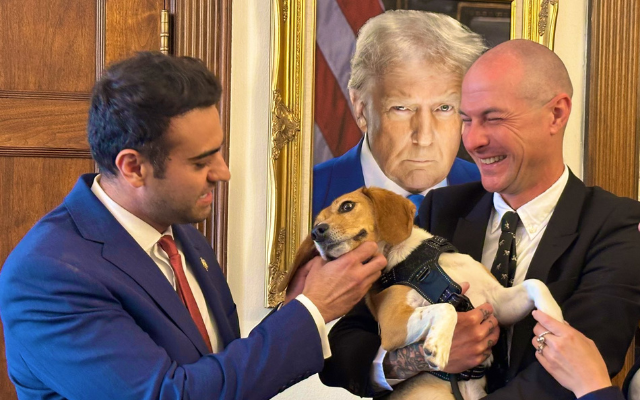
In a recent opinion piece in Townhall, Congressman Abraham Hamadeh (R-AZ-08) declared that he is leading the charge to end federal funding for transgender experiments on animals,” signaling a bold stance against the misuse of taxpayer dollars.
Congressman Hamadeh announced he is directing a group of House Republicans to demand that Fiscal Year 2026 spending bills include explicit language prohibiting federal funding for transgender experiments on animals.
“When Americans send their hard-earned money to Washington, they expect it to be used wisely to secure our borders, to defend our nation, and to provide essential services that protect our citizens. What they do not expect is for their tax dollars to bankroll the latest ideological fads of the radical left,” said Hamadeh.
“No one should be forced to subsidize radical gender ideology, let alone grotesque experiments that inflict suffering on animals in the name of ‘gender transition science.’ This is not medical research; it’s political theater disguised as science,” he added.
The initiative addresses growing concerns over federal funding being used to support immoral and unnecessary experiments involving animals such as monkeys, mice, and rabbits.
These experiments reportedly involve mutilating animals and administering cross-sex hormones to advance theories aligned with radical gender ideology.
“What possible scientific benefit can come from mutilating a rabbit or drugging a monkey with cross-sex hormones? None,” stated Congressman Hamadeh. “These experiments are not about medical advancement; they are about normalizing the transgender agenda.”
Hamadeh’s call to action highlights a broader issue: the capture of America’s research institutions by ideology. Agencies like the National Institute of Health (NIH) have diverted taxpayer dollars to projects that prioritize cultural agendas over scientific integrity.
The Congressman pointed to the Biden administration’s aggressive promotion of gender ideology across education, healthcare, and federal research as a driving force behind these experiments. “Billions of taxpayer dollars have been funneled into projects that redefine biology, undermine parental rights, and confuse children,” he said.
The push to defund these experiments is framed as part of a larger fight to protect American values and restore common sense to government spending.
Hamadeh concluded with a message to all members of Congress, saying, “The American people deserve better. Our children deserve better. And the animals who have no voice at all deserve better. That’s why I will keep leading this charge, because the line must be drawn here, and it must be drawn now. This isn’t politics – it’s common sense.”
Ethan Faverino is a reporter for AZ Free News. You can send him news tips using this link.
by Ethan Faverino | Oct 9, 2025 | News
By Ethan Faverino |
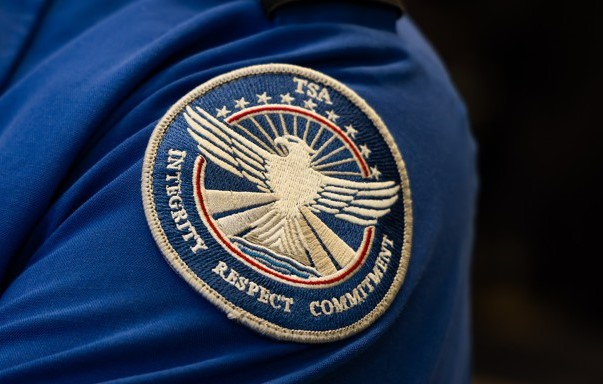
Just one week after discovering the TSA’s Quiet Skies Program was targeting him, Congressman Abe Hamadeh (R-AZ-08) raised urgent questions about the extent of the Biden administration’s violations of Americans’ civil rights.
The latest disclosures, brought to light by FBI Director Kash Patel, expose that former Special Counsel Jack Smith and his “Arctic Frost” team, tasked with investigating January 6, allegedly tracked the private communications and phone calls of multiple Republican lawmakers.
According to Fox News Digital, the targeted individuals included Republican Senators Lindsey Graham (SC), Marsha Blackburn (TN), Ron Johnson (WI), Josh Hawley (MO), Cynthia Lummis (WY), Bill Hagerty (TN), Dan Sullivan (AK), Tommy Tuberville (AL), and Republican Representative Mike Kelly (PA).
“I am disappointed, but not at all surprised, to learn more about how the Joe Biden administration weaponized the federal government to violate citizens’ sacred civil rights,” stated Hamadeh. “This corrupt cabal went to great lengths to keep sunlight from illuminating the truth about the 2020 election of Biden, so it is no surprise at all that the calls they were tracking were likely in reference to the vote to certify the 2020 election.”
The Quiet Skies program, administered by the Transportation Security Administration (TSA), is a domestic surveillance initiative designed to monitor travelers deemed potential security risks.
The program involves enhanced screening, observation by air marshals, and tracking of individuals’ movements through airports.
Congressman Hamadeh’s inclusion in this program, along with many Republican lawmakers and untold numbers of American citizens, has raised concerns about its misuse to target political figures without transparent justification.
Congressman Hamadeh condemned the actions as part of a broader pattern of overreach. “There is nothing radical leftists across all branches of government won’t do to maintain and expand their power,” Hamadeh said. “From our courtrooms to the ballot counting rooms, the Democrats have shown a blatant disregard for our democratic process and the rule of law.”
Expressing confidence in ongoing efforts to address these issues, Hamadeh added, “I have full confidence that FBI Director Patel will identify the layers of corruption left behind by the Biden Administration and tear them out root and branch. Nothing less will restore our Republic to one that honors our God-given rights and respects the voice of We the People.”
Ethan Faverino is a reporter for AZ Free News. You can send him news tips using this link.