by Staff Reporter | Dec 11, 2024 | News
By Staff Reporter |
Maricopa County Republicans no longer wish to challenge the voter-approved transportation sales tax.
The Maricopa County Republican Committee (MCRC) filed a motion to dismiss their lawsuit against Proposition 479 on Sunday.
The attorney for MCRC’s lawsuit, Bryan Blehm, filed the motion to dismiss on behalf of plaintiffs Craig Berland (chairman) and Shelby Busch (first vice-chairman).
Proposition 479 was styled as a continuation of a half-cent sales tax first established in 1985 and last renewed in 2004. The tax revenue funds Maricopa County infrastructure and will last until 2045.
Just short of 60 percent of voters passed Proposition 479. Polling months ahead of the election indicated this to be the case. The proposition came out of a Senate bill advanced by Republican leadership in both legislative chambers, SB 1102, which Senate President Warren Petersen hailed as “the most conservative transportation plan” in Arizona history.
Not all Republican leaders agreed. Arizona Freedom Caucus members expressed opposition to the Senate bill, as did the “conservative watchdog groups” they referenced.
“[This proposition is] a massive win for Hobbs and the Democrats,” said caucus member State Representative Justin Heap.
The Arizona Free Enterprise Club and Goldwater Institute also opposed Prop 479. The two entities claimed in remarks of opposition submitted to the county that the proposition would mostly fund transit.
Per the Maricopa Association of Governments (MAG), 40 percent of the sales tax revenues is slated for the construction of freeways and highways, 22 percent for arterial roads and regional transportation infrastructure, and 37 percent for transit.
Democratic leadership at all levels stood in support of the proposition’s passage and opposition to the MCRC lawsuit, from Governor Katie Hobbs to Phoenix Mayor Kate Gallego.
MAG Regional Council also joined the county to argue for dismissal of the lawsuit. Kevin Hartke, MAG chairman and Chandler mayor, said in a statement to InMaricopa that the lawsuit went against the majority of voters and their desire for transportation funding.
“We won’t let a flawed claim stand in the way of our 40-year legacy of building one of the best transportation systems in the country,” said Hartke. “The transportation plan unanimously approved by the region’s elected leadership, sent to the ballot by the Maricopa County Board of Supervisors and overwhelmingly approved by the voters of Maricopa County, is critical to the quality of life of our residents and the continued strength of our local economy.”
MAG predicts the tax will generate up to $15 billion in revenue (using 2020 dollars) and slash commute length to an average of 30 minutes through 2050, even with an estimated influx of 1.7 million residents and 900,000 jobs.
MAG Executive Director Ed Zuercher indicated that county officials weren’t going to cease moving forward with their transportation plan, even if the lawsuit had progressed.
“The regional transportation plan that was unanimously approved by MAG’s mayors, tribal and county leaders, and supported by business leaders and the voters, will be implemented on schedule,” said Zuercher.
In reporting from last week, Arizona’s general contractors also sided with the efforts to protect the sales tax. The Arizona Chapter of Associated General Contractors of America had criticized MCRC’s lawsuit as “frivolous” and based on political contentions advanced by “disgruntled partisans.”
AZ Free News is your #1 source for Arizona news and politics. You can send us news tips using this link.
by Daniel Stefanski | Dec 8, 2024 | Economy, News
By Daniel Stefanski |
Arizona Republican efforts to lower monthly bills for renters around the state have come to fruition.
Late last month, Arizona Senate President Warren Petersen shared a screenshot from an apartment property manager, alerting residents that rental taxes would no longer be on their bills. The manager wrote, “For years, Arizona has been one of the few states to allow cities and government entities to charge tax on rent. In 2023, a law was passed banning such transaction privilege tax. While the law was passed in 2023, it was not set to go into effect until January 1, 2025. Therefore, starting in January, rental tax will no longer be charged, and you will see a decrease in your monthly charges.”
Petersen responded to the news, saying, “It’s happening. Renters are about to get relief from the rental tax repeal passed by the Republican led legislature. The rental tax repeal was an important part of our majority plan to deliver inflation relief. To get the governors signature we had to delay the effective date to Jan 1 2025. Many people said the Dems would take the majority and put the tax back in place. Fortunately for renters we held the Senate and the House.”
Senator Shawnna Bolick also weighed in on the announcement from her chamber’s leader, indicating that additional plans to lower costs for Arizonans might be forthcoming from Republicans in the state legislature. She said, “In 2022, when I first sponsored that bill I met a guy from southern Arizona who asked me to do something about the residential rental tax. I spoke with this same gentleman this past week once again and he asked me to look at another tax issue since it is now going away. Stay tuned.”
Representative Travis Grantham echoed Petersen’s comments, writing, “So happy we made this happen. Wouldn’t have happened without you endlessly pushing for it!”
In August 2023, Governor Katie Hobbs signed SB 1131, the rental tax elimination bill for Arizona tenants, into law.
According to Arizona Senate Republicans at the time of the signing, “There are approximately 70 municipalities within our state charging this tax, while cities and towns continue to collect record revenues. From fiscal years 2019 to 2023, state-shared revenues from both sales and income taxes combined grew $733 million, or 59%. This increase is on top of any sales taxes or property taxes individually levied by each city. Between FY 2024 and FY 2025, those shared revenues are expected to grow by an additional $389 million.”
Hobbs had vetoed an earlier version of the rental tax prohibition. She gave two reasons for her action, stating, “First this bill lacks any enforceable mechanism to ensure relief will be provided to renters. As noted by the legislature’s own attorney, provisions in the bill that purport to require that tax savings be passed on to renters face challenges under both the state and federal constitutions. If we are going to promise relief to renters, it’s important that we are able to ensure they actually receive it.”
The League of Arizona Cities & Towns – as well as several cities and towns across the state – opposed the updated bill as it progressed through the state legislature and through the Governor’s Office in 2023. The Senate passed the bill on March 2, then the House on May 15. The Senate then concurred with the amended proposal on June 13. SB 1131 was not transmitted to Governor Hobbs until July 31 – the same day that the Legislature approved the negotiated Prop 400 plan.
Daniel Stefanski is a reporter for AZ Free News. You can send him news tips using this link.
by Daniel Stefanski | Dec 6, 2024 | News
By Daniel Stefanski |
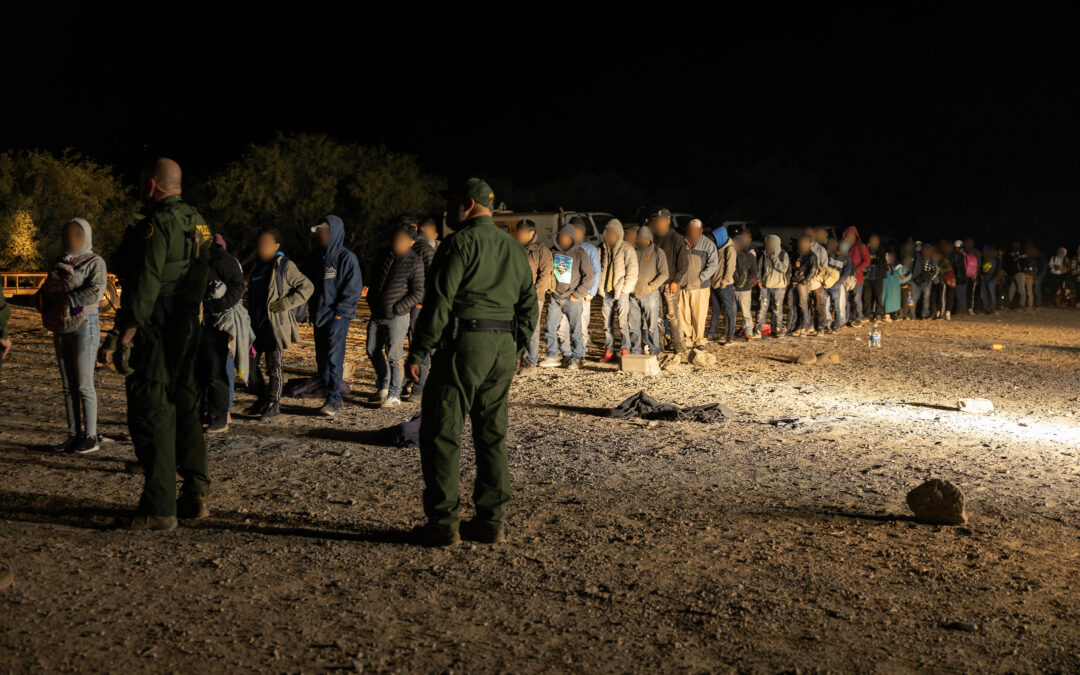
Arizona’s Senate President recently highlighted the exorbitant cost of illegal immigration to his state.
Last week, state Senator Warren Petersen shared a recent study on what the city of Denver, Colorado was spending on illegal immigration. He contrasted Denver’s “sanctuary city” approach to that just experienced by the State of Arizona, where voters passed a border security ballot measure, Proposition 314.
Petersen said, “And the media in AZ was pushing a false narrative that it would cost us money to enforce immigration laws. When in fact we save money. The cost of illegal immigration to AZ is 2 Billion. Cost of enforcement is significantly less. The voters didn’t buy the false media narrative. They passed our border security act by nearly 2 to 1.”
The study promoted by the Arizona legislator was from the Common Sense Institute, which showed that Denver had expended $356 million of taxpayer dollars on illegal immigrants – almost $8,000 per foreign national purportedly in the municipality, which amounts to eight percent of its 2025 budget.
According to the Federation for American Immigration Reform (FAIR), illegal immigration cost Arizona taxpayers around $3.19 billion in 2023 – an annual burden of $1,189 for each state household (or each illegal alien costing the state $5,230). As in Denver, a large share of that financial total was for educational expenses ($1.36 billion). More than half a billion dollars was shelled out for police, legal, and corrections in the Grand Canyon State.
In 2023, it was estimated that 453,000 illegal immigrants lived in Arizona, with their households sending 109,602 students to local schools.
Last month, Arizona voters overwhelmingly passed Proposition 314, which was referred to the ballot by Republican legislators earlier this year – with almost 63% of voters supporting the measure. Prop 314, which mostly is in effect now, gives local law enforcement and communities more resources to combat illegal immigration in their state and to protect innocent men, women, and children from the dangers that the open border has increasingly presented over the past four years of the Biden-Harris administration.
Daniel Stefanski is a reporter for AZ Free News. You can send him news tips using this link.
by Daniel Stefanski | Dec 4, 2024 | News
By Daniel Stefanski |
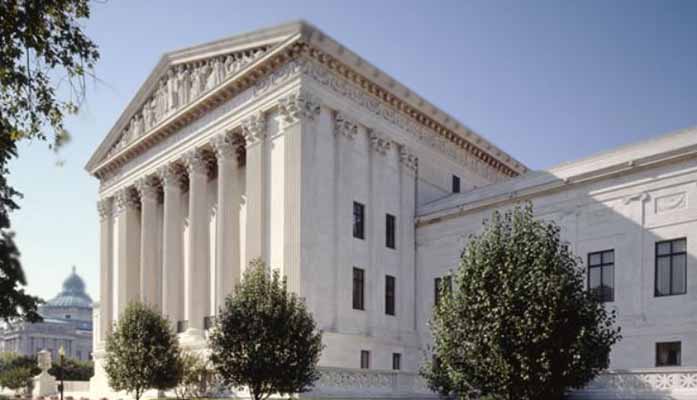
Republicans in the Arizona Legislature scored another legal victory with the nation’s high court granting cert on a case they had intervened in earlier this year.
On November 22, the Supreme Court of the United States agreed to hear FCC v. Consumers’ Research in its current term. The case will be consolidated with SHLB Coalition v. Consumers’ Research. This case involves a question of the nondelegation doctrine, which, according to the Legal Information Institute at Cornell, is “the principle that Congress cannot delegate its legislative powers or lawmaking ability to other entities.”
The decision from the U.S. Supreme Court represents a significant victory for Republicans in the Arizona Legislature, who had joined an amicus brief from state attorneys general from around the country to urge the justices to hear arguments in this case.
On its X account, Consumers’ Research reacted to the order, writing, “American citizens and consumers alike deserve basic accountability in government and in the marketplace. Americans currently are forced to pay a tax with every phone bill, set by unelected bureaucrats, at the recommendation by the same private corporation that receives the revenue. This is absurd and we believe SCOTUS will agree as the 5th circuit did.”
Arizona Senate President Warren Petersen, who was instrumental in the Arizona Legislature joining the efforts to support Consumers’ Research, told AZ Free News that, “These carriers are unlawfully taxing the public to the tune of billions of dollars. Congress should instead determine what taxes our citizens are to pay and by how much, not unelected Washington bureaucrats.”
The brief that the Arizona Legislature signed onto was joined by 15 other states, led by the West Virginia attorney general. The other states were Alabama, Arkansas, Indiana, Kansas, Louisiana, Missouri, Montana, Nebraska, Ohio, Oklahoma, South Carolina, Tennessee, Texas, and Virginia.
In their brief, the attorneys general argued that “the states – and our country – need guidance on the nondelegation doctrine,” that “those who mean to scare the court away from these issues are wrong,” that “preserving Congress’s legislative power protects the states’ interests,” and that “this court should evaluate this statute.”
They wrote, “Every year, the Federal Communications Commission extracts billions from American consumers based on a vague statute that says telecommunications providers ‘should make an equitable and nondiscriminatory contribution to the perseveration and advancement of universal service.’ The only limits on this multi-billion-dollar fee are vague notions like ‘quality’ service. And the Commission – an independent agency already shielded from accountability in its own right – doesn’t even set these rates itself. Instead, a private company picks a number that the Commission rubberstamps later.”
The attorneys general added, “Make no mistake: Amici States recognize the goal of securing universal telecommunications service is laudable. Congress can and should find a way to provide these services for everyone. But it’s a ‘fundamental principle that, no matter how laudable its purposes, the actions of our government are always subject to the limitations of the Constitution.’ Congress needs to be the one to act here, not a private band of unaccountable industry participants. The Court should grant the Petition to say so.”
The Court’s decision to hear arguments in this matter follows an opinion from the U.S. Court of Appeals for the Fifth Circuit in July, which found that “this misbegotten tax violates Article I, Section I of the Constitution.” The appeals court stated, “The Q1 2022 USF Tax is not only difficult to square with the Supreme Court’s public nondelegation precedents. It was also formulated by private entities. That raises independent but equally serious questions about its compatibility with Article 1, Section 1, which requires ‘[a]ll legislative Powers herein granted shall be vested in a Congress.’ We (1) explain that the scope of FCC’s delegation to private entities may violate the Legislative Vesting Clause by allowing private entities to exercise government power. Then we (2) explain that even if FCC’s delegation could be constitutionally justified, FCC may have violated the Legislative Vesting Clause by delegating government power to private entities without express congressional authorization.”
According to SCOTUSblog, this case will likely be argued before the U.S. Supreme Court in the spring of 2025. The justices’ opinion will be rendered in June or July at the conclusion of their term.
Daniel Stefanski is a reporter for AZ Free News. You can send him news tips using this link.
by Daniel Stefanski | Dec 3, 2024 | News
By Daniel Stefanski |
Arizona’s Senate President continues to stand in for an absentee attorney general in defense of key state and national laws.
Senate President Warren Petersen recently participated in a panel discussion with three state attorneys general, which was hosted by the Republican Attorneys General Association. In a post on his X account, Petersen said, “I sat on a panel discussion with 3 of the best AGs in the country to discuss possible legal action to take to secure the border. Thanks to the forsight of a prior legislature (see ARS 12-1841) as President I have been given standing to step in and defend our laws when our current AG fails to. In the last two years I have been involved with dozens of lawsuits. I will continue to do all I can to protect AZ when the AG fails.”
Petersen’s appearance with the attorneys general from New Hampshire, South Dakota, and Kansas, may have sent the strongest signal to date in Arizona about the likelihood and strength of a campaign for the job of the state’s top prosecutor in 2026.
The Republican Senate leader has quickly put his stamp of influence on the state over the past two years in Arizona’s divided government, forcing Democrat Governor Katie Hobbs to relent on her key priorities in two straight budgets, stopping left-wing agenda items from becoming reality, and protecting key state and national laws in the absence of Democrat Attorney General Kris Mayes. Under Petersen’s direction, the Arizona Legislature has joined over fifty legal matters across the nation, including lawsuits, amicus briefs, comments, and letters. He is also defending at least five state laws that Mayes declined to intervene in.
Many of the several briefs and lawsuits Petersen has signed onto are spearheaded by Republican attorneys general, giving him firsthand experience in the world of a state’s top prosecutor for select issues. If he would run for the office, it is unknown who – if anyone – might contend with him for the primary election nomination. Petersen is believed to have significant support within the different factions of the Republican Party in Arizona, which may help him to stave off a serious challenge and to save resources for the General Election with Mayes.
President Petersen recently acknowledged the “24 AGs who have written amicus briefs to SCOTUS for the case Warren Petersen et al. v. Jane Doe et al. in Support of AZs Save Women’s Sports act.” He added that, “Mayes refused to defend the law so I have intervened. … I will do all I can to make sure our girls can compete safely and on a fair playing field.”
Republican and Democrat attorneys general around the country are expected to flip their current legal roles with the incoming Trump administration in January. Republicans will likely assume positions in support of most of the White House’s agenda, while Democrats will take the lead on challenging executive actions from the various federal departments and agencies in Washington, D.C. Petersen, who will probably continue his growing partnership with Republican attorneys general, and Mayes, will assuredly be on opposing sides on a number of legal, policy, and political issues throughout the next two years, giving Arizona voters valuable insight on their values for the state and the office.
Daniel Stefanski is a reporter for AZ Free News. You can send him news tips using this link.