by Ethan Faverino | Feb 23, 2026 | News
By Ethan Faverino |
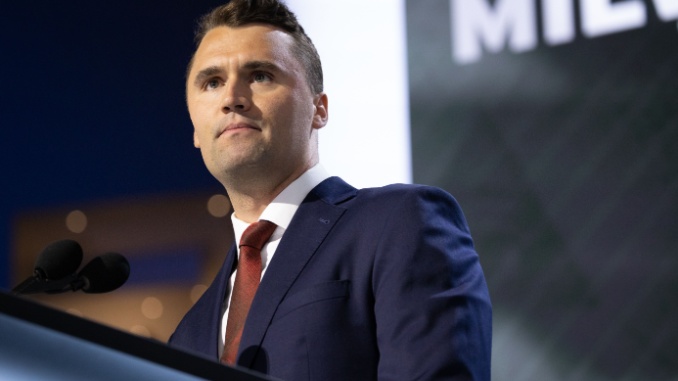
Arizona Senate Republicans passed two measures to commemorate the life, contributions, and enduring legacy of late Turning Point USA founder Charlie Kirk. The bills, SB 1010 and SB 1439, recognize Kirk’s dedication to promoting civic engagement, free speech, faith, liberty, patriotism, and traditional values, particularly amongst young Americans.
Sponsored by Senate President Warren Petersen (R-LD14), SB 1010 designates the Loop 202 as the “Charlie Kirk Loop 202.” The bill requires the new designation to appear in all official state records, documents, and reports related to the loop.
The Arizona Department of Transportation will install appropriate signage reflecting the name. Importantly, the designation does not supersede any existing names assigned (such as Red Mountain Freeway, Santan Freeway, and Congressman Ed Pastor Freeway) and is not anticipated to have a fiscal impact on the state’s general fund.
“Charlie devoted his life to public discourse and political participation,” said President Petersen, in a press release announcing the passing of the bills. “He believed Americans could disagree and still engage one another civilly and respectfully. He encouraged people, especially young people, to get involved in civic life and help shape the future of their communities. Designating Loop 202 ensures his contribution to civic engagement and public participation won’t be forgotten. Let this name stand as a daily reminder of the importance of promoting American ideals.”
SB 1439, sponsored by Senator Jake Hoffman (R-LD15), establishes a “Conservative Grassroots Network” memorial specialty license plate, creating an opportunity for Arizonans to support the legacy and mission of Charlie Kirk. To initiate the program, a qualifying entity must provide $32,000 to the Department of Transportation for implementation, after which the payer may design the plate (subject to departmental approval).
Proceeds generated by the plate will be directed toward educating and empowering students—particularly on high school and college campuses—advancing the organization’s mission and ensuring its continued impact.
“These bills exist because Charlie intentionally built something far bigger than himself. The world will never truly understand the magnitude of the loss we suffered, but Charlie’s legacy was never meant to end with his life,” said Hoffman. “He fought tirelessly for the soul of America and inspired tens of millions to stand boldly for truth, faith, and freedom. His voice was not silenced—it was multiplied. His legacy lives on, his voice is stronger than ever, and today we recognize that we are now the movement he began. This legislation turns his sacrifice into action and ensures that the mission God placed on his heart continues to grow. Thanks to Charlie, America is being called back to its rightful place—a shining city upon a hill, fortified by conviction, faith, and courage.”
Both SB 1010 and SB 1439 passed the Senate on February 18 and now move to the House for further consideration.
Ethan Faverino is a reporter for AZ Free News. You can send him news tips using this link.
by Staff Reporter | Feb 21, 2026 | News
By Staff Reporter |
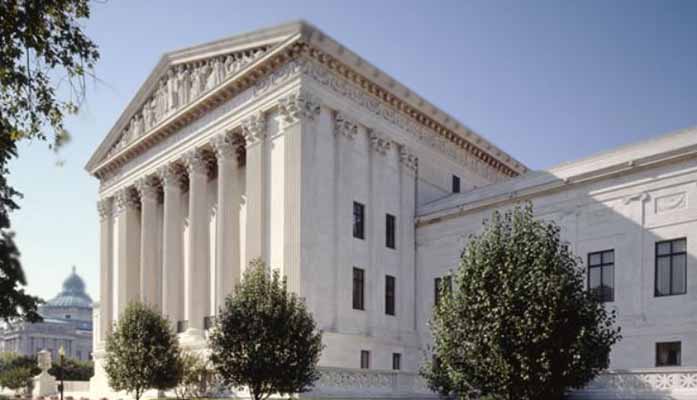
Arizona state lawmakers requested the U.S. Supreme Court to take up an appeal on the state’s proof of citizenship for voter registration.
Last February, the Ninth Circuit Court of Appeals struck down two laws which established proof of citizenship requirements. That court declared Arizona’s laws attempting to add more requirements on voter registrations were preempted by the simpler registration requirements of federal voting rights laws under the National Voter Registration Act (NVRA) and were therefore invalid.
Those laws, passed in 2022 under then-Gov. Doug Ducey, restricted mail-in voting for registrants lacking citizenship verification in addition to requiring recorders to check federal citizenship databases and applicants to provide documentary proof of citizenship and residence. These pieces of legislation emerged following the Supreme Court’s 2013 decision against an Arizona law requiring proof of citizenship when registering to vote in federal elections.
Several years later, in 2018, the state entered into a consent decree requiring county recorders to search Arizona Department of Transportation (ADOT) records for state registration forms lacking proof of citizenship. Those applications without verifiable citizenship proof through ADOT would only be allowed to cast ballots in the federal election, otherwise known as “federal-only voters.”
A number of progressive activist organizations joined in a lawsuit to challenge these laws: Mi Familia Vota, Voto Latino, Living United for Change in Arizona, League of United Latin American Citizens, Arizona Students Association, ADRC Action, Arizona Coalition for Change, Poder Latinx, Chicanos Por La Causa and their affiliated action fund, Democratic National Committee, Arizona Democratic Party, Arizona Asian American Native Hawaiian and Pacific Islander for Equity Coalition, Promise Arizona, and the Southwest Voter Registration Education Project.
The Inter-Tribal Council of Arizona, San Carlos Apache Tribe, Tohono O’odham Nation, and Gila River Indian Community also were among the challengers to proof of citizenship laws, citing concerns with challenges tribal members face to obtain proof of residency. Several tribal members were named independently in the lawsuit: Keanu Stevens, Alanna Siqueiros, and LaDonna Jacket.
The leaders of the Republican-led Arizona legislature filed their petition with the Supreme Court this week.
Sen. President Warren Petersen (R-LD4) issued a press release announcing the Supreme Court petition in which he accused the Ninth Circuit judges of having “rewrote” federal law and ignored Supreme Court precedent.
“For more than two decades, Arizona has required proof of citizenship to register to vote, because only American citizens should decide American elections,” said Petersen. “This case is about whether states still have the power to enforce commonsense safeguards to ensure only eligible voters participate in our elections. Arizona is standing up not just for our state, but for every state’s constitutional authority to secure its own elections.”
The filing argues that the Ninth Circuit ruling against Arizona law stretches federal voting law far beyond its allowable interpretation.
“This case, which comes to the Court on a non-expedited basis and underpinned by a comprehensive evidentiary record, offers an ideal vehicle for clarifying the NVRA’s preemptive scope, affirming that federal consent decrees cannot perpetually paralyze state legislative bodies, and vindicating the presumption of legislative good faith,” read the filing.
AZ Free News is your #1 source for Arizona news and politics. You can send us news tips using this link.
by Staff Reporter | Feb 20, 2026 | News
By Staff Reporter |
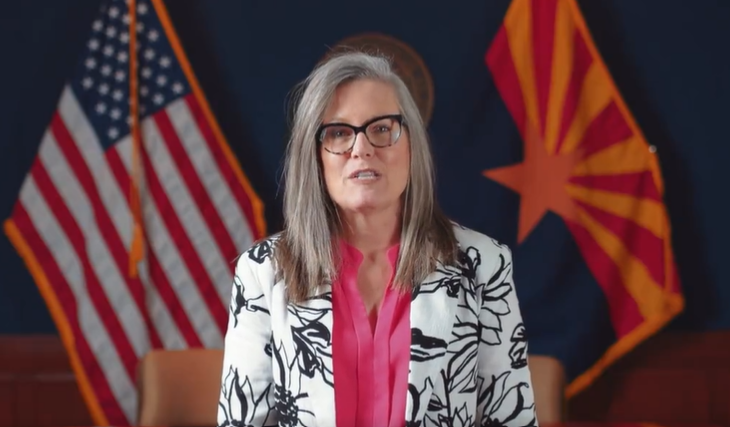
The Republican-led Arizona Senate is advancing legislation aimed at increasing oversight of Gov. Katie Hobbs’ handling of contracts.
On Wednesday, the Senate Regulatory Affairs and Government Efficiency Committee passed Senate Bill 1186 (SB1186) along party lines: Republicans in support, Democrats against.
State Sen. Mitzi Epstein (D-LD12) said she opposed the bill because it wasn’t “ready for primetime.” Epstein raised a concern that private companies could be impacted under the current way the bill is written. Epstein was the only one to explain her vote.
“Influence peddling is a bad thing, and we want to make sure in all aspects of government, including in this body, that people cannot pay for play,” said Epstein.
The bill would require companies currently holding or vying for state contracts or grants to disclose anything of value provided within the preceding five years to the governor, including anything beneficial provided to campaign or inauguration-related activities or outside organizations supporting or opposing the governor politically.
It would also prohibit state agencies and state employees from destroying any notes taken during evaluation of a company responding to a request for proposal on a state contract or grant. Should any state agency or state employee destroy their notes, any agreed-upon contracts could be solicited again.
Gov. Hobbs remains under legislative investigation over allegations of a “pay-to-play” relationship with Sunshine Residential Homes. That company received a unique rate increase following their donations to Hobbs. This legislation was inspired by that ongoing controversy.
Senate leadership to include President Warren Petersen (R-LD14), President Pro Tempore T.J. Shope (R-LD16), Majority Whip Frank Carroll (R-LD28), and Majority Leader John Kavanagh (R-LD3) all issued statements endorsing the legislation preceding the committee vote.
“State government has a responsibility to ensure taxpayer dollars are awarded through a fair and competitive process people can trust,” said Petersen. “When billions in public funds are at stake, the rules must be clear, consistent, and focused on delivering the best value for Arizona families.”
“After vetoing our bill last year, the Governor came back this session with her own proposal, but it still leaves the biggest gap untouched,” said Shope. “Her plan focuses on releasing information after contracts are awarded. Our bill requires transparency before decisions are made, when it actually matters.”
“The scandals we’ve seen show what happens when government oversight fails,” said Carroll. “When billions of taxpayer dollars are being spent, mistakes or favoritism don’t just stay inside government, they affect services families rely on and erode public confidence.”
“Arizona’s contracting laws were written for a different era and leave gaps that agencies can’t effectively police today,” said Kavanagh. “SB 1186 modernizes the rules by setting clear disclosure standards and establishing enforceable safeguards that strengthen the contracting process itself.”
Earlier this month the bipartisan advisory team put together by the Republican-led Arizona House brought on outside counsel from out of state for an independent investigation of the connection between Hobbs and Sunshine Residential Homes. The counsel, Justin Smith, is representing President Donald Trump in his defamation lawsuit against E. Jean Carroll; Smith’s law group was founded by Trump’s solicitor general, D. John Sauer.
AZ Free News is your #1 source for Arizona news and politics. You can send us news tips using this link.
by Staff Reporter | Feb 2, 2026 | News
By Staff Reporter |
The Republican majority at the Arizona House and Senate are advancing legislation to ensure full income tax conformity.
The state remains without conformity since Gov. Katie Hobbs rejected a solution by the Republican-led legislature amounting to $1.1 billion. Republicans are trying to bring another solution to the table with HB 2785. It’s unclear if Hobbs will pull up a seat for it.
Earlier this month, Hobbs vetoed legislation that would have aligned Arizona tax code with many of the congressional changes passed last summer under the One Big Beautiful Bill Act.
The governor accused Republicans of giving tax breaks to special interests and increasing taxes on working senior citizens. Hobbs said she would only agree to the Democratic minority’s Middle Class Tax Cuts Package.
“I urge you to rethink your partisan political theater and send the Middle Class Tax Cuts Package to my desk,” said Hobbs. “We should not hold tax cuts for over 88 percent of Arizonans hostage in order to force through tax breaks for special interests. Other questions of tax conformity must be decided through budget negotiations, following the precedent set by Governor Ducey.”
Unfortunately for the governor, the Arizona Department of Revenue (ADOR) had already advised Arizonans on how to file under federal tax law changes.
Several days before the governor issued her veto, ADOR notified lawmakers of the impossibility of altering their forms during the filing season. This latest bill from Republicans would codify ADOR’s instructions to taxpayers. Senate Finance Committee Chairman J.D. Mesnard (R-LD13) said the bill wasn’t the preferred approach since it wouldn’t provide as much relief to working families.
“The Department of Revenue has already told taxpayers how to file, and we are compelled to make sure the law and that guidance align, especially since the Department has publicly advised taxpayers not to wait to file,” said Mesnard. “Doing nothing would only guarantee more confusion and force families and businesses to fix the government’s mistakes later. We will never support a plan that requires taxpayers to amend their returns because state leaders failed to act when it mattered. It would be completely unjust.”
Without conformity, Arizonans have no way of knowing the accuracy of their filings. It’s likely taxpayers will need to refile, and even possibly pay more than they are prepared to pay.
House Speaker Steve Montenegro (R-LD29) said Hobbs was to blame for the present burden of impossible compliance facing Arizona taxpayers. The speaker said the governor has refused to communicate further with Republican leadership on conformity.
“Arizona taxpayers are being asked to file on forms that do not clearly match state law, while the Governor offers no answers and no alternative plan,” said Montenegro. “We asked for clarification privately. We asked publicly. We sent a detailed letter. We received silence. With tax season underway, waiting is not an option. This legislation exists because executive inaction left taxpayers exposed, and the Legislature has a responsibility to step in and restore clarity.”
Senate President Warren Petersen (R-LD14) said it was Hobbs’ agency that introduced the deductive provisions for wealthier filers to which she objected.
“It’s unfortunate the Governor has chosen not to work with us. The Legislature is stepping in to provide certainty by conforming state law to the tax forms her DOR has already released, including the State and Local Tax Deduction,” said Petersen. “The Governor would call that provision a tax break for the rich. We do not support the SALT deduction, but her agency has already included it on the forms, leaving the Legislature no choice but to address it. Tax reform was meant to make filing simpler and more predictable, not create confusion, anger, and frustration for Arizona taxpayers.”
AZ Free News is your #1 source for Arizona news and politics. You can send us news tips using this link.
by Staff Reporter | Feb 2, 2026 | News
By Staff Reporter |
A proposed bill making its way through the Arizona Senate promises to increase the number of police by relying on certain military veterans.
Senate Bill 1107 seeks to provide veterans with an alternative pathway for officer certification. This pathway would be limited to honorably discharged military veterans who served as military police. The Senate Public Safety Committee passed the bill unanimously on Wednesday.
The initial version of the bill extended the alternative pathway to all honorably discharged veterans. An amendment adopted by the Senate Public Safety Committee during Wednesday’s hearing modified the bill to limit the pathway to former military police.
Senate President Warren Petersen (R-LD14) authored the bill. Petersen said in a press release that this bill cut “unnecessary red tape” for those veterans with law enforcement training and experience, while remedying ongoing officer shortages.
“The law enforcement shortages we’re seeing around the state are affecting our officers’ abilities to respond to and stop illegal and criminal activities, hurting the morale of our brave men and women in blue and jeopardizing the freedoms of law-abiding Arizonans,” said Petersen. “Government’s first responsibility is to protect our citizens, which is what my bill does by giving an alternative to hire qualified officers. It’s time to have a surplus of officers in every community across our great state.”
Jeannette Garcia, a councilwoman for the city of Avondale and former military police officer, testified military police were more than qualified to enter the force without undergoing regular certification. Garcia said she may have become a police officer in Arizona herself had state laws not required her to start over in her law enforcement career.
“We operate under strict rules of engagement, high standards, and real consequences. We protect community, maintain order, and lead under pressure,” said Garcia. “This is not about making it easier to wear the badge. This is about making it possible for experienced veterans to continue serving without being forced to repeat training that they mastered.”
The bill would require the state to establish an alternative pathway for peace officer certification. That pathway would factor an applicant’s existing military police training and allow applicants to complete an abbreviated police standards and training program focusing on Arizona laws, procedures, and community policing requirements.
“Military police veterans possess substantial training, discipline, and law enforcement experience gained through active-duty service,” stated the bill’s legislative intent. “Transitioning veterans into civilian policing strengthens public safety while honoring their service.”
Applicants would still be required to pass a certification examination approved by the Arizona Peace Officer Standards and Training Board on Arizona’s police procedures and laws, as well as maintain statutory requirements relating to moral character, medical and physiological fitness, and background investigations.
As of this report, the bill only has individuals registered in support of the bill and none against.
Multiple states have adopted similar laws enabling veterans to have an expedited pathway for joining law enforcement, including Texas, Florida, and North Carolina.
If passed and approved by the governor, the bill would go into effect on Jan. 1, 2027.
AZ Free News is your #1 source for Arizona news and politics. You can send us news tips using this link.